
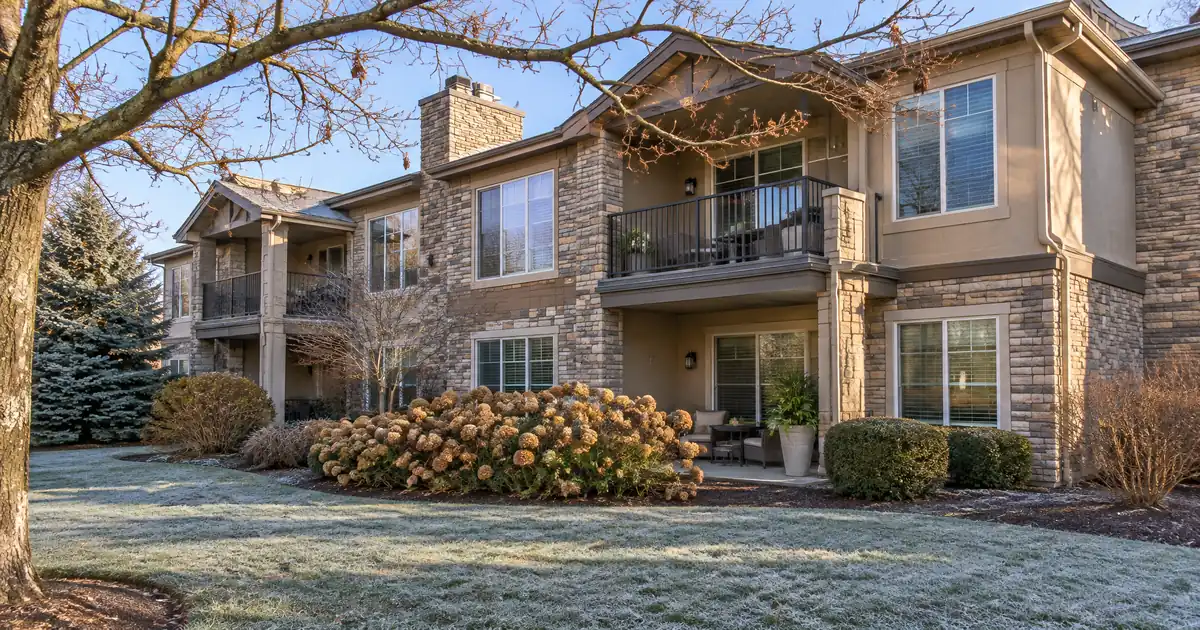
The Quick Read: A condo rental can carry an equity line, but the lender has to approve two things: you and the building. On this network, an investment-property line tops out at 70% combined loan-to-value, up to $500,000, for borrowers with at least a 700 credit score, with title held personally, subject to lender guidelines. Which lender fits depends on your file, and Lendmire, a mortgage broker, matches the scenario to select wholesale lenders.
- No tier sits above the 70% CLTV ceiling or below the 700 score floor.
- The title must sit in your name or a revocable living trust. An LLC cannot hold it.
- A non-warrantable condo is eligible. A condotel, a commercial unit, or a manufactured home is not.
- Your HOA can still cap rentals, no matter what the lender approves.
- Pricing floats and never converts to a fixed rate, so your borrowing cost can shift even when the rent holds steady.
Key Terms Defined
You will see these words on every condo file, so here they are once.
HELOC: A home equity line of credit. It is a revolving line secured by the property, and you borrow only what you need during the draw period.
CLTV (combined loan-to-value): Every loan against the property, added together, divided by its value. A first mortgage plus a HELOC both count.
Warrantable condo: A building that meets the standard project tests lenders use for condos: healthy finances, adequate insurance, no major litigation, and a reasonable mix of owners and renters. Non-warrantable means it misses one or more.
HOA questionnaire: A form your homeowners’ association or its manager fills out. It tells the lender about budget, reserves, delinquency, insurance, and lawsuits.
Master policy: The building’s blanket insurance, bought by the HOA. Your own policy covers the inside of your unit.
Draw period: The stretch when you can pull money from the line. On an investment line in this network, that is five years, followed by a 25-year repayment period.
How large a line the equity supports.
An equity line is sized by combined loan-to-value, occupancy, and credit — not by rental coverage. Switch the occupancy or the credit band and the ceiling moves with it.
Investment-property lines require a 700 minimum credit score; second-home lines start at a 640 minimum and primary-residence lines at 600, and the combined-LTV ceiling steps down as the credit band drops on primary-residence and second-home lines and holds on investment-property lines; the line cap steps down on primary-residence lines and holds at every tier on investment-property and second-home lines.
A debt-to-income ratio above 45% requires 680+ credit. Profiles under 640 are limited to single-family homes. At least 75% of the approved line is drawn at closing. Ceilings, floors, and caps update from Lendmire’s centralized guideline source.
Line estimate
Illustrative estimate only — not a quote, Loan Estimate, approval, or commitment to lend. The rate is an editable assumption; equity-line pricing is variable through both the draw and repayment periods and never converts to fixed. Occupancy and credit drive the ceiling together: an investment property tops out at 70% combined LTV (minimum credit 700, line cap $500,000); a second home tops out at 90% combined LTV (minimum credit 640, line cap $500,000), with the ceiling stepping down as the credit band drops (the cap holds at every tier); a primary residence tops out at 90% combined LTV (minimum credit 600), and its $750,000 maximum line is available only at 75% combined LTV or below with a 700-or-better credit profile (720 on the longer-runway program) and a full appraisal. Lines above $500,000 require a full appraisal. Credit, debt-to-income, property type, and full underwriting review all affect the final line.
Why Two Gates Instead of One?
A condo HELOC is approved twice. The first approval is about you. The second is about the building.
It is easy to expect only the first. You have the credit and the equity, so the file seems done. Then the HOA questionnaire comes back with a pending lawsuit or a thin reserve fund, and the file stalls.
Each lender decides for itself what it will accept in both reviews. That is why the same unit can be a clean yes at one lender and a flat no at another.
Many large retail lenders do not offer lines on rentals at all, and condos narrow the field further. One BiggerPockets thread shows an investor hearing that small lenders decline condos and non-primary homes. That is why a broker who shops several wholesale lenders matters here. You are not hunting one friendly bank. You are matching a file to a program built for it.
Gate One: How Lenders Review You
On a HELOC, the lender underwrites your personal profile. The rent does not qualify the loan. That is the opposite of how a DSCR loan works, where the property’s rent against its monthly obligation is the test.
Here is what the investment-property line looks like across the network:
- Credit: 700 minimum. A 720 score and a 700 score both reach the same 70% CLTV, so credit above 700 buys eligibility, not extra leverage.
- Debt-to-income: 50% maximum. The lender reviews your file on the interest-only payment calculated on the maximum draw, not on the amount you plan to use over time. Your HOA dues sit in the debt picture too.
- Line size: up to $500,000 on an investment property.
- Structure: a standalone line in first or second lien position. At least 75% of the line is drawn at closing, so size the line to what you expect to borrow up front.
- Pricing: it floats through both the draw and the repayment period. It never converts to fixed.
- Exposure: a borrower is limited to three lines in total, and an owner with more than 15 financed properties is not eligible.
- Derogatory history: a bankruptcy needs four years of seasoning from discharge or dismissal. On investment files, a foreclosure needs seven years of seasoning, and a deed-in-lieu, pre-foreclosure, or short sale needs four.
Notice the pattern. Each rule is about you, not the unit. Strong rent does not rescue a 680 score on this product.
One more point. Because an investment line caps at $500,000, it sits in the automated-valuation lane, and the line may close with no traditional appraisal. You can still request a full appraisal, and a higher CLTV may trigger a second valuation. Valuation method is a separate matter from your HOA, which can still restrict rentals.
Gate Two: How Lenders Review the Building
Condos are eligible on this network, and that includes non-warrantable ones. That surprises people. Non-warrantable is a label on the building, not a flaw in your unit and not a verdict on you.
The lender asks the HOA or its manager to complete the questionnaire. It then looks at the supporting documents: budget, financial statements, reserve information, master insurance, governing documents with the rental rules, and any disclosures about litigation or special assessments.
Different red flags carry different weight:
| Building issue | What it does to the file |
|---|---|
| Heavy investor ownership | Often workable; some lenders price or limit it |
| High HOA delinquency | A serious flag; lenders look at the trend |
| Thin reserves | Can narrow lenders; may improve if the HOA fixes it |
| Insurance gaps | Often must be cured before the deal works |
| Pending litigation | A hard one; depends on severity and subject matter |
| Condotel or rental pooling | Not offered |
| Commercial or mixed-use unit | Not offered |
Status can change. If an HOA raises reserves or settles a lawsuit, a lender can review the building again. A no today is not always a no forever.
Then there is the HOA itself. It can cap rentals, set minimum lease terms, or restrict short-term stays even when the lender is happy. Short-term rental rules can vary by city, county, HOA, and property type, so confirm local rules before relying on projected rental income. Get the answer in writing, not from a hallway chat with the property manager.
What Does Sizing Look Like?
Sizing is simple arithmetic. The CFPB’s HELOC booklet explains that lenders set the credit limit as a percentage of the home’s value, then subtract what you owe. On a condo rental, that means the cap percentage of value, minus every recorded lien.
Run it with percentages. Say you own a condo and your first mortgage already equals 55% of its value. The network’s investment ceiling is 70% CLTV. That leaves room for a line worth up to about 15% of the condo’s value. Not a lot.
Now change one input. Pay the first mortgage down to 40% of value, and the room grows to 30%. Same condo, same credit, double the line.
Two things trim the answer further. First, the lender’s valuation may come in lower than your own opinion. Second, the $500,000 line cap applies even if the percentage math says more. (For most condos, the percentage hits first.)
Your debt-to-income test then runs on the maximum draw, with HOA dues included. A condo with high dues leaves less room under the 50% ceiling than a similar townhome with none.
Where the General Rule Breaks
LLC-owned condo. A line on this network requires title in your name or an inter vivos revocable living trust. An LLC, corporation, partnership, or irrevocable, blind, or land trust cannot hold it. If the condo is already deeded to an LLC, you either change the vesting or use a DSCR cash-out refinance instead. Retitling can raise transfer and due-on-sale questions with your existing mortgage, so check those first.
Existing first mortgage. A line behind your first mortgage is a second lien. The CFPB notes that a lender can stop further draws if the property’s value drops significantly, and condo values follow the building’s health. A weak HOA can hurt you twice: once at approval and again when you want to draw.
Lien position. Many lenders write first-lien lines only. If you need a second-lien line behind an existing mortgage, that narrows the list. Mention it at the start.
Listed for sale. A property that is listed, or was listed within the past 60 days, is ineligible in a handful of states: IN, NC, PA, TN, TX, and WA.
Condotel, commercial, and mixed-use. Not offered. A residential unit in a building with a retail floor gets a case-by-case project review, but a unit that is itself commercial does not qualify.
Ineligible property types. Manufactured homes, co-ops, log homes, and agricultural zoning are not offered either.
State availability. Lendmire arranges these lines in 16 full-service states. That is narrower than its DSCR investor footprint of 41 markets, including Washington, D.C. Confirm your state before you spend time on documents.
Borrowing against another property. You can borrow against your primary residence and spend the money on the condo. That is a different product with different leverage tiers, and it moves the risk onto your home. Weigh it honestly.
Which Lenders Offer These Lines?
No single type of lender dominates. A few categories are worth knowing, and none are ranked here.
- Large retail lenders often decline rentals and condos altogether.
- Smaller banks and credit unions sometimes offer first-lien lines on non-owner-occupied property, often with conservative valuations. One BiggerPockets investor describes a local bank doing exactly that on two rentals.
- Wholesale lenders work only through brokers and write programs aimed at investors, including non-warrantable condos.
Which lenders fit depends on the property, the building, your credit profile, how much leverage you need, and how you document income. A broker’s value is that it shops several wholesale programs and matches the scenario to the one built for it. Lendmire is not a lender. It does not approve or fund the loan, and every figure here is subject to lender guidelines and full file review.
Here is a quick pre-screen for any condo file:
1. Does the borrower hold title personally or in a revocable trust? 2. Is the credit profile at least 700? 3. Is the condo a residential unit in an eligible project? 4. Is the combined balance at or below 70% of value? 5. Does the HOA allow the rental use?
Five yeses put the file in good shape for this program. A no on any of them means this product may not fit, and it is worth asking a broker about alternatives.
HELOC, DSCR Cash-Out, or a Closed-End Second?
These three products solve the same problem differently. The right one depends on the file.
| Factor | Investment HELOC | DSCR cash-out | Closed-end second |
|---|---|---|---|
| Reviewed on | Your credit and DTI | Property rent vs. payment | Varies by lender |
| Max leverage | 70% CLTV | Around 75% LTV on a cash-out | Varies |
| LLC title | Not allowed | Often allowed | Sometimes allowed |
| Draw style | Revolving, floating | One lump sum | One lump sum |
| Choose when | You want flexibility | Rent is strong, or title is an LLC | You want a fixed amount |
A DSCR cash-out refinance qualifies primarily on property-level rental income covering the payment, subject to lender guidelines. DSCR loans can often be held in an LLC, subject to lender program eligibility. Seasoning of about six months is a common expectation, and reserves commonly run around six months of PITIA (principal, interest, taxes, insurance, and HOA dues), though they vary by lender, leverage, and loan size.
The coverage test works like this. Divide monthly rent by the full monthly obligation, HOA dues included. Many select programs start at 1.00 coverage, and stronger ratios open better pricing and leverage. A separate select-lender path takes coverage below 1.00, with leverage and terms adjusted. Clearing 1.00 does not mean the property cash flows, since repairs, vacancy, management, and utilities sit outside the calculation.
Sequencing matters too. A line can complicate a later refinance. The CFPB explains that a second mortgage lender must agree to a refinance unless the second lien is paid off. If you plan a cash-out down the road, think about that before you open a line.
Pricing on a line like this moves over time. Your monthly obligation can rise while your lease stays flat. That erodes coverage in a way a fixed structure would not.
The complete DSCR loans guide covers how property-rent-based lender review works, including extended terms and interest-only periods available through select lenders.
Gather the HOA Package Before You Apply
Order the HOA documents first. That way a failed questionnaire does not cost you an appraisal fee. Here is the checklist:
- The current-year budget and recent financial statements
- Reserve study or reserve balance information
- The master insurance certificate
- Governing documents, including rental rules and any caps
- Disclosures on litigation and special assessments
- The completed condo questionnaire, signed by the HOA or its manager
- Your own entity and title documents, showing personal or trust vesting
- A current statement for your first mortgage
Property managers vary in how fast they respond, so ask early and ask in writing.
Frequently Asked Questions
Can I get a HELOC on a condo that is a rental?
Yes, through select wholesale lenders, subject to lender guidelines. An investment-property line on this network reaches 70% CLTV, up to $500,000, with a 700 credit minimum. Title must be personal or a revocable living trust. Many large retail lenders do not write rental lines at all, so the field is narrower than for a primary home.
Does a non-warrantable condo disqualify me?
No. Non-warrantable condos are eligible on this network, though a building with serious problems such as pending litigation can still stop a file. The label describes the building, not you. Condotels are not eligible.
Do HOA dues count against me?
Yes. Dues are part of the monthly obligation in the debt-to-income calculation, which runs at a 50% maximum on the interest-only payment at the maximum draw. On a DSCR loan, dues sit inside the monthly payment you divide the rent by.
What if my condo is held in an LLC?
A line on this network cannot be held in an LLC. You can retitle to yourself or a revocable trust, after checking the transfer and due-on-sale questions with your current lender. The other route is a DSCR cash-out refinance, which can often be held in an LLC, subject to lender program eligibility.
Can the HOA block my rental even if the lender approves?
Yes. Rental caps, minimum lease terms, and short-term rental limits come from the HOA’s governing documents. Read them before you apply, because lender approval does not override them.
Your Next Step
If you are considering a home equity line and want to see how the numbers work, Lendmire can help you compare HELOC options based on the property, the equity available, credit profile, combined leverage, and your goals. Call 828-256-2183 or request a quote.
About Lendmire
Lendmire is a mortgage brokerage (NMLS# 2371349) arranging home equity lines of credit — primary-residence, second-home and investment-property lines — through a wholesale lending network in its 16 full-service states. Eligibility is determined by the lender on each file. Scotsman Guide named Lendmire a Top Mortgage Workplace in both 2025 and 2026.
Get Started
Ready to find the right loan for you?
See your offer in seconds. No credit pull, no obligation.
Informational only. Not a Loan Estimate, approval, or commitment to lend. Program availability and eligibility are subject to lender guidelines, credit approval, property review, and underwriting.
References
1. BiggerPockets – HELOC on a condo that’s a rental
4. BiggerPockets – HELOC on rental property
This article is part of Lendmire’s investment property HELOC program — full qualification details, guidelines, and scenarios live on the program page.
Related reading: How to Qualify for an Investment Property HELOC on a Condo With an HOA · Cash-Out Refinance vs HELOC for an HOA Assessment on a Condo Rental · How to Get a HELOC on a Rental Condo · Top Investment Property HELOC Providers on a Rental Condo · Investment Property HELOC Requirements for a Condo Rental
Brandon Miller
Founder & CEO, Mortgage Loan Originator, Lendmire LLC
- Mortgage Loan Originator · NMLS# 1129696 · Verify on NMLS Consumer Access
- North Carolina Real Estate Broker · License# 343312 · Verify on NCREC
- North Carolina Insurance Producer · License# 19053198 · Property, Casualty, Life, Health · Verify on NAIC SBS
- Lendmire LLC · Firm NMLS# 2371349 · Verify firm licensure
Important disclosures. Lendmire (NMLS# 2371349) is a licensed mortgage brokerage. Lendmire is not a direct lender, depository institution, or financial advisor. All loan inquiries are subject to lender underwriting; this article does not constitute a commitment to lend. Rates, terms, and program guidelines are subject to change without notice and vary by borrower profile, property type, and state. Information in this article is general in nature and is not financial, legal, or tax advice. Equal Housing Opportunity. NMLS Consumer Access: nmlsconsumeraccess.org.