
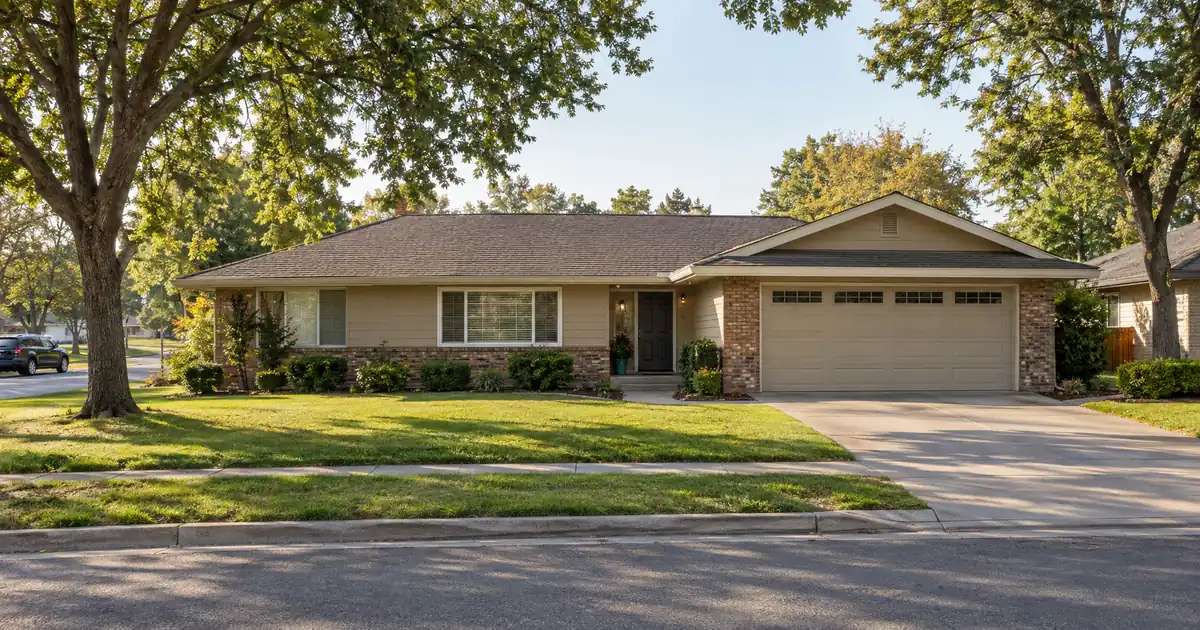
Blanket DSCR Mortgage Refinance — The Quick Read: A blanket DSCR refinance combines two or more rental properties into one loan. The lender qualifies you based on the combined rent from all the properties, not your personal income. Every property still gets its own appraisal and its own market-rent opinion. But the coverage test looks at the whole pool, not just one address. This tool works well for investors who have outgrown one-off refinancing. It is not a shortcut around underwriting. It is not automatically the cheaper path either. The mechanics matter more than the pitch. So do the release clause and the risk of cross-collateralization.
Key Takeaways
- A blanket DSCR refinance combines multiple rental properties under one note. Underwriters test blended rent against blended debt service.
- Every property in the pool still gets its own appraisal and rent schedule. Consolidation does not skip valuation.
- Cross-collateralization means every property secures the whole loan. Trouble with one property can affect the standing of all of them.
- Release clauses govern how a property exits the pool later. Lenders negotiate these terms individually — they are not standardized across the industry.
- Moving an individually-financed property into an LLC ahead of a blanket refinance can technically trigger a due-on-sale clause. Lenders rarely enforce this, but it can still happen.
What Is a Blanket DSCR Refinance, Exactly?
It is one loan secured by more than one rental property. The lender qualifies you on property income, not a W-2 or tax return. Instead of refinancing a duplex here and a fourplex there through separate closings, an investor rolls them together. Sometimes a handful of scattered single-family rentals join the pool too. The result: one note with one monthly obligation.
DSCR Calculator
Run the numbers in your market
Rate source: Freddie Mac 30-yr average via FRED® — Federal Reserve Bank of St. Louis · effective Sep 10, 2026
Prefilled with local estimates — enter your own rent or nightly figures, taxes, insurance, and HOA for a more accurate picture.
Program parameters update from Lendmire’s centralized guideline source. Taxes and insurance are editable estimates.
As of Sep 10, 2026 · General Freddie Mac market benchmark, not a Lendmire loan offer. Rent, nightly rate, occupancy, taxes, and insurance are editable estimates. Short-term rental figures are estimates only and vary significantly by season, property type, management approach, and local short-term-rental rules — confirm local regulations before relying on them. Qualifying income for short-term rentals varies by program — some use appraisal market rent, others use documented STR history or projections — and is confirmed in underwriting. Not a Loan Estimate, approval, or commitment to lend. Program availability and eligibility are subject to lender guidelines, credit approval, property review, and underwriting.
The “DSCR” part refers to how the lender measures repayment ability. It is total rent across the pool divided by total housing debt. That housing debt includes principal, interest, taxes, insurance, and any HOA dues — commonly shortened to PITIA. The “blanket” part refers to the collateral structure: multiple deeds, one lien. These are two separate design choices. They show up together often because DSCR lenders are usually the ones willing to underwrite portfolio-style deals in the first place.
Lendmire arranges this kind of financing through select lenders in a wholesale network spanning 40 markets, including Washington, D.C. Lendmire places files — it does not fund them directly. Every deal still runs through an individual lender’s underwriting.
Key Terms Defined
DSCR (debt-service coverage ratio): Rent divided by the property’s monthly housing debt. It’s a ratio, not a dollar figure. It tells a lender whether the income covers the obligation.
PITIA: Principal, interest, taxes, insurance, and association dues. These all roll into one number. Rent gets measured against this number.
Cross-collateralization: An arrangement where multiple properties each secure the same loan. A lender’s claim on any one property backs the whole balance.
Non-QM (non-qualified mortgage): A loan that doesn’t follow the standard agency income-documentation rules. DSCR loans, blanket or single-property, live entirely in this category.
Business-purpose loan: A loan made to an LLC, or for a non-owner-occupied rental, rather than for personal or household use. This classification lets DSCR underwriting skip W-2 and tax-return documentation.
Release clause: Contract language that spells out how one property can be sold or refinanced out of the pool. It does this without forcing payoff of the entire loan.
Seasoning: The minimum time a lender wants a property held, or a refinance completed, before it counts toward a new transaction.
How Underwriting Actually Handles a Blanket Refinance
The process runs in five stages. Skipping any of them isn’t an option. Consolidation changes how the numbers get tested — it doesn’t change how much documentation gets collected.
Step one: aggregate the cash flow. Every property gets its own rent determination first. For a single-unit rental, that typically means an appraiser-completed Fannie Mae Form 1007-style rent schedule. For a two-to-four-unit property, it means the equivalent operating-income form.
Step two: appraise every property, individually. There’s no shortcut here. A five-property pool means five appraisals. The lender assesses values, condition, and rent one property at a time before blending anything together.
Step three: run the blended coverage math. The lender divides total rent across the pool by total PITIA across the pool. Stronger properties elsewhere in the pool can offset one weaker-performing property. That’s the core mechanical benefit of going blanket in the first place.
Step four: structure the note and the release terms. All properties secure one loan, one lien, and one closing. The loan documents also spell out the release mechanism — how a property can later exit the pool.
Step five: close through the entity. Most blanket DSCR refinances close in the name of an LLC or similar entity, subject to lender program eligibility. Business-purpose lending keeps the file out of standard consumer-mortgage disclosure territory. DSCR loans are designed for non-owner-occupied investment properties. They are business-purpose loans made to a business or an LLC. This classification falls under Regulation Z’s exemption for business-purpose credit. Because of this, lenders review them differently from a standard owner-occupied mortgage. They also sit outside the consumer disclosure timeline that applies to a personal-residence refinance.
An investor moving from self-employment income documentation toward property-based qualification often finds this approach faster to structure than a traditional self-employed refinance. The file leans on leases and appraisals instead of two years of traditional personal-income documentation.
The Blended DSCR Formula
Blended DSCR = Total Monthly Rent Across the Pool ÷ Total Monthly PITIA Across the Pool.
Here’s what matters: this is a pool-wide test, not a per-property one. Picture a three-property pool. Two units clear comfortably above 1.20x on their own. A third sits closer to 0.90x by itself — maybe it’s between tenants, or maybe the rent is just lower relative to its debt. Blended together, the pool might land around 1.10x. That can clear a program floor that the weak property never would have cleared alone. This is the practical argument for going blanket: a stronger asset can carry a weaker one.
Be precise about what this ratio does and doesn’t mean. Clearing 1.00x means rent covers the mortgage payment. It says nothing about vacancy, repairs, management fees, or capital expenditures. All of those sit outside the calculation entirely. A pool that clears 1.15x on paper can still run negative in a given month if a roof needs replacing. DSCR measures debt coverage, not true cash flow.
Most standard DSCR programs are built around a 1.00x benchmark, because rent covers the payment at that level. But this is a floor for select programs, not a fixed industry standard. Exact eligibility always depends on lender guidelines, credit profile, reserves, and property review.
Blanket vs. Individual DSCR Refinances
| Factor | Blanket Pool Refinance | Individual DSCR Refinances |
|---|---|---|
| Closings required | One | One per property |
| Coverage test | Blended across the pool | Each property stands alone |
| Weak-property tolerance | Stronger assets can offset a weak one | Each file sinks or swims on its own |
| Exit flexibility | Governed by a release clause | Sell or refinance any property anytime |
| Default exposure | One default risks the whole pool | Isolated to that single property |
| Documentation load | Consolidated, but per-property appraisals still required | Repeated for each closing |
Neither column is universally “better.” A scaling investor with five stabilized rentals scattered across separate loans often finds single-closing consolidation genuinely useful. An investor planning to sell one property in the next couple of years usually finds the release-clause friction isn’t worth the trade.
What Happens When You Sell One Property?
Release clauses control this. Lenders negotiate them individually — they are not standardized across the industry. The loan documents specify how much of the remaining balance needs to be paid down before that one property’s lien can be released from the pool. Lenders generally set this above a pure pro-rata share. This keeps the remaining collateral adequately secured.
Here’s the catch: there’s no single industry-standard release formula. Some lenders in the network price releases as a percentage of that property’s allocated share of the loan. Others tie it to a minimum remaining pool balance, or require substitution of comparable collateral. None of this is guesswork-friendly. An investor who expects to sell individual properties within a shorter hold period should get the exact release terms in writing before closing, not after.
This is also where the comparison to selling versus refinancing a rental property outright becomes relevant. A blanket structure locks a property behind release pricing. That changes the exit math meaningfully compared to a standalone loan with no such constraint.
Where the Blanket Rule Breaks: Five Edge Cases
LLC transfers can trigger a due-on-sale clause
Investors frequently move an individually-financed rental into an LLC for liability protection before consolidating it into a blanket refinance. That move is not on the federal list of exempted transfers under the Garn-St Germain Act’s due-on-sale preemption rules. This means a transfer to an LLC technically triggers the acceleration clause, even on an ordinary one-to-four unit rental. Lenders rarely enforce this in practice on performing loans. But that’s a business decision on the lender’s part, not a statutory guarantee. It’s worth knowing this before assuming entity restructuring carries little to no risk.
Agency financed-property caps don’t apply — and that’s the point
Conventional financing caps most borrowers around ten financed properties under automated underwriting, and six under manual underwriting. Blanket DSCR loans sit entirely outside that ceiling, because they’re non-agency, business-purpose products. Investors who’ve maxed out their conventional property count are often the exact investors who turn to blanket structures to keep scaling.
A vacant unit drags the whole pool’s coverage number
Inside a single-property loan, one vacant unit is that borrower’s problem alone. Inside a blanket pool, one vacant or unleased property pulls down the blended ratio for the entire loan. That’s because its contribution to total rent drops to the appraiser’s market-rent opinion instead of an actual lease. A pool with one weak or empty unit needs the rest of the properties to carry more weight.
Larger pools sometimes mean more appraisal work
As the aggregate loan balance climbs, some programs step up documentation requirements. A second, independent appraisal on the larger side of the portfolio isn’t unusual. This is a size-driven trigger, not a property-count trigger. A two-property pool at a high balance can hit the same threshold as a five-property pool at a lower one.
Sub-1.00 coverage and no-ratio paths both exist — but narrowly
Coverage below 1.00x is available through select lenders in the network. These lenders adjust leverage and terms to offset the weaker ratio. It’s a real path, not a dead end — just a more conservative one. No-ratio qualification is different: the lender doesn’t test rent against debt at all. This is available only through a narrower set of lenders, generally for borrowers who already own a primary residence. It typically applies above the $2,000,000-plus loan-size band, rather than on smaller files.
The Leverage, Credit, and Reserve Picture
Most purchase files in the network land at 75%-80% LTV, meaning 20%-25% down. Select high-leverage purchase programs reach 85% LTV — roughly 15% down — for borrowers with around a 700 credit score or better; that higher-leverage tier is a purchase-only program and never extends to cash-out or rate-and-term refinances.
Cash-out refinancing on standard rental collateral typically tops out around 75% LTV. Short-term rental collateral usually caps closer to 70% on a cash-out. Those are two different ceilings, not one blended number.
DSCR vs. conventional financing
Two common ways to finance an investment property in this market. They qualify you differently — here’s how investors weigh them.
Why investors choose it
- Qualifies on the property’s rental income — no personal tax returns, W-2s, or pay stubs needed to document income.
- No personal debt-to-income ceiling to clear, so existing mortgages and obligations don’t cap your borrowing the same way.
- Can be closed in an LLC, keeping the property inside a business entity.
- Built for scaling — not held to the limit on number of financed properties that conventional financing applies.
- Underwriting centers on the deal: generally qualifies when the rent covers the payment, a 1.00x coverage ratio being a common baseline (confirmed in underwriting).
- Designed specifically for investment property, including long-term and, where the program allows, short-term rentals.
Where it’s strong
- Often the lowest ongoing financing cost for a buyer who fully qualifies on personal income — a fit for a first property or a cost-first purchase.
Trade-offs for investors
- Requires full personal income documentation and must fit within a debt-to-income limit — salary, existing debts, and other mortgages all count.
- Typically held in your personal name rather than a business entity.
- Caps how many financed properties you can carry, which can become a ceiling as a portfolio grows.
- Evaluates you as a borrower as much as the property, which usually means more paperwork.
How investors usually choose: a first or single property often optimizes for the lowest financing cost; portfolio builders often optimize for leverage, vesting in an LLC, and scaling past conventional caps. The right answer depends on your goals, the property, and current guidelines — both paths run through select lenders in Lendmire’s wholesale network, with eligibility and terms confirmed in underwriting.
Credit requirements run in tiers. A 620 floor exists in parts of the network. Most programs want closer to 660. A score of 700 or higher tends to unlock the strongest leverage and pricing tiers together. Reserves vary by lender, leverage, and loan size. Commonly, that means around six months of PITIA held in reserve, stepping up toward nine months once the loan crosses roughly $1,500,000. Conservative rate-and-term refinances at modest leverage under that threshold sometimes see reserves waived entirely — though that’s the exception, not the rule.
Loan sizes across the network run from the low six figures into the multi-million range on standard programs. They generally cap around $3,000,000. Above roughly $2,500,000, the network generally holds to 30-year fixed structures rather than adjustable-rate options. Extended 40-year terms and interest-only periods exist through select lenders below that ceiling, for investors who want the flexibility. State-level overlays also matter. Purchases in Connecticut, Florida, Illinois, and New Jersey generally cap near 75% LTV. Overlay-state deals typically cap around $2,000,000, regardless of what the borrower might otherwise qualify for elsewhere.
A larger down payment lowers the payment and can lift the coverage ratio. But it never overrides a leverage cap, a credit floor, a reserve requirement, or property eligibility on its own. The strongest files clear both tests: enough equity in the deal, and enough rent to cover the obligation. Exact terms depend on the lender’s guidelines, property type, leverage, and a full review of the borrower’s file.
DSCR files that involve short-term rental income inside the pool work a little differently. Purchase leverage on STR collateral tops out around 75% LTV; refinance leverage tops out around 70%. These deals generally need a 700+ score, roughly 12 months of hosting history, and a 1.00x coverage floor on both purchase and refinance transactions — assessed separately, not as a single blended standard. Short-term rental rules can vary by city, county, HOA, and property type. Investors should confirm local rules before relying on projected rental income in a blended pool.
One pattern shows up consistently across blanket files in the network. The deals that move cleanest are the ones where the investor pulled trailing twelve-month rent rolls and a fresh set of leases before ever asking for a quote — rather than estimating rents from memory. Files built on stale or assumed numbers tend to hit exceptions during valuation. A little upfront documentation would have avoided that.
Not every property type is eligible for this kind of financing, regardless of how the rest of the file looks. Manufactured homes, log homes, and barndominiums are not offered through DSCR programs in this network, blanket or otherwise.
Does a Blanket Refinance Make Sense for You?
It depends heavily on exit plans, not just current cash flow. Picture an investor holding four or five stabilized rentals with no near-term sale plans, tired of managing separate loans and separate closings — that’s the classic candidate. An investor who expects to sell one property in the next two or three years should think harder. The release clause becomes a real cost, not a footnote.
A few honest questions are worth asking before committing. How many years until any single property in the pool might get sold? Is one property meaningfully weaker on rent than the others, and does the pool need it to carry that weight? Would a cash-out refinance on one strong property, structured as a standalone transaction, accomplish the same equity-access goal without the cross-collateralization exposure?
This is genuinely a toss-up for a lot of mid-size portfolios. The consolidation convenience is real, but so is the exit friction. An investor with a clean five-year hold horizon and no plans to sell piecemeal usually comes out ahead going blanket. An investor who churns properties every 18-24 months usually doesn’t.
Tax treatment can depend on how refinance proceeds get used and how the properties are titled. Investors should keep clear records and speak with a qualified tax professional before relying on any deduction tied to a blanket restructuring.
Common Misconceptions
“Blanket” and “portfolio” mean the same thing. Not exactly. A blanket loan specifically describes one note secured by multiple properties. “Portfolio loan” more precisely describes a loan a lender keeps on its own books rather than sells. The two labels overlap often, but they answer different questions. It’s worth asking any lender directly which one they mean.
Moving a property into an LLC protects the existing mortgage. It doesn’t, legally. As covered above, that transfer sits outside the federal due-on-sale exceptions. Lenders’ non-enforcement in practice is not the same as a guarantee.
A higher appraisal automatically means more cash-out proceeds. Leverage limits, qualifying coverage, and use-of-proceeds rules all constrain available proceeds together. A bigger appraised value doesn’t override a blended ratio that only supports a smaller loan. This shows up with more force in a blanket pool. There, the pool’s combined coverage — not any single property’s value — usually sets the ceiling.
DSCR loans are just agency loans with a different name. They’re not. Lenders borrowed the appraisal forms as a standardized rent-verification tool. The underlying loan is entirely non-QM.
Non-QM lending overall keeps growing, for context. DSCR securitizations ran roughly $2.24 billion in a recent quarter, up 48.5% year-over-year, according to Scotsman Guide’s analysis of presale data. This market is expanding fast enough that portfolio-level tools like blanket refinancing are becoming mainstream rather than a niche product.
For the end-to-end picture of how these loans work — qualification, structures, and the full process — see Lendmire’s complete DSCR loans guide.
Frequently Asked Questions
Can I add a property to an existing blanket DSCR loan later?
Generally not, without restructuring the loan. Most blanket notes are underwritten against a fixed set of properties at closing. Adding a new one typically means a modification or a full refinance of the pool, rather than a simple addition. Investors planning to keep growing usually build in some cushion or plan for periodic re-consolidation, rather than assuming open-ended flexibility.
Do all properties in a blanket pool need to be in the same state?
Not necessarily, though it depends on the individual lender’s program and any state-level overlays that apply to specific properties in the pool. A pool spanning Florida and Illinois, for example, may run into overlay caps on the properties located in those states, even if the rest of the pool sits elsewhere.
What happens if one property in the pool defaults?
Because the properties are cross-collateralized, a default tied to one property can put the entire loan at risk — and every property securing it, not just the underperforming one. That’s the core trade-off of going blanket versus keeping loans separate.
Is a blanket DSCR refinance more expensive than refinancing each property separately?
Not inherently, though it depends on the specific properties and the lender’s pricing for pooled versus individual risk. The bigger cost difference usually shows up in flexibility — release-clause pricing and cross-collateralization exposure — rather than in the loan itself.
Can a self-employed investor still qualify for a blanket DSCR refinance?
Yes, and it’s often more straightforward than a self-employed mortgage refinance on a personal residence. The file is reviewed on property rent, rather than traditional personal-income documentation or profit-and-loss statements. Reviewing the complete DSCR loans guide is a good starting point before comparing it against self-employed refinance options.
If you’re weighing a blanket refinance against refinancing each rental individually, Lendmire can help. Lendmire compares the leverage, coverage, and release terms across lenders in its network, based on the actual properties, the credit profile, and where the portfolio is headed. Reach the team at 828-256-2183, or request a quote to see how a specific pool of properties would be structured.
About Lendmire
Lendmire is a DSCR and non-QM mortgage broker, NMLS# 2371349. Lendmire connects investors with wholesale lending channels across 40 markets, including Washington, D.C. Lender review centers on the property’s rental income, not the borrower’s tax returns. This works well for self-employed operators and for portfolios beyond four financed properties. Scotsman Guide named Lendmire a Top Mortgage Workplace in both 2025 and 2026.
Get Started
Ready to find the right loan for you?
In about 30 seconds you can review financing options available for your home or investment property. No commitment required.
Informational only. Not a Loan Estimate, approval, or commitment to lend. Program availability and eligibility are subject to lender guidelines, credit approval, property review, and underwriting.
References
1. Fannie Mae Selling Guide — Rental Income (B3-3.1-08)
2. eCFR — 12 CFR § 1026.3, Exempt Transactions
3. LegalClarity — Is the Garn-St Germain Act Still in Effect
4. BiggerPockets — Financing Multiple 1-4 Unit Properties
5. Scotsman Guide — Alternative Lending Offers New Pools for Lenders to Wade In
Brandon Miller
Founder & CEO, Mortgage Loan Originator, Lendmire LLC
- Mortgage Loan Originator · NMLS# 1129696 · Verify on NMLS Consumer Access
- North Carolina Real Estate Broker · License# 343312 · Verify on NCREC
- North Carolina Insurance Producer · License# 19053198 · Property, Casualty, Life, Health · Verify on NAIC SBS
- Lendmire LLC · Firm NMLS# 2371349 · Verify firm licensure
Legal disclosures. Lendmire (NMLS# 2371349) is a state-licensed mortgage brokerage that arranges financing through wholesale lender relationships. Lendmire is not a direct lender, depository institution, or registered financial advisor. The discussion above is general informational content about real estate financing — it is not financial, legal, or tax advice, and readers should consult licensed professionals for guidance on their individual circumstances. Loan inquiries are subject to lender underwriting; this article does not represent a commitment to lend. Loan terms, rates, and qualification standards vary by borrower, property, and state, and are subject to change at any time. Equal Housing Opportunity. NMLS Consumer Access: nmlsconsumeraccess.org.


