
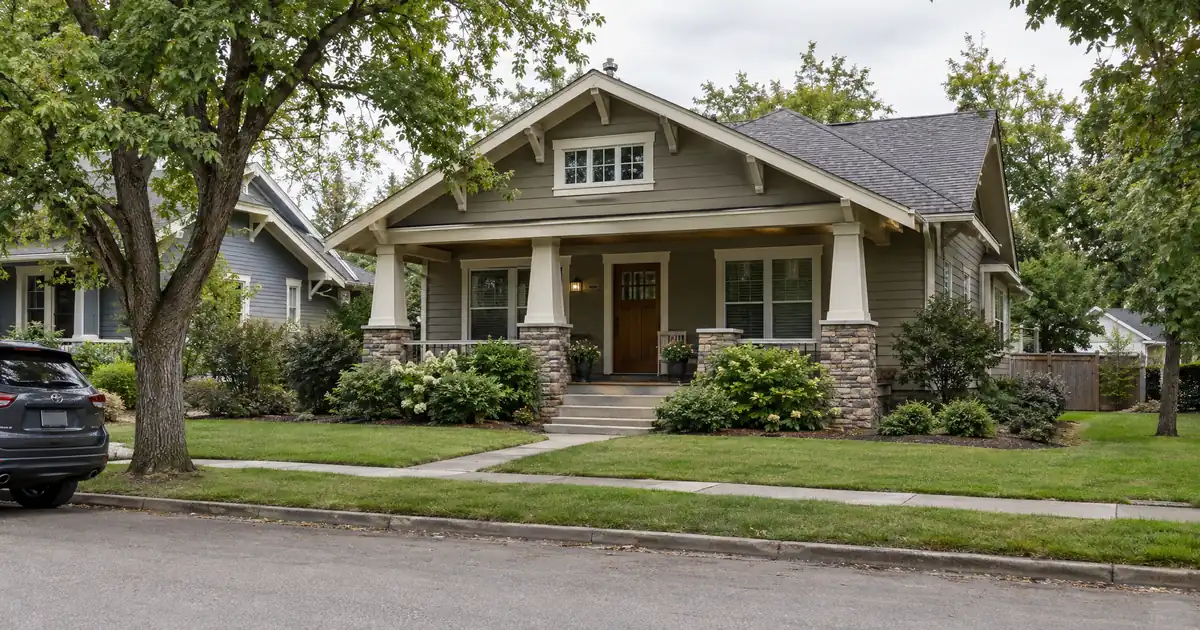
Can I Take A HELOC On A Rental Property — The Quick Read: Yes. Lenders do offer a HELOC on a rental property, but it’s a smaller, tighter version of the primary-residence product. Expect a higher credit-score floor, less available equity relative to the home’s value, and title rules that shut out LLCs. Fewer lenders play in this space at all, so shopping around matters more here than almost anywhere else in mortgage lending.
That’s the short version. The longer version — how the math works, why it’s harder, and where a DSCR loan quietly becomes the better tool — is worth walking through before you call a bank.
How large a line the equity supports in your market.
An equity line is sized by combined loan-to-value, occupancy, and credit — not by rental coverage. Switch the occupancy or the credit band and the ceiling moves with it.
Investment-property lines require a 700 minimum credit score. Second-home tiers reach 640; primary-residence tiers reach 600.
A debt-to-income ratio above 45% requires 680+ credit. Profiles under 640 are limited to single-family homes. At least 75% of the approved line is drawn at closing. Ceilings, floors, and caps update from Lendmire’s centralized guideline source.
Line estimate
Illustrative estimate only — not a quote, Loan Estimate, approval, or commitment to lend. The rate is an editable assumption; equity-line pricing is variable through both the draw and repayment periods and never converts to fixed. Occupancy and credit drive the ceiling together: investment property runs to 70% combined LTV with a 700 credit floor and a $500,000 cap; a second home runs to 90% at a 640 floor with a $500,000 cap; a primary residence reaches up to 90% at a 600 floor, and its $750,000 maximum line applies only at 75% combined LTV or below with 720+ credit and a full appraisal. Lines above $500,000 require a full appraisal. Credit, debt-to-income, property type, and full underwriting review all affect the final line.
How a Rental Property HELOC Actually Works
A HELOC on a rental works the same way it does on a house you live in, just with tighter dials. It’s a revolving line of credit secured by the property, sitting behind the first mortgage in a second-lien position, with a draw period followed by a repayment period.
Across the wholesale programs used for investment properties, that structure runs a 5-year interest-only draw followed by a 25-year fully amortizing repayment period — one structure, no shorter option, unlike the 3-year/17-year track available on primary residences and second homes. At closing, most programs require that at least 75% of the approved line be drawn immediately, which is a detail a lot of first-time applicants miss.
The line itself is capped lower on a rental than on a primary home. Most files land at a maximum combined loan-to-value — first mortgage plus the new line, divided by the property’s value — of 70% on investment property, with a maximum line size of $500,000. Compare that to a primary residence, where the ceiling can reach 90% CLTV for the strongest credit profiles, and the gap becomes obvious fast.
Key Terms Defined
HELOC (home equity line of credit): a revolving credit line secured by a property, letting you draw funds as needed instead of receiving one lump sum.
CLTV (combined loan-to-value): the first mortgage balance plus any new line, divided by the property’s appraised value — the core math a HELOC lender uses to size your available line.
Draw period: the phase where you can pull money from the line and typically pay interest-only on what you’ve drawn.
Repayment period: the phase after the draw period ends, when the balance amortizes into a fixed schedule of principal-and-interest payments.
Business-purpose loan: a loan made to an investment property rather than a home you live in, reviewed under different rules than a personal mortgage.
DSCR (debt-service coverage ratio): a ratio comparing a property’s rent to its full monthly housing payment — the core coverage figure on the loan type most rental investors eventually pivot toward.
Two Paths: HELOC on the Rental vs. HELOC on Your Primary Residence
There’s a decision most competitors gloss over entirely: you don’t have to secure the line against the rental itself. You can take a HELOC against your primary residence and deploy the funds into the rental instead — and for a lot of investors, that’s the easier path.
A primary-residence HELOC in this network can reach up to 90% CLTV for a 720-plus credit profile, against a rental ceiling of 70% CLTV. That’s a meaningful gap in available equity for the same dollar of home value. The tradeoff: you’re putting your own house behind the line, not the rental, so the risk sits in a different place. Lendmire’s guide on using a HELOC to buy a rental property walks through that route in more depth — how the draw gets structured, how it typically gets paired with a purchase, and where it fits into a broader acquisition strategy.
The rental-secured path makes more sense when your primary residence doesn’t have much equity to spare, or when you’d rather not touch the house you live in. Either way, the property doing the securing determines the leverage ceiling, the credit floor, and — as covered below — how the interest gets treated at tax time.
Why Qualifying Is Harder — And What Lenders Actually Check
A rental HELOC is harder to get than a primary-residence HELOC because the lender is taking on occupancy risk on top of ordinary credit risk. Owners are statistically more likely to walk away from a rental in financial distress than from the house they live in, so underwriting tightens across nearly every dial.
The investment-property tier in this network floors at a 700 credit score, with no tier below it — compare that to a 600 floor on primary residences and 640 on second homes. Credit above 700 buys eligibility, not more leverage; both the 700 and 720 tiers land at the same 70% CLTV ceiling. Final terms depend on lender guidelines, property type, leverage, and the borrower’s complete credit picture.
Debt-to-income matters too, and unlike a DSCR loan, a HELOC is personal consumer credit, so your income and other obligations are part of the file. Programs generally cap DTI at 50%, tightening to 45% for credit profiles between 600 and 679; anything above 45% needs a credit score of 680 or better. Qualification runs on the interest-only payment calculated at the maximum draw amount — not the amount you actually plan to use.
Title matters as much as credit. These lines want the property held by an individual borrower or a revocable living trust. An LLC, corporation, partnership, or irrevocable trust can’t hold title and still get one of these lines — a structural wall that surprises a lot of investors used to more flexible ownership rules.
Property type narrows the field too. Single-family homes, 2-4 units, PUDs, townhomes, and condos — including non-warrantable condos — are generally eligible. Manufactured homes, co-ops, condotels, log homes, commercial, mixed-use, and agriculturally zoned parcels are not offered on either investment-property program.
A Worked Example: Equity, CLTV, and the Draw
Picture a rental valued at $350,000 with a first mortgage balance of $200,000. That’s a current CLTV near 57%. With the network’s investment-property ceiling sitting at 70% CLTV, there’s a real equity gap available to draw against — though the exact amount depends on the lender’s valuation method, the credit tier, and how the required 75%-drawn-at-closing rule applies.
Lines at or below $500,000 — which covers every investment-property line in this network, since that’s the hard cap — typically run on an automated valuation with no traditional appraisal, unless a higher CLTV pushes the file into a secondary valuation. That’s a real time-and-cost advantage worth knowing about before assuming an appraisal is coming.
Step-by-Step: Preparing and Applying
1. Pull your own credit first. You need a single-bureau score of 700 or better for the investment-property tier; know where you stand before a lender does.
2. Check your CLTV math. Get a realistic current value estimate and subtract your existing first-mortgage balance — that gap, capped at 70%, is your leverage ceiling.
3. Confirm how title is held. If the property sits in an LLC, this product is off the table until title changes hands — a decision with real tax and liability tradeoffs worth thinking through before making it.
4. Gather income and debt documentation. Because personal DTI drives qualification, expect to document income the same way you would for any consumer loan.
5. Check derogatory history. Bankruptcy generally needs four years of seasoning from discharge or dismissal; foreclosure needs seven years, and short sales, deeds-in-lieu, or pre-foreclosure activity need four.
6. Shop more than one lender. Not every bank or credit union offers this product on non-owner-occupied property, and the ones that do price and structure it differently. Real investor threads on BiggerPockets consistently describe calling several lenders before finding one that would even consider a rental-secured line.
7. Compare it against the alternative before signing anything. That’s the next section.
HELOC vs. Cash-Out Refinance vs. DSCR Loan
| Factor | Rental HELOC | DSCR Cash-Out Refi |
|---|---|---|
| Reviewed on | Personal credit + DTI | Property rent vs. payment |
| Title allowed | Individual / rev. Trust only | LLC eligible, subject to program eligibility |
| Typical ceiling | 70% CLTV, $500K cap | Up to 70% LTV standard rentals, ~65% on short-term rentals |
| Structure | Revolving, variable-rate | Fixed loan amount, term loan |
| Portfolio limit | 3 lines / borrower | No hard property-count cap |
The HELOC’s real advantage is flexibility — draw what you need, when you need it, without disturbing your existing first mortgage. A DSCR cash-out refinance replaces the whole first lien and pulls equity based on what the property rents for, not what you personally earn. Lendmire’s comparison of a HELOC against a cash-out refinance on a rental property breaks down that tradeoff in more detail, and the DSCR cash-out refinance program page covers how that structure works on its own.
Pros and Cons of a Rental Property HELOC
| Pros | Cons |
|---|---|
| Leaves your first mortgage untouched | Second-lien position — first mortgage gets paid first in foreclosure |
| Draw only what you need, when you need it | Investment-property ceiling caps at $500,000 total |
| No appraisal on most files at or under $500K | Variable pricing floats through both draw and repayment |
| Useful bridge for a BRRRR-style purchase | Title must be individual/trust — LLCs excluded |
The lien-position risk is the one investors underweight most. If payments stop, the HELOC lender’s claim sits behind the first mortgage — meaning a foreclosure can wipe out the equity backing the line before the second-lien holder sees a dollar. Losing a rental isn’t the same emotional hit as losing your home, but it still shows up on your credit and cuts into the portfolio you’ve built.
The Portfolio Ceiling — Why Scaling Investors Hit a Wall
A single borrower is limited to three of these lines, with combined exposure capping around $750,000 across the network’s investment-property structure. That ceiling arrives fast for anyone building past a handful of doors — often before the CLTV math even becomes the binding constraint.
This is the point where DSCR financing usually takes over. DSCR loans qualify primarily on the property’s own rental income covering its payment, subject to lender guidelines, and personal DTI isn’t part of the formula at all — so a borrower isn’t boxed in by a fixed line-count. Purchase leverage on most DSCR files runs 75%-80% LTV, with select high-leverage programs reaching 85% for stronger credit profiles. Cash-out refinances generally top out around 75% LTV on standard rentals and about 70% LTV on short-term-rental collateral, typically after roughly six months of seasoning on title.
Across the files this network places, the pattern shows up constantly: an investor draws a rental HELOC to fund a down payment on the next acquisition, then a DSCR cash-out refinance later replaces that short-term balance once the new property’s own rents can carry the qualification. The two tools aren’t competitors — they’re sequenced.
LLC-Owned Rentals: Where This Product Breaks Down
If your rental is already deeded to an LLC, a HELOC generally isn’t available against it — title has to sit with an individual or a revocable living trust. That’s the sharpest structural line between this product and a DSCR loan.
DSCR programs, by contrast, are built to support entity ownership, since most serious investors hold rentals in an LLC for liability protection. Coverage below a 1.00 ratio is available through select lenders in the network, with leverage and terms adjusted accordingly, and no-ratio qualification exists only through select lenders — generally for borrowers who already own a primary residence. Credit floors on DSCR files run as low as 620 in parts of the network, though most programs want closer to 660, and a 700-plus profile opens the strongest leverage tiers. Loan amounts on standard DSCR files generally run from around up to $3,000,000 on standard programs (smaller balances available through select lenders), with files above $2,500,000 typically structured as 30-year fixed loans only.
Lendmire’s complete DSCR loans guide is the fuller breakdown of how that qualification actually works property by property. For rentals booked as short-term rentals specifically, Lendmire’s guide to short-term rental HELOCs covers how hosting history and occupancy documentation factor into either product.
Tax treatment doesn’t follow which property secures the loan — it follows where the money actually goes, and the rules get specific fast. Keep clean records of how draw proceeds are used, and talk to a qualified tax professional before assuming any interest is deductible.
Lendmire’s HELOC placements run through select wholesale partners across its 16 full-service states; its DSCR investor programs reach a wider footprint of 39 states plus Washington, D.C. Investors weighing both tools can call Lendmire at 828-256-2183 or request a quote to see how the numbers compare based on the property’s rent, current equity, credit profile, and where title is actually held.
Frequently Asked Questions
Can I get a HELOC on a rental property held in an LLC?
Not through the standard HELOC programs in this network — title has to sit with an individual borrower or a revocable living trust. A property already deeded to an LLC generally needs a vesting change to pursue a HELOC, or a DSCR cash-out refinance, which is built to support entity ownership, subject to program eligibility.
Does the three-day right to cancel apply to a rental property HELOC?
Generally, no. The federal right of rescission built into home-equity lending under the CFPB’s HELOC disclosure requirements applies specifically when the property is the borrower’s principal dwelling. A non-owner-occupied rental doesn’t meet that definition, so this cooling-off period typically doesn’t attach the same way.
What credit score do I need for a rental property HELOC?
Most investment-property programs in this network floor at a 700 credit score, with no lower tier available. That’s notably higher than the 600 floor on primary residences and 640 on second homes — a direct reflection of the added occupancy risk lenders price into a non-owner-occupied line. These specifics are subject to lender guidelines and a full review of property, leverage, and credit.
Can I use a HELOC on my primary residence to buy a rental property instead?
Yes, and for many investors this is the easier route. A primary-residence line can reach up to 90% CLTV for the strongest credit profiles versus a 70% ceiling on a rental-secured line, giving access to more available equity for the same home value — though it puts your own residence behind the line rather than the rental.
How does rent factor into DSCR lender review if I skip the HELOC route entirely?
DSCR lenders document market rent the same way appraisers do for conventional loans, often referencing forms like Fannie Mae’s Single-Family Comparable Rent Schedule, then compare that rent to the property’s full monthly payment to arrive at the coverage ratio — qualification runs on the property’s income, subject to lender guidelines, not your personal pay stubs.
About Lendmire
A DSCR-focused mortgage broker, Lendmire (NMLS# 2371349) places investor financing across 40 markets — 39 states plus Washington, D.C. — with DSCR eligibility generally reviewed by the lender on property cash flow instead of tax returns, subject to lender guidelines. Scotsman Guide named Lendmire a Top Mortgage Workplace in 2025 and 2026.
Lendmire’s Top Mortgage Workplace recognition is documented by Scotsman Guide 2025 Top Mortgage Workplace and Scotsman Guide 2026 Top Mortgage Workplace.
Get Started
Ready to find the right loan for you?
In about 30 seconds you can review financing options available for your home or investment property. No commitment required.
Informational only. Not a Loan Estimate, approval, or commitment to lend. Program availability and eligibility are subject to lender guidelines, credit approval, property review, and underwriting.
References
1. BiggerPockets Forum — HELOC on Investment Property: Can It Be Done?
2. Consumer Financial Protection Bureau — HELOC Consumer Booklet
3. Fannie Mae Form 1007 — Single-Family Comparable Rent Schedule
Brandon Miller
Founder & CEO, Mortgage Loan Originator, Lendmire LLC
- Mortgage Loan Originator · NMLS# 1129696 · Verify on NMLS Consumer Access
- North Carolina Real Estate Broker · License# 343312 · Verify on NCREC
- North Carolina Insurance Producer · License# 19053198 · Property, Casualty, Life, Health · Verify on NAIC SBS
- Lendmire LLC · Firm NMLS# 2371349 · Verify firm licensure
Disclosures. The information presented in this article is general market commentary, not financial, legal, or tax advice. Lendmire is a mortgage brokerage (NMLS# 2371349) — not a direct lender or depository institution — and loan placement is subject to lender underwriting. Nothing in this content represents a commitment to lend. Loan terms, pricing, and program availability vary based on borrower qualifications, property characteristics, and state of subject property, and are subject to change at any time. Lendmire complies with Equal Housing Opportunity requirements. Consumer access: nmlsconsumeraccess.org.


