
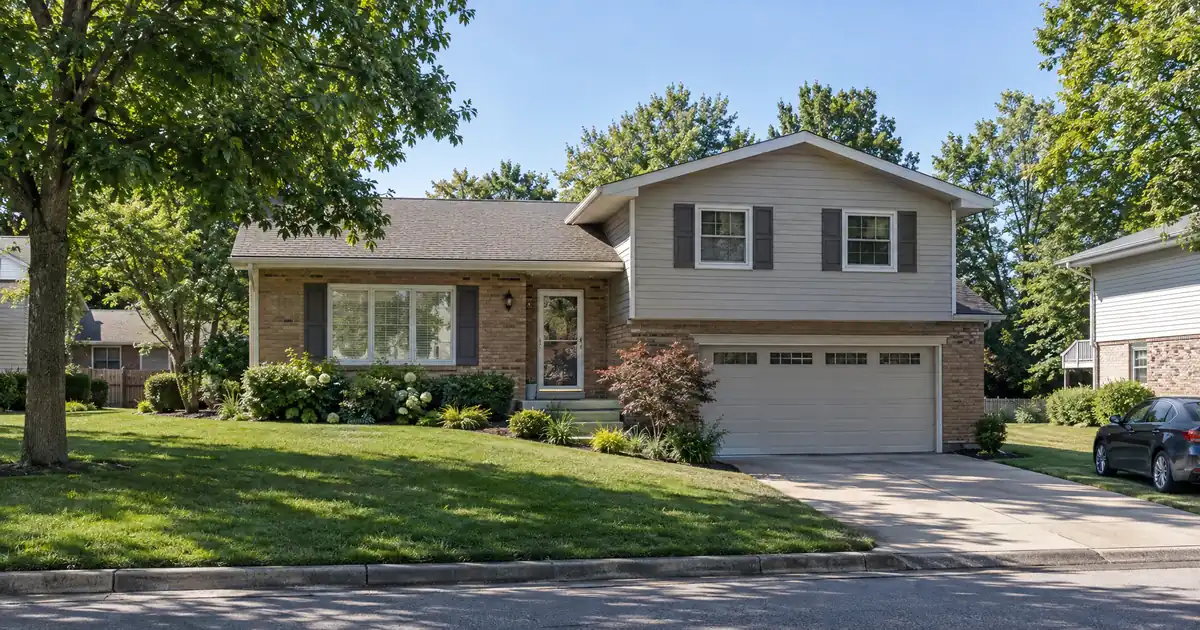
Using Home Equity To Buy Rental Property — The Quick Read: Homeowners tap equity three main ways — a HELOC, a closed-end home equity loan, or a cash-out refinance — then use that cash as the down payment or purchase capital for a separate rental loan. The equity loan and the rental’s acquisition loan are two different files, underwritten on two different bases: one against the home you already own, one against the rent the new property will bring in. For investors financing the rental itself with a DSCR loan, that second file typically is reviewed on the property’s own rental income rather than traditional personal-income documentation, subject to lender guidelines. It works, but it stacks two obligations against two collateral pools, and the mechanics shift sharply depending on which property the equity comes from.
Key Takeaways
- Home equity funds the down payment. It does not finance the rental itself — the rental gets its own loan, usually secured only by that property.
- A HELOC pulled from a primary residence can reach meaningfully higher leverage than a HELOC pulled from a rental you already own. The ceiling depends on occupancy, not just credit.
- Home equity loans and HELOCs must be titled to an individual borrower or a revocable living trust — never an LLC — which is the sharpest structural break from a DSCR loan.
- DSCR loans on the new rental typically run 75%-80% LTV on a purchase, occasionally to 85% for stronger credit profiles, and are reviewed on the property’s rent rather than the borrower’s income documentation.
- Cross-collateralizing a primary home to buy a rental adds real risk. A struggling rental doesn’t just cost the deal — it can put the source property on the line.
Key Terms Defined
- Home equity — the difference between what a home is worth and what’s still owed on it.
- HELOC (home equity line of credit) — a revolving second-lien credit line secured by a home, drawn as needed rather than disbursed all at once.
- Home equity loan — a closed-end second-lien loan secured by a home, paid out as a single lump sum at closing.
- Cash-out refinance — a new first-lien loan that replaces the existing mortgage and hands the borrower the difference between the new loan amount and what was owed.
- DSCR (debt-service coverage ratio) — a ratio comparing a property’s rent to its monthly payment obligation, used to qualify the rental’s own loan rather than the borrower’s personal income.
- CLTV (combined loan-to-value) — every lien against a property added together, divided by the property’s value; it’s the number a HELOC lender caps.
- Business-purpose loan — a loan made to finance an investment property rather than a home the borrower lives in, reviewed under different standards than an owner-occupied mortgage.
Two Separate Loans, Not One: How the Money Actually Moves
Buying a rental with home equity is really two transactions stitched together — an equity-extraction loan against the property already owned, and a separate acquisition loan against the rental being purchased. The first depends on the current home’s value and the borrower’s credit. The second depends almost entirely on the new property’s rent.
How large a line the equity supports in your market.
An equity line is sized by combined loan-to-value, occupancy, and credit — not by rental coverage. Switch the occupancy or the credit band and the ceiling moves with it.
Investment-property lines require a 700 minimum credit score. Second-home tiers reach 640; primary-residence tiers reach 600.
A debt-to-income ratio above 45% requires 680+ credit. Profiles under 640 are limited to single-family homes. At least 75% of the approved line is drawn at closing. Ceilings, floors, and caps update from Lendmire’s centralized guideline source.
Line estimate
Illustrative estimate only — not a quote, Loan Estimate, approval, or commitment to lend. The rate is an editable assumption; equity-line pricing is variable through both the draw and repayment periods and never converts to fixed. Occupancy and credit drive the ceiling together: investment property runs to 70% combined LTV with a 700 credit floor and a $500,000 cap; a second home runs to 90% at a 640 floor with a $500,000 cap; a primary residence reaches up to 90% at a 600 floor, and its $750,000 maximum line applies only at 75% combined LTV or below with 720+ credit and a full appraisal. Lines above $500,000 require a full appraisal. Credit, debt-to-income, property type, and full underwriting review all affect the final line.
The sequence runs like this: a lender values the source property and sets a borrowing limit based on CLTV. Funds are drawn (HELOC) or disbursed as a lump sum (home equity loan) into the borrower’s account. That cash never wires directly into the new deal’s escrow — a home equity loan or HELOC is structurally a refinance-style tool against an owned property, not a purchase-money loan, so the cash always moves as a separate deposit first. It then becomes the down payment, or part of it, on the rental.
That rental typically gets financed separately with a DSCR loan, reviewed on the property’s own income rather than the borrower’s traditional personal-income documentation. Across the wholesale network Lendmire places files through, most purchase files land at 75%-80% LTV, and select high-leverage programs reach 85% at roughly a 700+ credit profile. Coverage on many of those programs starts around a 1.00 ratio — a floor for specific programs, not a universal standard — and stronger ratios tend to open better leverage and pricing. Reserve requirements vary by lender, leverage, and loan size, but commonly run near six months of the monthly obligation, sometimes waived on conservative, modestly leveraged rate-term files and stepped up on larger loan amounts.
DSCR loans are built for non-owner-occupied investment properties. Because they’re business-purpose investor loans, they’re reviewed differently from a standard owner-occupied mortgage — worth understanding before assuming the same rules apply. Lendmire’s complete DSCR loans guide walks through that qualification process in full, and arranges these loans through select lenders spanning 40 markets, including Washington, D.C.
HELOC, Home Equity Loan, Cash-Out Refi, or DSCR — Side by Side
Four structures show up in this conversation, and only one of them actually finances the rental itself. The other three just generate the cash an investor brings to that purchase.
| Structure | Lien Position | How Funds Arrive | Typical Ceiling | Best Fit |
|---|---|---|---|---|
| HELOC | 2nd, revolving | Drawn as needed | Up to 90% CLTV on a primary home at 720+ credit; 70% CLTV on an investment line, capped near $500,000 | Repeat draws across multiple deals |
| Home equity loan | 2nd, closed-end | Lump sum at closing | Similar CLTV bands, program-dependent | One-time lump-sum need |
| Cash-out refinance | 1st, replaces old loan | Lump sum at closing | Standard rental collateral tops out near 75% LTV; short-term-rental collateral tops out lower, around 70% | Consolidating into a single note |
| DSCR loan (on the rental) | 1st, new property | Purchase financing | 75%-80% LTV standard; up to 85% on select high-leverage programs | Financing the target property on its own rent |
Investors comparing DSCR structures against a plain cash-out refinance can walk through the mechanics on Lendmire’s DSCR cash-out refinance page.
Pulling Equity From Your Primary Home vs. From a Rental You Already Own
Occupancy — not just credit score — sets the ceiling here. Pull equity from the home you live in, and 90% CLTV is available at a 720-or-better credit profile. Pull equity from a rental already owned, and the ceiling drops to 70% CLTV with a $500,000 line cap, regardless of score.
That last part surprises a lot of investors. On an investment-property line, 720 credit and 700 credit both land at the same 70% CLTV ceiling — credit above 700 buys eligibility, not extra leverage. There’s no tier beneath 700 on the investment side; it’s a hard floor. And because investment lines cap at $500,000 while full appraisals only kick in above that number, an investment HELOC is structurally always in the automated-valuation lane — it commonly closes with no traditional appraisal at all.
Draw structure differs by occupancy, too. Primary and second-home lines offer two options: a 3-year interest-only draw with 17-year repayment, or a 5-year interest-only draw with 25-year repayment (Tennessee runs shorter versions of both). Investment lines run only the 5-year draw, 25-year repayment structure. Both programs require at least 75% of the line drawn at closing — this isn’t a small revolving cushion, it’s most of the money moving on day one.
Whether the primary-home line or the investment-property line is the better source of capital is a genuine judgment call. The primary line offers more leverage at a strong credit profile, but it puts the home the investor actually lives in on the hook. The investment line offers less room, but keeps the personal residence out of the collateral pool entirely. Investors weighing this exact tradeoff can see how it plays out in practice on Lendmire’s page on using equity in your home to buy investment property.
One more scaling limit worth flagging: a borrower is generally capped at three lines total, with combined exposure topping out near $2,000,000 on the higher-leverage program or $750,000 on the longer-runway program. Owning more than 15 financed properties typically takes a borrower out of eligibility for a new line altogether — a real ceiling for investors trying to chain equity from one deal into the next.
When This Strategy Actually Makes Sense
A few situations come up again and again in files that use this approach:
- Preserving cash reserves ahead of a purchase, instead of draining a bank account to the last dollar.
- Reaching a bigger down payment to land in a stronger leverage tier or push the new rental’s coverage ratio comfortably above 1.00.
- Buying before selling — tapping equity in a current home to move on a rental without waiting on a sale to close first.
- Building a repeatable capital source across several deals, which a revolving HELOC handles in a way a one-time cash-out refinance simply can’t.
- Moving on a time-sensitive deal where waiting for a traditional sale-then-buy sequence would mean losing the property.
Where the Risk Really Lives
Cross-collateralization is the risk nobody frames strongly enough. A HELOC or home equity loan is a lien against the borrower’s existing property — if the new rental underperforms and that equity-loan payment still comes due, the exposure sits on the source home, not the rental. For many investors, that source home is the primary residence.
There’s also a math trap worth naming plainly: clearing a 1.00 coverage ratio on the new rental is not the same thing as positive cash flow. DSCR compares rent against the payment only — principal, interest, taxes, insurance, and HOA dues where applicable. Repairs, vacancy, management fees, utilities, and capital expenses all sit outside that number. A file that clears the ratio can still lose money in a slow month (which is exactly when a stacked equity-loan payment hurts most).
And markets move. A downturn that erodes equity in the source property doesn’t retroactively change the balance owed on the HELOC or home equity loan — it just tightens the borrower’s margin for error if a refinance or sale is ever needed on that property.
Where the Rule Breaks: Edge Cases Worth Knowing
Title has to stay personal. HELOCs and home equity loans require title in the borrower’s individual name or a revocable living trust — never an LLC, corporation, partnership, or irrevocable trust. If the rental purchase itself is closing in an LLC, which is common with DSCR-financed rentals subject to lender program eligibility, the home-equity side of the deal still has to sit in the borrower’s personal name. Two loans, two very different vesting rules.
Derogatory history splits by program. A bankruptcy generally needs about four years of seasoning from discharge or dismissal. Foreclosure-family history is where programs diverge sharply — one path seasons a foreclosure in about seven years and a deed-in-lieu, pre-foreclosure, or short sale in about four; another program declines that history outright, regardless of age. Investment-property lines generally follow the seven-and-four-year path.
State overlays bite in specific spots. In Texas, a 12-day waiting period, a one-lien-at-a-time rule, and 12-month seasoning apply to a primary residence — a rental or second home in Texas is treated as a non-homestead transaction and isn’t bound by those same rules, though Texas properties are capped at 10 acres regardless of occupancy. New Mexico and Ohio scale the CLTV ceiling to the borrower’s credit profile rather than posting a single flat number.
You can’t fund a purchase with the target property’s own future equity. A home equity loan or HELOC only works against a property already owned, with enough equity to qualify — it’s a refinance-style tool, not a purchase-money loan. That rules this strategy out for a first rental purchase with no other owned real estate behind it.
Some property types are off the table on both sides. Manufactured homes, co-ops, condotels, log homes, and commercial or mixed-use property fall outside eligibility for the equity-loan side entirely. On the DSCR side financing the actual rental, manufactured homes (single- and double-wide), log homes, and barndominiums fall outside these programs as well — not a “harder to finance” situation, just not offered.
Tax treatment isn’t automatic. Whether interest on a HELOC or home equity loan deployed into a rental is deductible depends on how the funds were actually used and how the property is held, and generally runs through IRS tracing rules distinguishing acquisition debt from home-equity debt, laid out in IRS Publication 936. Investors should keep clear records of exactly what the draw funded and talk to a qualified tax professional before assuming any deduction.
HELOCs are also structured as open-end credit under the Truth in Lending Act, which the Consumer Financial Protection Bureau’s Regulation Z treats differently from the closed-end disclosures used on the rental’s own purchase loan — a small but real reason the two files feel procedurally different at closing.
Paying Off the Equity Debt Once the Rental Stabilizes
Most investors retire the equity debt one of three ways: paying it down from the rental’s cash flow, refinancing the new rental itself once it has enough seasoning to support a cash-out that repays the HELOC, or selling. About six months of seasoning is the common expectation before a cash-out refinance on the new rental gets serious lender consideration, and leverage on that refinance generally tops out around 75% LTV for standard rental collateral.
Lendmire’s page on pulling equity from a rental with a DSCR loan walks through that exact exit path — using the new property’s own performance, once it has a lease history behind it, to unwind the debt that helped buy it in the first place. For investors weighing whether this whole approach fits their next purchase, a call to Lendmire at 828-256-2183 or a pricing quote request is a reasonable next step to compare structures side by side.
Frequently Asked Questions
Can a HELOC buy a rental property outright, with no other loan involved?
Only if the draw covers the full purchase price and closing costs, since a HELOC or home equity loan is a lien against a property already owned — not a purchase-money loan for the new one. Most investors draw a portion of the equity as a down payment and finance the rest of the rental separately, commonly through a DSCR loan reviewed on the property’s own rental income, subject to lender guidelines.
Does pulling equity out of a primary home hurt DSCR lender review on the new rental?
Not directly, since DSCR loans typically qualify on rent covering the payment rather than the borrower’s overall debt-to-income. That said, the file still reviews credit and reserves, so a new HELOC payment layered on top of the existing mortgage is something a lender may weigh as part of overall borrower risk, even on a business-purpose loan.
What credit score is needed to pull equity from an investment property already owned?
A 700 credit profile is generally the floor for an investment-property HELOC across the wholesale network, with no lower tier available. A 720 doesn’t buy extra leverage on that line — the ceiling still sits around 70% CLTV, since credit above 700 mainly buys eligibility rather than headroom on this two-tier table.
Can the new rental be titled in an LLC if home equity funded the down payment?
The rental itself can often be titled in an LLC on the DSCR side, subject to lender program eligibility, but the home equity loan or HELOC cannot — that loan requires title in the borrower’s individual name or a revocable living trust, never an LLC, corporation, or irrevocable trust. They’re two separate title questions on two separate loans.
Is interest on a HELOC used to buy a rental tax-deductible?
It depends on how the funds were used and how the property is held, and generally runs through IRS tracing rules distinguishing acquisition debt from home-equity debt under Publication 936. Investors should keep clear records of what the draw funded and speak with a qualified tax professional before relying on any deduction.
About Lendmire
Lendmire (NMLS# 2371349) is a mortgage brokerage built around DSCR investor lending, with programs available in 40 markets, including Washington, D.C. DSCR lenders commonly evaluate rental-income coverage instead of personal income paperwork — a practical fit for LLC-owned and multi-property investors. Terms vary by lender, property, leverage, and program. Scotsman Guide named Lendmire a Top Mortgage Workplace in both 2025 and 2026.
Get Started
Ready to find the right loan for you?
In about 30 seconds you can review financing options available for your home or investment property. No commitment required.
Informational only. Not a Loan Estimate, approval, or commitment to lend. Program availability and eligibility are subject to lender guidelines, credit approval, property review, and underwriting.
References
1. Internal Revenue Service — Publication 936, Home Mortgage Interest Deduction
2. Consumer Financial Protection Bureau — Regulation Z, Open-End Credit Disclosures (12 CFR 1026.19)
Brandon Miller
Founder & CEO, Mortgage Loan Originator, Lendmire LLC
- Mortgage Loan Originator · NMLS# 1129696 · Verify on NMLS Consumer Access
- North Carolina Real Estate Broker · License# 343312 · Verify on NCREC
- North Carolina Insurance Producer · License# 19053198 · Property, Casualty, Life, Health · Verify on NAIC SBS
- Lendmire LLC · Firm NMLS# 2371349 · Verify firm licensure
Compliance and disclosures. Lendmire (NMLS# 2371349) is a licensed mortgage broker and is not a direct lender, depository institution, financial advisor, or tax professional. Content in this article is general market analysis and educational information — not financial, legal, or tax advice for any specific situation. Lendmire does not guarantee loan approval; every transaction is subject to underwriting by the funding lender. Mortgage pricing and loan program guidelines are subject to change at any time without notice and vary by borrower characteristics, property type, and state regulations. Lendmire complies with Equal Housing Opportunity. Licensure verification: NMLS Consumer Access.


