
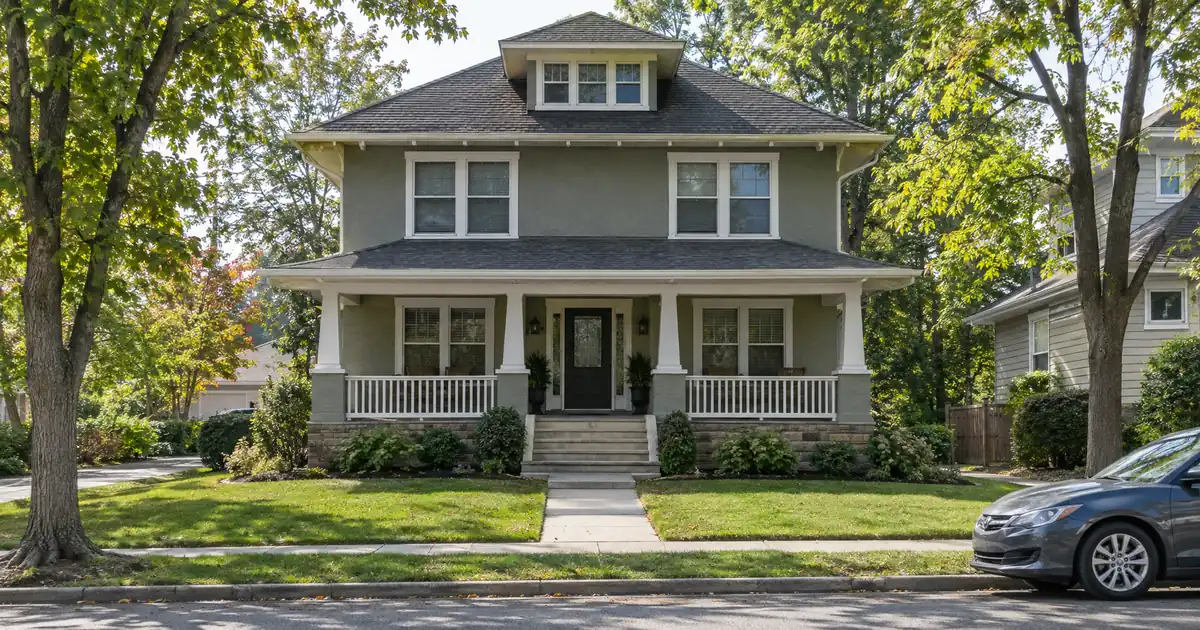
Can You Get A Home Equity Line Of Credit On Rental Property — The Quick Read: Yes. Investment property owners can get a HELOC. But it works nothing like the HELOC on a primary home. Combined leverage tops out lower. The credit bar sits higher. And the line has to sit in your own name, not an LLC. For many rental-only purchases, a DSCR cash-out refinance ends up being the more flexible route. Compare the two side by side and you’ll see why.
Key Terms Defined
- HELOC (home equity line of credit): a revolving credit line backed by the equity in a property. You draw funds and repay them, much like a credit card.
- CLTV (combined loan-to-value): the total of every lien against a property. That means the first mortgage plus a new home equity line, measured against the property’s value.
- DSCR (debt-service coverage ratio): a ratio lenders use to compare a property’s monthly rent to its full monthly housing payment.
- Business-purpose loan: a loan made for an investment or commercial reason. It’s not for personal, family, or household use.
- Draw period / repayment period: the draw period is the window when you can pull cash from a line. The repayment period is when you pay it back on a fixed schedule.
- Second lien: a loan positioned behind the first mortgage. If a property sells in foreclosure, the second lien gets paid only after the first is satisfied.
- Seasoning: the length of time you must own a property — or the time that must pass since a credit event like bankruptcy — before certain financing becomes available again.
Yes, But the Program Runs on Different Rails
An investment-property HELOC is real. It exists inside the wholesale programs Lendmire, a mortgage broker specializing in DSCR loans, arranges files through. But the ceiling sits well below what a primary-residence HELOC offers. Across these programs, an investment-property line caps at 70% combined loan-to-value. That ceiling holds whether your credit profile sits at 700 or 750. On this program, 700 is the floor you clear to get in the door. It is not a stepping stone to more room. Credit above 700 doesn’t buy extra leverage here. It’s simply the minimum most lenders in the network want to see on a rental.
How large a line the equity supports in your market.
An equity line is sized by combined loan-to-value, occupancy, and credit — not by rental coverage. Switch the occupancy or the credit band and the ceiling moves with it.
Investment-property lines require a 700 minimum credit score. Second-home tiers reach 640; primary-residence tiers reach 600.
A debt-to-income ratio above 45% requires 680+ credit. Profiles under 640 are limited to single-family homes. At least 75% of the approved line is drawn at closing. Ceilings, floors, and caps update from Lendmire’s centralized guideline source.
Line estimate
Illustrative estimate only — not a quote, Loan Estimate, approval, or commitment to lend. The rate is an editable assumption; equity-line pricing is variable through both the draw and repayment periods and never converts to fixed. Occupancy and credit drive the ceiling together: investment property runs to 70% combined LTV with a 700 credit floor and a $500,000 cap; a second home runs to 90% at a 640 floor with a $500,000 cap; a primary residence reaches up to 90% at a 600 floor, and its $750,000 maximum line applies only at 75% combined LTV or below with 720+ credit and a full appraisal. Lines above $500,000 require a full appraisal. Credit, debt-to-income, property type, and full underwriting review all affect the final line.
This matters when you model a deal. On a primary residence, a stronger credit profile often means more available equity. On a rental, extra credit strength mostly buys you certainty of approval, not a bigger line. Some investors assume the two products scale the same way. They tend to over-budget the cash they can pull out of a property. Then they discover the gap late in the process.
The line itself tops out at $500,000 total. That ceiling sits right where full appraisals typically kick in. Because of that, an investment-property HELOC almost always closes on an automated valuation model instead of a traditional appraisal. No appraiser walks the unit. No one waits on a report. The value comes from data, unless a higher CLTV request triggers a secondary check. For a tenant-occupied rental, that’s a real advantage. There’s no interior access to coordinate and no reason to disturb a lease in place.
Every investment-property line in the network runs the same shape: a five-year draw period followed by a 25-year repayment period. These lines carry variable pricing through both phases. They never convert to a fixed structure, so the payment profile isn’t static over the life of the line. HELOCs usually have a reputation for flexibility — draw what you need, when you need it. This one doesn’t work that way. At least 75% of the line has to be drawn the day it closes. Front-loaded, not flexible. If your plan was to open a standby line and sit on it untouched until the right deal surfaced, this product won’t let you.
Debt-to-income is capped around 50% on most files. That matters, because this is not an income-agnostic product. Your personal income documentation still drives qualification — the opposite of how a DSCR loan works. Past credit trouble matters too. A prior bankruptcy needs four years of seasoning from discharge or dismissal. A foreclosure on an investment line follows a seven-year path. Deed-in-lieu, pre-foreclosure, and short-sale history follow a four-year path. All of these are guideline points. They vary by lender and are subject to change.
One rule trips up more investors than any leverage number. Title has to sit in your personal name or in an inter vivos revocable living trust. LLCs, corporations, partnerships, and irrevocable or land trusts cannot hold title on this product. Many investors deed their rental to an LLC for liability reasons. If yours is already there, this loan won’t work until you unwind that vesting. That unwinding isn’t just paperwork. It can touch your operating agreement, your insurance, and how your accountant treats the property. It’s worth a conversation before an application goes anywhere.
Eligible collateral includes single-family homes, 2-4 unit properties, PUDs, townhomes, and condos — including non-warrantable condos. Manufactured homes, co-ops, condotels, log homes, commercial buildings, mixed-use property, and agriculturally zoned land are not eligible. The network also caps how many of these lines an investor can stack. Borrowers are generally limited to three. Anyone already holding more than 15 financed properties falls outside program guidelines entirely. For a portfolio investor, that second cap arrives faster than expected. Financed properties are counted across the whole portfolio, not just the ones with equity lines attached.
A few states carry their own overlays. New Mexico and Ohio apply a CLTV cap that shifts with the credit profile. Indiana, North Carolina, Pennsylvania, Tennessee, Texas, and Washington won’t approve a line on a property that’s listed for sale, or was listed within the past 60 days. That rule catches investors who tested the market, pulled the listing, and pivoted to pulling equity instead. The clock still has to run. In Texas, the state’s homestead protections apply only to primary residences — the 12-day waiting period, the one-lien-at-a-time rule, and 12-month seasoning. A Texas rental qualifies as a non-homestead transaction, though the property itself is capped at 10 acres.
Geography sets the outer boundary too. Lendmire currently arranges these home-equity lines across 16 full-service states — Alabama, California, Colorado, Florida, Georgia, Indiana, Michigan, Montana, New Mexico, North Carolina, Ohio, Pennsylvania, Tennessee, Texas, Virginia, and Washington. If a rental sits outside that 16-state list, a DSCR loan is usually the workable path, regardless of any other factor. For the full underwriting checklist on credit, reserves, and documentation for this product, Lendmire’s guide to getting a home equity line of credit for a rental property walks through it in more depth.
The House-Hack Exception
There’s one real workaround. It depends on where you sleep at night, not what you plan to do with the property long-term. If you occupy one unit of a two-, three-, or four-unit property as your primary residence, the primary-residence HELOC tier applies to that property instead of the investment tier. Combined leverage on that tier can run meaningfully higher than the investment-property ceiling allows. But that’s only for borrowers with a credit profile of 720 or better, and it’s not a ceiling every file hits.
Primary and second-home lines also get a choice of structure that investment lines don’t. Borrowers can pick a three-year draw with a 17-year repayment, or a five-year draw with a 25-year repayment (Tennessee shortens both, to 12 years and 10 years respectively). Investment lines only get the second option, full stop. For an owner-occupant with a shorter horizon — say, someone planning to refinance the whole structure in a few years — the shorter draw and repayment pairing can be the cleaner fit.
What Happens Once You Move Out?
Occupancy is tested at the time you apply, not forever. Once a property fully converts to a rental, any new line or fresh draw on that property gets underwritten on the investment tier from that point forward — not the more generous owner-occupied one. Picture an investor who house-hacked into a duplex, built equity while living there, then moved out and rented the second unit. The next application on that property is capped at 70% CLTV and priced against the 700-credit floor. It doesn’t matter what higher leverage they may have qualified for while they lived on-site.
The practical takeaway is sequencing. If an owner-occupant knows a move is coming, and also knows they’ll want equity access, the order those two things happen in changes the terms available. This isn’t a loophole to exploit — occupancy has to be genuine at application. But it is a timing reality worth understanding, rather than discovering after the fact.
A full comparison of how equity access changes once a property crosses from owner-occupied to investment is worth reading before you assume last year’s terms still apply. How a home equity line of credit works on a rental property covers that shift in detail.
Why a Straight Rental Purchase Usually Ends Up in DSCR
Home-equity lines make sense on a property already owned free of an LLC, sitting inside the 16-state list, comfortably under $500,000 in combined leverage. Once a deal falls outside any of those boxes, DSCR financing tends to be the better fit. And for pure rental purchases, deals often land there anyway.
DSCR loans are designed for non-owner-occupied investment properties. Because they are business-purpose investor loans, lenders review them differently from a standard owner-occupied mortgage. The Consumer Financial Protection Bureau’s Regulation Z draws this distinction explicitly. It treats credit extended for a genuinely non-owner-occupied rental as business purpose, regardless of how many units the property has.
The practical differences show up fast once a file starts moving. DSCR loans qualify primarily on property-level rental income covering the payment, subject to lender guidelines. They don’t rely on W-2s, traditional personal-income documentation, or personal debt-to-income math. That single difference is why entity vesting, self-employment, and a growing portfolio tend to be non-events on a DSCR file — and hard stops on an equity line. Loan sizes across the network typically run up to $3,000,000 on standard programs, with smaller balances available through select lenders. Anything above $2,500,000 is generally structured as a 30-year fixed, rather than an adjustable product.
Purchase leverage on most DSCR files lands at 75-80% LTV, meaning 20-25% down. A handful of high-leverage programs reach the top of that range for borrowers with a credit profile around 700 or better. Cash-out refinances run lower. They typically reach up to 70% LTV on a standard long-term rental, and lower still on short-term-rental collateral, since STR income carries more seasonal risk in a lender’s eyes. For an owner comparing a cash-out refinance against a second-lien equity line, that 70% figure is the honest apples-to-apples benchmark. And the refinance route doesn’t carry the entity-vesting restriction or the mandatory initial draw.
Credit requirements flex by program. A 620 floor exists in parts of the network. Most lenders want something closer to 660. And 700-plus unlocks the strongest leverage tiers. Reserve requirements vary by lender, leverage, and loan size. They commonly land around six months of PITIA (principal, interest, taxes, insurance, and any HOA dues). Conservative rate-and-term refinances at modest leverage under $1,500,000 can see reserves waived. Loans above that size typically step up to roughly nine months. Taxes and insurance belong in that payment model even when they aren’t the headline number. In some markets, insurance in particular has become a meaningful part of the carrying cost, and it flows straight into coverage math.
Coverage itself is measured as the debt-service coverage ratio — modeled monthly rent divided by the full modeled monthly payment. A 1.00x reading is where select programs set their floor. That means the rent is projected to just cover the payment. It’s a program floor, not a universal rule. And it says nothing about the vacancy, repairs, management fees, or capital expenditures a real operator still has to fund out of pocket. Plenty of lenders in the network want coverage comfortably above that floor. Plenty of investors should want the same, for their own underwriting reasons, independent of what any guideline permits.
For the end-to-end picture of how these loans work — qualification, structures, and the full process — see Lendmire’s complete DSCR loans guide.
Frequently Asked Questions
How do you qualify for a HELOC on a rental property?
You clear four gates. First, credit: 700 is the entry floor on the investment tier, and stronger credit does not buy extra leverage. Second, leverage: all liens combined have to fit inside 70% CLTV, with the line itself capped at $500,000. Third, vesting: title must sit in your personal name or an inter vivos revocable living trust — not an LLC, corporation, partnership, irrevocable trust, or land trust. Fourth, personal income: debt-to-income is capped around 50%, so this is still a full-documentation product. Bankruptcy needs four years of seasoning from discharge or dismissal. Foreclosure follows a seven-year path on an investment line. All of this is subject to lender guidelines and program availability.
What are the requirements for a DSCR loan instead, and when does it make more sense?
A DSCR loan is reviewed primarily on property-level rental income covering the payment, rather than on W-2s, traditional personal-income documentation, or personal debt-to-income math. Credit floors range from 620 in parts of the network to 660 at most lenders, with 700-plus reaching the strongest leverage tiers. Purchase leverage generally lands at 75-80% LTV. Cash-out refinances typically reach up to 70% LTV on long-term rentals, and lower on short-term-rental collateral. Reserves commonly land around six months of PITIA and vary by lender, leverage, and loan size. A DSCR loan usually makes more sense when the property is held in an LLC, sits outside the 16-state home-equity footprint, needs more than $500,000, or when you’d rather not have personal income drive the file.
Can I open an investment-property HELOC and leave it undrawn until I find a deal?
Not on this program. At least 75% of the line has to be drawn at closing, so it works more like a front-loaded second lien than a standby facility. If your goal is dry powder waiting on the sidelines, that structure works against you. A cash-out refinance sized to the deal you actually intend to make is often the more honest fit.
My rental is titled in an LLC. What are my options?
You have two paths. You can unwind the vesting and hold title personally or in an inter vivos revocable living trust. That makes the equity line possible, but it touches your liability structure, insurance, and tax treatment — worth reviewing with your attorney and CPA first. Or you can leave the entity in place and pursue a DSCR cash-out refinance, a business-purpose loan commonly written to entities. Most investors who chose an LLC on purpose end up on the second path.
Does an appraisal get ordered on a rental-property equity line?
Usually not a traditional one. The line caps at $500,000, right where full appraisals typically begin. Because of that, these files most often close on an automated valuation model, unless a higher CLTV request triggers a secondary check. For a tenant-occupied unit, that means no interior access to schedule and no disruption to the lease in place.
About Lendmire
Lendmire is a non-QM DSCR mortgage broker, NMLS# 2371349, serving investors across 40 markets. Lendmire doesn’t lend its own money. It arranges financing through a wholesale network of non-QM and DSCR lenders. That’s why the guidelines described here vary by lender and are subject to change without notice. Home-equity lines are currently arranged in 16 full-service states, while DSCR financing reaches considerably further. Scotsman Guide named Lendmire a Top Mortgage Workplace in both 2025 and 2026.
All figures and guideline points here are program parameters, not offers. Nothing here is a commitment to lend or an approval. Every file is subject to lender guidelines, full underwriting, property eligibility, and applicable state law. A 1.00 DSCR is a select-program floor, not a universal standard. Qualifying depends on the specific property, the documentation provided, and the lender reviewing the file. Investors should consult their own attorney, tax advisor, and insurance agent on vesting, tax, and coverage questions.
For deeper background on the mechanics discussed here, see Consumerfinance.
Get Started
Ready to find the right loan for you?
In about 30 seconds you can review financing options available for your home or investment property. No commitment required.
Informational only. Not a Loan Estimate, approval, or commitment to lend. Program availability and eligibility are subject to lender guidelines, credit approval, property review, and underwriting.
References
1. Consumer Financial Protection Bureau’s Regulation Z
2. 2025
3. 2026
Brandon Miller
Founder & CEO, Mortgage Loan Originator, Lendmire LLC
- Mortgage Loan Originator · NMLS# 1129696 · Verify on NMLS Consumer Access
- North Carolina Real Estate Broker · License# 343312 · Verify on NCREC
- North Carolina Insurance Producer · License# 19053198 · Property, Casualty, Life, Health · Verify on NAIC SBS
- Lendmire LLC · Firm NMLS# 2371349 · Verify firm licensure
Compliance and disclosures. Lendmire (NMLS# 2371349) is a licensed mortgage broker and is not a direct lender, depository institution, financial advisor, or tax professional. Content in this article is general market analysis and educational information — not financial, legal, or tax advice for any specific situation. Lendmire does not guarantee loan approval; every transaction is subject to underwriting by the funding lender. Mortgage pricing and loan program guidelines are subject to change at any time without notice and vary by borrower characteristics, property type, and state regulations. Lendmire complies with Equal Housing Opportunity. Licensure verification: NMLS Consumer Access.


