
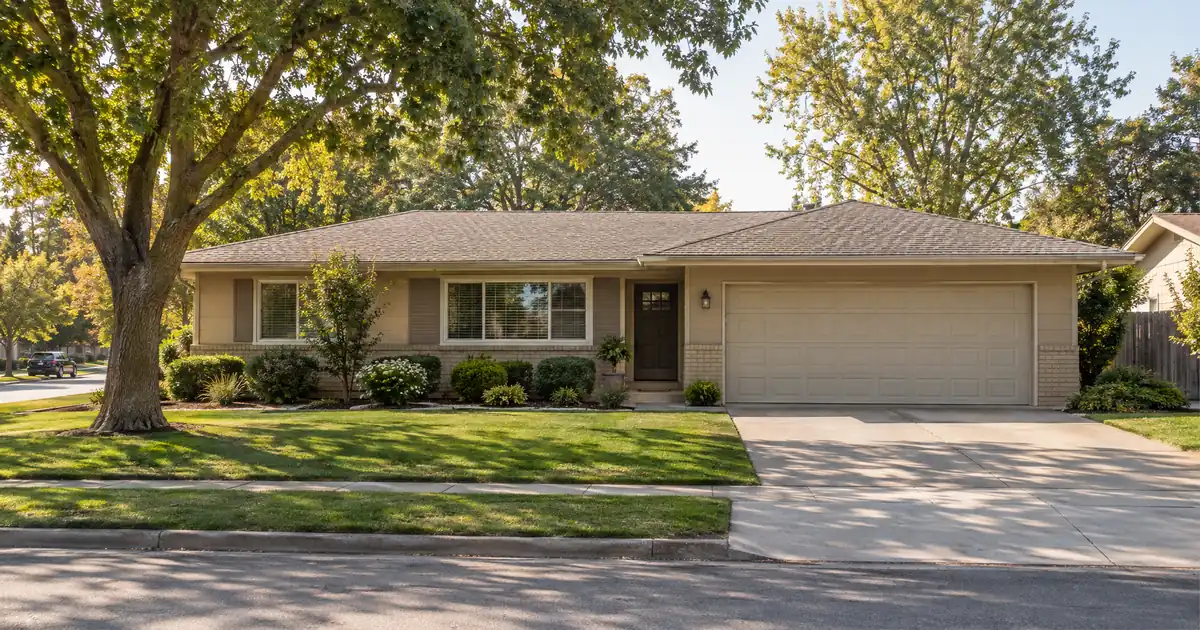
Business Rental Property Refinance Loan — The Quick Read: A business rental property refinance loan is a mortgage on a rental you don’t live in. Lenders look at the property’s rent, not your personal income. Most of these loans are structured as DSCR loans. Cash-out refinances on standard rentals typically cap near 75% loan-to-value. Purchases run 75%-80% loan-to-value. Qualification comes down to one question: does the rent cover the payment? Your tax return doesn’t matter as much here. The mechanics, the edge cases, and the state-by-state quirks below decide whether a given file actually clears underwriting.
Key Terms Defined
DSCR (Debt Service Coverage Ratio) — Take the property’s monthly rent and divide it by the monthly PITIA payment. That’s the DSCR. A result at or above 1.00 means the rent covers the payment.
DSCR Calculator
Run the numbers in your market
Rate source: Freddie Mac 30-yr average via FRED® — Federal Reserve Bank of St. Louis · effective Sep 10, 2026
Prefilled with local estimates — enter your own rent or nightly figures, taxes, insurance, and HOA for a more accurate picture.
Program parameters update from Lendmire’s centralized guideline source. Taxes and insurance are editable estimates.
As of Sep 10, 2026 · General Freddie Mac market benchmark, not a Lendmire loan offer. Rent, nightly rate, occupancy, taxes, and insurance are editable estimates. Short-term rental figures are estimates only and vary significantly by season, property type, management approach, and local short-term-rental rules — confirm local regulations before relying on them. Qualifying income for short-term rentals varies by program — some use appraisal market rent, others use documented STR history or projections — and is confirmed in underwriting. Not a Loan Estimate, approval, or commitment to lend. Program availability and eligibility are subject to lender guidelines, credit approval, property review, and underwriting.
LTV (loan-to-value) — This is the loan amount shown as a percentage of the property’s value. A lower LTV means more equity in the deal.
PITIA — This stands for principal, interest, taxes, insurance, and association dues added together. It’s the full monthly housing cost the rent gets measured against.
Business-purpose loan — This is a mortgage made for investment, business, or commercial use, not personal or household use. Non-owner-occupied rental loans generally fall into this category.
Rate-and-term refinance — This refinance replaces your existing loan with new terms. It doesn’t pull cash out of the property’s equity.
Cash-out refinance — Here the new loan is larger than the payoff on the old one. The borrower keeps the difference in cash.
Seasoning — This is how long a lender wants you to have owned a property before it will use the current value for a refinance.
Non-owner-occupied — This means the owner doesn’t live in any unit of the property. This status typically pushes a loan into the business-purpose category.
Key Takeaways
- A business rental property refinance loan is usually a DSCR loan. Qualification runs on the property’s rent, not the owner’s traditional personal-income paperwork.
- Cash-out refinances on standard rentals typically top out around 75% LTV. Purchase leverage runs 75%-80%, and select high-leverage programs reach 85%.
- SBA-backed refinances generally require owner-occupancy. That rules them out for a straight rental. It’s the main reason most investor-held rentals refinance through DSCR programs instead.
- Coverage below 1.00 and no-ratio structures both exist through select lenders in the network. Leverage and eligibility narrow accordingly.
- Manufactured homes, log homes, and barndominiums are not offered under these programs. This holds regardless of rent or location.
Which Path Applies to You: Owner-Occupied vs. Investor-Held
One question decides which loan programs are even available: does the borrower occupy the property? If the answer is no — a straight rental with tenants in every unit — most owner-occupancy-based programs are off the table before underwriting even starts.
SBA-backed loans are a good example. They require the borrower’s business to occupy most of the property. That’s exactly why they don’t work for a pure rental refinance. An investor who owns a fourplex with tenants in all four units fails that test on day one. It doesn’t matter how strong the property’s income looks. That’s the fork in the road. Owner-occupied commercial space pivots toward SBA or a conventional bank commercial mortgage. A non-owner-occupied rental pivots toward a DSCR loan.
A second question matters too: unit count. A duplex, triplex, or fourplex that the owner doesn’t occupy is generally treated as residential-style investment property for financing purposes. This is the kind DSCR programs are built around. Larger multifamily and true commercial buildings move into a different lending category with different underwriting entirely. That’s outside the scope of what this article covers.
Comparing the Loan Types That Refinance Rental Property
| Loan Type | Underwriting Basis | Best-Fit Borrower |
|---|---|---|
| Conventional bank commercial mortgage | Personal and business financials, global cash flow | Established operators with strong documented income |
| SBA 7(a) / 504 | Business financials plus owner-occupancy requirement | Owner-operators occupying most of the property |
| DSCR loan | Property rental income vs. the payment | Investors with non-owner-occupied 1-4 unit rentals |
| Bridge-to-permanent | Short-term value-add plan, refinanced once stabilized | Investors renovating or leasing up a property |
| Portfolio / blanket loan | Combined rental income across several properties | Investors consolidating multiple rentals under one loan |
For most investor-held single-family and small multifamily rentals, the DSCR row is where the file lands. Lendmire’s complete DSCR loans guide walks through the broader mechanics of this loan type in more depth. A side-by-side look at DSCR vs. conventional financing shows why property-income underwriting behaves so differently from a standard mortgage.
How DSCR Underwriting Actually Works, Step by Step
The DSCR formula is simple. Take monthly rent and divide it by monthly PITIA. Clear 1.00 and the rent covers the payment on paper. Fall short and the shortfall has to get offset another way — lower leverage, stronger reserves, or a program built to handle it. That’s step one. It’s not the whole file.
Step one — rent gets verified, not assumed. Appraisers use a standardized comparable-rent format to pull a market-rent opinion from nearby leases. For a single-unit rental, that’s Fannie Mae’s Form 1007 rent schedule. The lender then typically uses whichever number is lower — the appraiser’s market-rent figure or the actual lease in place. A parallel comparable-rent analysis applies to 2-4 unit buildings.
Step two — credit and leverage get layered on top of the ratio. Clearing a DSCR of 1.00 doesn’t automatically buy the best terms available. Credit tier, requested LTV, and the borrower’s reserves all move together. In most files in the network, a 620 score is a floor on some programs. But 660 is closer to where most programs actually sit comfortably. Crossing into the 700-plus range is generally what unlocks the strongest leverage tiers.
Step three — reserves get sized to the file, not applied as one flat number. Reserve requirements vary by lender, leverage, and loan size. A conservative rate-and-term refinance at modest leverage under $1,500,000 can sometimes see reserves waived entirely. Most files land around six months of PITIA in reserve. Loans above $1,500,000 commonly step up to roughly nine months.
Step four — the entity gets documented, not sidestepped. These are business-purpose loans by design. Title held in an LLC, corporation, or trust is a standard, expected feature, not an exception a lender has to approve around. That’s a real structural difference from an agency-backed loan on an owner-occupied home, which generally requires the borrower’s personal name on title. Investors refinancing rentals held under an LLC — including self-employed borrowers refinancing rental property — typically find the entity-vesting piece of a DSCR file more straightforward than the income-documentation piece of a conventional one, subject to lender program eligibility.
One short technical note worth stating plainly: DSCR loans are designed for non-owner-occupied investment properties. Because they’re business-purpose investor loans, they get reviewed differently from a standard owner-occupied mortgage. They also fall outside the disclosure timeline that governs a consumer home loan. That means no Loan Estimate and no three-day waiting period, because the transaction was never a consumer mortgage in the first place.
Rate-and-Term vs. Cash-Out: What Actually Changes
A rate-and-term refinance replaces the existing loan without pulling equity out. A cash-out refinance pulls a lump sum out of the equity while resetting the loan. The leverage math and seasoning expectations differ sharply between the two. Mixing them up is one of the more common mistakes investors make when comparing quotes.
On the rate-and-term side, leverage tends to be more flexible. Seasoning requirements are often lighter or waived entirely. That’s because the lender isn’t extending new equity out the door — the transaction is closer to a like-for-like swap. Refinancing a rental property without pulling cash out generally moves through underwriting on that basis.
Cash-out is a different animal. It typically caps around 75% LTV on a standard long-term rental. Roughly six months of ownership seasoning is the common expectation before a lender will use the property’s current, appreciated value instead of the original purchase price. A larger down payment or more equity in the deal lowers the loan balance and can lift the DSCR. But it never overrides a hard leverage cap, a credit floor, a reserve requirement, or a property eligibility rule. The strongest files clear both tests at once: enough equity in the property, and rent that comfortably covers the payment. Pulling cash out of a rental works best when both boxes are checked, not just one.
Investors sometimes weigh a cash-out refinance against simply selling and redeploying the capital elsewhere. That comparison is worth running side by side. The sell-versus-cash-out-refinance decision depends heavily on how much equity is trapped and what the reinvestment opportunity actually looks like.
The Structures and Variations Worth Knowing
Not every rental refinance looks the same. The variations matter more than most investors expect going in.
Short-term rentals run their own leverage schedule. On the purchase side, short-term-rental collateral can reach up to 75% LTV on the stronger files. Refinances without cash out run closer to 70% LTV. Cash-out refinances on short-term-rental collateral cap near 70%, compared with roughly 75% on a standard long-term rental cash-out. Most short-term-rental programs also want a credit score near 640 and about 12 months of documented hosting history. A 1.00 coverage floor applies to purchases, and a separate 1.00 floor applies to refinances. Treat the two as different, not identical — the comparable-rent methodology differs between them. Lendmire’s DSCR loans for Airbnb and short-term rentals page goes deeper on how that income gets documented. Short-term rental rules can also vary by city, county, HOA, and property type. Investors should confirm local rules before relying on projected nightly income.
Portfolio and blanket structures let an investor refinance several rentals under one loan instead of juggling separate notes. The combined rental income across the portfolio does the qualifying work.
Investment-property HELOC lines cap at $500,000 total across the network. There’s no larger tier above that ceiling. An investor sitting on more trapped equity than that in a single rental is typically better served by a standard cash-out refinance instead.
Term structures follow a 30-year fixed spine in most cases. Loans above $2,500,000 generally hold to that 30-year fixed structure across the network. Below that threshold, select lenders offer extended 40-year terms or interest-only periods. Adjustable-rate structures exist too, for investors who prefer them. Loan amounts generally run up to $3,000,000 on standard programs. Smaller balances are still reviewable, but they typically route through a narrower slice of lenders that specialize in smaller-balance investor files.
Here’s the honest tension worth flagging. A longer amortization or an interest-only period can improve a file’s DSCR on paper without the property’s actual rent changing at all. That’s exactly why coverage ratios need to be read alongside the term structure producing them, not in isolation.
Where the General Rule Breaks: Edge Cases
The 75%-cap, 1.00-coverage version of this loan is the baseline. Real files deviate from it constantly. Knowing where is what separates a broker-guided decision from a guess.
Coverage below 1.00 isn’t an automatic decline. A rental that falls short of full coverage can still move forward through select lenders in the network. But leverage typically comes down, and pricing adjusts to offset the gap. This is never a guaranteed outcome, and never at the same leverage as a file that clears comfortably.
No-ratio structures exist, but narrowly. A handful of lenders skip the rent-to-payment test altogether. This is generally reserved for borrowers who already own a primary residence. That option is largely unavailable outside the $2,000,000-plus loan segment, where a narrower set of lenders can offer it.
State overlays reshape leverage in specific markets. A handful of states — Connecticut, Florida, Illinois, and New Jersey among them — generally cap purchase leverage near 75% LTV rather than the higher tiers available elsewhere. Loan sizes in those states typically top out around $2,000,000 rather than running to the full standard ceiling.
Prepayment penalty rules vary by state, and calling a loan “business purpose” isn’t automatic protection. Regulation Z is the federal rule that exempts business-purpose lending from consumer mortgage disclosure requirements. It looks at the substance of the deal, not just the label on the paperwork — how involved the borrower is personally, how large the transaction is, how the income concentrates. Some states extend residential-style prepayment restrictions to certain smaller rental loans, unless the transaction is properly structured and disclosed as business-purpose from the start. This is legal and structural context. A pricing quote or a loan officer’s assurance can’t override it on its own.
Certain property types are excluded entirely. Manufactured homes — single- and double-wide — log homes, and barndominiums are not offered under these programs. This holds regardless of the rent they’d produce or where they sit.
DSCR files in markets with a lot of newer construction or unconventional builds tend to hit this wall more than investors expect. The property type gets flagged before the income ever gets discussed. It’s worth checking property eligibility before running rent numbers at all, not after.
What the Investor Decision Looks Like in Practice
Picture an investor holding a single-family rental valued at $310,000. They’ve owned it for just over the six-month seasoning window most cash-out programs expect. The tenant’s current lease sits comfortably under market, and the appraiser’s rent schedule comes back higher. At a modeled 75% cash-out LTV, the file needs the rent to land at a coverage ratio the chosen lender is comfortable with. That rent figure uses whichever is lower — the lease or the appraised market rent. The needed coverage ratio generally runs from a bare 1.00x on the more flexible programs up to a stronger 1.20x-or-better on the pricing tiers that reward it.
Now run the same property through a rate-and-term refinance instead. No cash gets pulled, seasoning matters less, and leverage is often more forgiving, since the lender isn’t extending new funds against the equity. The decision between the two isn’t really about which loan is “better.” It’s about whether the investor needs the cash now, or is optimizing for the strongest possible coverage ratio and terms on the existing balance.
This is where the math gets genuinely case-by-case rather than formulaic. A property clearing 1.35x on current rent might still make more sense as a rate-and-term refinance, if the investor’s real goal is simply improving the loan structure and not extracting equity. Meanwhile, a property barely clearing 1.00x might still support a modest cash-out at reduced leverage, if the borrower brings strong reserves and a 700-plus credit profile to the table. Neither call is automatic. Both run through underwriting on their own facts.
Scotsmanguide.com/news/alternative-lending-offers-new-pools-for-lenders-to-wade-in/). More capital chasing this type of paper generally means more programs and more refinance flexibility for investors. It also means guidelines shift lender by lender. That’s exactly why comparing more than one program before committing matters.
Tax treatment of any refinance proceeds can depend on how the funds are used and how the property is held. Investors should keep clear records and speak with a qualified tax professional before relying on any deduction.
Weighing a rate-and-term refinance against pulling cash out of a rental? Trying to figure out which loan program even applies to your ownership structure? Lendmire can help you compare DSCR loan options based on the property’s income, your credit profile, requested leverage, and what you’re actually trying to accomplish. Reach the team at 828-256-2183 or request a quote directly.
Frequently Asked Questions
Can I refinance a rental property I own through an LLC?
Yes. DSCR programs are built around business-purpose lending, so entity-vesting in an LLC, corporation, or trust is standard rather than an exception, subject to lender program eligibility. Most files still require personal guaranties from the LLC’s members. The lender will typically request formation documents alongside the standard file.
Why doesn’t my rental qualify for an SBA refinance?
SBA-backed loans generally require the borrower’s business to occupy most of the property. A straight rental with tenants in every unit fails that test, no matter how strong the income looks. That’s the main reason non-owner-occupied rentals move toward DSCR financing instead of SBA programs.
Does a higher down payment guarantee my refinance will qualify?
No. More equity can lower the loan balance and improve the DSCR. But it doesn’t override a leverage cap, a credit floor, a reserve requirement, or a property eligibility rule. The strongest files clear both the equity test and the rental-coverage test at once, subject to lender guidelines and underwriting review.
What happens if my rental’s DSCR comes in below 1.00?
It doesn’t automatically disqualify the file. Select lenders in the network will still consider a rental refinance below full coverage. But expect leverage to come down and terms to adjust to offset the shortfall. Approval and terms remain subject to lender guidelines, credit profile, and property review.
Is there a seasoning requirement before I can refinance a rental I just bought?
Cash-out refinances commonly expect around six months of ownership before a lender will use the property’s current value. Rate-and-term refinances often carry lighter or no seasoning requirement at all, since no new equity is leaving the deal. Exact seasoning depends on the lender and the specific program.
About Lendmire
Lendmire (NMLS# 2371349) is a mortgage brokerage built around DSCR investor lending. Its programs are available in 40 markets, including Washington, D.C. DSCR lenders commonly evaluate rental-income coverage instead of personal income paperwork. This is a practical fit for LLC-owned and multi-property investors. Terms vary by lender, property, leverage, and program. Scotsman Guide named Lendmire a Top Mortgage Workplace in both 2025 and 2026.
Get Started
Ready to find the right loan for you?
In about 30 seconds you can review financing options available for your home or investment property. No commitment required.
Informational only. Not a Loan Estimate, approval, or commitment to lend. Program availability and eligibility are subject to lender guidelines, credit approval, property review, and underwriting.
References
1. Fannie Mae — Single-Family Comparable Rent Schedule (Form 1007)
2. Consumer Financial Protection Bureau — Regulation Z, Business-Purpose Exemption
Brandon Miller
Founder & CEO, Mortgage Loan Originator, Lendmire LLC
- Mortgage Loan Originator · NMLS# 1129696 · Verify on NMLS Consumer Access
- North Carolina Real Estate Broker · License# 343312 · Verify on NCREC
- North Carolina Insurance Producer · License# 19053198 · Property, Casualty, Life, Health · Verify on NAIC SBS
- Lendmire LLC · Firm NMLS# 2371349 · Verify firm licensure
Compliance and disclosures. Lendmire (NMLS# 2371349) is a licensed mortgage broker and is not a direct lender, depository institution, financial advisor, or tax professional. Content in this article is general market analysis and educational information — not financial, legal, or tax advice for any specific situation. Lendmire does not guarantee loan approval; every transaction is subject to underwriting by the funding lender. Mortgage pricing and loan program guidelines are subject to change at any time without notice and vary by borrower characteristics, property type, and state regulations. Lendmire complies with Equal Housing Opportunity. Licensure verification: NMLS Consumer Access.


