
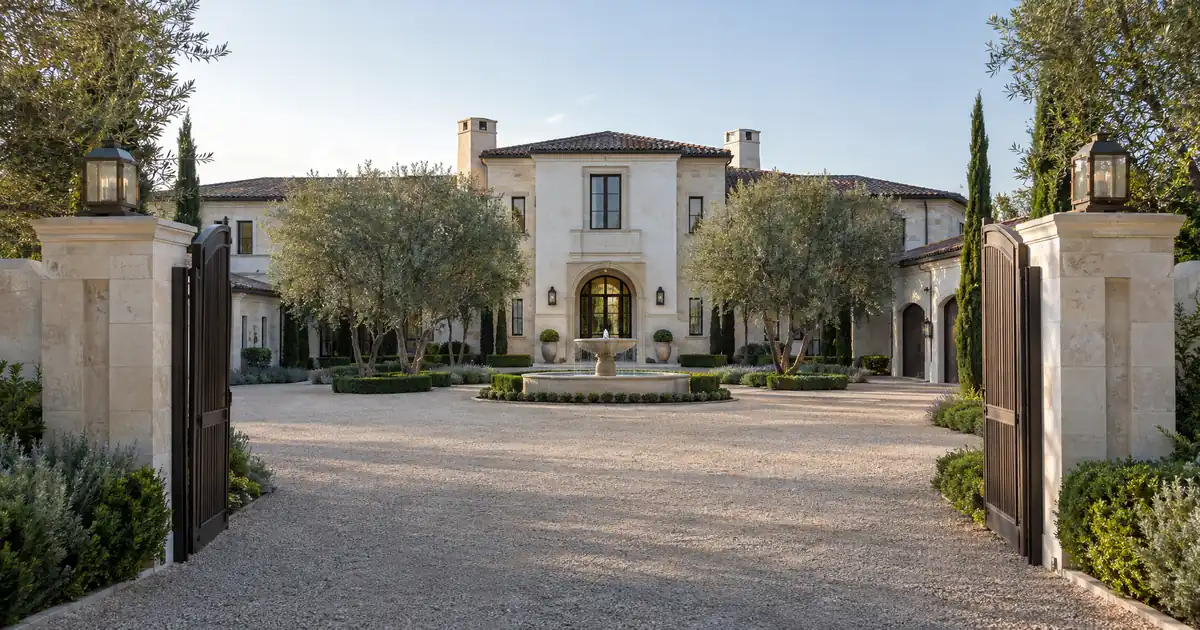
Acreage and unique features shape the appraisal on a jumbo DSCR loan by thinning the pool of comparable sales, forcing the appraiser to separate land value from structure value, and pushing rent conclusions into judgment-heavy territory. On large loans this matters twice as much, because a second independent appraisal often has to reach a similar number before the file can move forward.
How Acreage And Unique Features Shape The Appraisal On A Jumbo DSCR Loan — The Quick Read: A ten-acre lot, a detached guest house, or a custom-built main residence all change how an appraiser builds the value opinion and the rent opinion at the same time. Extra land gets classified as excess or surplus rather than valued as a flat add-on. Unique structures get contributory-value treatment, not construction-cost credit. On a jumbo file, thin comps and a second appraisal requirement can compound each of these issues before the loan ever reaches underwriting.
DSCR Calculator
Run the numbers in your market
Rate source: Freddie Mac 30-yr average via FRED® — Federal Reserve Bank of St. Louis · effective Sep 17, 2026
Prefilled with local estimates — enter your own rent or nightly figures, taxes, insurance, and HOA for a more accurate picture.
Program parameters update from Lendmire’s centralized guideline source. Taxes and insurance are editable estimates.
As of Sep 17, 2026 · General Freddie Mac market benchmark, not a Lendmire loan offer. Rent, nightly rate, occupancy, taxes, and insurance are editable estimates. Short-term rental figures are estimates only and vary significantly by season, property type, management approach, and local short-term-rental rules — confirm local regulations before relying on them. Qualifying income for short-term rentals varies by program — some use appraisal market rent, others use documented STR history or projections — and is confirmed in underwriting. Not a Loan Estimate, approval, or commitment to lend. Program availability and eligibility are subject to lender guidelines, credit approval, property review, and underwriting.
Why Extra Acreage Doesn’t Just Add Value
More land does not automatically mean more appraised value — appraisers split acreage into two buckets, and only one of them moves the number the way most investors expect. Land that could legally be carved off and sold separately gets treated as excess land and valued on its own. Land that’s stuck to the property and can’t be separated gets treated as surplus land, which contributes little.
Appraisal educators describe this as a routine but frequently skipped step: many residential appraisers apply a flat dollar-per-square-foot adjustment for lot-size differences without asking whether the extra ground is separable in the first place, according to McKissock Learning. Skipping that step isn’t a minor shortcut. One appraiser lost a license for five years after failing to account for subdivision potential on a property with clear excess land, per a case described by Sacramento Appraisal Blog.
The test runs in a specific order: first, is the use legally permissible; then, is it physically possible; then, is it financially feasible; and finally, is it maximally productive. A zoning restriction or a deed covenant that bars subdivision ends the inquiry right away. The land counts as surplus no matter how many acres sit behind the house, according to analysis from LegalClarity. That’s the practical reason two ten-acre properties in the same county can carry very different appraised values.
Acreage properties also draw more review scrutiny than a standard subdivision file. Large lot-size adjustments are unusual enough that acreage appraisals get flagged for a closer look almost automatically, according to Cleveland Appraisal Blog. For an investor pursuing a jumbo DSCR loan, that means the file is likely to get more attention before it ever reaches the lender’s desk — not less.
On the network side, rural collateral on a super jumbo file has structural limits. Qualifying acreage generally tops out around ten acres above the smallest loan tiers. For standard rural eligibility at higher leverage, the limit is five acres or less. Twenty acres only becomes workable up to a $3,000,000 loan amount, subject to underwriting. Above that, acreage size alone can shrink the leverage available, even when the rent covers the payment.
What Counts As A “Unique Feature,” And How Is It Valued?
A guest house, barn, pool, or ADU adds value only to the extent buyers actually pay for it — not what it cost the owner to build. Appraisers call this contributory value, and it’s a market question, not a construction-invoice question.
That distinction trips up a lot of owners. A property owner who spends heavily on a finished accessory dwelling unit may find the market simply doesn’t recognize the full spend — construction cost and market contribution are separate economic questions, and a beautifully finished ADU can cost far more to build than local buyers will pay extra for it, per West Coast Evaluation. The blunt version from one appraisal practitioner site: a future buyer doesn’t inherit the owner’s receipts, and the market gets the final vote, regardless of what went into the build.
Fannie Mae’s own reporting guidance explains how the mechanics work here — it is not a DSCR rule. An ADU must be reported and adjusted on its own line in the sales-comparison grid, unless it’s fully attached to the main house. Standalone structures that don’t meet ADU criteria still get listed and adjusted as ancillary improvements based on their contributory value. This comes from the Fannie Mae Selling Guide B4-1.3-05. Appraisers look for paired sales with similar accessory structures before they default to a generic per-square-foot figure. When comparable ADU sales are scarce, appraisers should explain why and lay out their adjustment logic instead of guessing.
Habitability matters as much as square footage. A detached structure without a permanent heat source or independent utilities may get treated as a workshop or outbuilding rather than a livable guest house — meaning it gets valued against comps for sheds and barns, not against comps for finished living space, based on discussion among practicing appraisers on AppraisersForum.com. For an investor counting on a guest house to boost rent or resale value, that’s a real risk worth confirming before underwriting starts, not after.
The Comparable-Sales Problem
Acreage and unique features share the same underlying weakness: fewer sales to compare against, which forces the appraiser to reach farther and adjust harder. That reach is exactly what triggers extra scrutiny on a jumbo file.
A property gets tagged “rural” in the appraisal not because of its address but because comps are thin nearby. Non-QM program guidance commonly treats comps pulled from more than five miles away as a rural signal requiring explanation, and a shortage of at least three comparable sales within a normal search radius is a widely used practical marker of rural status. Whether the label lands depends far less on the acreage itself and more on whether enough sales exist to support a defensible value — a point echoed across private-lending trade commentary.
That thinness cuts both ways on a DSCR file, because the property’s income gets documented the same way its value does. Investment-property rent gets estimated on Fannie Mae’s Single-Family Comparable Rent Schedule (Form 1007), a form non-QM lenders borrow from the conventional world even though the loan itself never touches a GSE. The appraiser pulls comparable rentals and adjusts for differences to reach a supportable market-rent opinion — and when rental comps are as scarce as sales comps, the rent conclusion carries the same uncertainty as the value conclusion. That’s a double point of failure specific to DSCR underwriting: a thin comp pool doesn’t just threaten the appraised value, it threatens the rent figure the loan is actually qualified against.
Short-term rental properties amplify this. STR-friendly properties tend to sit in scenic or acreage-heavy locations — exactly where comp density is lowest. And the rent estimate can’t be built by multiplying a nightly rate by thirty days; that approach ignores vacancy, personal-property use, and business expenses baked into a STR’s economics. The correct method compares monthly lease rates, not nightly rates.
Key Terms Defined
Excess land: the portion of a lot not needed for the existing home that could realistically be separated and sold as its own parcel, valued independently from the main site.
Surplus land: extra land that isn’t needed for the current use but can’t be separated and sold on its own, contributing comparatively little to overall value.
Contributory value: what a buyer will actually pay for a feature like an ADU, pool, or barn — as distinct from what it cost to build.
Highest and best use: the legally allowed, physically possible, financially workable, and most productive use of a site as if vacant — the four-part test that decides how extra land gets classified.
Rural designation: an appraisal flag driven by comp scarcity within a normal search radius, not by lot size or population alone.
Why Jumbo Files Get a Second Look
Loan size changes the appraisal math independently of acreage. Above $2,000,000, two full appraisals are typically required before a large-balance DSCR file moves forward, and a unique or thinly-comped property raises the odds those two appraisers land on different numbers.
Historical commentary on the super jumbo space describes this pattern broadly: high-value properties commonly draw two full appraisals at a minimum once value climbs into seven figures, and when the collateral is unique or comps are hard to pin down, lenders may layer in field reviews, desk reviews, or broker price opinions to firm up the value conclusion. A field review sends a second appraiser to walk the property and neighborhood — typically exterior-only, since the underlying data already exists — and review scoring generally escalates from a desk review at moderate concern levels to a full field review when something looks off. A second full appraisal is reserved for the more unusual cases.
Across the wholesale network Lendmire works with, that second-opinion requirement is built into the ladder itself, not left to chance. Two appraisals apply above $2,000,000, and credit expectations tighten alongside them: a 700 floor with clean housing history above $3,000,000, forty-eight months of event seasoning, and a firm ten-acre ceiling on the collateral at that tier. Reviewed case by case before submission, loans from $4,000,000 to $10,000,000 run purchase and rate-and-term only — no cash-out — at 60% leverage on review, never a flat “up to.” Every figure here varies by lender and program — guidelines, property type, leverage, and credit profile all apply.
A working practitioner observation: Files that pair large acreage with a custom or unusual main residence are the ones most likely to see two appraisers disagree. One might lean on a handful of distant rural sales; the other might pull from a slightly different radius or weight the guest house differently. It helps to flag the property’s unique features to the lender before the appraisal is ordered, rather than disputing the number afterward. This tends to produce a cleaner file.
Who’s Qualified to Appraise It?
A residential-only appraiser license may not cover the job once a property involves subdivision analysis or complex agricultural land. State boards draw a hard line here. A Certified Residential license generally covers one-to-four unit residential property, no matter the value. But it excludes assignments that need a subdivision or development analysis, according to Colorado’s real estate division. Only a Certified General Appraiser can appraise any property type, no matter how complex or how large the transaction. This license requires roughly 300 hours of education and 3,000 hours of experience. Most state boards require 1,500 of those hours to be in non-residential work, per the Maine Office of Professional and Occupational Regulation.
For an investor on a jumbo DSCR file with heavy acreage or agricultural zoning, the wrong license level assigned to the job is a warning sign on its own. It usually means someone with broader authority will need to redo the report before underwriting can rely on it.
Common Misconceptions
“More acres always means more value.” Not automatically. Excess land adds real value only when it’s legally separable; surplus land rarely moves the number much no matter its size.
“A rural flag kills the loan.” Rural is a spectrum, not a disqualifier. Rental demand and income potential drive the outcome far more than the label itself, and lenders weigh population size, proximity to amenities, and comp availability together rather than applying a single rural definition.
“An ADU is worth what it cost to build.” The market sets contributory value, not the construction invoice — a well-built accessory structure can be worth less, or sometimes more, than it cost depending on what nearby buyers have actually paid for similar utility.
DSCR vs. conventional financing
Two common ways to finance an investment property in this market. They qualify you differently — here’s how investors weigh them.
Why investors choose it
- Qualifies on the property’s rental income — no personal tax returns, W-2s, or pay stubs needed to document income.
- No personal debt-to-income ceiling to clear, so existing mortgages and obligations don’t cap your borrowing the same way.
- Can be closed in an LLC, keeping the property inside a business entity.
- Built for scaling — not held to the limit on number of financed properties that conventional financing applies.
- Underwriting centers on the deal: generally qualifies when the rent covers the payment, a 1.00x coverage ratio being a common baseline (confirmed in underwriting).
- Designed specifically for investment property, including long-term and, where the program allows, short-term rentals.
Where it’s strong
- Often the lowest ongoing financing cost for a buyer who fully qualifies on personal income — a fit for a first property or a cost-first purchase.
Trade-offs for investors
- Requires full personal income documentation and must fit within a debt-to-income limit — salary, existing debts, and other mortgages all count.
- Typically held in your personal name rather than a business entity.
- Caps how many financed properties you can carry, which can become a ceiling as a portfolio grows.
- Evaluates you as a borrower as much as the property, which usually means more paperwork.
How investors usually choose: a first or single property often optimizes for the lowest financing cost; portfolio builders often optimize for leverage, vesting in an LLC, and scaling past conventional caps. The right answer depends on your goals, the property, and current guidelines — both paths run through select lenders in Lendmire’s wholesale network, with eligibility and terms confirmed in underwriting.
“The appraiser decides the loan’s rental income.” Appraisers document market rent; they aren’t tasked with assessing business income under the standard rent-schedule form, and that assessment role belongs to the lender applying the figure to the DSCR calculation.
How This Plays Out on a Jumbo DSCR File
Picture an investor purchasing a $2,600,000 property on twelve acres with a detached guest house, targeting the network’s $2,000,000-to-$3,000,000 tier at 75% leverage on a purchase, coverage at 1.00 or better. Two appraisals are required at this size. If one appraiser treats the guest house as a legitimate ADU with rental contributory value and the other treats it as an unpermitted outbuilding worth little, the rent conclusion and the value conclusion can diverge meaningfully between the two reports — which is exactly why lenders in this tier lean on two independent opinions rather than one. Final terms depend on lender guidelines, property type, leverage, and the borrower’s complete credit picture.
The acreage complicates it further. Twelve acres sits above the ten-acre ceiling that applies once credit requirements tighten past $3,000,000, so documenting that the extra land is legally excess — and separately valued rather than folded into a flat per-acre bump — becomes part of getting the file to a defensible number. None of this changes whether the rent covers the payment; it changes how confidently that rent figure and that value can be defended if the file gets a second look.
Investors looking at this kind of purchase or a cash-out refinance should also think about acreage and unique features. These things affect bank-statement income documentation on similar files. Lendmire covers this in how acreage and unique features change a bank-statement loan. Lenders also use the two-appraisal requirement in specific ways on large-balance files. You can read more in two appraisals on jumbo loans and how lenders use both.
DSCR loans are business-purpose financing for non-owner-occupied investment property. Lenders review them differently than a standard owner-occupied mortgage. Qualification runs mainly on whether the property’s rental income covers the payment, subject to lender guidelines. This is different from traditional personal-income documentation. For a broader look at how this qualification model works across property types, check Lendmire’s complete DSCR loans guide. It covers the fundamentals this article builds on.
Tax treatment can depend on how loan proceeds are used and how the property is held; investors should keep clear records and speak with a qualified tax professional before relying on any deduction.
If you’re buying or refinancing a rental property with acreage or an unusual feature set and want to see how the numbers actually work, Lendmire can help compare DSCR loan options based on the property’s income, credit profile, leverage, and investor goals. Investors can request a quote or call 828-256-2183 to talk through a specific property.
Frequently Asked Questions
Does more acreage always increase my appraised value on a jumbo DSCR loan?
No. Appraisers split extra land into excess land (separable, adds real value) and surplus land (not separable, adds little). A ten-acre parcel with subdivision potential values very differently than a ten-acre parcel locked by a no-subdivide covenant, even though both look identical on paper.
Will a guest house or ADU boost my rent qualification?
It can, but only if the appraiser can support a rental-comparable analysis for it and the structure is legally habitable — permanent heat, independent utilities, proper permitting. An unpermitted or non-habitable detached structure often gets valued like a workshop instead, with little to no rent contribution.
Why do jumbo DSCR loans require two appraisals?
Above $2,000,000, files in the network typically require two independent appraisals rather than one, largely because larger, unique, or acreage-heavy properties carry more valuation risk. Two appraisers reaching similar conclusions gives underwriting more confidence in the number before committing to leverage at that size.
Can I still get a DSCR loan if my property is flagged “rural”?
Often yes — rural status alone doesn’t disqualify a file. What matters more is whether enough rental and sales comps exist to support the value and rent conclusions. Acreage above the network’s rural ceilings, typically five acres at higher leverage tiers and up to twenty acres on loans to $3,000,000, can affect leverage even when the property otherwise qualifies.
How does the appraiser estimate rent for a short-term rental with unique features?
Not by multiplying a nightly rate by thirty days. Appraisers are expected to use comparable monthly lease data rather than nightly STR pricing, and in Lendmire’s network, STR income on a refinance is documented through twelve months of operating history at a discount to gross rent, subject to underwriting.
For current guidelines and terms, see Lendmire’s super jumbo DSCR loan programs page.
Self-employed borrowers can compare both super jumbo programs on Lendmire’s self-employed mortgages page.
About Lendmire
Lendmire, NMLS# 2371349, is a non-QM mortgage broker serving real estate investors in 40 markets, including Washington, D.C., through DSCR investor loan programs. Qualification is generally reviewed around the subject property’s rental income, not the borrower’s W-2 history — a practical fit for LLC-titled portfolios and self-employed investors. All scenarios remain subject to lender review and program guidelines. Two consecutive Scotsman Guide Top Mortgage Workplace recognitions (2025, 2026).
Lendmire’s Top Mortgage Workplace recognition is documented by Scotsman Guide 2025 Top Mortgage Workplace and Scotsman Guide 2026 Top Mortgage Workplace.
Get Started
Ready to find the right loan for you?
In about 30 seconds you can review financing options available for your home or investment property. No commitment required.
Informational only. Not a Loan Estimate, approval, or commitment to lend. Program availability and eligibility are subject to lender guidelines, credit approval, property review, and underwriting.
References
1. McKissock Learning — Surplus Land vs. Excess Land
2. Sacramento Appraisal Blog — Excess and Surplus Land
3. LegalClarity — Excess Land vs. Surplus Land Appraisal Distinctions
4. Cleveland Appraisal Blog — How Surplus vs. Excess Land Works
5. West Coast Evaluation — Does an ADU Increase Home Value
6. Fannie Mae Selling Guide B4-1.3-05
7. AppraisersForum.com — Rural Property with Guest House, Not ADU
8. Fannie Mae Single-Family Comparable Rent Schedule (Form 1007)
Brandon Miller
Founder & CEO, Mortgage Loan Originator, Lendmire LLC
- Mortgage Loan Originator · NMLS# 1129696 · Verify on NMLS Consumer Access
- North Carolina Real Estate Broker · License# 343312 · Verify on NCREC
- North Carolina Insurance Producer · License# 19053198 · Property, Casualty, Life, Health · Verify on NAIC SBS
- Lendmire LLC · Firm NMLS# 2371349 · Verify firm licensure
Disclosure information. Lendmire is a state-licensed mortgage brokerage under NMLS# 2371349. Lendmire is not a depository institution, direct lender, or financial advisor — all loans referenced are placed through wholesale lender partners and are subject to each lender's underwriting standards. This article is provided for general informational purposes and is not a commitment to lend, nor does it constitute financial, legal, or tax advice. Loan programs, terms, rates, and qualification standards change without notice and depend on borrower profile, property type, and the state in which the subject property is located. Equal Housing Opportunity provider. NMLS Consumer Access: nmlsconsumeraccess.org.


