
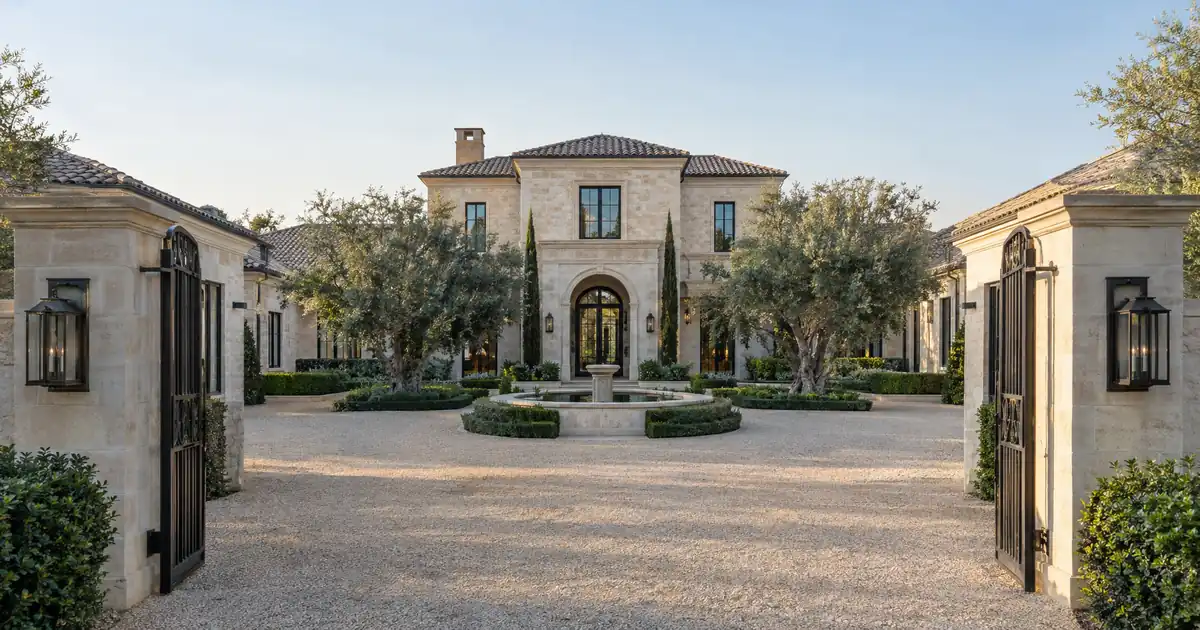
Acreage Vs Standard Lot On A Luxury Short-term Rental DSCR Loan — The Quick Read: A standard subdivision lot underwrites faster and simpler because comparable sales and rental comps exist within a few miles. Acreage properties bring a second underwriting layer — appraisal comparability and, separately, zoning-based STR legality — that has nothing to do with the loan program itself. Neither lot type is disqualifying on its own; the file that struggles is the one where the appraiser can’t find enough comparables, not the one with extra land.
Investors shopping a luxury short-term rental often assume the acreage version of the deal and the standard-lot version of the deal go through the same file the same way. They don’t. The loan program doesn’t care about acreage directly — DSCR underwriting is built around the property’s rental income, not lot geometry. But acreage changes what has to happen before that income number gets accepted, and it changes what local government will let the property do with that income once it’s earned.
Short-Term Rental Calculator
Run the STR numbers in your market
Rate source: Freddie Mac 30-yr average via FRED® — Federal Reserve Bank of St. Louis · effective Sep 17, 2026
Prefilled with local estimates — enter your nightly rate, occupancy, taxes, and insurance for a more accurate picture.
Short-term rental income is documented with a 12-month history or a market data report. Program parameters update from Lendmire’s centralized guideline source.
As of Sep 17, 2026 · General Freddie Mac market benchmark, not a Lendmire loan offer. Nightly rate, occupancy, taxes, and insurance are editable estimates. Qualifying income for short-term rentals varies by program — some use appraisal market rent, others use documented STR history or projections — and is confirmed in underwriting. Not a Loan Estimate, approval, or commitment to lend. Program availability and eligibility are subject to lender guidelines, credit approval, property review, and underwriting.
Side-by-Side
| Factor | Standard Lot | Acreage Property |
|---|---|---|
| Appraisal basis | Comparable sales grid, ample comps | Comparability review first; may need broader search radius |
| STR income method | Narrative STR addendum or AirDNA-style projection | Same method, but comp scarcity can slow the file |
| Documentation | Standard purchase/refi package | Add well/septic evaluation, water quality test if applicable |
| Entity vesting | Standard LLC/entity closing | Same — vesting mechanics don’t change with lot size |
| STR legality | Usually governed by bedroom count or occupancy | Often governed by lot-size thresholds or agricultural exemptions |
| Reserve expectations | Six months PITIA typical, twelve for first-time investors | Same reserve framework, no acreage-specific add-on |
| Appraisal count | Single appraisal below $2,000,000 typical | Second appraisal more likely triggered above $2,000,000 regardless of acreage |
The table above reflects program mechanics as seen across a wholesale network of investor lenders, not any single lender’s overlay — every cell is subject to underwriting on the individual file.
What Actually Decides the Outcome
Acreage size alone rarely kills a DSCR file. The real variable is whether the appraiser can find enough comparable sales and comparable rentals nearby to support a credible number. A twelve-acre luxury cabin surrounded by other large-lot properties with recent sales activity underwrites cleanly. The same twelve acres surrounded by nothing but undeveloped land in every direction is a different conversation — not because the acreage itself is a problem, but because the appraiser has nothing to compare it to.
This is why rural classification gets treated as flexible rather than binary across the industry. A property doesn’t fail because it’s rural — it fails, or gets delayed, when there aren’t enough sales comparables within a reasonable radius to establish value. Income potential and rental demand end up mattering more than the rural label itself.
Standard-Lot Appraisal Mechanics
On a standard subdivision lot, the ordinary comparable-sales grid does the work. Long-term rent gets documented through the Fannie Mae-designed comparable rent schedule for one-unit properties, or the small residential income property form for two-to-four-unit buildings, per Fannie Mae Selling Guide. But those forms were built for long-term leases, not nightly rentals. A short-term rental income analysis has to run through a separate narrative addendum instead, since the standard rent schedule form can’t and shouldn’t carry STR income. This distinction applies on every lot size. Still, it’s a cleaner process on a standard lot, because the sales-comparability question is already settled by the surrounding neighborhood.
Acreage-Specific Complications
Acreage introduces two separate friction points that don’t exist on a standard lot: appraisal comparability, and property-condition documentation.
On the appraisal side, agency guidance requires the site to be generally conforming in size, shape, and topography for the market area. It also needs market-rate utilities and adequate access. Deviations get flagged and analyzed — they aren’t automatically rejected, per Fannie Mae Selling Guide. Sometimes a parcel carries meaningfully more land than what’s typical for the area. In that case, only the typical portion may contribute proportionally to value. The rest gets treated as excess land — a distinct appraisal concept from the land a house physically sits on.
On the property-condition side, acreage properties on private wells or septic systems need documents that standard-lot properties on municipal utilities simply don’t need. A septic evaluation from a qualified appraiser, licensed professional, or health authority is one example. A water quality test for bacteria and nitrates is another. These items show up on rural acreage files. They never show up on a subdivision lot tied into city water.
Across the wholesale network Lendmire places files through, the leverage ladder for the portfolio investor DSCR program treats rural acreage as its own line item: rural properties on five acres or less can reach 75% LTV, up to twenty acres cash-out at loan amounts to $3,000,000, and above twenty acres the file tightens further. Above $3,000,000, credit requirements step up to a 700 floor with additional seasoning and no rural property allowed past ten acres maximum — a hard ceiling that exists specifically because comp scarcity gets worse as acreage climbs. These specifics are subject to lender guidelines and a full review of property, leverage, and credit.
Zoning Governs STR Legality — Separately From the Loan
This is the part investors miss most often: a property can appraise fine and still not be legally rentable as a short-term unit, because zoning treats acreage and standard lots on completely different axes.
Some jurisdictions size STR eligibility by lot size directly. One draft county ordinance sets STR property limitations based on lot size and number of developed lots within larger subdivisions, treating parcels of three-quarters of an acre or less as a distinct regulatory category — see a market source Draft STR Ordinance. Other jurisdictions run the opposite direction — a rural tourist-home ordinance can require a minimum acreage before a permit is even available, plus caps on occupancy and lodging units.
Standard suburban lots more often get regulated by bedroom count instead of land area, a structure planning staff have favored specifically because it gives older housing stock more flexibility when it doesn’t meet current lot-area minimums.
None of this touches the loan file directly — Lendmire’s program guidelines don’t ask whether a county caps STR permits by acreage. But municipal permission to operate a short-term rental has to be documented for the specific property before that income can be used to qualify, and this doctrine holds regardless of city or state — short-term rental rules can vary by city, county, HOA, and property type, so investors should confirm local rules before relying on projected rental income.
Key Terms Defined
Excess land — the portion of a parcel beyond what’s typical for the area, which may not contribute proportionally to appraised value even though it’s part of the same legal lot.
Narrative STR income addendum — a separate appraisal report used to support short-term rental income, since the standard long-term rent schedule form isn’t built to carry nightly-rate income.
No-ratio qualification — a select-program path where the loan is evaluated without a published minimum coverage number, available through select lenders in Lendmire’s wholesale network to $2,000,000, subject to underwriting and a seven-year clean housing history.
Comparability threshold — the practical test of whether enough comparable sales and rentals exist near a property to produce a credible appraisal, independent of the property’s own acreage.
When Acreage Is the Better Fit
Acreage tends to make more financial sense for investors chasing the luxury STR demand curve. This trend is currently outperforming smaller-format listings. Larger bedroom-count properties have seen meaningfully stronger year-over-year demand growth. Upscale listings have posted average-daily-rate gains, while budget-tier listings have softened, according to StayFi/VRM Insider vacation rental data. A six-bedroom mountain or lake property on ten acres fits that trend directly.
Acreage also fits investors who want privacy-driven amenities — pools, guest structures, outbuildings — that a standard lot can’t physically hold. It also fits investors who are comfortable budgeting extra time for appraiser assignment and possible addenda, rather than assuming a quick turn. Coverage on these files still runs off the same leverage ladder. At loan amounts up to $1,000,000 with coverage at 1.00 or better, purchase and rate-term financing can reach 80% LTV. Cash-out on a short-term-rental-collateral file caps lower — generally around 70% at that tier, and 75% for a standard rental under the same size band.
DSCR vs. conventional financing
Two common ways to finance an investment property in this market. They qualify you differently — here’s how investors weigh them.
Why investors choose it
- Qualifies on the property’s rental income — no personal tax returns, W-2s, or pay stubs needed to document income.
- No personal debt-to-income ceiling to clear, so existing mortgages and obligations don’t cap your borrowing the same way.
- Can be closed in an LLC, keeping the property inside a business entity.
- Built for scaling — not held to the limit on number of financed properties that conventional financing applies.
- Underwriting centers on the deal: generally qualifies when the rent covers the payment, a 1.00x coverage ratio being a common baseline (confirmed in underwriting).
- Designed specifically for investment property, including long-term and, where the program allows, short-term rentals.
Where it’s strong
- Often the lowest ongoing financing cost for a buyer who fully qualifies on personal income — a fit for a first property or a cost-first purchase.
Trade-offs for investors
- Requires full personal income documentation and must fit within a debt-to-income limit — salary, existing debts, and other mortgages all count.
- Typically held in your personal name rather than a business entity.
- Caps how many financed properties you can carry, which can become a ceiling as a portfolio grows.
- Evaluates you as a borrower as much as the property, which usually means more paperwork.
How investors usually choose: a first or single property often optimizes for the lowest financing cost; portfolio builders often optimize for leverage, vesting in an LLC, and scaling past conventional caps. The right answer depends on your goals, the property, and current guidelines — both paths run through select lenders in Lendmire’s wholesale network, with eligibility and terms confirmed in underwriting.
An investor considering a rural luxury cabin priced at $950,000 with strong projected STR income and coverage clearing roughly 1.2x on the appraisal’s short-term-rent analysis at 80% of gross, would be looking at purchase leverage in the 80% range at that loan size, assuming credit clears the 660 floor and six months of PITIA reserves are documented on the subject property. That’s a modeled illustration built from the leverage ladder above, not a quoted market figure.
When a Standard Lot Is the Better Fit
A standard lot is the stronger choice for investors who want a cleaner, more predictable underwriting path with fewer comparability questions. Comparable sales and rental comps exist in abundance, so the appraisal moves through the ordinary grid without a comparability review layered on top. STR legality is more often governed by bedroom count and occupancy caps than by lot-size thresholds, which tends to be more forgiving for standard-sized homes than acreage-based rules that can require minimum land before a permit even applies.
Standard-lot properties are also the more common fit for investors targeting the no-ratio or reduced-coverage paths — those select-program routes are capped at $2,000,000 and reward files with strong credit history and clean housing seasoning, and comp-rich neighborhoods make the underlying valuation less of an open question going into review.
Lendmire has placed many files through its wholesale network. One pattern shows up again and again. Acreage files with few nearby comps take longer to close. The appraiser has to work harder to justify the number. STR income documents are different, though. The narrative addendum, the AirDNA-style projection, and the twelve-month operating history all go through basically the same steps, no matter the lot type.
The Balanced Verdict
Neither option is objectively better — they solve for different things. Acreage buys privacy, larger amenity packages, and access to the luxury STR demand trend that’s currently outperforming smaller listings. The cost is a slower, more document-heavy appraisal path and zoning rules that can be stricter or more permissive, depending entirely on the local ordinance. A standard lot buys predictability instead: abundant comps, a bedroom-count-based zoning framework that’s often more flexible, and a smoother run through the appraisal process.
The loan program itself, per Lendmire’s complete DSCR loans guide, qualifies primarily on the property’s rental income covering the payment rather than traditional personal-income documentation — that’s true on both lot types. What changes is how much documentation stands between the purchase agreement and a number the underwriter can rely on. Investors weighing a luxury STR purchase on a large parcel should also look at how super-jumbo DSCR financing handles size tiers above the standard program ceiling, since acreage and loan size often climb together on these files.
DSCR loans are designed for non-owner-occupied investment properties. Because they are business-purpose investor loans, they are reviewed differently from a standard owner-occupied mortgage. Tax treatment can depend on how the funds are used and how the property is held; investors should keep clear records and speak with a qualified tax professional before relying on any deduction.
Frequently Asked Questions
Does more acreage automatically mean a lower loan-to-value ceiling? Not automatically — leverage steps down by loan amount and coverage tier, not by acreage directly. Rural acreage does carry its own cap within the network’s guidelines: five acres or less can reach 75% LTV, with a ten-acre maximum above the $3,000,000 tier, subject to underwriting. Terms vary by lender guidelines, property type, leverage, credit profile, and full file review.
Can short-term rental income qualify the loan on an acreage property the same way it does on a standard lot? Yes, the documentation method is the same either way — twelve months of operating history on a refinance, or the appraisal’s short-term-rent analysis at 80% of gross on a purchase — but comp scarcity on acreage can slow how quickly the appraiser produces an usable number.
Is a second appraisal required more often on acreage deals? The second-appraisal trigger is tied to loan amount, not lot type — files above $2,000,000 typically require two appraisals regardless of whether the property sits on a standard lot or ten acres.
Does closing in an LLC work differently for acreage versus a standard lot? No — entity vesting mechanics are identical on both lot types under DSCR programs, since these are business-purpose loans built around entity ownership from the recording date, subject to program eligibility.
What documentation should an investor expect on an acreage property that a standard-lot buyer wouldn’t need? Wells and septic systems are the main trigger — a septic evaluation and, on private wells, a water quality test for bacteria and nitrates, are items that show up specifically on rural acreage files.
Investors comparing acreage and standard-lot options on a specific luxury STR purchase can call Lendmire at 828-256-2183 or request a quote to see how leverage, credit tier, and coverage line up for that particular property.
Investors focused on short-term rentals can review DSCR loans for Airbnb and short-term rentals.
For current guidelines and terms, see Lendmire’s super jumbo DSCR loan programs page.
Self-employed borrowers can compare both super jumbo programs on Lendmire’s self-employed mortgages page.
About Lendmire
Lendmire is a non-QM mortgage brokerage (NMLS# 2371349) arranging DSCR investor loans in 40 markets, including Washington, D.C. DSCR eligibility is generally reviewed around property-level rental income rather than personal income, subject to lender and program guidelines, a fit for self-employed investors and LLC-owned portfolios. Lendmire was recognized as a Scotsman Guide Top Mortgage Workplace in 2025 and 2026.
Lendmire’s Top Mortgage Workplace recognition is documented by Scotsman Guide 2025 Top Mortgage Workplace and Scotsman Guide 2026 Top Mortgage Workplace.
Get Started
Ready to find the right loan for you?
In about 30 seconds you can review financing options available for your home or investment property. No commitment required.
Informational only. Not a Loan Estimate, approval, or commitment to lend. Program availability and eligibility are subject to lender guidelines, credit approval, property review, and underwriting.
References
1. Fannie Mae Selling Guide — Site Section of the Appraisal Report
2. StayFi/VRM Insider — Vacation Rental Statistics
Brandon Miller
Founder & CEO, Mortgage Loan Originator, Lendmire LLC
- Mortgage Loan Originator · NMLS# 1129696 · Verify on NMLS Consumer Access
- North Carolina Real Estate Broker · License# 343312 · Verify on NCREC
- North Carolina Insurance Producer · License# 19053198 · Property, Casualty, Life, Health · Verify on NAIC SBS
- Lendmire LLC · Firm NMLS# 2371349 · Verify firm licensure
Disclosure information. Lendmire is a state-licensed mortgage brokerage under NMLS# 2371349. Lendmire is not a depository institution, direct lender, or financial advisor — all loans referenced are placed through wholesale lender partners and are subject to each lender's underwriting standards. This article is provided for general informational purposes and is not a commitment to lend, nor does it constitute financial, legal, or tax advice. Loan programs, terms, rates, and qualification standards change without notice and depend on borrower profile, property type, and the state in which the subject property is located. Equal Housing Opportunity provider. NMLS Consumer Access: nmlsconsumeraccess.org.


