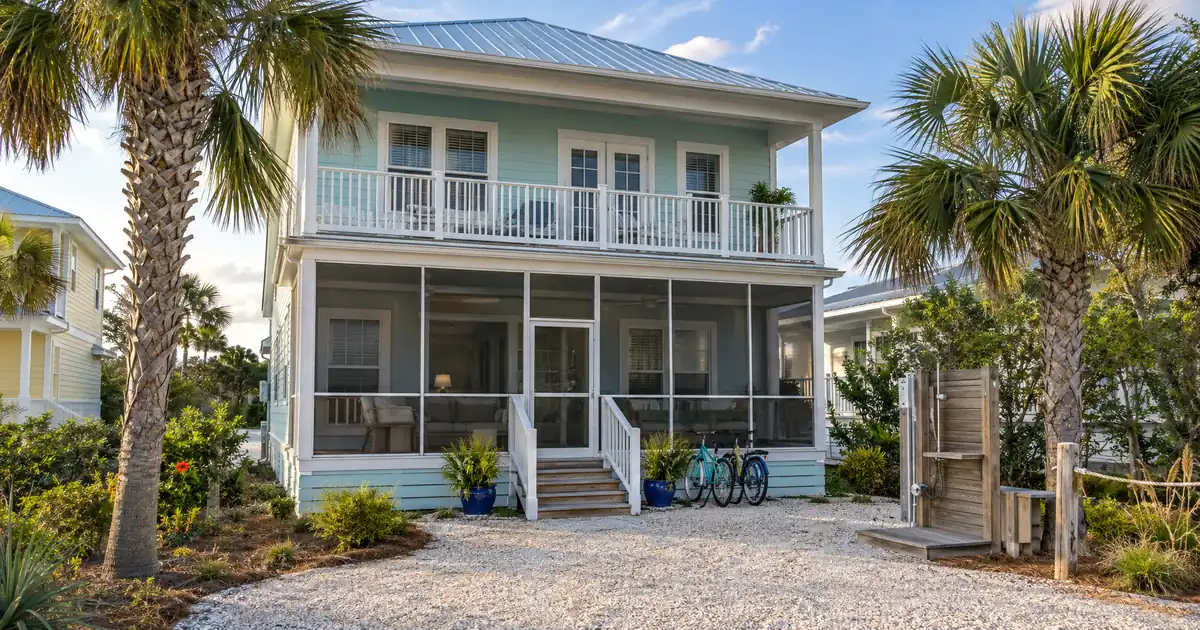
Add An Operating Beach Rental To Your LLC — The Quick Read: An operating beach rental with real booking history usually is reviewed on that trailing income, not a market projection, and DSCR loans are built to close directly into an LLC from day one. The catch isn’t the loan math — it’s the appraisal form, the flood insurance, and the HOA rulebook, each of which can undercut a strong income file if nobody checks them first.
Key Takeaways
- DSCR loans qualify on the property’s rent, not traditional personal-income documentation, and they’re structured to vest in an LLC at closing.
- An already-operating beach rental typically documents income from twelve months of actual deposits or platform statements — not a fresh market projection.
- Coverage runs off the lower of two figures when both an appraisal-style number and a market-data number exist, so a strong AirDNA estimate doesn’t automatically win.
- Flood insurance is a federal requirement in high-risk zones for government-backed lenders, and coverage can lag the loan if it’s not lined up early.
- HOA and condo rules can override state law entirely — a legally permitted rental can still get shut down by the association.
What Counts As “Operating” for DSCR Purposes?
An operating beach rental has a documented history of actual rental income. This can come from bank deposits, platform payout statements, or a property manager’s ledger, usually covering the last twelve months or so. Most DSCR programs rely on that history, not a projected nightly rate, when the property already has a track record.
DSCR Calculator
Run the numbers in your market
Rate source: Freddie Mac 30-yr average via FRED® — Federal Reserve Bank of St. Louis · effective Sep 17, 2026
Prefilled with local estimates — enter your own rent or nightly figures, taxes, insurance, and HOA for a more accurate picture.
Program parameters update from Lendmire’s centralized guideline source. Taxes and insurance are editable estimates.
As of Sep 17, 2026 · General Freddie Mac market benchmark, not a Lendmire loan offer. Rent, nightly rate, occupancy, taxes, and insurance are editable estimates. Short-term rental figures are estimates only and vary significantly by season, property type, management approach, and local short-term-rental rules — confirm local regulations before relying on them. Qualifying income for short-term rentals varies by program — some use appraisal market rent, others use documented STR history or projections — and is confirmed in underwriting. Not a Loan Estimate, approval, or commitment to lend. Program availability and eligibility are subject to lender guidelines, credit approval, property review, and underwriting.
This matters because the DSCR formula itself never changes: gross monthly rental income divided by the full monthly payment, including principal, interest, taxes, insurance, and any HOA dues. What changes for a short-term rental is which number gets plugged into the top of that fraction. A property with no operating history has to lean on an appraiser’s projection or market data. A property that’s already renting nightly has real deposits to point to, and lenders generally prefer that.
Across the wholesale network Lendmire places files through, short-term-rental income on a refinance is commonly built from the trailing twelve months of actual receipts, run at a discount to gross — typically around 80% of documented income — and paired with a 1.00 or higher coverage requirement to access full leverage on the ladder. Files under 1.00 coverage, down through a range some lenders describe loosely as “0.75 and up,” can still move through select programs, but leverage and terms adjust to compensate, subject to underwriting. No-ratio structuring is also available through select lenders in the network, with leverage and terms set by that program rather than by a debt-service calculation.
Step By Step: Getting The Deal Structured
Step 1 — Form or confirm the LLC before the loan application, not after. A newly formed LLC with a proper operating agreement that grants borrowing authority typically qualifies the same way an established one does. Waiting until after closing to move title into an entity risks a due-on-sale review on any existing loan and forces the insurance and title policy to be redone anyway.
Step 2 — Pull twelve months of income evidence. Gather platform payout statements, bank deposits, or a property manager’s annual statement. Zero-income months during off-season still count in the average — they’re not excluded, they’re averaged in.
Step 3 — Confirm which appraisal deliverable applies. The standard 1007 rent schedule was built for long-term leases, not nightly bookings. Fannie Mae’s own appraiser guidance acknowledges the form wasn’t designed for short-term-rental use, and that limitation carries into non-QM underwriting because DSCR programs borrow the same appraisal infrastructure. A short-term-rental file typically needs a narrative income analysis instead of the standard rent form — worth confirming with the lender before the appraisal is even ordered.
Step 4 — Let the lower-of convention settle the number. When both an operating-history figure and a market-data figure exist for the same property, the income that gets used for qualifying is usually the smaller of the two. A strong AirDNA-style projection doesn’t override a lower appraisal figure.
Step 5 — Run the ratio and check where it lands on the leverage ladder. Loan sizes on this program run from $150,000 up through $10,000,000 on the broader portfolio-investor ladder, though the standard DSCR program tops out at $3,000,000 and short-term-rental files specifically are capped at $2,000,000. Leverage steps down as size climbs: up to 80% on purchase and rate-and-term at the $150,000–$1,000,000 tier with a 660 credit floor, stepping to 75% through the $1,000,000–$3,000,000 range with higher credit floors, and down to 65% and eventually 60% above $3,000,000 — those upper tiers are reviewed case by case before submission, never a flat percentage. Cash-out on short-term-rental collateral tops out around 70% and on standard rental collateral around 75%, both scoped to the same lower size tiers — cash-out isn’t available at all above $3,000,000.
Step 6 — Confirm flood insurance before closing, not during underwriting. For a property in a Special Flood Hazard Area, federal law requires flood coverage on loans made by federally regulated institutions, and FEMA confirms the same requirement applies practically to any mortgage from a government-backed lender securing property in a high-risk zone. The standard NFIP policy caps out well below many coastal property values, so a private or excess flood policy often has to fill the gap — get that quote early, since binding can pause entirely when a storm is approaching.
Step 7 — Close directly into the LLC. DSCR programs are structured for entity vesting from the recording date, with the guarantor providing a personal credit guarantee. Vesting in the LLC shields the operational side of the business — it does not remove the guarantor from liability on the loan itself if it defaults.
For a deeper walkthrough of how DSCR loans work generally, Lendmire’s complete DSCR loans guide covers the underwriting basics this article builds on.
Where This Can Go Wrong
The loan math is rarely the problem on an already-operating beach rental. The regulatory and insurance layers sitting outside the loan file are where deals stumble.
The HOA veto beats state law. Even in states that legally protect an owner’s right to run a short-term rental, the condo or homeowners association holds independent contractual authority to restrict or ban it entirely — state preemption doesn’t reach private association rules. A property can be fully legal at the city and state level and still get shut down by a cease-and-desist letter from the HOA before the first guest checks out. Confirming HOA-level eligibility is a separate step from confirming municipal legality, and it needs to happen before the income gets underwritten as durable.
Local ordinances shift, and they don’t move in one direction. Short-term-rental rules can vary by city, county, HOA, and property type, and they change without much warning — a jurisdiction that allows nightly rentals today can restrict them next year. Investors should confirm current local rules directly before relying on projected rental income for a specific property; this is never something to assume based on a neighboring city’s regulations or a state’s general reputation.
Insurance volatility is a DSCR risk, not just a line-item cost. Because insurance sits inside the “I” of PITIA, a premium spike lowers the coverage ratio directly, even if rent hasn’t changed. Coastal insurance markets have gotten harder to price in some regions, with carriers pulling back or exiting entirely in certain states. An investor modeling a beach rental’s DSCR should stress-test against a realistic forward premium, not last year’s renewal quote — a file that clears 1.10x on a stale number can slide toward 1.00x or below once the new bill arrives.
Binding timing risk around named storms. Insurers can pause new business, binding, or coverage increases once a tropical system is forecast to threaten a region, and a submitted application or displayed price isn’t the same as bound coverage. NFIP flood policies also carry a standard 30-day waiting period before coverage takes effect, so flood coverage bought the week before a storm generally won’t cover that storm. Sequencing insurance well ahead of a purchase closing matters more on the coast than almost anywhere else.
Two appraisals above $2,000,000. Once a file crosses that threshold, programs across the network commonly require two independent appraisals rather than one, and credit floors step up to roughly 700 for loans above $3,000,000. That’s a scheduling and cost consideration worth building into the timeline on a larger coastal purchase.
DSCR vs. conventional financing
Two common ways to finance an investment property in this market. They qualify you differently — here’s how investors weigh them.
Why investors choose it
- Qualifies on the property’s rental income — no personal tax returns, W-2s, or pay stubs needed to document income.
- No personal debt-to-income ceiling to clear, so existing mortgages and obligations don’t cap your borrowing the same way.
- Can be closed in an LLC, keeping the property inside a business entity.
- Built for scaling — not held to the limit on number of financed properties that conventional financing applies.
- Underwriting centers on the deal: generally qualifies when the rent covers the payment, a 1.00x coverage ratio being a common baseline (confirmed in underwriting).
- Designed specifically for investment property, including long-term and, where the program allows, short-term rentals.
Where it’s strong
- Often the lowest ongoing financing cost for a buyer who fully qualifies on personal income — a fit for a first property or a cost-first purchase.
Trade-offs for investors
- Requires full personal income documentation and must fit within a debt-to-income limit — salary, existing debts, and other mortgages all count.
- Typically held in your personal name rather than a business entity.
- Caps how many financed properties you can carry, which can become a ceiling as a portfolio grows.
- Evaluates you as a borrower as much as the property, which usually means more paperwork.
How investors usually choose: a first or single property often optimizes for the lowest financing cost; portfolio builders often optimize for leverage, vesting in an LLC, and scaling past conventional caps. The right answer depends on your goals, the property, and current guidelines — both paths run through select lenders in Lendmire’s wholesale network, with eligibility and terms confirmed in underwriting.
Who This Fits — And Who It Doesn’t
This structure works well for an investor who already has a beach property with real, documented income. That investor wants to move the property — or a similar new purchase — into an entity without re-qualifying using traditional personal-income paperwork. It also works for someone building a portfolio who is hitting the debt-to-income limits of conventional financing. These loans are built around entity vesting and property-level qualification, so that fits naturally.
This structure fits less well for someone buying their first beach property with no operating history. That file has to rely on an appraiser’s projection or market data instead of real deposits. Under the lower-of convention, a rosy projection may not carry the weight the investor expects. It also fits less well for someone unwilling to plan for realistic future insurance costs. A file that only clears coverage based on today’s premium is fragile, especially as renewal quotes keep climbing.
Some investors compare two paths: converting an existing long-term rental into a nightly booking listing, or buying a fresh listing outright. This is a related but different decision. Lendmire’s piece on operating an existing rental versus a new short-term-rental listing across an LLC walks through that specific choice. For investors weighing a coastal property against a mountain property on cash-flow and seasonality, the beach house versus mountain comparison covers that tradeoff directly.
Key Terms Defined
DSCR (debt service coverage ratio): the property’s monthly rental income divided by its full monthly payment, including principal, interest, taxes, insurance, and HOA dues — a ratio above 1.00 means the rent covers the payment.
Lower-of convention: when a lender has two income figures for the same property — an appraisal-based number and a market-data projection — the smaller figure is generally the one used to qualify.
Special Flood Hazard Area (SFHA): a FEMA-designated high-risk flood zone where federally regulated lenders are legally required to confirm flood insurance is in place before closing.
Entity vesting: holding title to the property in an LLC, S-corp, or trust rather than an individual’s name, with the guarantor still personally liable on the loan itself.
No-ratio loan: a DSCR structure that doesn’t rely on a calculated coverage ratio at all, available through select programs on standard rentals at reduced leverage — not currently offered on short-term-rental collateral.
Frequently Asked Questions
Does the beach rental need twelve months of history before it qualifies as “operating”? Most programs in the network look for roughly a full trailing year of actual income — deposits, platform statements, or a manager’s ledger — before treating the property as an operating short-term rental rather than a fresh purchase. Shorter histories can sometimes work, but the file typically leans harder on the appraisal’s projected number instead, subject to lender guidelines.
Can the LLC be brand new, or does it need an operating history of its own? A newly formed LLC generally qualifies the same way an established one does, as long as it has proper formation documents and an operating agreement granting the signer authority to borrow. Qualification runs mainly on the guarantor’s credit and the property’s income, not the entity’s age.
What happens if the insurance quote comes in higher than what was used to underwrite the file? A materially higher premium can push the coverage ratio down, since insurance is part of the payment used in the DSCR calculation. That’s why getting a current, realistic quote before underwriting — rather than relying on an old policy’s renewal number — matters more on coastal property than almost anywhere else.
Does closing in the LLC protect me personally if the loan goes into default? No — entity vesting shields the operational side of running the rental, but the guarantor’s personal credit and guarantee typically stay attached to the loan itself. It limits certain liability exposure; it doesn’t remove the borrower from the loan.
Is a strong Airbnb income history enough on its own, or does the appraisal still matter? Both usually get considered, and the lower of the two figures is generally what qualifies the file. Strong actual income helps, but a conservative appraisal number can still cap what’s usable for coverage purposes.
This article is for general information only. It is not legal or tax advice. Rules for entity structuring, insurance, and short-term rentals vary by property and location. Investors should talk to a qualified attorney or CPA about their own situation before making financing or ownership decisions.
For current guidelines and terms, see Lendmire’s super jumbo DSCR loan programs page.
Self-employed borrowers can compare both super jumbo programs on Lendmire’s self-employed mortgages page.
About Lendmire
Lendmire is a non-QM mortgage brokerage (NMLS# 2371349) arranging DSCR investor loans in 40 markets, including Washington, D.C., through wholesale and investor-lending channels. DSCR loans are evaluated by the lender on rental income rather than personal income, subject to lender guidelines — a fit for LLC-owned portfolios, self-employed investors, and operators scaling beyond conventional loan caps. Recognized as a Scotsman Guide Top Mortgage Workplace in 2025 and 2026.
Lendmire’s Top Mortgage Workplace recognition is documented by Scotsman Guide 2025 Top Mortgage Workplace and Scotsman Guide 2026 Top Mortgage Workplace.
Get Started
Ready to find the right loan for you?
In about 30 seconds you can review financing options available for your home or investment property. No commitment required.
Informational only. Not a Loan Estimate, approval, or commitment to lend. Program availability and eligibility are subject to lender guidelines, credit approval, property review, and underwriting.
References
1. Fannie Mae Selling Guide B7-3-06 — Flood Insurance Requirements
Brandon Miller
Founder & CEO, Mortgage Loan Originator, Lendmire LLC
- Mortgage Loan Originator · NMLS# 1129696 · Verify on NMLS Consumer Access
- North Carolina Real Estate Broker · License# 343312 · Verify on NCREC
- North Carolina Insurance Producer · License# 19053198 · Property, Casualty, Life, Health · Verify on NAIC SBS
- Lendmire LLC · Firm NMLS# 2371349 · Verify firm licensure
Disclosures. The information presented in this article is general market commentary, not financial, legal, or tax advice. Lendmire is a mortgage brokerage (NMLS# 2371349) — not a direct lender or depository institution — and loan placement is subject to lender underwriting. Nothing in this content represents a commitment to lend. Loan terms, pricing, and program availability vary based on borrower qualifications, property characteristics, and state of subject property, and are subject to change at any time. Lendmire complies with Equal Housing Opportunity requirements. Consumer access: nmlsconsumeraccess.org.