
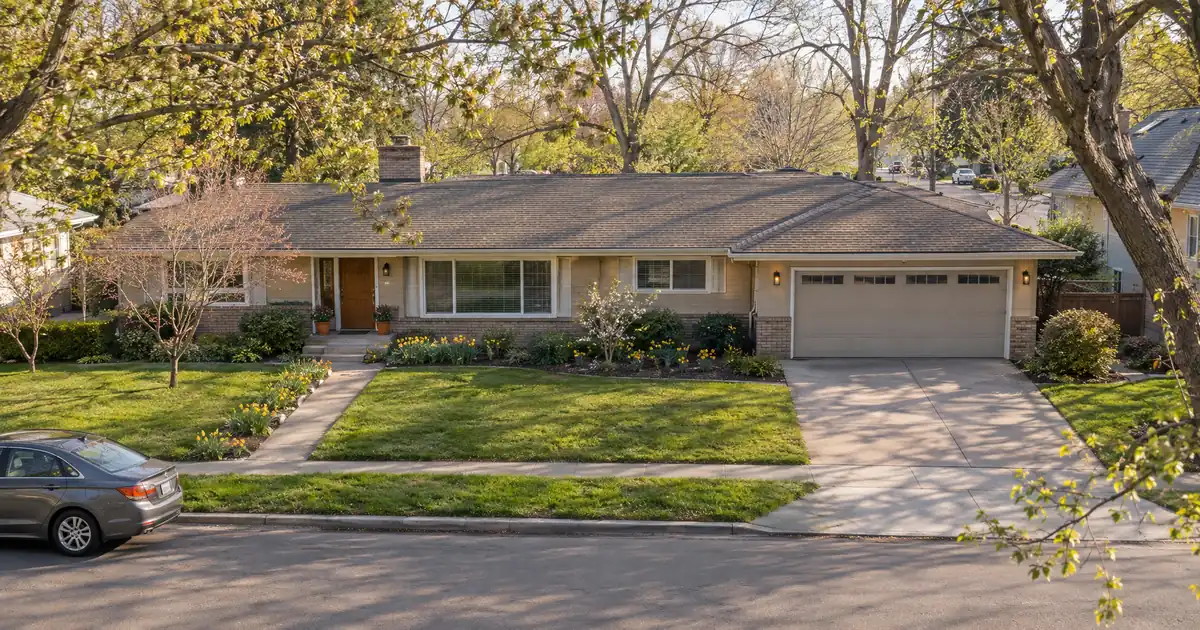
The Quick Read: On an unpermitted unit, the usual answer is none of it. Most programs set rent used for lender review from the appraisal, and the appraiser typically leaves an unpermitted unit out of both value and rent. A few lenders treat it differently, so the answer depends on the program.
- Collected rent and signed leases do not set rent used for lender review. The appraisal does.
- Run your numbers on the main dwelling’s market rent alone. Treat ADU rent as a bonus.
- Legal status decides the treatment far more than the unit’s type or quality.
- Ask the lender how it treats the unit before you order the appraisal.
- Legalizing the unit first is the cleanest way to bring its rent into the ratio.
An accessory dwelling unit (ADU) is a second, smaller home on the same lot as the main house. It might be a backyard cottage, a garage conversion, or a finished basement with its own entrance. Many of them were built without permits. That fact drives everything below.
DSCR Calculator
Run the numbers in your market
Rate source: Freddie Mac 30-yr average via FRED® — Federal Reserve Bank of St. Louis · effective Oct 15, 2026
Prefilled with starting assumptions — enter your own rent or nightly figures, taxes, insurance, and HOA for a more accurate picture.
Program parameters update from Lendmire’s centralized guideline source. Taxes and insurance are editable estimates.
As of Oct 15, 2026 · General Freddie Mac market benchmark, not a Lendmire loan offer. Rent, nightly rate, occupancy, taxes, and insurance are editable estimates. Short-term rental figures are estimates only and vary significantly by season, property type, management approach, and local short-term-rental rules — confirm local regulations before relying on them. Qualifying income for short-term rentals varies by program — some use appraisal market rent, others use documented STR history or projections — and is confirmed in underwriting. Not a Loan Estimate, approval, or commitment to lend. Program availability and eligibility are subject to lender guidelines, credit approval, property review, and underwriting.
Key Terms Defined
DSCR (debt service coverage ratio): Qualifying monthly rent divided by the full monthly housing payment. A result of 1.00 means rent equals the payment.
PITIA: Principal, interest, taxes, insurance, and association dues. It is the payment the rent has to cover.
Rent used for lender review: The rent figure the lender uses as the income side of the DSCR calculation. It can differ from what you actually collect.
Rent schedule: The appraiser’s written opinion of market rent, built from comparable rentals.
Unpermitted unit: Living space built or converted without the required permits or final inspection. It is not the same thing as a unit that is illegal under zoning.
Legal nonconforming: A unit that was lawful when built but no longer matches current zoning. Lenders may treat it differently from an unpermitted unit.
Why Doesn’t Real Rent Count as Qualifying Rent?
Your tenant’s rent is real. Rent used for program review is a different number. DSCR loans qualify primarily on property-level rental income covering the payment, subject to lender guidelines. The lender is underwriting the property, not your bank deposits.
That framing changes what counts. The property has to support the income on its own terms. Lenders also underwrite as if they might someday have to take the property back and operate it. A unit that was never permitted could be ordered vacated. Income that can disappear on a city notice is hard to count on.
A signed lease proves rent was agreed. It does not prove the unit is legal. A pile of deposit receipts doesn’t either. Many investors expect a long payment history to carry weight. In practice it rarely does when the unit’s status is the problem.
Most DSCR programs in Lendmire’s wholesale network work this way. Lease rent and market rent are both inputs. The legal-use finding sits above both.
What Does the Appraiser Do With an Unpermitted Unit?
The appraiser decides what the space is and what the file can say about it. Most of the ADU outcome is set here, before an underwriter reviews anything.
Here is the usual sequence.
1. You report the unit and its rent. This happens on the application or through a lease.
2. The appraisal is ordered. The appraiser gives an opinion of market rent on a rent schedule. Agency appraisal forms give a useful vocabulary. Form 1007 is the single-family comparable rent schedule, and Form 1025 is the small residential income property report. Both are listed on Fannie Mae’s forms page. A DSCR program may name its own form, so the lender tells you which one applies.
3. The appraiser classifies the space. Is it a legal unit, finished area, or just a bedroom? Is it permitted? Appraisers also weigh marketability and whether comparable sales reflect a similar layout, as McKissock’s appraisal education blog describes in its coverage of ADU size, amenities, and rent potential.
4. A rent opinion is developed. For an unpermitted unit, the appraiser often reports the space but gives it little or no rent and little or no value.
5. The lender selects rent used for eligibility review. Depending on the program, that could be a lease, the appraiser’s market rent, or the rent schedule. Programs also limit which unit setups are eligible.
6. The ratio is calculated. If the ADU rent is excluded, the top of the fraction shrinks and the ratio falls.
Two details matter here. First, the appraiser’s rent opinion for the main house is separate from the ADU question. Rental comparables for the main dwelling still count. Second, ADU rent generally needs comparable-market support. If the appraiser cannot find similar rentals with an ADU, the lender has nothing to anchor the number to.
What Does Each Legal Status Mean for Rent?
“Unpermitted” covers several situations that lenders treat differently. This table shows typical treatment. It is general guidance, not a rule, and each program sets its own terms.
| Legal status | Typical rent treatment | What you’d need to show |
|---|---|---|
| Never permitted | Usually excluded | Permit path or legalization plan |
| Permit pulled, not finaled | Often excluded until sign-off | Open permit history, inspection status |
| Permitted and finaled | Counted via lease or market rent | Permit, final sign-off, lease |
| Legal nonconforming | Depends on lender guidelines | Proof it predates the current rules |
| Split or multiple units | Program-specific limits | Recorded unit count, layout |
Notice what is missing: a column for how nice the unit is. A beautifully finished backyard cottage with no permit usually fares worse than a plain finaled one. Missing final inspections and life-safety gaps, such as egress, smoke detectors, and electrical, are common reasons a unit’s income gets set aside. An academic paper on appraising properties with ADUs notes that unpermitted units are often outside the official financing channels in the first place.
Is There a Published Haircut for Partial Credit?
No. There is no standard percentage that lenders apply to unpermitted rent. Anyone quoting one is describing a single program.
Here is what Lendmire sees across the lenders it places files with. The most common treatment is full exclusion. A smaller group of lenders will consider the unit if the appraisal supports it with comparable sales and comparable rents. In those cases, the result is still shaped by the appraiser’s conclusion rather than a fixed discount. The outcomes fall into three buckets:
- Excluded entirely. This is the most common result for a never-permitted unit.
- Counted at appraiser-supported rent. This is less common and requires comparables plus a program that allows it.
- Property declined under that program. This can happen when the unit’s condition or configuration raises eligibility questions beyond the rent.
Because of that spread, the sound planning approach is to assume exclusion and treat anything more as upside.
What Does the Math Look Like With and Without the ADU?
Take a modeled example. These are assumptions for illustration, not sourced market data. A single-family house on a lot with an unpermitted backyard unit. Assume the main dwelling’s market rent covers the full monthly payment at 0.95x. Assume the ADU’s rent would add another 0.30x of coverage if counted.
| Scenario | ADU rent counted | Coverage |
|---|---|---|
| ADU excluded | None | 0.95x |
| Partly counted (hypothetical) | Half | 1.10x |
| ADU fully counted | All | 1.25x |
The swing is the whole story. Counted fully, the file looks comfortable. Excluded, it sits below 1.00. Here the two path types matter. Across Lendmire’s network, 1.00 is where many select programs start. A separate select-lender path takes coverage below 1.00, with leverage and terms adjusted. Approval on that path is subject to lender guidelines, credit review, and property review.
A few more points on this math:
- The ratio is not cash flow. Clearing 1.00 only means rent covers the payment. Repairs, vacancy, management, utilities, and capital costs sit outside it.
- Down payment helps but doesn’t fix status. More equity lowers the payment and can lift the ratio. It never erases leverage caps, credit floors, reserve rules, or property eligibility.
- Typical ranges still apply. On a purchase, most files land at 75%–80% LTV (loan-to-value, the loan as a share of value). Credit floors start around 620 in parts of the network. Most programs want about 660, and 700+ opens the strongest leverage tiers. Reserves commonly run about 6 months of PITIA, subject to lender guidelines.
- Value can shrink too. If the appraiser gives the unit little or no value, LTV is measured against a lower number. On a cash-out refinance of an investment property, where the ceiling is around 75% LTV, that matters.
How Do Agency Rules Compare?
This is contrast only. DSCR loans are not agency loans, and agency rules do not govern them.
Agency guidance has long kept illegal-unit rent out of qualifying income. Freddie Mac’s ADU fact sheet says rental income from an illegal ADU may not be used to qualify. It applies that rule to owner-occupied agency loans. For a unit not allowed by zoning, Fannie Mae’s Selling Guide requires the appraisal to show the improvement is typical for the market. It does that by analyzing at least two comparable sales with the same non-compliant zoning use.
The common thread is useful. Even the agency world treats legal status and market comparables as the gatekeepers. Non-QM programs set their own terms, and they can be stricter.
DSCR vs. conventional financing
There are two common ways to finance an investment property, and they qualify you differently — here’s how investors weigh them.
Why investors choose it
- Qualifies on the property’s rental income — no personal tax returns, W-2s, or pay stubs needed to document income.
- No personal debt-to-income ceiling to clear, so existing mortgages and obligations don’t cap your borrowing the same way.
- Can be closed in an LLC, keeping the property inside a business entity.
- Built for scaling — not held to the limit on number of financed properties that conventional financing applies.
- Underwriting centers on the deal: generally qualifies when the rent covers the payment, a 1.00x coverage ratio being a common baseline (confirmed in underwriting).
- Designed specifically for investment property, including long-term and, where the program allows, short-term rentals.
Where it’s strong
- Often the lowest ongoing financing cost for a buyer who fully qualifies on personal income — a fit for a first property or a cost-first purchase.
Trade-offs for investors
- Requires full personal income documentation and must fit within a debt-to-income limit — salary, existing debts, and other mortgages all count.
- Typically held in your personal name rather than a business entity.
- Caps how many financed properties you can carry, which can become a ceiling as a portfolio grows.
- Evaluates you as a borrower as much as the property, which usually means more paperwork.
How investors usually choose: a first or single property often optimizes for the lowest financing cost; portfolio builders often optimize for leverage, vesting in an LLC, and scaling past conventional caps. The right answer depends on your goals, the property, and current guidelines — both paths run through select lenders in Lendmire’s wholesale network, with eligibility and terms confirmed in underwriting.
What Are Your Options?
You have four realistic paths. Each carries a different trade-off.
| Option | Upside | Trade-off |
|---|---|---|
| Qualify on main unit alone | Simplest, no changes needed | Needs coverage without ADU |
| Legalize first, then apply | Unit rent can enter the ratio | Cost, permits, and added steps |
| Renegotiate the price | Lowers the loan size needed | Seller must agree |
| Choose a different program | May fit your leverage needs | Terms adjust, ask about pricing |
Qualifying on the main unit alone is the best default. If the house clears coverage without the ADU, the unpermitted unit is irrelevant to the file. Any rent it earns is extra.
Legalizing first works when the unit can be brought into compliance. Missing permits, final inspections, and life-safety items are fixable in many cases. Zoning is different. Some jurisdictions do not allow the unit at all, so confirm that before spending anything. Legalizing may also change insurance and how the property is assessed, so build those into your numbers.
Renegotiating the price makes sense when you are the buyer. If the seller marketed the unit’s income, the appraiser may not credit it, and the price should reflect that.
A different program can help when coverage is close but not there. Select lenders in the network offer sub-1.00 coverage with leverage and terms adjusted, and structures such as extended terms or interest-only periods exist through select lenders. Lendmire’s complete DSCR loans guide covers how these programs fit together.
What Should You Gather Before You Apply?
Even if the unit is likely to be excluded, a clean file prevents surprises. The short checklist:
- Permit history and any final inspection or certificate of occupancy
- A description of the unit: size, entrance, kitchen, bath, utilities
- Leases and proof of payment, which show rent history but not legal status
- Insurance confirming how the unit is actually occupied
- Any recorded easements or restrictions on the lot
- A plain statement of whether the unit is permitted, so nobody discovers it mid-file
Accurate disclosure helps. A lender that learns of an unpermitted unit late may stop the file or change the structure.
Where Does the General Rule Break?
Four edge cases come up often.
Legal nonconforming units. A unit that predates the zoning rule is not the same as an unpermitted one. Non-QM programs decide for themselves, so ask.
Zoning that bans ADUs. Where the zoning doesn’t allow an ADU at all, treatment gets stricter. A non-QM lender may be harder on this than an agency program.
Split or multiple units. Some owners divided one ADU into two, or built more than one. Program limits on unit counts vary, and a lender may require the property be returned to its recorded configuration.
Purchase versus refinance. On a purchase, you can negotiate before the appraisal. On a refinance, the unit already exists and may already produce rent. Expect the same appraisal logic either way.
One more point on owner occupancy. DSCR loans are designed for non-owner-occupied investment properties. Because they are business-purpose investor loans, they are reviewed differently from a standard owner-occupied mortgage.
What Mistakes Cost Investors the Most?
- Underwriting with collected rent. The deal looks fine on your spreadsheet and thin on the lender’s.
- Using a lease above market. Rent used for the lender’s review follows market comparables, not a lease priced high.
- Assuming type beats legality. The label on the unit matters less than its status.
- Ordering the appraisal first. If the program treats the unit differently than you assumed, the fee is already spent.
- Ignoring the forced-vacate risk. A city notice can remove the unit’s income and affect the loan’s coverage after closing.
Frequently Asked Questions
Does unpermitted ADU rent count toward a DSCR loan?
Usually not. Most programs set rent used for financing review from the appraisal, and the appraiser typically excludes an unpermitted unit from rent and value. A few lenders will consider it with comparable-market support. Plan on the main dwelling’s rent alone.
Can I still get a DSCR loan on a property with an unpermitted ADU?
Possibly, depending on the program and the appraisal. Many files work when the main house covers the payment on its own. Some lenders decline the property if the unit raises eligibility questions, so ask before you order the appraisal.
Does a signed lease change the answer?
No. A lease documents the rent, not the unit’s legal status. It can support market rent for a legal unit, but it rarely rescues rent from an unpermitted one.
Does the unpermitted unit add value to the property?
Often little or none. Appraisers may leave it out of the value conclusion, which can lower the value the lender uses. A permitted unit may support a higher appraised value, depending on comps and underwriter review.
Can I legalize the unit later and refinance?
Yes, in many cases. Once the unit is permitted and finaled, a new appraisal can consider its rent. That depends on local zoning and on the lender’s guidelines at that point.
Next Steps
Start with the conservative version of the deal. Price it on the main dwelling’s market rent. If the ratio clears there, the ADU becomes a bonus. If it doesn’t, decide whether to legalize, renegotiate, or look at a different program.
If you are buying or refinancing a rental property and want to see how the numbers work, Lendmire can help you compare DSCR loan options based on the property income, credit profile, leverage, and investor goals. As a broker, Lendmire arranges financing through select lenders in its wholesale network across 41 markets, including Washington, D.C. All terms are subject to lender guidelines and are not a commitment to lend. An unpermitted unit is one of the few features of a property that can change a deal’s math overnight, and the appraisal is where that change shows up.
About Lendmire
Lendmire — NMLS# 2371349 — is a mortgage brokerage specializing in DSCR investor loans, helping arrange financing across 41 markets, including Washington, D.C., through wholesale and investor-lending channels. The model centers on property-level rental income reviewed by the lender rather than W-2 documentation, subject to lender guidelines, suiting entity-owned and multi-property investors. Lendmire holds Scotsman Guide Top Mortgage Workplace recognition for 2025 and 2026.
Get Started
Ready to find the right loan for you?
In about 30 seconds you can review financing options available for your investment property. No commitment required.
Informational only. Not a Loan Estimate, approval, or commitment to lend. Program availability and eligibility are subject to lender guidelines, credit approval, property review, and underwriting.
References
1. Fannie Mae Selling & Servicing Guide Forms
2. McKissock: Resources for Appraising Accessory Dwelling Units
3. Understanding and Appraising Properties with Accessory Dwelling Units
This article is part of Lendmire’s DSCR loan program — full qualification details, guidelines, and scenarios live on the program page.
Related reading: How Much Cash a 2-4 Unit DSCR investor Brings After a Low Appraisal · Renting to a Parent vs. a Stranger on a DSCR Loan · Can a DSCR Loan Use Market Rent for an Inherited Tenant?
Brandon Miller
Founder & CEO, Mortgage Loan Originator, Lendmire LLC
- Mortgage Loan Originator · NMLS# 1129696 · Verify on NMLS Consumer Access
- North Carolina Real Estate Broker · License# 343312 · Verify on NCREC
- North Carolina Insurance Producer · License# 19053198 · Property, Casualty, Life, Health · Verify on NAIC SBS
- Lendmire LLC · Firm NMLS# 2371349 · Verify firm licensure
Important disclosures. Lendmire (NMLS# 2371349) is a licensed mortgage brokerage. Lendmire is not a direct lender, depository institution, or financial advisor. All loan inquiries are subject to lender underwriting; this article does not constitute a commitment to lend. Rates, terms, and program guidelines are subject to change without notice and vary by borrower profile, property type, and state. Information in this article is general in nature and is not financial, legal, or tax advice. Equal Housing Opportunity. NMLS Consumer Access: nmlsconsumeraccess.org.