
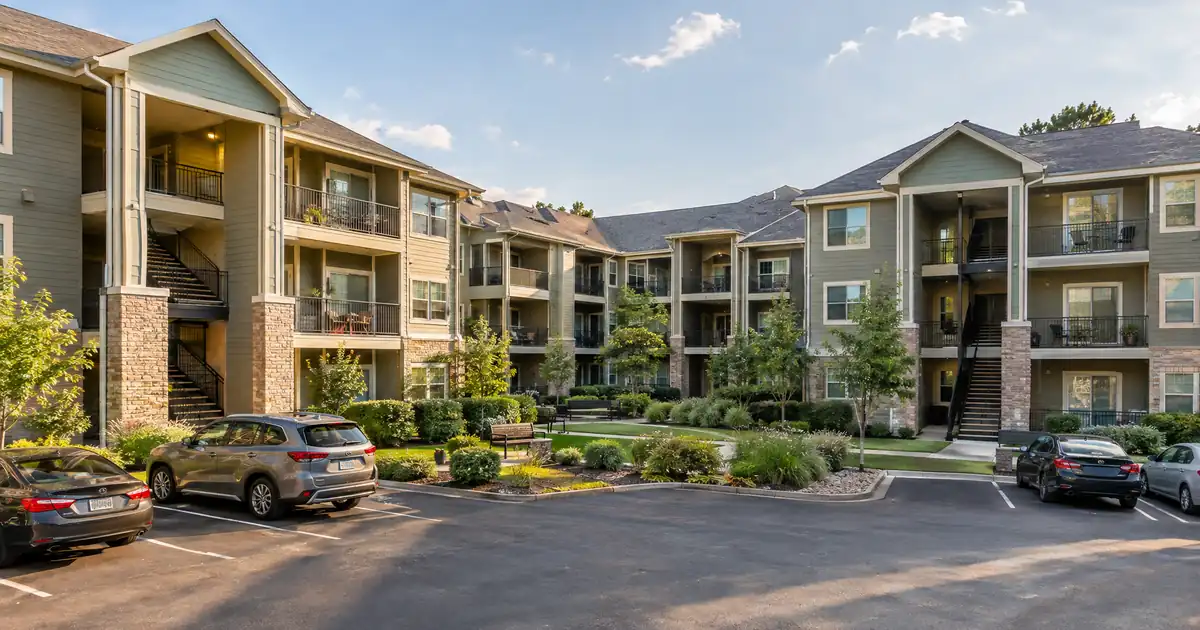
Apartment Cash Out Refinance — The Quick Read: An apartment cash-out refinance swaps your current loan on a rental property for a bigger one. You keep the difference in cash. On most files in Lendmire’s wholesale network, the ceiling sits around 75% loan-to-value. You’ll also need roughly six months of ownership before the file is eligible. A select-program floor of 1.00 debt-service coverage ratio decides how much rent has to show up against the payment. But here’s the thing that changes everything: unit count. A duplex and a 40-unit building don’t get underwritten the same way. Different forms. Different lenders. Different rules.
Key Takeaways
- Unit count splits the product in two: 2-4 unit properties run through DSCR/non-QM underwriting; 5+ unit buildings typically move to agency, HUD, or bank-portfolio channels.
- Cash-out leverage tops out around 75% LTV across most of the network, regardless of how much higher a rate-and-term or purchase transaction might go.
- Seasoning (how long title has been held) runs about six months before cash-out becomes available on most programs.
- Coverage is measured strictly as rent against the full monthly payment — it is not the same thing as positive cash flow after real operating costs.
- Sub-1.00 coverage isn’t automatically disqualifying, but it comes with reduced leverage and adjusted terms through select lenders, not as a standard program feature.
DSCR Cash-Out Calculator
Run the cash-out numbers in your market
Rate source: Freddie Mac 30-yr average via FRED® — Federal Reserve Bank of St. Louis · effective Aug 6, 2026
Prefilled with local estimates — enter your property’s value, balance, taxes, and insurance for a more accurate picture.
Program parameters update from Lendmire’s centralized guideline source. Taxes and insurance are editable estimates.
As of Aug 6, 2026 · General Freddie Mac market benchmark, not a Lendmire loan offer. Property value, balance, taxes, and insurance are editable estimates. Maximum loan-to-value varies by lender, program, property type, and seasoning. Not a Loan Estimate, approval, or commitment to lend. Program availability and eligibility are subject to lender guidelines, credit approval, property review, and underwriting.
Key Terms Defined
DSCR (debt-service coverage ratio): Divide the property’s monthly rent by its full monthly payment. That payment includes principal, interest, taxes, insurance, and any HOA dues — together called PITIA. The result is your DSCR. A ratio of 1.00 means rent covers the payment exactly.
LTV (loan-to-value): This is the loan amount shown as a percentage of the property’s appraised value. A lower LTV gives the lender more equity cushion.
Seasoning: This is the minimum time a borrower (or their LLC) must hold title before a cash-out refinance becomes eligible. It runs on its own clock — separate from how old the existing mortgage is.
PITIA: This stands for principal, interest, taxes, insurance, and association dues combined. It’s the full monthly obligation used in the coverage calculation — not just principal and interest.
Rate-and-term refinance: This type of refinance adjusts the loan’s terms without pulling cash out. It’s generally underwritten with more leverage room than a full cash-out.
The Unit-Count Divide Most Investors Miss
Everything about how an apartment cash-out refinance gets underwritten changes at the 5-unit mark. A 2-4 unit property gets appraised on Fannie Mae’s Form 1025 Small Residential Income Property Appraisal Report. This form requires the appraiser to document comparable rental properties and support a market-rent number for the property. That rent figure becomes the top half of the DSCR math a non-QM lender uses to size the loan.
Cross into 5+ units, and the file usually leaves the residential DSCR lane entirely. It moves into agency small-balance programs, bank-portfolio lending, or a government-insured path like HUD’s Section 207/223(f) program. HUD insures the refinancing of existing multifamily rental housing, but it underwrites based on net operating income — not a rent-schedule DSCR grid.
| Property Size | Appraisal Basis | Underwriting Basis | Typical Program Lane |
|---|---|---|---|
| 2-4 units | Form 1025 rent schedule | Rent vs. PITIA (DSCR) | DSCR / non-QM investor loan |
| 5+ units | Commercial appraisal, NOI-based | Net operating income, debt yield | Agency small-balance, HUD 223(f), bank/CMBS |
This is the single biggest source of confusion when people search “apartment cash-out refinance.” A duplex owner and a 20-unit building owner are running two completely different processes. Different appraisal forms. Different lenders. Different paperwork. It’s not the same product at different sizes. Lendmire’s wholesale network places the 2-4 unit DSCR path. Anything larger routes to a different type of lender.
How Underwriting Actually Treats a Cash-Out File, Step by Step
DSCR loans are built for non-owner-occupied investment properties. Because they’re business-purpose investor loans, they get reviewed differently from a standard owner-occupied mortgage. Qualification runs mainly on the property’s rental income, not on the borrower’s traditional personal-income paperwork, subject to lender guidelines.
Here’s the sequence on a typical DSCR-lane apartment cash-out file:
1. Classification. The file gets sorted into rate-and-term or full cash-out right at intake. This decision sets the LTV ceiling for everything that follows, since cash-out always caps tighter than a purchase transaction.
2. Seasoning and title check. Underwriting checks how long the borrower or LLC has held title. Most programs in the network want roughly six months of ownership before cash-out becomes eligible.
3. Appraisal and rent conclusion. An independent appraisal sets the current market value. On 2-4 unit files, it also sets a market-rent figure. This appraiser-derived rent number — not a self-reported one — drives the coverage math.
4. Coverage calculation. Rent gets divided by the full monthly payment to produce the DSCR. Some programs use a floor of 1.00, but that’s not a universal industry rule — it’s a select-program threshold. Stronger ratios open up better leverage and pricing.
5. Credit and reserves review. Credit still matters, even though income doesn’t run through traditional personal-income paperwork. Reserve requirements vary by lender, leverage, and loan size. They commonly land around six months of PITIA. Some conservative rate-and-term files under $1,500,000 at modest leverage may see reserves waived. Files above that amount typically need closer to nine months.
6. Terms and closing. Rate structure and amortization get finalized here. DSCR loans are business-purpose loans, so they fall outside TRID’s consumer-disclosure timeline. That means the usual Loan Estimate/Closing Disclosure clock that governs owner-occupied mortgages doesn’t apply.
Scotsman Guide has reported that non-QM lending in this space is highly individualized by lender. One lender’s rules aren’t another’s. A file that doesn’t fit one program can still work at another if it has stronger compensating factors.
What Actually Determines the Cash-Out Number
Two tests have to pass at the same time on a cash-out file. First: enough equity against the 75% LTV ceiling. Second: enough rent against the payment. Passing just one test won’t get the deal done. Final terms depend on lender guidelines, property type, leverage, and the borrower’s full credit picture.
Picture a fourplex bought four years ago. It’s appreciated a lot, and rents have climbed along with it. The refinance amount sizes toward the network’s roughly 75% LTV ceiling on the new appraised value. But actual cash proceeds depend on paying off the existing loan balance, covering closing costs, and confirming the new, bigger payment still clears the lender’s coverage floor. A property with plenty of equity but weak rent can hit a coverage wall before it hits the LTV wall. A property with strong rent-to-payment coverage but limited appreciation runs into the opposite problem. The strongest files clear both tests comfortably — not just one. All of this is subject to lender guidelines and a full review of property, leverage, and credit.
Credit still shapes where a file lands on leverage. Some parts of the network allow a 620 floor. Most programs want something closer to 660. A score of 700 or higher tends to unlock the strongest leverage tiers. On loan amounts, most standard programs top out around $3,000,000. Above roughly $2,500,000, the network generally sticks to 30-year fixed structures instead of shorter or adjustable terms.
Coverage below 1.00 isn’t automatically a dead file either. Select lenders in the network will still review a property whose rent falls short of full coverage. Leverage comes down and terms adjust to compensate. This isn’t a standard program feature — it’s a lender-by-lender call, not something available across the board. A no-ratio option is available for DSCR below 1.00 with stronger credit or higher down payment; qualification on that path rests on credit and equity rather than a rent-coverage calculation.
Rental-market conditions also shape what an appraiser is likely to land on for rent. The U.S. Census Bureau’s Housing Vacancy Survey reported a national rental vacancy rate of 7.3% in the second quarter — nearly flat against 7.0% a year earlier. The Harvard Joint Center for Housing Studies notes vacancy has climbed from a record low of 5.9% to levels closer to the 1990s average of 7.7%. But multifamily-specific data from CBRE tells a tighter story at the property level: 4.8% vacancy, with rents holding firm. That’s a reminder that broad rental-market headlines and multifamily-specific numbers don’t always move together. It’s the appraiser’s submarket rent conclusion, not a national statistic, that decides the file.
Structures and Variations Worth Knowing
Cash-out isn’t the only way to reach an apartment’s equity. And the standard DSCR path isn’t the only structure inside it.
Short-term rental cash-out runs tighter than long-term rental financing. Purchase leverage tops out around 75% LTV. Refinance and cash-out generally land closer to 70%. Lenders typically want a 640-plus credit score, roughly 12 months of hosting history, and a 1.00 coverage floor before extending terms.
Investment-property HELOC lines cap at $500,000 total across the network. There’s no higher tier above that for a home-equity line on a rental property. That makes a full cash-out refinance the more common tool once equity needs go past that ceiling.
Term structures on the standard side are built around a 30-year fixed spine. Extended 40-year terms and interest-only periods are available through select lenders in the network. Adjustable-rate structures exist too, for investors who prefer them — though none of these change the leverage or coverage rules above.
State overlays matter more than most investors expect. In states like Connecticut, Florida, Illinois, and New Jersey, the network’s overlays generally hold loan sizes to roughly $2,000,000 on these files. That’s true even when the coverage math and equity position would otherwise support more.
Where the General Rule Breaks
A handful of properties fall outside this framework no matter how strong the numbers look. Manufactured homes — single- and double-wide — log homes, and barndominiums are not offered through the network’s DSCR programs. They’re not “harder to finance.” They simply fall outside what these programs cover.
Entity vesting changes more than just paperwork. Business-purpose credit extended to an entity “other than a natural person” — a corporation, LLC, or similar — sits outside standard consumer mortgage disclosure rules. So how title is held can affect which underwriting path and which state-level requirements apply to a given file.
Seasoning isn’t a fixed six-month wall in every case either. All-cash purchases sometimes qualify for different treatment, letting an investor tap equity sooner than a financed purchase would allow. The specifics depend on the lender, the property, and the program. Confirm this file-by-file — don’t assume it.
Tax treatment can depend on how cash-out funds are used and how the property is held. Investors should keep clear records and talk with a qualified tax professional before relying on any deduction.
The Investor Decision in Practice
Before calling a lender, it helps to know which lane a property falls into and what the file needs to clear. Here’s a quick self-check: confirm the unit count (2-4 vs. 5+), estimate current market value against the existing loan balance, pull together roughly six months of ownership history, and get a realistic read on current market rent. Not last year’s lease — what the unit would rent for today. That rent figure, checked against the full payment on a larger loan, tells an investor whether the file clears coverage before an appraisal ever gets ordered.
Lendmire (NMLS# 2371349) is a mortgage broker that arranges DSCR investor loans through select lenders across 40 states plus Washington, D.C. — and works apartment cash-out files through the small-multifamily DSCR lane described above. For deals that need the full mechanics, Lendmire’s complete DSCR loans guide walks through qualification basics. The DSCR cash-out refinance page and apartment-specific cash-out refinance page go deeper into what’s covered here. Investors newer to the concept can start with what a cash-out refinance actually is before working through unit-count and coverage questions. Credit-score thresholds are covered separately on Lendmire’s minimum credit score page.
Loan approval is never guaranteed, and nothing here is a commitment to lend. Every scenario described here is subject to lender approval and depends on the specific borrower, property, and program guidelines in effect at the time of application. This article is general information, not financial, legal, or tax advice.
If you’re weighing a cash-out refinance on a 2-4 unit rental and want to see how the numbers actually work, Lendmire can help compare DSCR loan options based on the property’s income, credit profile, leverage position, and investor goals — reach the team at 828-256-2183 or request a quote.
Frequently Asked Questions
What’s the maximum LTV on an apartment cash-out refinance?
Most programs in Lendmire’s wholesale network cap cash-out leverage around 75% LTV on 2-4 unit properties. That’s true regardless of how high a purchase or rate-and-term transaction might otherwise go. That ceiling can drop further in certain overlay states or on larger loan amounts. It’s worth confirming against the specific property and state before assuming the full 75%.
How long do I need to own the property before I can cash out?
About six months of title seasoning is the common expectation across most programs. Some all-cash purchase scenarios may see different treatment. But that depends heavily on the lender and program, so confirm it file-by-file rather than assume it.
Does a 5+ unit apartment building qualify for the same DSCR loan as a duplex?
No. Once a property crosses into five or more units, it generally exits the residential DSCR lane. It moves into agency, HUD, or bank-portfolio financing, underwritten around net operating income instead of a rent-schedule DSCR calculation. These are different products with different appraisal forms and different lenders — not just variations on the same loan.
Can I still refinance if my coverage ratio is below 1.00?
Sometimes. Select lenders in the network will review properties with rent falling short of full coverage. Leverage typically comes down and terms adjust to compensate. A property qualifies mainly on property-level rental income covering the payment, subject to lender guidelines.
What credit score do I need for the strongest leverage?
Some parts of the network allow a 620 floor, and most programs are built around 660 as a working minimum. Scores of 700 or higher tend to unlock the strongest available leverage tiers. Every file still gets reviewed on its own merits alongside coverage, reserves, and property type.
For the mechanics of pulling equity out of a rental property, see cash-out refinance on an investment property.
About Lendmire
Lendmire (NMLS# 2371349) is a DSCR-focused mortgage broker that helps arrange investor financing across 41 markets, including Washington, D.C., through wholesale and investor-lending channels. Lenders generally review DSCR eligibility around the property’s rental income rather than personal income documentation, subject to lender guidelines. This approach works well for self-employed investors, LLC operators, and portfolios above four financed properties. Scotsman Guide named Lendmire a Top Mortgage Workplace in both 2025 and 2026.
A deeper walk-through of investment-property equity extraction lives in cash-out refinance on an investment property.
Get Started
Ready to find the right loan for you?
In about 30 seconds you can review financing options available for your home or investment property. No commitment required.
Informational only. Not a Loan Estimate, approval, or commitment to lend. Program availability and eligibility are subject to lender guidelines, credit approval, property review, and underwriting.
References
1. Fannie Mae — Form 1025 Small Residential Income Property Appraisal Report
2. HUD — Multifamily Programs (Section 207/223(f))
3. Scotsman Guide — Reach Real Estate Investors by Becoming an Expert in These Loans
4. Harvard Joint Center for Housing Studies — Ten Takeaways from the State of the Nation’s Housing
5. CBRE — Q1 2026 US Multifamily Figures
This article is part of Lendmire’s investment property cash-out refinance program — full qualification details, guidelines, and scenarios live on the program page.
Related reading: Cash Out Refinance Apartment · Apartment Investment Property Refinance Lending · Apartment Investment Property Refinance Lenders
Brandon Miller
Founder & CEO, Mortgage Loan Originator, Lendmire LLC
- Mortgage Loan Originator · NMLS# 1129696 · Verify on NMLS Consumer Access
- North Carolina Real Estate Broker · License# 343312 · Verify on NCREC
- North Carolina Insurance Producer · License# 19053198 · Property, Casualty, Life, Health · Verify on NAIC SBS
- Lendmire LLC · Firm NMLS# 2371349 · Verify firm licensure
Disclosures. The information presented in this article is general market commentary, not financial, legal, or tax advice. Lendmire is a mortgage brokerage (NMLS# 2371349) — not a direct lender or depository institution — and loan placement is subject to lender underwriting. Nothing in this content represents a commitment to lend. Loan terms, pricing, and program availability vary based on borrower qualifications, property characteristics, and state of subject property, and are subject to change at any time. Lendmire complies with Equal Housing Opportunity requirements. Consumer access: nmlsconsumeraccess.org.