
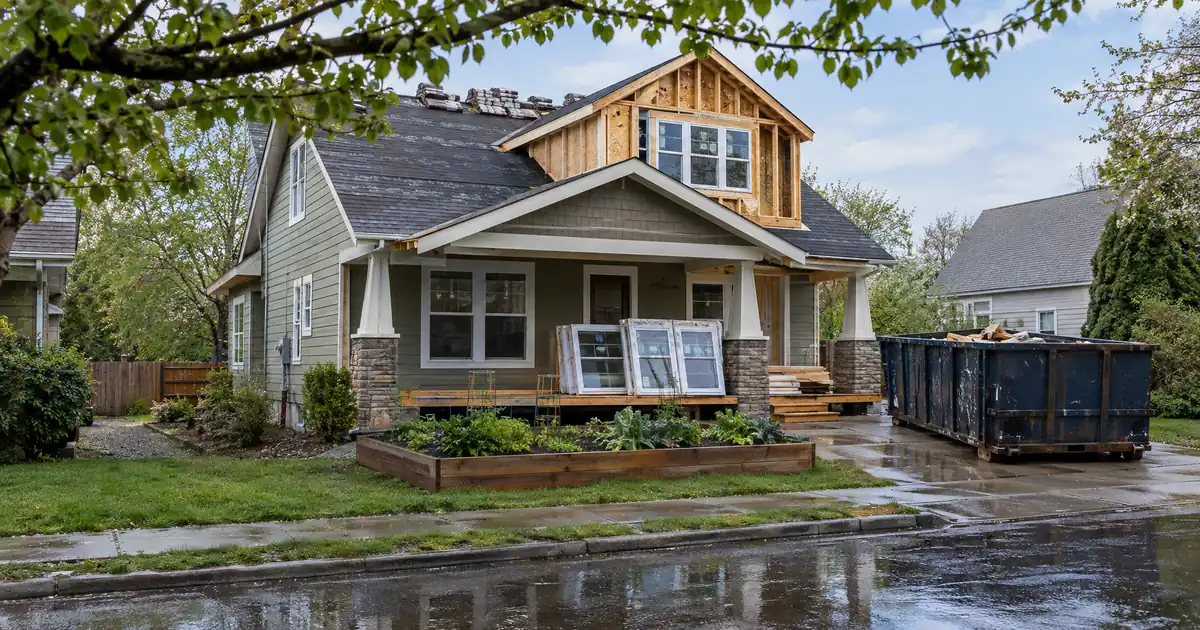
The Quick Read: Your after-repair value (ARV, the projected worth of the property once the work is finished) is the number you plan with. The lender’s value is the number that sizes the loan. When the two disagree, the lender’s number wins, and you cover the difference in cash.
- The lender usually orders its own appraisal, broker price opinion, or internal valuation. Your comp sheet does not replace it.
- A first-time flipper typically sits in the lowest leverage tier, so a low valuation leaves less room for error.
- The loan usually has two limits, a cost-based one and a value-based one, and the lower limit governs.
- The DSCR lender you refinance into later runs its own valuation and does not use your ARV.
Most first flips go wrong at the gap between the investor’s number and the lender’s number, so this article treats the two as a real choice of planning basis. Your ARV is built from recent comparable sales and answers the question “what could this sell for finished?” The lender’s value answers a different question: what could the lender recover if the deal stalls? Investors with a track record can lean harder on their own number. A first-timer is better served by planning at the lender’s number and treating anything above it as upside.
What this loan actually costs to carry.
Hard money is sized against the project and priced by time. Enter the deal and see how much the program will lend, the cash required at closing, the carry while you hold it, and what is left at the exit.
Leverage tiers on the current program: 85% with fewer than 2, 90% with 2 or more, 93% with 5 or more completed projects — every tier capped at 75% of after-repair value. Loan amounts up to $5,000,000, larger by exception; terms of 6 to 18 months, interest-only, no prepayment penalty. The rehab portion funds in draws against completed work, not at closing.
Program parameters shown update from Lendmire’s centralized guideline source. Rate, points, and months are editable assumptions, not quoted terms.
Cost cap sets the loan · positive spread
Illustrative estimate only — not a quote, Loan Estimate, approval, or commitment to lend. Rate, points, and months are editable assumptions. Hard money is business-purpose financing for real estate investors, not a consumer mortgage. Leverage on the current program tops out at 93% of project cost for investors with a documented track record, capped at 75% of after-repair value, with rehab funding up to 100% of the documented budget released in draws; actual terms vary by lender, borrower experience, property, and exit. Lendmire is a mortgage broker, not a lender.
Lendmire is a mortgage broker that arranges hard money and DSCR investor loans through a wholesale network of lenders in 41 markets, including Washington, D.C. Everything below about program mechanics reflects what that network typically does. Every file is underwritten individually and nothing here is a commitment to lend.
Side-by-Side
The table compares the two numbers on how they are set and what they need from you. Lender-side cells reflect typical hard money practice and the network’s guidelines. Individual lenders differ.
| Factor | Your ARV | Lender’s Value |
|---|---|---|
| Basis | Your comps and judgment | Lender-ordered value, capped by cost |
| Documentation | Comp sheet, scope, budget | Contract, scope, budget, entity papers |
| Property types | Anything you can comp | 1-4 unit non-owner-occupied typical |
| Entity vesting | Doesn’t change the number | Entity documents if LLC-held |
| Timeline | Built before you make an offer | Ordered after contract and scope exist |
| Reserves | Your own contingency plan | Vary by lender, experience, and file |
Hard money is business-purpose lending. The lender may ask for proof you will not live in the property, and for entity documents when an LLC holds title, subject to lender program eligibility.
Key Terms Defined
As-is value: What the property is worth today, before any work.
Broker price opinion (BPO): A lighter value opinion from a real estate broker, shorter than a full appraisal.
Loan-to-cost: The loan as a percentage of project cost, meaning purchase price plus rehab budget.
Draw: A release of rehab money after a phase of work is completed and checked.
Hypothetical condition: An appraiser’s way of valuing a property as if the planned work were already done.
PITIA: Principal, interest, taxes, insurance, and any association dues, which is the monthly obligation a DSCR lender compares rent against.
ARV Appraisal vs Lender Value: Why the Gap Appears
The gap exists because the two numbers come from different people with different risks. Landlord Studio defines ARV as the projected post-renovation value and notes that it differs from current market value. Stessa describes investors building it from a comparative market analysis of recent sales, adjusting for square footage, beds and baths, lot size, age, and condition. That is a sound planning method. It is also a method where optimism creeps in without anyone noticing.
The lender’s value starts from your contract, your scope of work, and your budget. The lender then orders its own valuation. In practice that is a full appraisal showing an as-is value and an as-completed value, a BPO, or an internal review. Which method applies depends on the lender, and a good lender will tell you before you apply.
A true “ARV appraisal” is also a strange creature. The property is not finished, so the appraiser typically values it under a hypothetical condition, meaning the improvements are treated as complete and the report must say so. The appraiser can only credit what your plans and budget make believable. A vague scope gets a cautious number.
Several things commonly pull the lender’s number below yours:
- Stale or distant comps. Sales from a different block or an older market stand in for your finished product.
- List-price comps. Active listings show hopes, not closings. Appraisers lean on closed sales.
- Unrenovated comps. A comparable sale that never had the improvements you plan will drag the value down.
- Over-improving for the block. A finish level the neighborhood has not paid for rarely gets full credit.
- A thin scope. If the budget does not clearly produce the finished product, the value is discounted.
How the Loan Actually Gets Sized
For a first flip, the network’s hard money programs typically fund up to 85% of project cost (loan-to-cost) for borrowers with fewer than two completed projects, always capped at 75% of after-repair value. Borrowers with two or more completed projects reach 90% of project cost, and five or more reach 93%. Up to 100% of the rehab budget funds in draws against completed work. All of this varies by lender, property, and experience.
Those two limits, one on cost and one on value, are the whole story. The lower one governs. In a first flip the cost leg usually binds when your number and the lender’s number agree. The value leg binds when the lender’s number comes in low.
Run the numbers on a modeled example. These are assumptions for illustration, not market data, and they use index units instead of dollars.
- Assume your ARV is 100 units and total project cost (purchase plus rehab) is 80 units.
- At 85% of project cost, the cost leg allows 68 units.
- At the 75% value cap on your ARV of 100, the value leg allows 75 units. The cost leg is lower, so the loan is 68.
- Now assume the lender’s value comes in at 85 units. The 75% cap becomes 63.75 units, which is now the lower limit.
The loan shrinks by about four points of your original ARV. You never changed the deal, and your cash requirement still grew. A lender is also free to lend against what it believes the value could be, so a strong scope and good comps can help your case. Even so, the number that matters is the one that comes out of the lender’s valuation, not the one you believe.
When Leaning on Your Own ARV Is the Better Fit
Your own ARV is the right basis in three situations.
Before you make an offer. Nobody orders an appraisal to screen ten possible deals. Your comp-based number is how you decide which properties deserve a contract. The widely used 70% rule says to pay no more than 70% of ARV minus repairs. The Motley Fool describes it as a guideline whose percentage gets adjusted by market. It is a purchase screen, not a loan-sizing rule, and the leftover share is meant to cover holding costs, selling costs, and profit.
When you have a track record. Investors with completed projects reach the higher cost-based tiers, and lenders have seen their numbers hold up. Their ARV and the lender’s tend to sit closer together. That is an edge you earn, not one you can assume.
When your comps are unusually clean. Several closed sales, nearby, recent, and renovated to the finish level you plan, make a defensible case. If you can hand the lender that comp set along with a detailed scope, you are doing what you can to narrow the gap.
Your own number does one more job. It tells you whether the exit works at all. A flip needs to sell, and a buyer’s lender will run its own appraisal at that stage. If your ARV only holds up with generous assumptions, the sale can leave you exposed no matter how your loan was sized.
When Trusting the Lender’s Value Is the Better Fit
The lender’s number is the better planning basis for most first flips, and it is the only basis once you apply.
When you are new. First-time investors qualify at the lower leverage tiers, usually with a 620 minimum score and additional conditions below 660. You have no completed projects to offset a low valuation. Planning cash at the lender’s number protects you from a surprise at the appraisal.
When the rehab is heavy. The more the value depends on work not yet done, the more the lender relies on assumptions it must trust. A light cosmetic rehab leaves little distance between as-is and as-completed. A deep gut rehab leaves a lot, and the appraiser will treat it cautiously.
When your scope is still soft. The lender reviews the budget for realism. An unrealistic budget can stall a file outright, and a property that is too far gone for its price may not get funded at all. A line-item scope with contractor numbers earns more credit than a lump-sum guess.
When your cash is limited. If a low value would break the deal, you should know that before the contract goes hard. Build the deal so it still works if the lender’s number comes in below yours. Keep a contingency of cash for overruns as well. Profit math also carries tax effects, which vary, so consult a qualified professional.
What to Do If the Valuation Comes in Low
Work down this list from more affordable fix to hardest.
1. Check the comps used. If the appraiser used sales without your improvements, ask what finished sales would show. Most appraisal companies allow disputes, and more relevant closed sales are the usual basis.
2. Review the scope. If the report ignored upgrades that are in your plan, send a clearer scope and budget.
3. Ask the lender how the number was set. A BPO or internal review can differ from a full appraisal. Learn which one you are dealing with.
4. Renegotiate the purchase price. A lower price shrinks project cost and helps the cost leg and your cash at once.
5. Trim the scope. Cut work that the market is not paying for.
6. Bring more cash. This works only if the profit still justifies it.
7. Walk away. An unworkable deal you did not close is cheaper than one you did.
The Second Lender Value: Your DSCR Exit
Hard money is short-term. Terms typically run 6 to 18 months, interest-only, with no prepayment penalty. Many investors refinance into long-term DSCR financing once the property is stabilized with a tenant, and Lendmire brokers that path.
Here the valuation question appears again, with a new set of rules. A DSCR lender orders its own appraisal and sizes the loan on that value. Your ARV never enters the formula. On a cash-out refinance of a standard rental, the network tops out around 75% LTV, and about six months of seasoning is the common expectation. Seasoning is the waiting period between buying a property and refinancing it, and it varies by lender.
The same appraisal also carries a market-rent opinion. Agency form numbers are a handy reference for what that report contains: Fannie Mae lists the 1004 for single-family value, the 1007 rent schedule, and the 1025 for small income properties. DSCR loans are not agency products, so those names are only a map of what the appraiser reports.
Coverage is where your hard money assumptions can collide with the exit. DSCR compares monthly rent to PITIA. A coverage of 1.00 is where many select programs start. A separate select-lender path takes coverage below 1.00, with leverage and terms adjusted. Clearing 1.00 is not the same as positive cash flow, because repairs, vacancy, management, utilities, and capital expenses sit outside the calculation.
So a flip can work at your ARV and still leave cash trapped at the exit. If the DSCR appraisal lands below your planning value, the refinance may not repay the hard money loan in full. Stress-test the whole path at the lender’s value, not just the first step. The complete DSCR loans guide explains how rent coverage, leverage, and reserves interact at that stage.
Questions to Ask Before You Apply
Lenders differ, and a few direct questions save you from learning the answers at the appraisal. Ask each one before you pay for anything.
- Do you order a full appraisal, a BPO, or an internal valuation?
- Does the loan size off as-is value, as-completed value, or project cost, and which limit usually binds?
- Can I see how the appraiser will receive my scope of work?
- What happens to the loan amount if the value comes in low, and what is the dispute process?
- Which documents do you need if an LLC holds title?
- What reserves do you expect, given my experience and the loan size?
Reserves vary by lender, leverage, loan size, and transaction type. Loan sizes run up to $5,000,000, with larger loans by exception and smaller balances varying by lender.
Verdict
Use your own ARV to find deals and to judge whether the exit works. Use the lender’s value to decide how much cash you actually need. For a first flip, those are different jobs, and mixing them up is the common error.
If you are new, plan at the lender’s number, keep a contingency, and treat any gap in your favor as a bonus. If you have a few completed projects behind you, your number will carry more weight, though the lender’s valuation still governs the loan. In both cases the strongest files show enough equity and enough documented planning to survive a conservative appraisal.
If you are buying, rehabbing, or refinancing an investment property on a short timeline and want to see how the numbers work, Lendmire can help you compare hard money options based on the project, the exit plan, leverage, and your goals.
Frequently Asked Questions
Will the hard money lender use my ARV?
Not directly. The lender orders its own appraisal, BPO, or internal valuation and sizes the loan from that result. Your comps and scope help the valuation, but the lender’s number is the one that counts. Programs vary by lender, property, and experience.
Is a BPO as good as an appraisal?
They are different products. A BPO is a lighter opinion from a broker, sometimes only a short letter, while an appraisal is a detailed report. Some lenders accept a BPO and others order a full appraisal showing both as-is and as-completed values. Ask which one your lender uses.
Does the 70% rule decide how much I can borrow?
No. The rule is a screen for how much to pay for a property, built on ARV minus repairs. Loan sizing depends on the lender’s value and project cost. On a first flip the network’s programs typically cap the loan at 75% of after-repair value, with up to 85% of project cost for borrowers with fewer than two completed projects.
Can a first-time investor qualify for hard money?
Often yes, at the lower leverage tiers. First-time investors typically need a 620 minimum credit score, with additional conditions below 660. Underwriting stays asset-based, looking at the property, the plan, and the exit. Approval depends on the lender, the file, and the property.
Will my DSCR lender use the same value later?
No. A DSCR lender orders its own appraisal and rent opinion when you refinance, then sizes the loan on that value. On a cash-out of a standard rental the network tops out around 75% LTV. A flip that works at your ARV can still leave cash in the deal at that stage. Terms vary by lender guidelines, property type, leverage, credit profile, and full file review.
About Lendmire
Lendmire is a non-QM mortgage brokerage (NMLS# 2371349) arranging DSCR investor loans in 41 markets, including Washington, D.C., through wholesale and investor-lending channels. DSCR loans are evaluated by the lender on rental income rather than personal income, subject to lender guidelines — a fit for LLC-owned portfolios, self-employed investors, and operators scaling beyond conventional loan caps. Recognized as a Scotsman Guide Top Mortgage Workplace in 2025 and 2026.
Get Started
Ready to find the right loan for you?
In about 30 seconds you can review financing options available for your investment property. No commitment required.
Informational only. Not a Loan Estimate, approval, or commitment to lend. Program availability and eligibility are subject to lender guidelines, credit approval, property review, and underwriting.
References
1. Landlord Studio: ARV in Real Estate
3. Riverfront Appraisals: Hypothetical Conditions and Extraordinary Assumptions
4. The Motley Fool: ARV Formula
5. Fannie Mae: Appraiser Forms and Property Underwriting
This article is part of Lendmire’s hard money loan program — full qualification details, guidelines, and scenarios live on the program page.
Related reading: How Long Each Step of a DSCR Refinance Takes to Pay Off Hard Money · How to Get a Fourplex DSCR Appraisal Through in a Town of Five Thousand · Gap Funding vs. a Money Partner for Your First DSCR Rental
Brandon Miller
Founder & CEO, Mortgage Loan Originator, Lendmire LLC
- Mortgage Loan Originator · NMLS# 1129696 · Verify on NMLS Consumer Access
- North Carolina Real Estate Broker · License# 343312 · Verify on NCREC
- North Carolina Insurance Producer · License# 19053198 · Property, Casualty, Life, Health · Verify on NAIC SBS
- Lendmire LLC · Firm NMLS# 2371349 · Verify firm licensure
Legal disclosures. Lendmire (NMLS# 2371349) is a state-licensed mortgage brokerage that arranges financing through wholesale lender relationships. Lendmire is not a direct lender, depository institution, or registered financial advisor. The discussion above is general informational content about real estate financing — it is not financial, legal, or tax advice, and readers should consult licensed professionals for guidance on their individual circumstances. Loan inquiries are subject to lender underwriting; this article does not represent a commitment to lend. Loan terms, rates, and qualification standards vary by borrower, property, and state, and are subject to change at any time. Equal Housing Opportunity. NMLS Consumer Access: nmlsconsumeraccess.org.