
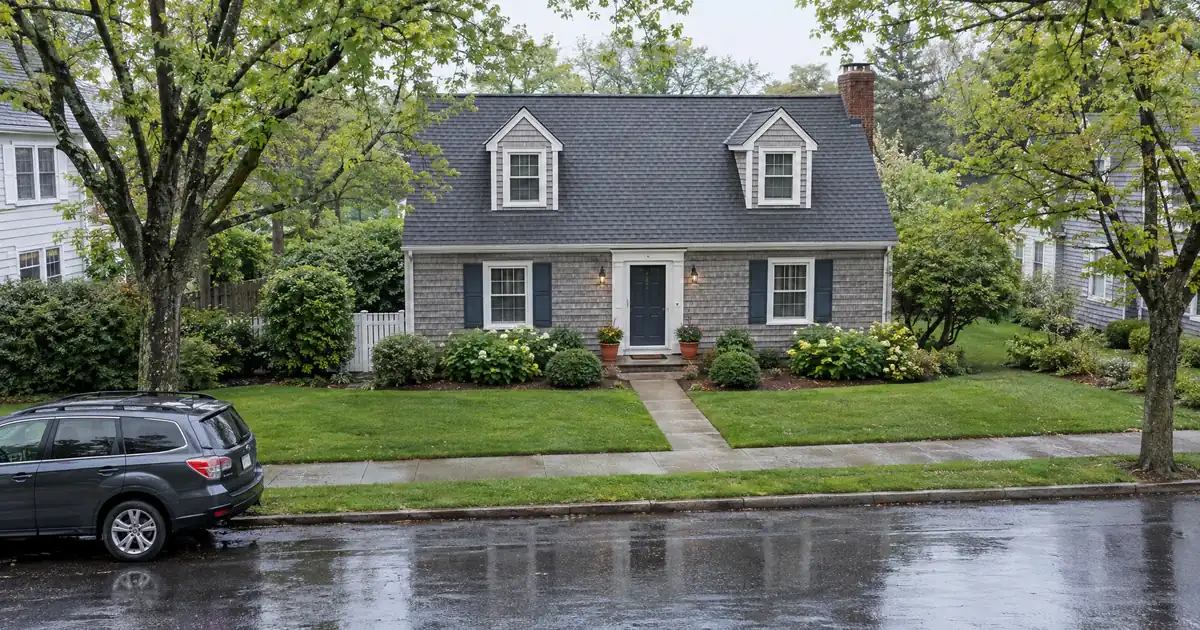
The Quick Read: A rental buyer usually ends up on a new DSCR purchase loan, because an assumption needs a note that allows it and the existing lender’s written consent. Most investor notes give the buyer neither, so the new loan becomes the default way to take title. An assumption only makes sense when the seller’s note permits it and the buyer can fund the gap between price and loan balance.
- A new DSCR purchase loan is reviewed primarily on property-level rental income covering the payment, subject to lender guidelines.
- An assumption puts the buyer in front of the seller’s servicer, who decides whether to approve the transfer.
- Purchase leverage on most DSCR files typically lands at 75%-80% LTV on an investment property.
- The buyer funds the equity gap in an assumption, and the seller is not automatically released.
- Informal “subject-to” takeovers leave the lender’s due-on-sale right in place.
The honest answer on who each option is for: the assumption suits a buyer who has already confirmed that a specific note is assumable, has the cash for the equity gap, and can pass the servicer’s review. The new DSCR purchase loan suits nearly everyone else buying a rental, because the buyer picks the entity, the lender reviews the property’s rental income fresh, and the seller’s loan is simply paid off. The rest of this piece shows where that line sits and how to check a given deal.
DSCR Calculator
Run the numbers in your market
Rate source: Freddie Mac 30-yr average via FRED® — Federal Reserve Bank of St. Louis · effective Oct 15, 2026
Prefilled with starting assumptions — enter your own rent or nightly figures, taxes, insurance, and HOA for a more accurate picture.
Program parameters update from Lendmire’s centralized guideline source. Taxes and insurance are editable estimates.
As of Oct 15, 2026 · General Freddie Mac market benchmark, not a Lendmire loan offer. Rent, nightly rate, occupancy, taxes, and insurance are editable estimates. Short-term rental figures are estimates only and vary significantly by season, property type, management approach, and local short-term-rental rules — confirm local regulations before relying on them. Qualifying income for short-term rentals varies by program — some use appraisal market rent, others use documented STR history or projections — and is confirmed in underwriting. Not a Loan Estimate, approval, or commitment to lend. Program availability and eligibility are subject to lender guidelines, credit approval, property review, and underwriting.
Key Terms Defined
Assumption: the buyer takes over the seller’s existing mortgage on its original terms, with the servicer’s approval.
New DSCR purchase loan: a fresh investor loan that pays off the seller’s mortgage and is underwritten on the property’s rent against its monthly obligation.
Due-on-sale clause: a note provision letting the lender demand the full balance if the property is transferred without consent.
Equity gap: the difference between the purchase price and the loan balance the buyer takes over.
Release of liability: the lender’s written agreement that the original borrower no longer owes on the loan.
DSCR (debt service coverage ratio): monthly rent divided by the full monthly obligation: principal, interest, taxes, insurance, and any HOA dues.
Side-by-Side
The assumption column reflects published industry norms for assumable notes. The DSCR column reflects typical ranges from select lenders in Lendmire’s wholesale network, subject to lender guidelines. Lendmire’s network places new DSCR purchase loans, and pricing for any file lives in the calculator, not here.
| Factor | Assumption | New DSCR Purchase Loan |
|---|---|---|
| Availability | Only if note and servicer allow it | Open to eligible property and borrower |
| Review basis | Buyer’s credit and finances, per servicer | Property rent vs. payment, plus credit |
| Who approves | Seller’s existing servicer | The new lender, file by file |
| Documentation | Application, financials, assumption agreement | Appraisal with rent schedule, lease evidence, entity papers |
| Entity vesting | Often limited; FHA bars entity-only | Buyer chooses entity, per program terms |
| Cash to close | Equity gap funded by buyer | Down payment, typically 20%-25% |
| Reserves | Set by servicer | Commonly around 6 months of PITIA |
| Seller liability | Continues unless released in writing | Seller’s loan is paid off |
| Timeline | Depends on servicer response | Depends on appraisal, title, file completeness |
| Risk if declined | Deal can stall at consent | Fallback to another program or lender |
Can a Rental Buyer Actually Assume the Loan?
Rarely. Federal law lets lenders enforce due-on-sale clauses, and Nolo explains that the protected transfers are family and estate events, such as a death or a transfer to a spouse or child. An arm’s-length sale to an investor is not on that list. If the lender has not consented, it can accelerate the full balance.
The assumable types are mostly government-backed. BiggerPockets describes FHA, VA, and USDA loans as the assumable ones and conventional loans as not offering the option. Investors hit a second wall on FHA: HUD’s handbook says loans closed on or after December 15, 1989 require a creditworthiness review, and an assumption solely in the name of an LLC, partnership, or trust is not acceptable when that review applies. Occupancy intent is part of the modern FHA test, which makes it a poor fit for a pure rental buyer.
VA loans can be assumed by approved buyers, but the seller’s entitlement stays tied to the loan unless an eligible Veteran substitutes. That is a seller-side headache that shows up fast in negotiations.
What about a DSCR note? Whether one can be assumed comes down to the note and the lender. Nothing makes it a standard feature. A buyer who wants to explore it should ask the servicer for written confirmation before spending money on the deal.
How Each Path Works
The assumption path runs in a set order. Skip a step and the file can stall at the servicer.
1. Read the note and security instrument. Look for assumption or due-on-sale language. BiggerPockets covers what to look for.
2. Contact the servicer. Submit the buyer’s application and financials.
3. Get underwritten. The servicer reviews the buyer. If the loan is assumable but approval is missing, the transfer is only a sale “subject to” the loan, and the lender keeps its due-on-sale right.
4. Fund the equity gap. The CFPB describes the buyer paying the difference between price and balance in cash or with other financing.
5. Sign and record the assumption agreement. Confirm in writing whether the seller is released. Release is a separate lender decision, not an automatic result.
The new DSCR purchase path is more familiar to investors.
1. Contract and entity. The buyer signs the purchase contract and decides how to vest title. LLC vesting is subject to lender program eligibility.
2. File build. The core documents are the purchase contract, credit, entity papers, lease or market-rent evidence, and an appraisal with a rent schedule. That is a Form 1007 for a single-unit property and a Form 1025 for two to four units.
3. Underwriting on the property. The lender compares rent to the full monthly obligation. A 1.00 coverage ratio is the floor for select programs we place files with, not a standard across all of them. A separate select-lender path takes coverage below 1.00, with leverage and terms adjusted.
4. Title and payoff. Clearing title, reconciling the settlement statement, and paying off the seller’s loan finish the file.
When an Assumption Is the Better Fit
An assumption earns its place in narrow situations:
- The seller’s note is confirmed assumable in writing by the servicer.
- The buyer has the cash or other financing to cover the equity gap, which can be large when the seller’s balance is low against the price.
- The buyer can pass the servicer’s review, which for government-backed loans leans on personal credit and income.
- The buyer’s entity needs match what the servicer accepts. For FHA, that rules out entity-only buyers.
- The deal has time to absorb a servicer review the buyer does not control.
Think of it as a specialty path. A buyer who finds one should treat it the way a processor would: get the servicer’s answer in writing first, then decide whether the economics justify the extra step.
When a New DSCR Purchase Loan Is the Better Fit
A new DSCR purchase loan is the better fit for most rental buyers, and the reasons are mostly mechanical:
- The buyer controls vesting. The entity is chosen up front instead of inherited from a seller’s loan structure.
- Qualification runs on the property. The loan is reviewed primarily on property-level rental income covering the payment, subject to lender guidelines, so a buyer without a conventional income profile is not shut out. Credit still matters. Programs in the network run from a 620 floor in parts of the network, around 660 on most programs, to 700+ for the strongest leverage tiers.
- No equity-gap scramble. Leverage is set by the program: most files land at 75%-80% LTV on a purchase, and select high-leverage programs reach 85% with roughly a 700+ score. The buyer’s down payment is a known percentage, not whatever the seller’s balance leaves over.
- No reliance on a seller’s note. If the seller’s loan is non-assumable, nothing breaks. It gets paid off at closing.
- Property range is clear. Loan sizes run up to $3,000,000 on standard programs (smaller balances available through select lenders), with a 30-year fixed as the spine and extended terms, interest-only periods, and ARMs available through select lenders. Manufactured homes, log homes, and barndominiums are not offered.
One more point on leverage: a bigger down payment lowers the monthly obligation and can lift the DSCR, but it does not erase leverage caps, credit floors, reserve rules, or property eligibility. The strongest files clear both tests, enough equity and enough rental coverage. Reserves vary by lender, leverage, and loan size. About 6 months of PITIA is common, and loans above $1,500,000 typically step up to around 9 months.
Clearing a 1.00 ratio also does not mean the property cash flows. DSCR compares rent to PITIA only. Repairs, vacancy, management, utilities, and capex sit outside the calculation.
DSCR vs. conventional financing
There are two common ways to finance an investment property, and they qualify you differently — here’s how investors weigh them.
Why investors choose it
- Qualifies on the property’s rental income — no personal tax returns, W-2s, or pay stubs needed to document income.
- No personal debt-to-income ceiling to clear, so existing mortgages and obligations don’t cap your borrowing the same way.
- Can be closed in an LLC, keeping the property inside a business entity.
- Built for scaling — not held to the limit on number of financed properties that conventional financing applies.
- Underwriting centers on the deal: generally qualifies when the rent covers the payment, a 1.00x coverage ratio being a common baseline (confirmed in underwriting).
- Designed specifically for investment property, including long-term and, where the program allows, short-term rentals.
Where it’s strong
- Often the lowest ongoing financing cost for a buyer who fully qualifies on personal income — a fit for a first property or a cost-first purchase.
Trade-offs for investors
- Requires full personal income documentation and must fit within a debt-to-income limit — salary, existing debts, and other mortgages all count.
- Typically held in your personal name rather than a business entity.
- Caps how many financed properties you can carry, which can become a ceiling as a portfolio grows.
- Evaluates you as a borrower as much as the property, which usually means more paperwork.
How investors usually choose: a first or single property often optimizes for the lowest financing cost; portfolio builders often optimize for leverage, vesting in an LLC, and scaling past conventional caps. The right answer depends on your goals, the property, and current guidelines — both paths run through select lenders in Lendmire’s wholesale network, with eligibility and terms confirmed in underwriting.
Where Informal Takeovers Go Wrong
Investors sometimes try a subject-to purchase, taking title while leaving the seller’s loan in place. This is not the same as an assumption. The CFPB’s assumption fact sheet, summarized by JD Supra, says an assumption requires the creditor’s express written agreement to accept the new borrower, and a subject-to purchase usually lacks that. The lender’s due-on-sale right stays alive.
Moving the property into a land trust does not fix it either. A Texas real estate attorney warns that a land-trust transfer of an investment property does not avoid due-on-sale. The seller also stays on the hook for a loan on a property they no longer own.
The practical read: if a deal depends on the seller’s loan surviving the sale and the lender has not consented, the deal has a hole in it. The contract should include a financing contingency that lets the buyer switch to a new DSCR purchase loan if consent does not arrive.
Contract Language and Diligence Checklist
Whichever path the buyer is leaning toward, the deal works cleaner when these items are in hand early:
- A copy of the note and security instrument, so assumption and due-on-sale language can be read directly.
- The servicer’s contact and a written statement of whether assumption is permitted.
- Payment history and a payoff statement.
- A financing contingency that allows a switch to a new loan.
- For the new-loan path: entity documents, lease evidence, insurance quote, HOA or condo questionnaire where applicable, and reserves documentation.
Buyers weighing a newly built unit against an existing rental should also read Lendmire’s piece New Build vs Existing Rental: DSCR for a Trust Buyer. Entity choice matters in either path, and a separate guide, How to Vest a DSCR Loan in a New LLC as a First-Time Rental Buyer, covers that step.
The Balanced Verdict
Pick the new DSCR purchase loan unless a specific note has been confirmed assumable in writing, the buyer can fund the equity gap, and the servicer’s review is something the buyer can pass. That describes a small share of rental purchases. The assumption is a real tool, but a narrow one, and the cost of being wrong is acceleration of the full balance. For the underlying mechanics of qualification, leverage, and documents, the complete DSCR loans guide covers the full picture.
If you are buying or refinancing a rental property and want to see how the numbers work, Lendmire can help you compare DSCR loan options based on the property income, credit profile, leverage, and investor goals. Program details are subject to lender guidelines and individual underwriting, and nothing here is a commitment to lend.
Frequently Asked Questions
Can a DSCR loan be assumed by a new buyer?
Only if the note allows it and the lender consents in writing. It is not a standard feature, so the buyer should verify before relying on it. If the answer is no, a new DSCR purchase loan pays off the seller’s loan at closing and avoids the question.
Does an assumption save a rental buyer money compared with a new loan?
That depends on the note’s terms and the equity gap, and pricing is a calculator question rather than something this article compares. The gap can be large when the seller’s balance sits well below the price, and the buyer funds it in cash or other financing. Weigh the extra cash against the new-loan down payment, typically 20%-25% on a purchase.
Is the seller released after an assumption?
Not automatically. Nolo notes the original borrower usually stays liable unless the lender grants a release. Get the release in writing before closing.
Can I assume an FHA loan as an investor?
Generally not on a modern loan. HUD’s handbook requires a creditworthiness review for loans closed on or after December 15, 1989, and entity-only assumptions are not acceptable when that review applies. Occupancy intent also comes into play, so a pure rental buyer should plan on a new loan.
What happens if the lender declines the assumption?
The deal stalls unless the contract has a financing contingency. A buyer with that language can switch to a new DSCR purchase loan, where the property’s rent, the buyer’s credit, and the program’s leverage and reserve rules decide the file.
About Lendmire
Lendmire (NMLS# 2371349), a non-QM mortgage broker serving investors in 41 markets including Washington, D.C., helps structure DSCR scenarios commonly evaluated around a property’s rental income rather than personal income paperwork, subject to lender guidelines. A Scotsman Guide Top Mortgage Workplace in 2025 and 2026, Lendmire places loans through wholesale investor lenders and is not a direct lender.
Get Started
Ready to find the right loan for you?
In about 30 seconds you can review financing options available for your investment property. No commitment required.
Informational only. Not a Loan Estimate, approval, or commitment to lend. Program availability and eligibility are subject to lender guidelines, credit approval, property review, and underwriting.
References
1. Nolo — Can someone else assume or take over the mortgage?
3. HUD Handbook 4155.1, Chapter 4
4. BiggerPockets — Assumable mortgages
6. JD Supra — CFPB fact sheet on assumptions
7. LoneStarLandLaw — Due-on-sale in Texas
This article is part of Lendmire’s DSCR loan program — full qualification details, guidelines, and scenarios live on the program page.
Related reading: Can You Get a DSCR Loan After a Short Sale or a Lost Rental? · DSCR Buyout Refinance vs Assumption vs Selling a Divorce Rental · Short Sale vs Lost Rental for a DSCR Loan Waiting Period
Brandon Miller
Founder & CEO, Mortgage Loan Originator, Lendmire LLC
- Mortgage Loan Originator · NMLS# 1129696 · Verify on NMLS Consumer Access
- North Carolina Real Estate Broker · License# 343312 · Verify on NCREC
- North Carolina Insurance Producer · License# 19053198 · Property, Casualty, Life, Health · Verify on NAIC SBS
- Lendmire LLC · Firm NMLS# 2371349 · Verify firm licensure
Disclosure information. Lendmire is a state-licensed mortgage brokerage under NMLS# 2371349. Lendmire is not a depository institution, direct lender, or financial advisor — all loans referenced are placed through wholesale lender partners and are subject to each lender's underwriting standards. This article is provided for general informational purposes and is not a commitment to lend, nor does it constitute financial, legal, or tax advice. Loan programs, terms, rates, and qualification standards change without notice and depend on borrower profile, property type, and the state in which the subject property is located. Equal Housing Opportunity provider. NMLS Consumer Access: nmlsconsumeraccess.org.