
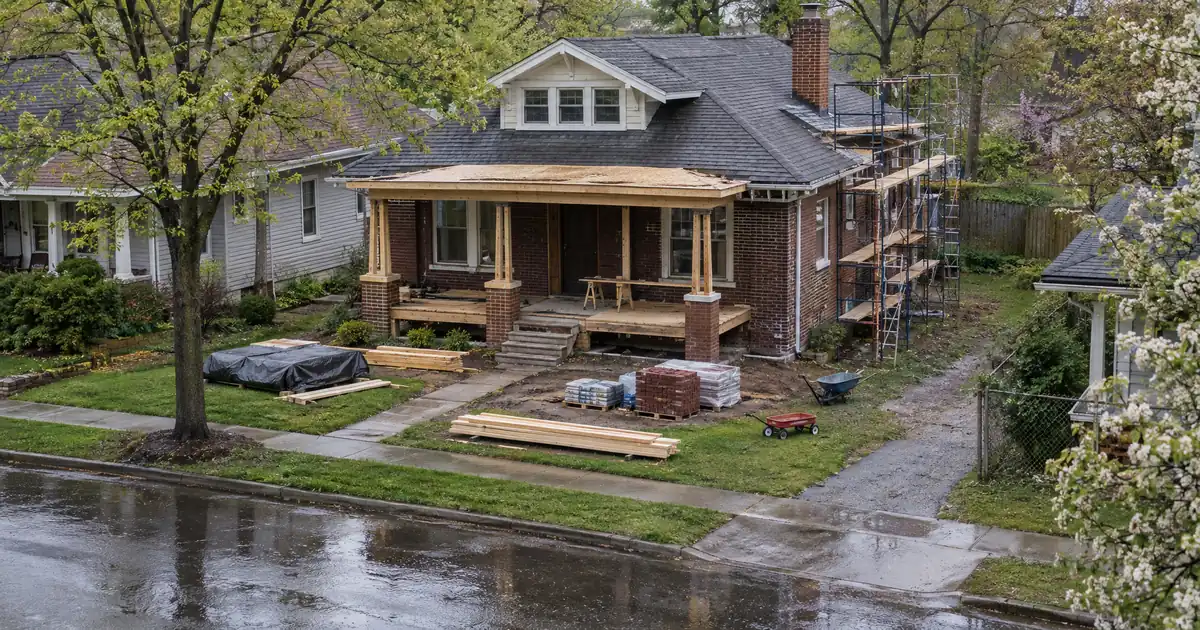
The Quick Read: A bank statement loan is reviewed for you, the borrower, by turning 12 to 24 months of deposits into qualifying income. A hard money loan is reviewed for the property, the rehab plan, and your exit. Pick the loan whose test your deal can actually pass.
- Bank statement loan: a long-term loan that proves income from your deposit history instead of traditional personal-income documentation. Credit, reserves, and the property are still reviewed.
- Hard money loan: a short-term, interest-only loan secured by the property. Terms run 6 to 18 months, and the exit matters most.
- Different failure points: bank statement files stall on messy deposits. Hard money files stall when the exit plan falls through.
- They often work in sequence: many investors bridge with hard money, then refinance into long-term financing once the property is stable.
The Core Difference: Underwriting You vs. Underwriting the Property
A bank statement loan asks whether your deposit history supports the payment. A hard money loan asks whether the property’s value supports the loan and whether you can repay it at maturity. Same collateral, different question.
What this loan actually costs to carry.
Hard money is sized against the project and priced by time. Enter the deal and see how much the program will lend, the cash required at closing, the carry while you hold it, and what is left at the exit.
Leverage tiers on the current program: 85% with fewer than 2, 90% with 2 or more, 93% with 5 or more completed projects — every tier capped at 75% of after-repair value. Loan amounts up to $5,000,000, larger by exception; terms of 6 to 18 months, interest-only, no prepayment penalty. The rehab portion funds in draws against completed work, not at closing.
Program parameters shown update from Lendmire’s centralized guideline source. Rate, points, and months are editable assumptions, not quoted terms.
Cost cap sets the loan · positive spread
Illustrative estimate only — not a quote, Loan Estimate, approval, or commitment to lend. Rate, points, and months are editable assumptions. Hard money is business-purpose financing for real estate investors, not a consumer mortgage. Leverage on the current program tops out at 93% of project cost for investors with a documented track record, capped at 75% of after-repair value, with rehab funding up to 100% of the documented budget released in draws; actual terms vary by lender, borrower experience, property, and exit. Lendmire is a mortgage broker, not a lender.
Bank statement loans fall under non-QM, short for non-qualified mortgage. That means the loan does not fit the standard box that most mainstream mortgages use. Non-QM does not mean no underwriting. It means the lender proves repayment ability with different documents.
Hard money works the opposite way. Documentation is lighter, but the lender digs into the project: what the property is worth now, what it will be worth after repairs, and how you plan to get out.
| Factor | Bank statement loan | Hard money loan |
|---|---|---|
| Core question | Do deposits support the payment? | Does the value and exit support the loan? |
| Key documents | Statements, ownership proof, P&L or CPA letter | Appraisal or BPO, scope and budget, exit plan |
| Credit role | Reviewed; floors vary by program | 620 minimum, extra conditions below 660 |
| Property role | Must be eligible; reviewed | The main event: value drives the loan |
| Term | Long-term, often 30-year fixed | 6 to 18 months, interest-only |
| Main risk | Inconsistent deposits | Maturity and a failed exit |
Requirements vary by lender, property, and experience on both sides. Every file is underwritten individually, and nothing here is a commitment to lend.
How a Bank Statement Loan Is Underwritten, Step by Step
The lender builds a monthly income number out of your deposits. Trade press describes the typical setup: Scotsman Guide notes borrowers supply 12 to 24 months of statements, and lenders want consistent monthly deposits. Here is how that plays out.
1. Pick the window and the account type. You choose personal or business statements, covering 12 or 24 consecutive months. Underwriters want every page and no gaps.
2. Screen the deposits. Transfers between your own accounts, loan proceeds, refunds, and one-time items generally get removed. Only real revenue counts.
3. Apply an expense factor to business deposits. The lender treats a share of gross deposits as operating cost. A third-party P&L or an expense letter from a tax professional can sometimes replace the default. Scotsman Guide also points out that asset-heavy businesses can be penalized by a one-size-fits-all factor.
4. Prorate for ownership. If you own part of the business, you get credit for your share only.
5. Average it into monthly income. The lender tests that figure against your existing debts and the new payment.
6. Review the rest of the file. Credit, assets, reserves, property eligibility, occupancy, and leverage all get a look.
Across Lendmire’s wholesale network, expense factors, statement windows, and leverage tiers differ from lender to lender. Two lenders can read the same 24 months of deposits and land on different income figures. That spread is why a broker who sees many guidelines can save a borrower from applying in the wrong place.
A typical document list: bank statements, proof of ownership and time in business, ID, a P&L or CPA letter if the program uses one, and the purchase contract or current mortgage details. Bank statement does not mean “no paperwork.” It means different paperwork.
How a Hard Money Loan Is Underwritten, Step by Step
The lender starts with the property. It orders an appraisal or broker price opinion (BPO) to set the as-is value and, on a rehab, the after-repair value (ARV). That is the value after the work is done.
Then it reads your plan:
- Scope of work and budget. The lender checks that the repairs and costs are realistic. An unrealistic budget can stop a file.
- Exit strategy. Hard money is a balloon loan. The lender gets repaid by a sale or a refinance, so the exit gets real scrutiny.
- Borrower review. Property leads, but credit, experience, and liquidity still matter.
- Draw schedule. Rehab money is typically released in draws against completed work, not all at once.
Here are the program figures, always varying by lender, property, and experience:
- Fix-and-flip: up to 93% of project cost with 5 or more completed projects, 90% with 2 or more, and 85% with fewer than 2. Every tier is capped at 75% of after-repair value.
- Bridge purchase without rehab: up to 80% of purchase price.
- Rate-and-term or cash-out refinance: up to 65% of value.
- Rehab budget: up to 100% of the budget funds in draws against completed work. That is a budget figure, not a purchase LTV.
- Ground-up construction: up to 90% of cost and 75% of completed value at 3 or more completed projects.
- Loan size: up to $5,000,000, larger by exception.
- Term: 6 to 18 months, interest-only, no prepayment penalty.
- Credit: 620 minimum, with added conditions below 660. First-time investors qualify at the lower leverage tiers.
- Collateral: non-owner-occupied residential, 1 to 4 units. Ground-up construction goes to 10 units. Commercial, land, and owner-occupied properties are not on the sheet.
The top leverage tier is reserved for experienced investors. There is no true 100% purchase program. The 100% figure applies to the rehab budget only.
Requirement by Requirement: Where the Two Split
Income proof. Bank statement loans need it, built from deposits. Hard money leans on the asset, so it does not run your deposits through an income formula.
Credit. Both look at it. Bank statement programs often want a mid-600s score or better, depending on the lender. Hard money sets a 620 floor with conditions below 660.
Property. On a bank statement loan, the property must fit program rules. On hard money, the property’s current and future value is the entire basis for sizing the loan.
Equity. Bank statement loans use standard leverage tiers set by each lender. Hard money sizes against cost and ARV, so the budget and the after-repair value set the ceiling.
Reserves. Bank statement lenders usually want liquid reserves after closing. Hard money lenders may glance at your liquidity too, but they are checking that you can carry interest if the plan slips, not converting deposits into income.
Term and exit. A bank statement loan is built to be held. A hard money loan is built to be repaid. If you cannot name your exit, hard money is the wrong tool.
Experience. It barely matters on a bank statement loan. On hard money it can move you up or down the leverage tiers.
Where the General Rules Break
Deposits that are not income. Pass-through payments and personal transfers do not count.
Mixed accounts. When personal and business activity share one account, the expense-factor choice gets messy. Business-account deposits are treated as gross revenue. Personal-account programs often skip that haircut, depending on the lender.
Partial ownership. Credit is prorated to your ownership share. A 40% partner is credited with 40%.
Hard money that peeks at statements. Some hard money lenders look at your statements as a liquidity check. They are not building a debt-to-income ratio.
Documents that don’t match. A bank statement file lives on consistency. When statements, the P&L, and the loan application tell different stories, the file slows down.
Maturity overruns. A rehab that slips can push you past a 6-month term. Hard money terms top out at 18 months, and there are no multi-year options on the current program. Investors who need longer runway refinance into long-term rental financing.
Which One Fits? Three Scenarios
The stabilized rental and the thin tax return. Picture a self-employed owner who has run a small business for years. Her traditional personal-income documentation shows modest income because of deductions, but her deposits are steady. The property is rented and stable. This is the bank statement lane. Hard money would be an expensive way to hold a stable property.
The distressed house with a deadline. Say an investor finds a vacant property that needs a full rehab, and the seller wants a firm closing. Nothing about the building would pass a long-term loan’s property review yet. A bank statement loan does not fit. Hard money does, because it sizes against the project: 85% of project cost with fewer than two completed projects, 90% with two or more, 93% with five or more, always capped at 75% of ARV.
The messy deposits. Consider a borrower whose business account is full of transfers, loan proceeds, and mixed personal spending. Screened deposits may produce a low income figure. The fix is usually cleaner accounting, a CPA-prepared P&L, or a different product. Sometimes hard money bridges the gap while the books get sorted. Sometimes a rental-income loan fits better, as the next section explains.
A pattern shows up across files like these. Borrowers pick the loan they have heard of, not the one their property and paperwork can support. A short conversation about the property’s condition and your documents usually points to the right lane.
Using Both in Sequence
Hard money and long-term financing are often two legs of one plan. Buy and rehab with hard money. Once the property is finished and rented, refinance into a long-term loan. The refinance is the exit.
That exit needs paperwork ready before the maturity date. For a self-employed owner, it could be a bank statement package. For a rental, it could be a rent schedule. Lendmire’s piece How to Pay Off a Hard Money Loan With a Bank Statement Cash-Out Refinance covers that handoff.
A third path tests the property instead of you. A DSCR loan compares the property’s rent to its full monthly obligation: principal, interest, taxes, insurance, and any HOA dues. Many investors refinance out of hard money into long-term DSCR financing once the property is stabilized, and Lendmire brokers that path. Programs in the network generally start at a 1.00 coverage ratio. A separate select-lender path goes below 1.00, with leverage and terms adjusted. Clearing 1.00 is not the same as positive cash flow, because repairs, vacancy, management, and capex sit outside the calculation.
On purchases, most DSCR files land at 75% to 80% LTV on an investment property, with select programs reaching 85% at roughly a 700 score. Cash-out refinances top out around 75% LTV on standard rentals, with about six months of seasoning typical. Credit floors run from 620 in parts of the network to around 660 for most programs. Loan sizes run up to $3,000,000 on standard programs (smaller balances available through select lenders), subject to lender guidelines. The complete DSCR loans guide explains how the coverage test works end to end.
Why Investment-Property Loans Get Treated Differently
Loans made to buy, improve, or maintain a non-owner-occupied rental are deemed business purpose, regardless of unit count, according to the CFPB’s official commentary on business-purpose credit. Because they are business-purpose investor loans, they are reviewed differently from a standard owner-occupied mortgage.
The label has limits. A flip or raw land can need a closer look at the loan’s primary purpose. The CFPB also notes that temporary or bridge loans of 12 months or less sit outside its ability-to-repay rule, per its compliance guide. That is one reason short-term hard money does not run on a deposit-based income formula. Since hard money terms can run to 18 months, treat that as background, not a promise about any one loan.
Common Mistakes
- Treating bank statement as no-paperwork. It is fully documented.
- Assuming you choose the expense factor. The lender or program sets it. A CPA-supported P&L can sometimes change it.
- Assuming hard money ignores the borrower. Property leads. Credit, experience, and liquidity still count.
- Calling hard money a pricier bank statement loan. They solve different problems: short-term and asset-based versus long-term and income-based.
- Skipping the exit plan. A balloon loan with no exit is a countdown.
- Underestimating carry. You must be able to pay interest if the plan slips.
- Forgetting property eligibility. On long-term programs, manufactured homes, log homes, and barndominiums are not offered. Hard money collateral is limited to 1 to 4 unit residential, plus ground-up construction to 10 units.
Key Terms Defined
Non-QM: a loan that does not fit the standard Qualified Mortgage box, usually because it uses alternative income documents.
Expense factor: the share of business-account deposits a lender treats as operating cost before counting the rest as income.
ARV (after-repair value): what the property should be worth once the renovation is finished.
Loan-to-cost: the loan amount as a percentage of the total project cost, purchase plus rehab.
Balloon loan: a loan with a large lump sum due at maturity, usually repaid by a sale or a refinance.
Draw: a release of rehab funds after a stage of work is completed.
DSCR (debt service coverage ratio): monthly rent divided by the property’s full monthly housing obligation. A 1.00 means rent equals the obligation.
Reserves: liquid money you hold after closing to cover payments if income stalls.
Frequently Asked Questions
Does a bank statement loan mean no traditional income documentation?
It means no traditional income documentation on programs designed that way, but the file is still fully documented. You supply 12 to 24 months of statements, proof of ownership, and often a P&L or CPA letter. Credit, assets, reserves, and the property still get reviewed. Qualification runs on documented income under the applicable program, subject to lender guidelines.
Can a hard money lender approve me with weaker credit?
Often, yes, up to a point. The program sets a 620 minimum score, with additional conditions below 660, and first-time investors qualify at lower leverage tiers. Underwriting stays asset-based, so the property, the plan, and the exit carry most of the weight. Terms vary by lender, property, and experience.
How much of the project will hard money cover?
It depends on your track record. Fix-and-flip loans run up to 85% of project cost with fewer than two completed projects, 90% with two or more, and 93% with five or more. Every tier is capped at 75% of ARV. Bridge purchases without rehab go up to 80% of purchase price. Refinances go up to 65% of value.
Which loan works better for a stabilized rental?
A long-term loan, not hard money. A bank statement loan suits a self-employed owner whose returns understate cash flow. A DSCR loan suits an owner who wants the property’s rent to carry the file. Hard money fits vacant or rehab properties and short timelines.
What happens if my hard money term ends before the property is ready?
You must repay or refinance at maturity, so the plan needs a cushion inside the 6-to-18-month term. There are no multi-year options on the current program. Investors who need more runway refinance into long-term rental financing. Having your refinance documents ready early is the safest hedge.
Next Step
If you are buying, rehabbing, or refinancing an investment property on a short timeline and want to see how the numbers work, Lendmire can help you compare hard money options based on the project, the exit plan, leverage, and your goals. Lendmire is a broker arranging financing through select lenders in its wholesale network, across 41 markets including Washington, D.C. Tax treatment varies; consult a qualified professional.
Whichever loan you choose, the file that closes cleanly is the one where the property, the paperwork, and the exit all tell the same story.
About Lendmire
Lendmire — NMLS# 2371349 — is a mortgage brokerage specializing in DSCR investor loans, helping arrange financing across 41 markets, including Washington, D.C., through wholesale and investor-lending channels. The model centers on property-level rental income reviewed by the lender rather than W-2 documentation, subject to lender guidelines, suiting entity-owned and multi-property investors. Lendmire holds Scotsman Guide Top Mortgage Workplace recognition for 2025 and 2026.
Get Started
Ready to find the right loan for you?
In about 30 seconds you can review financing options available for your investment property. No commitment required.
Informational only. Not a Loan Estimate, approval, or commitment to lend. Program availability and eligibility are subject to lender guidelines, credit approval, property review, and underwriting.
References
1. Scotsman Guide, Don’t Shut the Door on Quality Borrowers
2. CFPB, Official Interpretation of Regulation Z § 1026.3
3. CFPB, ATR/QM Small Entity Compliance Guide
This article is part of Lendmire’s hard money loan program — full qualification details, guidelines, and scenarios live on the program page.
Related reading: Is a Hard Money Fix and Flip Loan Worth It for a Business Owner? · Can a 1099 Contractor Get a Hard Money Loan to Flip a House? · Can You Get an Interest-Only Hard Money Loan for a Fix and Flip?
Brandon Miller
Founder & CEO, Mortgage Loan Originator, Lendmire LLC
- Mortgage Loan Originator · NMLS# 1129696 · Verify on NMLS Consumer Access
- North Carolina Real Estate Broker · License# 343312 · Verify on NCREC
- North Carolina Insurance Producer · License# 19053198 · Property, Casualty, Life, Health · Verify on NAIC SBS
- Lendmire LLC · Firm NMLS# 2371349 · Verify firm licensure
Disclosure information. Lendmire is a state-licensed mortgage brokerage under NMLS# 2371349. Lendmire is not a depository institution, direct lender, or financial advisor — all loans referenced are placed through wholesale lender partners and are subject to each lender's underwriting standards. This article is provided for general informational purposes and is not a commitment to lend, nor does it constitute financial, legal, or tax advice. Loan programs, terms, rates, and qualification standards change without notice and depend on borrower profile, property type, and the state in which the subject property is located. Equal Housing Opportunity provider. NMLS Consumer Access: nmlsconsumeraccess.org.