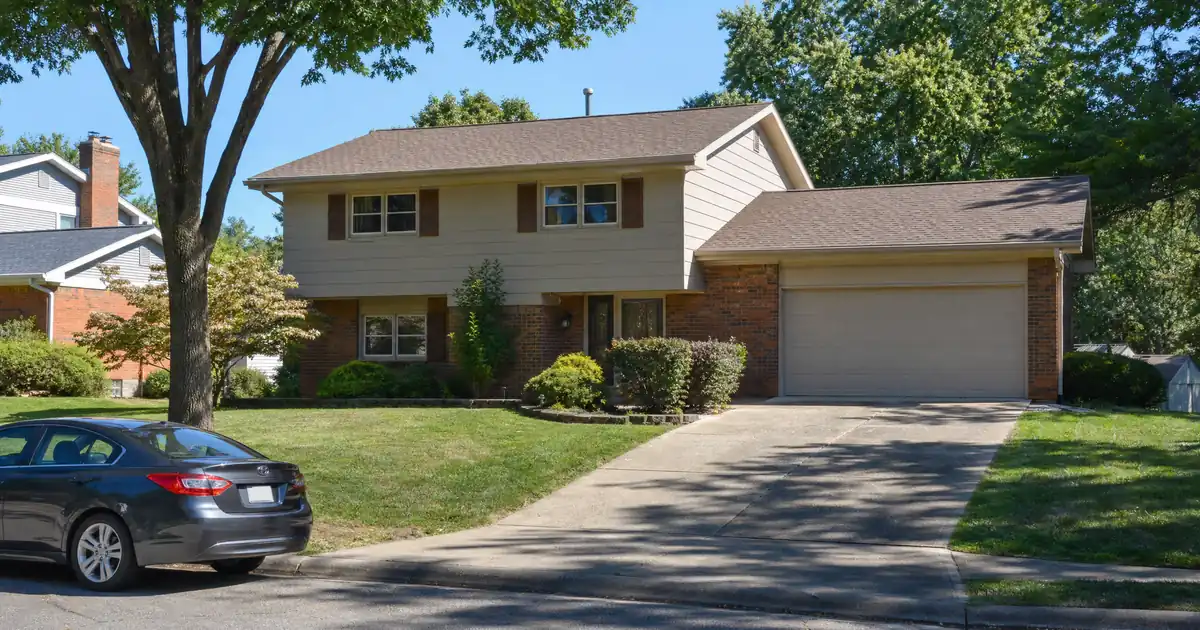
The Quick Read: A bank statement refinance loan lets a self-employed borrower qualify using 12 to 24 months of deposit history. It skips traditional personal-income documentation. Why? Schedule C income is built to minimize taxable profit. It doesn’t show real cash flow. This loan works for primary residences and second homes, where personal or business deposits tell the real story. For a rental property refinance, most investors do better with a DSCR loan. That loan looks at the property’s rent. It never touches the owner’s bank account.
Key takeaways:
DSCR Calculator
Run the numbers in your market
Rate source: Freddie Mac 30-yr average via FRED® — Federal Reserve Bank of St. Louis · effective Jul 30, 2026
Prefilled with local estimates — enter your own rent or nightly figures, taxes, insurance, and HOA for a more accurate picture.
Program parameters update from Lendmire’s centralized guideline source. Taxes and insurance are editable estimates.
As of Jul 30, 2026 · General Freddie Mac market benchmark, not a Lendmire loan offer. Rent, nightly rate, occupancy, taxes, and insurance are editable estimates. Short-term rental figures are estimates only and vary significantly by season, property type, management approach, and local short-term-rental rules — confirm local regulations before relying on them. Qualifying income for short-term rentals varies by program — some use appraisal market rent, others use documented STR history or projections — and is confirmed in underwriting. Not a Loan Estimate, approval, or commitment to lend. Program availability and eligibility are subject to lender guidelines, credit approval, property review, and underwriting.
- Bank statement refinance loans replace tax-return income documentation with 12-24 months of deposit averaging — they still analyze personal or business cash flow.
- Business-account deposits get run through an expense factor before they count as qualifying income; personal-account deposits generally don’t.
- DSCR loans solve a different problem: they qualify on the subject property’s rent, not the borrower’s income documentation at all.
- Investment-property owners refinancing a rental usually get a cleaner file on the DSCR side, since bank statement underwriting still ties back to the individual borrower’s finances.
- Non-QM as a category — bank statement and DSCR loans both live here — closed 2024-vintage loans at credit profiles indistinguishable from conforming production, so this isn’t a subprime corner of the market.
What Is a Bank Statement Refinance Loan?
It’s a refinance that qualifies the borrower on deposit history, not tax-return net income. Qualification for the line runs on a borrower-permissioned account connection analysed for deposit history and income trend — no tax returns, and no hand-counted stack of monthly statements. They add up the eligible deposits. They strip out transfers and loan proceeds. Then they divide by the number of months. That gives a monthly qualifying figure. Trade press consistently groups this approach with DSCR and asset-depletion lending. Together, these three form the pillars of the non-QM space.
The product exists because of a structural mismatch. It’s not a lender preference. A sole proprietor reports income and expenses from the business on Schedule C. That form is built to legally lower taxable profit through deductions. It’s not built to show what actually lands in the account. An investor who writes off vehicle expenses, home office costs, and depreciation might show taxable income that’s a fraction of real cash flow. Conventional underwriting ties debt-to-income ratio to tax-return net income. That screens out this borrower, even when the money is clearly there. Bank statement underwriting exists to close that gap.
It’s still a personal-income product, though. That distinction matters more than most borrowers realize. It’s also the reason this article eventually points toward a different structure for rental property owners.
How Bank Statement Underwriting Actually Works
The mechanics follow a fixed order. It’s worth walking through, because most borrowers assume the lender just totals up deposits and divides. The real process is more disciplined than that.
Step one — the documentation window. The borrower supplies personal statements, business statements, or both. The lender picks a 12- or 24-month window. Longer windows smooth out seasonal swings. Shorter windows help a borrower whose recent months look stronger than the trailing two years.
Step two — the strip-out. The lender pulls out transfers between the borrower’s own accounts, loan proceeds, tax refunds, and other non-income deposits before running the calculation. This is standard cash-flow analysis. It’s not a rubber stamp on whatever number sits at the bottom of the statement.
Step three — the expense factor on business accounts. Business statements work differently. When a lender uses them, instead of or alongside personal statements, it can’t treat gross deposits as income. Why? A business’s revenue includes money that gets spent on payroll, inventory, and overhead before it ever reaches the owner. So the lender applies an expense ratio against gross deposits. This approximates real take-home cash flow. That factor varies a lot by lender and by whether the file uses personal or business statements. There’s no single industry-standard percentage. Any lender that quotes one number for every business type isn’t being precise.
Step four — everything else in the file. The deposit average sets the qualifying income figure. But that’s just one input among several. Credit profile, loan-to-value, liquidity, and property type all shape the final decision and pricing. The deposit number doesn’t operate in isolation.
Key Terms Defined
Qualifying income — the monthly income figure underwriting derives from averaged deposits, used in place of tax-return net income to calculate debt-to-income ratio.
Expense factor — a deduction applied against gross business-account deposits to estimate real owner cash flow, since gross business revenue isn’t the same as personal income.
DTI (debt-to-income ratio) — the borrower’s total monthly debt obligations divided by qualifying income; this is the metric bank statement loans are built around.
DSCR (debt service coverage ratio) — a property-level metric comparing the subject property’s rent to its full monthly payment (principal, interest, taxes, insurance, and any HOA dues); it has nothing to do with the owner’s personal income or DTI.
Non-QM (non-qualified mortgage) — a loan ineligible for purchase by the government-sponsored enterprises, typically because its documentation method falls outside Qualified Mortgage safe-harbor criteria — not because the ability-to-repay analysis was skipped.
Bank Statement Refinance vs. DSCR Refinance vs. Conventional Refinance
Three refinance paths solve three different documentation problems. The table below shows what each one actually looks at.
| Factor | Bank Statement Refinance | DSCR Refinance | Conventional Refinance |
|---|---|---|---|
| Income basis | Personal/business deposits (12-24 mo.) | Property rent vs. payment | Traditional personal-income documentation / W-2s |
| Whose finances matter | The borrower’s | The property’s | The borrower’s |
| Best fit | Self-employed owner-occupants, second homes | Rental and investment property owners | W-2 borrowers with clean traditional personal-income documentation |
| Occupancy | Primary or second home, most common | Non-owner-occupied investment property | Primary or second home |
Here’s the split that matters most for a rental owner. Bank statement underwriting still runs through the borrower’s personal or business cash flow. DSCR underwriting doesn’t touch it at all. These are genuinely separate qualifying paths. A borrower can pass one while failing the other — the two products succeed or fail on their own.
The Practical Exception: When Personal Income Still Matters
Not every property owner should skip past bank statement underwriting toward DSCR. Take a self-employed borrower refinancing a primary residence, or a second home. This product was built exactly for that borrower. DSCR loans typically aren’t even available on owner-occupied property. The exception runs the other way too. Say an investor also lives in one unit of a two- to four-unit building — a common house-hack setup. That owner is often still evaluated on personal income for that specific transaction. Why? Occupancy, not property type, is what triggers owner-occupied underwriting rules. Once that owner moves out and the property becomes a pure rental, the file typically shifts toward property-income underwriting on the next refinance.
Why a Rental Refinance Usually Moves to DSCR Instead
Picture a true investment property — no owner occupancy, held purely for rental income. A bank statement approach still asks the wrong question here. It analyzes the owner’s cash flow, when the property’s own rent is the number that actually matters. DSCR loans qualify primarily on property-level rental income covering the payment, subject to lender guidelines. That means a self-employed investor with a messy personal deposit history can still refinance cleanly, as long as the subject property’s rent clears the payment on its own.
Lendmire (NMLS# 2371349) works with a wholesale network for DSCR investor loans a multi-state wholesale network In that network, cash-out refinances typically top out around 75% loan-to-value. Most files need roughly six months of seasoning before cash-out proceeds become available. A 1.00 coverage ratio is where select programs start. That’s a floor for specific programs, not a universal standard, and stronger ratios open better leverage and pricing on the same file. Credit floors run as low as 620 in parts of the network, though most programs are built around 660. A 700-plus score is generally what unlocks the strongest leverage tiers. Loan sizes on standard programs run roughly up to $3 million, with select lenders in the network handling smaller balances below that. Above roughly $2.5 million, the network generally sticks to 30-year fixed structures rather than shorter-term or adjustable options.
Reserve requirements vary by lender, leverage, loan size, and transaction type. They commonly land around six months of PITIA. Conservative rate-and-term files at modest leverage under $1.5 million sometimes see reserves waived. Loans above that threshold typically step up to around nine months. A larger down payment on a purchase, or more equity kept on a refinance, lowers the payment and can lift the coverage ratio. But it never overrides a leverage cap, a credit floor, or a reserve requirement on its own. The strongest files clear both tests at once: enough equity, and enough rent to cover the payment.
One thing worth saying plainly: clearing 1.00 coverage is not the same as positive cash flow. DSCR only compares rent to the payment — principal, interest, taxes, insurance, and HOA. Repairs, vacancy, property management, utilities, and capital expenditures sit entirely outside that ratio. A file that clears 1.05 on paper can still run cash-negative once real operating costs hit the ledger. Investors sizing a refinance should run their own numbers past the coverage ratio, not stop at it.
Some investors have already done a bank statement refinance and now want to move a rental property into a property-income structure instead. For them, the DSCR loan vs. bank statement loan comparison lays out the switch in more detail. Lendmire’s bank statement refinance loan page covers the personal-income side for anyone still deciding which path fits.
Where the General Rule Breaks: Edge Cases
The rule “deposit average or coverage ratio decides the file” has real exceptions. Knowing them changes how an investor prepares a refinance.
Full-doc and alt-doc loans don’t perform the same, even under the same non-QM label. Impairment rates have increased across most non-QM documentation types except full-doc loans. Profit-and-loss-based files are climbing back toward elevated impairment levels. Bank statement and P&L-only files sit in a materially different risk bucket than full-doc non-QM, even inside the same broad category. That’s one reason pricing and reserve requirements aren’t uniform across “non-QM” as a label. Final terms depend on lender guidelines, property type, leverage, and the borrower’s complete credit picture.
A weak bank statement file doesn’t disqualify a DSCR file, and vice versa. DSCR underwriting never touches personal deposits. Because of that, a borrower with a messy personal cash-flow picture can still refinance a rental cleanly, as long as the property’s own rent clears the payment. The two programs fail and succeed on entirely separate inputs.
Compensating factors can override a marginal primary metric. A DSCR file with a coverage ratio near the program floor can still move forward when credit, liquidity, and rental-management experience are strong. Structuring the file as cross-collateralized or blanket across multiple properties can offset risk further, subject to lender guidelines. The “one number decides everything” assumption breaks down fastest for experienced portfolio investors.
Appraisal rent forms don’t qualify anyone. The industry-standard rent schedules — Fannie Mae’s Form 1007 for one-unit properties and Form 1025 for two- to four-unit properties — get borrowed by non-QM and DSCR lenders. They use these forms as the common format for documenting market rent to an appraiser, even though those lenders aren’t selling to the GSEs. But the form only estimates market rent for the appraisal file. It doesn’t set the DSCR ratio or qualify the borrower. That calculation happens separately, in underwriting.
Ineligible property types stay ineligible regardless of documentation method. Manufactured homes (single- and double-wide), log homes, and barndominiums aren’t offered through DSCR programs in Lendmire’s wholesale network. That’s a property-type limitation. It’s not a documentation workaround waiting to be found.
The Investor Decision: Which Refinance Path Fits?
Say the borrower’s own finances are strong and the property is a primary residence or second home. Bank statement underwriting is usually the more natural fit. The deposit history tells a clear story. There’s no reason to introduce a property-income test that program isn’t built for. Now say the property is a pure rental, and the borrower’s personal deposit picture is inconsistent, spotty, or just doesn’t reflect the property’s actual performance. A DSCR refinance is typically the cleaner path here, since it never touches personal income documentation at all.
Short-term rental owners have their own lane inside the same DSCR framework. Purchase financing generally runs up to 75% LTV. Refinance and cash-out both trend closer to 70%. Lenders in the network generally want a 700-plus credit score, along with roughly 12 months of hosting history and a 1.00 coverage floor, before extending that structure. Short-term rental rules can vary by city, county, HOA, and property type. Investors relying on projected nightly income should confirm local rules before running the numbers.
State overlays matter too. Purchase transactions in Connecticut, Florida, Illinois, and New Jersey generally cap near 75% LTV, even on programs that reach higher elsewhere in the network. Overlay-state deals often cap around $2 million regardless of borrower strength.
DSCR loans are business-purpose investor products for non-owner-occupied property. That’s why they get reviewed differently than a standard owner-occupied mortgage. That review still runs through borrower, property, and program guidelines. A lower coverage ratio can sometimes be offset by stronger credit or reserves, but qualification is never automatic, and loan approval is never guaranteed. Tax treatment of a refinance can depend on how the funds are used and how the property is titled — including in an LLC, subject to lender program eligibility. So investors should keep clear records and talk with a qualified tax professional before relying on any deduction.
Nothing here is a commitment to lend. Every scenario described here is general information, not financial, legal, or tax advice. Actual terms depend on lender approval, along with the specific borrower, property, and program guidelines in place at the time of application.
Buying or refinancing a rental property? Want to see how the numbers actually work? Lendmire can help compare DSCR loan options based on the property’s income, your credit profile, target leverage, and overall investor goals. Reach the team at 828-256-2183 or request a quote directly through Lendmire’s mortgage quote page.
Frequently Asked Questions
Can a self-employed borrower switch from a conventional mortgage into a bank statement refinance? Yes — occupancy and program eligibility govern the switch, not what the original loan was underwritten on. A borrower who was W-2 employed at origination and is now self-employed can typically move into a bank statement refinance on the same property, as long as the deposit history supports the qualifying income figure the file needs.
Is cash-out available on a bank statement refinance, or just rate-and-term? Both structures generally exist across the non-QM space. Availability depends on the specific lender and the borrower’s deposit history and equity position. Rate-and-term is the more universally available structure; cash-out terms and maximum loan-to-value vary more by lender.
Can a bank statement loan be used on an investment property? It can. But most investors refinancing a pure rental get a cleaner file through a DSCR loan instead, since DSCR underwriting looks at the property’s rent rather than the owner’s deposit history. A complete DSCR loans guide breaks down how that qualification actually runs.
What counts as a “transfer” versus real income in bank statement underwriting? Money moving between the borrower’s own accounts, loan proceeds, and tax refunds get excluded from the deposit total before qualifying income is calculated. Only deposits that represent actual earned income — client payments, business revenue, consistent recurring deposits — count toward the average.
Where can an investor compare bank statement refinancing against other cash-out options before choosing a lender? A side-by-side look at what to consider when choosing a bank for a cash-out refinance and cash-out refinancing an investment property through a bank covers the tradeoffs between depository lenders and non-QM specialists for both owner-occupied and investment scenarios.
This article is provided for general informational purposes and does not constitute financial, legal, or tax advice. Loan approval is never guaranteed, and nothing here represents a commitment to lend. All scenarios described are subject to lender approval and to the specific borrower, property, and program guidelines in effect at the time of application.
About Lendmire
Lendmire is a non-QM mortgage broker (NMLS# 2371349). It facilitates DSCR investor loans across 40 markets, including Washington, D.C. DSCR eligibility is generally reviewed around property-level rental income instead of personal income documentation, subject to lender guidelines. This serves LLC-structured portfolios and self-employed borrowers who don’t fit conventional boxes. Lendmire is a two-time Scotsman Guide Top Mortgage Workplace (2025, 2026).
Lendmire’s Top Mortgage Workplace recognition is documented by Scotsman Guide 2025 Top Mortgage Workplace and Scotsman Guide 2026 Top Mortgage Workplace.
Get Started
Ready to find the right loan for you?
In about 30 seconds you can review financing options available for your home or investment property. No commitment required.
Informational only. Not a Loan Estimate, approval, or commitment to lend. Program availability and eligibility are subject to lender guidelines, credit approval, property review, and underwriting.
References
1. Scotsman Guide — Which groups are driving non-QM lending?
2. IRS — Schedule C & Schedule SE FAQ
3. Scotsman Guide — Alternative lending offers new pools for lenders to wade in
4. Scotsman Guide — Non-QM gaps widen between full-doc and alt-doc loans
5. Fannie Mae Selling Guide — Rental Income (B3-3.8-01)
Brandon Miller
Founder & CEO, Mortgage Loan Originator, Lendmire LLC
- Mortgage Loan Originator · NMLS# 1129696 · Verify on NMLS Consumer Access
- North Carolina Real Estate Broker · License# 343312 · Verify on NCREC
- North Carolina Insurance Producer · License# 19053198 · Property, Casualty, Life, Health · Verify on NAIC SBS
- Lendmire LLC · Firm NMLS# 2371349 · Verify firm licensure
Disclosure information. Lendmire is a state-licensed mortgage brokerage under NMLS# 2371349. Lendmire is not a depository institution, direct lender, or financial advisor — all loans referenced are placed through wholesale lender partners and are subject to each lender's underwriting standards. This article is provided for general informational purposes and is not a commitment to lend, nor does it constitute financial, legal, or tax advice. Loan programs, terms, rates, and qualification standards change without notice and depend on borrower profile, property type, and the state in which the subject property is located. Equal Housing Opportunity provider. NMLS Consumer Access: nmlsconsumeraccess.org.