
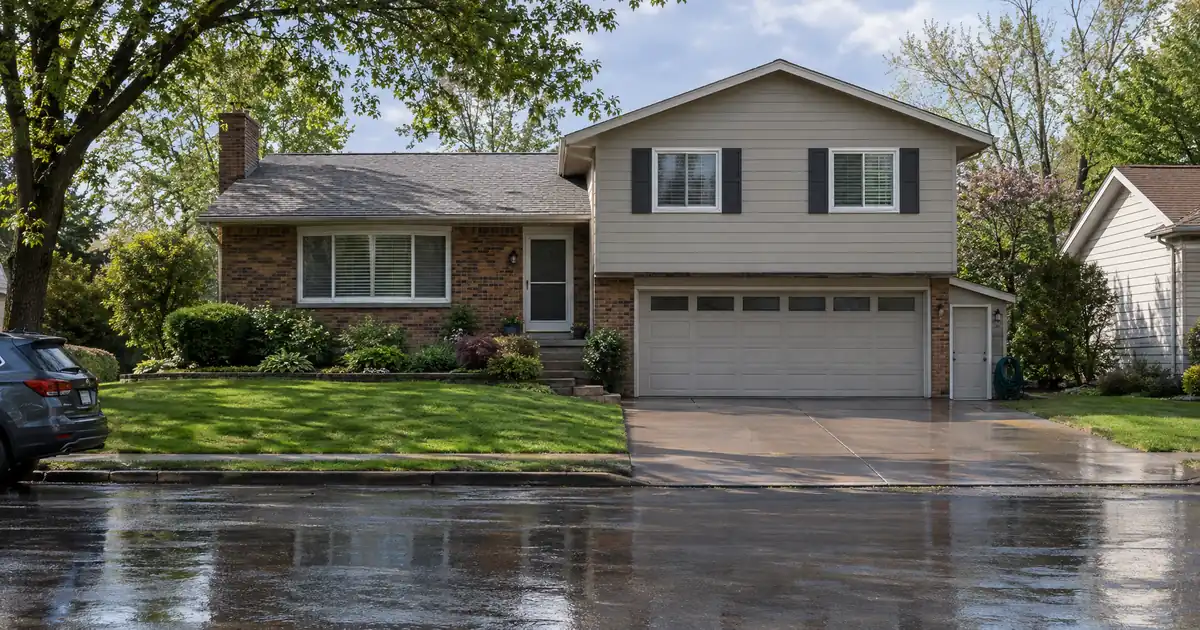
The Quick Read: A partner buyout on a rental is a cash-out refinance: one new loan pays off the old mortgage, the extra proceeds pay your departing partner, and bank statements simply prove the remaining owner’s income to the lender under the applicable program, subject to lender guidelines. The statements change how your income is documented. They do not change the buyout mechanics. Your real work is showing which deposits are yours, which are not income, and whether the property holds enough equity to cover the price.
- A buyout refinance is a cash-out loan, so the cash-out leverage cap sets how much equity can fund the buyout.
- Bank statement income comes from averaged eligible deposits over 12 months, reduced by a lender-set expense factor.
- Transfers and the buyout money itself are screened out of income, and the ownership change can affect which deposits count.
- Payoff, not a quitclaim deed, is what releases your partner from the old mortgage.
What a Partner Buyout Refinance Actually Is
You and a partner own a rental together. One of you wants out. The cleanest way to do that is a new mortgage in the remaining owner’s name (or the remaining owner’s LLC), sized to pay off the old loan and fund the partner’s share.
What your deposits qualify you for.
Alt-doc programs read 12 months of business or personal bank deposits instead of tax returns. Enter your average monthly deposits and see the income a lender would credit you.
The expense factor is set by the lender from your business type and profit-and-loss statement; it is not a number you choose. This widget quotes no rate and no payment.
Program parameters shown update from Lendmire’s centralized guideline source.
Estimate
Illustrative estimate only — not a quote, Loan Estimate, approval, or commitment to lend. Deposit average, expense factor, and housing ratio are editable assumptions; the expense factor a lender applies is set from your business type and documentation. No interest rate or monthly payment is quoted here. Purchase capacity is a simplified illustration and does not account for taxes, insurance, HOA dues, or other debts. Alt-doc income documentation is available on consumer mortgages in the states where Lendmire is licensed for consumer lending; actual terms vary by lender, borrower, and property.
Lenders call this a cash-out refinance because the new loan is larger than the old balance. It does not matter that the cash goes to your partner instead of your pocket. The lender sees extra proceeds at closing, so the cash-out leverage limits apply.
Those limits are lower than purchase limits. Across Lendmire’s wholesale network, investment-property cash-out refinances top out around 75% loan-to-value (LTV, the loan as a percentage of appraised value), subject to lender guidelines. An owner-occupied cash-out on a primary residence or second home runs up to 80% LTV with a fixed expense ratio, or 75% with an accountant-prepared ratio, depending on loan size and credit. Loan amounts generally run from $125,000 to $3,500,000, and lenders commonly look for about six months of reserves (cash left after closing, measured in months of the housing payment).
How Lenders Read Bank Statements After Buying Out a Partner
A bank statement loan is reviewed on documented income under the applicable program, subject to lender guidelines, instead of on traditional personal-income documentation. The lender totals eligible deposits from 12 months of personal or business statements, removes anything that is not income, averages the rest, and applies an expense factor.
Here is how that plays out when a partner has just left.
Eligible deposits only. Customer payments, rent, and business revenue count. Transfers between your own accounts, loan proceeds, and refunds do not. Most programs we see place a heavy emphasis on this screening step, and it is where files shrink.
The lender sets the expense factor. You do not pick it. On business statements, the lender applies a percentage that stands in for the costs of running the business. Some programs accept an accountant-prepared expense ratio or profit-and-loss statement instead. Programs differ, so two lenders can turn the same deposits into different qualifying income.
Ownership share matters. If the deposits land in a business account you shared with your partner, a lender may credit only your ownership percentage, or want proof that you control the account. After a buyout, your percentage goes up. That helps, but only for the months when you actually owned the larger share.
Here is the timing problem. Say you bought out a partner four months ago. Eight of your twelve statement months show a business you co-owned. Lenders handle this differently. Some credit income in line with your ownership during each period. Others want statements from after the change, or documents showing you already controlled the account and the income. A buyout agreement and an accountant letter explaining the history can resolve most of it.
The buyout money is not income. Cash-out proceeds that pass through your account on the way to your partner look like large deposits. The underwriter will screen them out. Label them clearly, keep the title or escrow paperwork, and do not let them mix with the business operating account.
The Buyout, Step by Step
1. Fix the price in writing. Many buyouts tie the price to the appraised value from the refinance, less transaction costs, with the old mortgage paid off so the departing partner carries no debt. A sample buyout agreement on BiggerPockets works this way and lets any partner dispute the appraisal and order another at their own expense. Build in a fallback for a low appraisal.
2. Confirm how title is held. If individuals are on the deed, each departing co-owner signs a deed. If an LLC owns the property, the partner assigns their membership interest and title may not move at all. Either way, amend the operating agreement.
3. Choose the borrower. That is either you personally or your LLC with you as guarantor, subject to program terms. The bank statement file qualifies you, the individual.
4. Document income. Gather 12 months of statements, any expense letter or P&L, proof of your ownership share, and a business license or accountant verification.
5. Appraise. The appraised value sets the maximum loan under the cash-out cap. On rentals the appraiser also completes a rent schedule form, which lenders use to understand the property’s income.
6. Close in the right order. The new lender pays off the old lien through the title company or escrow, then funds your partner. Title and debt are separate. A deed changes who owns the property. Only payoff changes who owes the mortgage.
Before, During, or After: Which Order Works?
You can refinance before the buyout, use the refinance to fund it, or refinance afterward. Each path changes your income picture and paperwork.
| Path | Income picture | Main risk |
|---|---|---|
| Refinance funds the buyout | Statements show the shared period | Equity may fall short of the price |
| Buy out first, refinance later | Cleaner post-buyout history builds | Deed change can trip the old loan |
| Refinance first, then buy out | Partner is still on the loan | Partner stays liable until payoff |
For most owners, the first path is simplest. One closing, one payoff, one set of documents.
The second path carries a trap. Federal law lets a lender call a loan due when all or any part of the property, or an interest in it, is transferred without the lender’s prior written consent. Deeding your partner off the title, or deeding into an LLC, before the refinance can give the existing lender grounds to demand payoff. The statute’s exemptions cover only residential property with fewer than five units. Pay off first, then record the deed at the same closing.
A recent deed change can also reset seasoning, the waiting period many programs require after you take ownership before they allow cash-out. No published rule waives it for a partner buyout. Lendmire’s piece How Soon Can You Refinance An Investment Property After Purchase? covers how programs count it.
A Worked Example
Run the numbers as percentages of appraised value. These are modeled assumptions, not market data.
Scenario one: it fits.
- Appraised value: 100%.
- Old mortgage payoff: 40% of value.
- Equity: 60% of value.
- Your partner’s half of the equity: 30% of value.
- Assumed closing costs: 3% of value.
- Total the new loan must cover: 73% of value.
On an investment property, that sits just under the 75% cash-out ceiling. On an owner-occupied cash-out, with an 80% ceiling, it leaves more room. These specifics are subject to lender guidelines and a full review of property, leverage, and credit.
Scenario two: it does not.
- Appraised value: 100%.
- Old mortgage payoff: 50% of value.
- Your partner’s half of the equity: 25% of value.
- Assumed closing costs: 3% of value.
- Total the new loan must cover: 78% of value.
That is three points over the investment cash-out cap. You would need added cash, a smaller or staged buyout, or a seller note for the gap. Some lenders restrict subordinate financing, so confirm that before you promise your partner a note.
In both cases, test your income against the new, larger loan, not the old balance. The qualifying income has to carry the bigger payment.
Which Paperwork Rules Apply to Your Property?
Occupancy decides the disclosure regime. An owner-occupied file, meaning a primary residence or second home, is a consumer mortgage, so TRID (the federal loan-disclosure rules for consumer mortgages) applies. A bank statement loan on a non-owner-occupied rental, including a short-term rental, is a business-purpose loan and is exempt from TRID.
The CFPB’s Regulation Z commentary deems credit to acquire, improve, or maintain a non-owner-occupied rental to be business purpose, regardless of unit count. It also says that if you expect to occupy the property for more than 14 days in the coming year, that special rule does not apply. If you plan to move into one of the units, tell your loan officer early, because the file may move to the consumer side.
Getting Your Partner Off the Loan
A quitclaim deed removes a name from title. It does not remove that name from the note. If your partner signed the old mortgage, they stay liable until the loan is paid off, even after they have given up ownership.
That is the main reason to fund the buyout with a refinance. The new loan pays off the old note, which releases your partner. It also gives you sole control, which usually strengthens your hand when negotiating the price.
Where the General Rule Breaks
- LLC membership assignment. Title may never move, so the lender reviews the operating agreement and who has signing authority.
- Owner-occupied or mixed-use property. The business-purpose treatment can fail, and consumer-mortgage rules apply to the file.
- Use of proceeds. Cash that goes to a partner for the buyout is still cash-out. Cash used for personal purposes can change how the loan is classified.
- Partner who will not agree. Paying more of the bills does not change ownership. You need a consenting co-owner, a negotiated deal, or a court-ordered path such as partition.
- Price above equity. If the buyout number is higher than the available equity, a refinance cannot close the gap. Look at a partial buyout, added cash, or a bridge.
- Business account changes. New accounts or new signers can shorten your clean statement history. Keep old and new statements together and be ready to explain the switch.
Tax treatment can depend on how the funds are used and how the property is held; investors should keep clear records and speak with a qualified tax professional before relying on any deduction.
When Bank Statements Are the Wrong Tool
Bank statements fit a self-employed owner whose traditional personal-income documentation understates real cash flow. They fit poorly when your deposits are thin or mixed up with your partner’s.
If the property is a true non-owner-occupied rental, compare a DSCR loan. It qualifies primarily on property-level rental income covering the payment, subject to lender guidelines, and your personal deposits matter less. Lendmire’s complete DSCR loans guide explains how that test works.
Either way, the bigger post-buyout loan has to be supported by whichever method you pick. Run both before you commit.
Key Terms Defined
Cash-out refinance: A new mortgage larger than the old balance, with the extra proceeds paid out at closing.
Expense factor: A percentage the lender subtracts from business deposits to estimate operating costs.
Eligible deposits: Deposits that reflect real income, after transfers, loan proceeds, and refunds are removed.
Seasoning: The waiting period a program requires after you take title before it allows a cash-out refinance.
Due-on-sale clause: A mortgage provision that lets the lender call the loan if the property is transferred without consent.
Business-purpose loan: A loan made for investing or operating a rental, as opposed to personal, family, or household use.
Before You Apply
- Get the buyout price and terms in writing.
- Pull 12 months of statements and mark every buyout-related transfer.
- Gather your operating agreement, ownership records, and an accountant letter if you have one.
- Confirm how title is held and whether the old lender must consent.
- Ask your lender how it credits income when your ownership share changed mid-period.
Frequently Asked Questions
Can I refinance on bank statements right after buying out a partner?
Often yes, but timing matters. Programs vary on whether they want statements covering the period after your ownership changed, and a recent deed change can restart a seasoning clock. Funding the buyout with the refinance itself avoids most of that, since there is no separate buyout first.
Does my partner’s money coming out count against my income?
Buyout payments are not business expenses, but they do appear in your accounts. The lender screens out the proceeds and the payment, so your qualifying income comes from the remaining eligible deposits. Keep the title or escrow paperwork to show where the money went.
How much of the buyout can a refinance cover?
Only as much as the cash-out cap allows. On an investment property, that is around 75% LTV on a cash-out. On an owner-occupied cash-out, it is up to 80% LTV, subject to lender guidelines. If the price plus payoff and costs exceeds the cap, you need added cash or a smaller buyout.
Will a quitclaim deed take my partner off the mortgage?
No. A quitclaim changes title only. The mortgage note stays in force until it is paid off, and the departing partner remains liable until then.
Does an LLC change the process?
Yes, it can. If an LLC holds title, the partner assigns their membership interest and the deed may not move, so the lender reviews your operating agreement. Whether the LLC itself can borrow depends on program terms.
Next Step
Owner-occupied bank statement files fall under Lendmire’s consumer mortgage licensing in 16 states, and every file is underwritten individually by the lender. Reach the team at 828-256-2183, or use the quote form. A buyout is rarely about the loan alone, and the owners who get the cleanest result are usually the ones who settle the price and the paperwork before the lender ever sees the file.
About Lendmire
Lendmire — NMLS# 2371349 — is a DSCR and non-QM mortgage brokerage with investor loan programs in 41 markets, including Washington, D.C. DSCR eligibility is commonly reviewed by the lender around property-level rent rather than personal income documentation, subject to lender guidelines, and the brokerage helps arrange financing for LLC-owned portfolios beyond conventional financed-property limits. Recognized by Scotsman Guide as a Top Mortgage Workplace in 2025 and 2026.
Get Started
Ready to find the right loan for you?
In about 30 seconds you can review financing options available for your home or investment property. No commitment required.
Informational only. Not a Loan Estimate, approval, or commitment to lend. Program availability and eligibility are subject to lender guidelines, credit approval, property review, and underwriting.
References
1. BiggerPockets, sample partner buyout agreement
2. Cornell Law School LII, 12 U.S.C. § 1701j-3
3. CFPB, Regulation Z § 1026.3
This article is part of Lendmire’s bank statement loan program — full qualification details, guidelines, and scenarios live on the program page.
Related reading: Can You Qualify With Business Bank Statements Only? · How to Get a CPA Letter for First-Page Bank Statements · Can You Use Personal Bank Statements for a Mortgage?
Brandon Miller
Founder & CEO, Mortgage Loan Originator, Lendmire LLC
- Mortgage Loan Originator · NMLS# 1129696 · Verify on NMLS Consumer Access
- North Carolina Real Estate Broker · License# 343312 · Verify on NCREC
- North Carolina Insurance Producer · License# 19053198 · Property, Casualty, Life, Health · Verify on NAIC SBS
- Lendmire LLC · Firm NMLS# 2371349 · Verify firm licensure
Compliance and disclosures. Lendmire (NMLS# 2371349) is a licensed mortgage broker and is not a direct lender, depository institution, financial advisor, or tax professional. Content in this article is general market analysis and educational information — not financial, legal, or tax advice for any specific situation. Lendmire does not guarantee loan approval; every transaction is subject to underwriting by the funding lender. Mortgage pricing and loan program guidelines are subject to change at any time without notice and vary by borrower characteristics, property type, and state regulations. Lendmire complies with Equal Housing Opportunity. Licensure verification: NMLS Consumer Access.