
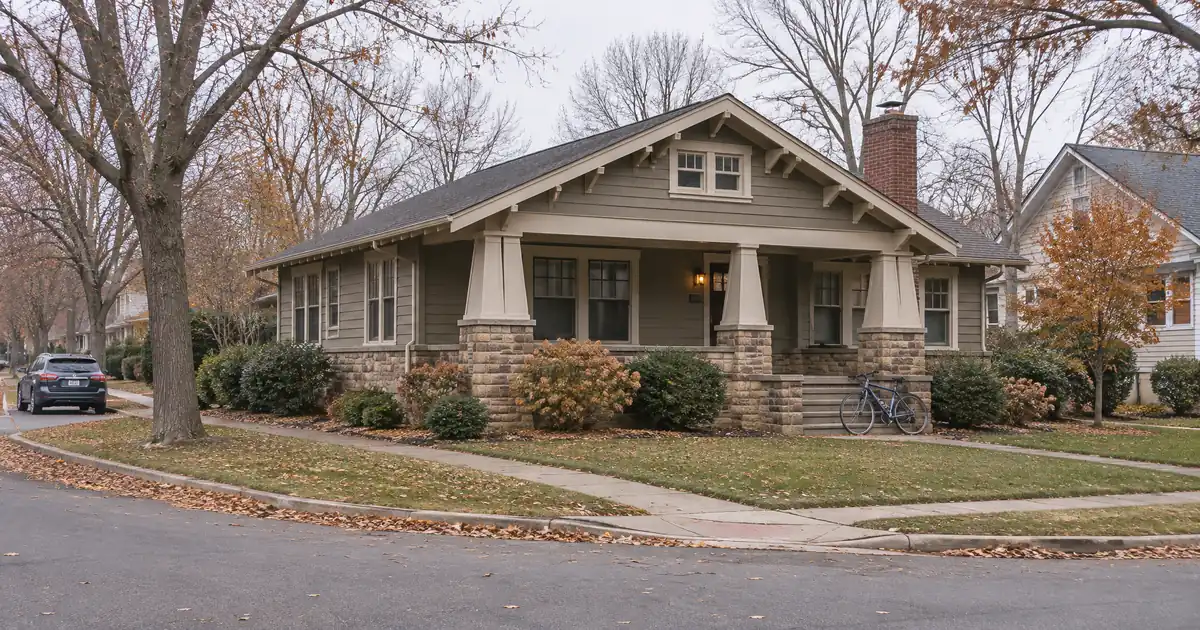
The Quick Read: Banks, credit unions and wholesale HELOC lenders may consider an application after a final divorce decree, but a former spouse still shown on the recorded deed generally must either transfer their interest through an acceptable recorded deed or sign the new lien as a non-borrowing owner. The decree alone does not necessarily resolve the title record or remove anyone from an existing mortgage.
Key takeaways
- A deed addresses ownership; a mortgage note addresses responsibility for the debt.
- A former spouse may be able to sign the new lien without becoming a borrower on the HELOC.
- A HELOC generally leaves an existing joint mortgage in place.
- Investment-property lines and primary-residence lines have different credit and combined loan-to-value limits.
- A refinance may be the more relevant comparison when the decree requires the existing joint debt to be paid off.
How large a line the equity supports.
An equity line is sized by combined loan-to-value, occupancy, and credit — not by rental coverage. Switch the occupancy or the credit band and the ceiling moves with it.
Investment-property lines require a 700 minimum credit score; second-home lines start at a 640 minimum and primary-residence lines at 600, and the combined-LTV ceiling steps down as the credit band drops on primary-residence and second-home lines and holds on investment-property lines; the line cap steps down on primary-residence lines and holds at every tier on investment-property and second-home lines.
A debt-to-income ratio above 45% requires 680+ credit. On the longer-runway program, profiles under 640 are limited to single-family homes. At least 75% of the approved line is drawn at closing. Ceilings, floors, and caps update from Lendmire’s centralized guideline source.
Rate assumption as of November 23, 2026.
Line estimate
Illustrative estimate only — not a quote, Loan Estimate, approval, or commitment to lend. The rate is an editable assumption; equity-line pricing is variable through both the draw and repayment periods and never converts to fixed. Occupancy and credit drive the ceiling together: an investment property tops out at 70% combined LTV (minimum credit 700, line cap $500,000); a second home tops out at 90% combined LTV (minimum credit 640, line cap $500,000), with the ceiling stepping down as the credit band drops (the cap holds at every tier); a primary residence tops out at 90% combined LTV (minimum credit 600), and its $750,000 maximum line is available only at 75% combined LTV or below with a 700-or-better credit profile (720 on the longer-runway program) and a full appraisal. Lines above $500,000 require a full appraisal. Credit, debt-to-income, property type, and full underwriting review all affect the final line.
Estimate only, not a loan offer or a commitment to lend. The rate is variable and can go up. The payment shown is interest only. Full calculator disclaimer.
Lendmire, LLC, a mortgage broker (NMLS# 2371349), arranges DSCR investor loans through wholesale channels across 40 states plus Washington, D.C. Its HELOC programs have a narrower footprint: they are available in its 16 full-service states. The brokerage can compare a file against available programs; lenders make the underwriting decisions.
What Does Old Title Mean After a Divorce?
Old title means the recorded ownership documents have not caught up with the parties’ intended arrangement. The decree may award the property to one spouse, while the public record still shows both. A title search brings that difference into the HELOC file.
The problem can take several forms. No deed may have been signed. A deed may have been signed but not recorded. Or a court order may contain language intended to transfer ownership, but the title company still needs to determine whether the property records support the proposed lien.
World Wide Land Transfer explains the distinction between changing ownership and changing responsibility for a mortgage. A new deed can transfer an ownership interest without removing a borrower from the existing note.
| Title situation | What the file needs |
|---|---|
| Former spouse remains on the deed | An acceptable transfer or lien signature |
| Transfer deed is signed but unrecorded | Recording and updated title review |
| Decree contains vesting language | Title-company review of the order and record |
| Former spouse refuses to cooperate | Legal review of enforcement or other remedies |
A signed deed is not a substitute for an updated title report. The lender and settlement agent need to see what the record shows and whether any other title requirements remain.
Key Terms Defined
Final divorce decree: The court’s final order addressing the divorce and any property or debt terms included in it.
Recorded deed: A document placed in the property records that shows a transfer of an ownership interest.
Quitclaim deed: A deed that transfers whatever ownership interest the signer has, without necessarily making warranties about that interest.
Mortgage note: The agreement that identifies the borrowers responsible for repaying the debt.
Security instrument: The mortgage or deed of trust that gives a lender a lien against the property.
Non-borrowing titleholder: An owner whose interest in the property is subject to the lien, but whose income and credit are not used to qualify for the new debt.
Combined loan-to-value, or CLTV: The relationship between the property’s value and the total liens used in the lender’s calculation.
Which HELOC Programs Fit an Old-Title File?
The fit depends on the property, the recorded owners, the existing debt and the applicant’s qualifications. No neutral list establishes which named institutions will accept this exact situation. A broker can instead screen the file against available guidelines and ask the title question before the borrower commits to a structure.
A bank or credit-union HELOC generally reviews the applicant’s income, credit and debts along with the property’s value and title. A wholesale investment-property HELOC also reviews the borrower under its income and credit rules. It should not be assumed to work like a rental-income-only DSCR loan.
The first screening questions are practical:
- Will the program review a property with a former spouse still on title?
- Can that owner sign only the security instrument if the applicant qualifies alone?
- Does the decree restrict a new lien or require an existing mortgage to be paid off?
- Is the property held in an eligible name or trust?
- Does the existing first mortgage meet the program’s lien requirements?
- How will the lender calculate combined leverage and document income?
For the programs in Lendmire’s wholesale network, everyone holding title signs the security instrument. Only the people whose income and credit are used to qualify sign the application and note. The title company and lender must still review the documents for the individual file.
A separate discussion of a bank that offer a HELOC with a divorce decree and a former spouse still on title covers that signature issue in more detail.
What Will Underwriting Check?
The lender reviews the proposed lien and the borrower’s qualifications as separate parts of the file. An acceptable title solution does not establish that the income, credit, property value or existing mortgage meets the program. Likewise, an income-eligible borrower still needs a lien the lender can place against the property.
Occupancy changes the limits
For an investment-property HELOC in the network, the guideline ceiling is 70% CLTV, with a 700 minimum credit profile and a line limit of $500,000. The investment line uses a five-year interest-only draw followed by a 25-year fully amortizing repayment structure; repayment terms can be shorter under a state overlay.
For a primary residence or second home, a separate program can reach 90% CLTV at a 720-or-better credit profile, with a line up to $500,000. That program uses a three-year interest-only draw followed by a 17-year fully amortizing repayment structure. State and property overlays can reduce the available terms.
These are program ceilings, not promises. Review details are subject to lender overlays, property review and the complete file. Program details can change and should be confirmed with Lendmire.
On the network’s HELOC programs, at least 75% of the approved line is drawn at closing. That matters for an investor who wants a line mainly as an undrawn reserve. The applicant should review the draw requirement and repayment structure rather than assume every HELOC works the same way.
Income and the existing mortgage
The network’s investment-line program reviews documented borrower income and debts. Its process generally starts with electronic verification, with document review available when that path does not produce a result. Rental income may be documented through a lease or return under the applicable program.
Court-ordered support may also be considered under the investment-line program when documented by the decree or settlement. The lender decides whether the evidence and income treatment meet its guidelines; the borrower should not assume that an award alone establishes usable income.
An existing joint mortgage remains part of the title and credit review. It is a lien against the property, and the borrower may still be responsible for it even if the decree assigns payment to the former spouse. The lender reviews the obligation under its guidelines and the evidence in the file.
How Is the Title Gap Cleared?
The process starts with the decree and the record, not with an assumption about which document controls every issue. The following sequence gives the lender and title company the information needed to identify the remaining gap.
1. Read the decree and settlement.
Identify who receives the property, whether a deed is required, and whether the order requires a refinance, payoff or buyout. Any restriction on a new lien belongs in the file.
2. Obtain the current recorded deed and title report.
Compare the names on the record with the proposed borrower and the decree. Ask the title company to identify open liens and any documents needed for the new security instrument.
3. Locate any transfer deed.
If a deed was signed but not recorded, the settlement agent can review whether it is acceptable for recording. If no deed exists, the parties may need a properly prepared transfer document or a court-authorized remedy.
4. Decide whether the former spouse will remain an owner.
If the former spouse remains on title, the lender may require that person to sign the lien. If the intent is sole ownership, the title company must review the transfer and updated record.
5. Document the existing debt.
Obtain current statements or payoff information for the first mortgage and any existing equity line. A payoff request and a release from liability are not the same document.
6. Submit the complete structure for lender review.
Include the decree, settlement, recorded deed or proposed title solution, income evidence and property information. The program reviews the whole file, not the decree in isolation.
A court order with detailed vesting language can present a different question from a decree that merely directs someone to sign a deed. The title company must decide what evidence it needs for the property records and the proposed lien. If the former spouse refuses to sign or cannot be found, an attorney can assess available court remedies rather than leaving the lender to infer authority from the decree.
Does the Former Spouse Have to Sign the Note?
Not necessarily. A person can sign a security instrument as an owner without necessarily signing the note as a borrower. That distinction matters when the retaining spouse is reviewed on their own but the former spouse still owns an interest in the property.
The Electronic Code of Federal Regulations permits a creditor in a secured transaction to require signatures it reasonably believes are needed under applicable law to make the property available as collateral. The required documents depend on the ownership record and the transaction.
The practical question for the title company is whether the proposed lien reaches the interest the lender expects. The question for the borrower is whether the former spouse is signing only as an owner or also taking on the new debt. Those are different roles, and the documents should show the difference.
Property and marital rights vary by jurisdiction. A person not shown as a record owner may still have an interest relevant to the lien, so title counsel should resolve unusual vesting or marital-status questions.
What Happens to the Joint Mortgage or Existing HELOC?
A new HELOC does not, by itself, remove either borrower from an existing joint first mortgage. A recorded deed does not do that either. The prior note remains a separate obligation until the debt is paid off or the creditor expressly releases a borrower through an accepted process.
A refinance may pay off the joint first mortgage, but it still requires an eligible new borrower and property. An assumption may be another question for the existing servicer; an assumption is not the same as an express release unless the servicer’s documents say so.
The Consumer Financial Protection Bureau has described complaints from homeowners who encountered problems with mortgage servicing and assumption requests after divorce or a death. Those complaints illustrate possible documentation and communication problems; they do not establish how often such problems occur.
An existing joint HELOC needs its own review. The borrower should ask its servicer whether further draws are permitted, whether the account can be frozen or closed, what payoff requires, and whether either person remains liable. A new line should not be treated as a substitute for answers about the old one.
Can a HELOC Fund a Buyout?
A HELOC can be considered for a buyout when the available equity, income, title and program rules support it. The decree or settlement must also permit the proposed structure. A line may provide funds for the transfer, but it does not itself complete the transfer or release an existing borrower.
Consider an investor who is awarded a rental and must buy out a former spouse. The former spouse has signed a deed, but it is not recorded. The title report still shows both owners, and both remain on the first mortgage note.
The settlement agent reviews and records the deed if it is acceptable, then obtains updated title evidence. The lender then reviews the borrower’s income, credit, property value and combined loan-to-value for eligibility. If the decree separately requires the joint first mortgage to be refinanced, the HELOC alone may not satisfy that obligation.
That distinction should be resolved before the line is selected. The buyout, the ownership transfer and the release from the old debt are three different objectives.
HELOC or Refinance: Which Solves the File?
A HELOC is a separate line secured by the property. A refinance replaces existing financing with a new loan. The choice turns on whether the investor needs access to equity, needs to resolve joint debt, or needs both.
| Question | HELOC | Refinance |
|---|---|---|
| Existing first mortgage | Generally remains in place | Can be paid off |
| Former spouse’s old note liability | Generally remains | Ends if that debt is paid off |
| Access to equity | Draws under the line terms | Cash-out may be available |
| Main review | Borrower income, credit and liens | Borrower, property and loan program |
A DSCR cash-out refinance is an option to review for a rental when replacing the existing mortgage serves the decree and the investment plan. It qualifies primarily on property-level rental income covering the payment, subject to lender guidelines; the complete DSCR loans guide explains that calculation. Rental coverage does not account for every ownership expense, so a ratio that covers the lender’s obligation is not a statement of overall profit.
Vesting is another dividing line. The network’s HELOC programs permit eligible individual ownership or an eligible revocable living trust, but not title held by an LLC, corporation or partnership. A rental already held by an LLC would need an acceptable vesting change for that HELOC or a different financing path. DSCR loans to LLC-titled entities may be available subject to lender program eligibility.
Changing vesting can affect existing loan documents and the owner’s legal arrangements. The investor should have the proposed transfer reviewed rather than assume a deed change is a harmless administrative step.
Frequently Asked Questions
Can a borrower get a HELOC if the divorce decree awards the property to them?
Potentially, but the lender still needs an acceptable title record and a valid lien. If the former spouse remains on the deed, the file generally needs either an acceptable recorded transfer or that owner’s signature on the security instrument.
Does an unrecorded quitclaim deed remove the former spouse from the file?
Not from the recorded title report. The title company must review the deed, its recording and any remaining requirements. The deed also does not release either party from an existing mortgage note.
Can a former spouse sign the HELOC lien without borrowing?
That structure may be available when the applicant qualifies alone and the lender accepts the former spouse as a non-borrowing titleholder. The owner signs the security instrument; the note and application identify the people taking on the new debt.
Can court-ordered support help qualify for the line?
It may be considered under the network’s investment-line program when documented by the decree or settlement. The lender reviews the evidence and applies the program’s income rules.
What if the decree requires a refinance?
A second-lien HELOC generally does not replace the existing first mortgage. The borrower should compare the decree’s exact wording with the proposed financing and seek legal review if the required action is unclear.
Comparing the Options
An investor considering a HELOC can contact Lendmire at 828-256-2183 to discuss the property, available equity, credit profile, existing liens and decree. The useful starting package is the decree, recorded deed, current mortgage information and any existing title report. The brokerage can compare available wholesale programs; the lender and title company decide what the file requires.
About Lendmire
Lendmire, LLC, NMLS# 2371349, is a mortgage brokerage that arranges home equity lines of credit through wholesale lending partners in its 16 full-service states. Lines on primary residences, second homes and investment properties are each reviewed individually by the lender under the program’s occupancy, credit and combined-loan-to-value guidelines. Scotsman Guide named Lendmire a Top Mortgage Workplace in both 2025 and 2026.
Get Started
Ready to find the right loan for you?
See your offer in seconds. No credit pull, no obligation.
Informational only. Not a Loan Estimate, approval, or commitment to lend. Program availability and eligibility are subject to lender guidelines, credit approval, property review, and underwriting.
References
2. Electronic Code of Federal Regulations
3. Consumer Financial Protection Bureau
This article is part of Lendmire’s HELOC & home equity loan program — full qualification details, guidelines, and scenarios live on the program page.
Related reading: Best HELOC Program After a Divorce With the Old Title Still Recorded · HELOC Lenders Before the Divorce Is Final · HELOC Lenders With a Final Divorce Decree and Old Title Still Recorded · Best HELOC Program With a Final Divorce Decree and Old Title Still Recorded · Banks That Offer a HELOC Before the Divorce Is Final
Brandon Miller
Founder & CEO, Mortgage Loan Originator, Lendmire, LLC
- Mortgage Loan Originator · NMLS# 1129696 · Verify on NMLS Consumer Access
- North Carolina Real Estate Broker · License# 343312 · Verify on NCREC
- North Carolina Insurance Producer · License# 19053198 · Property, Casualty, Life, Health · Verify on NAIC SBS
- Lendmire, LLC · Firm NMLS# 2371349 · Verify firm licensure
Required disclosures. Lendmire, LLC (NMLS# 2371349) operates as a licensed mortgage broker, not a direct lender or depository. The discussion in this article is general in nature and should not be relied upon as financial, legal, or tax advice — every investment scenario is unique and should be reviewed by a qualified professional. Any loan inquiry is subject to lender underwriting, and this article is not a commitment to lend or a guarantee of approval. Mortgage rates, loan terms, and program guidelines vary by borrower, property, and state, and may change without notice. Equal Housing Opportunity. Verify licensure at NMLS Consumer Access.