
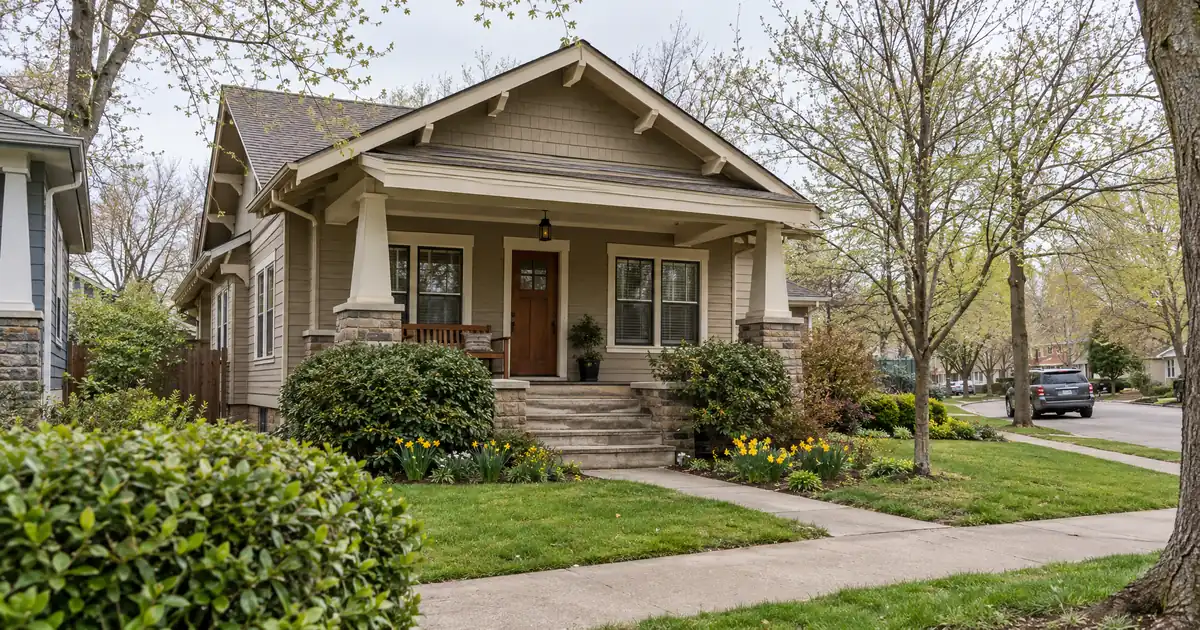
The Quick Read: Few banks hold a rental-backed cash-out loan on their own books, and most of those that do still underwrite your personal income. The realistic route after a decline is usually a wholesale non-QM lender that qualifies the rentals on their own income. A broker can place several rentals under one loan or refinance each property separately, depending on the file.
- A bank decline often reflects your personal income, your property count or the bank’s own product limits, not the rental itself.
- Cash-out on standard rentals tops out at 75% of value, and about six months of ownership is the common seasoning expectation.
- One loan can cover two to twenty rentals on a 30-year structure, or five or more rentals on a term loan with a balloon.
- Coverage on a pooled loan is measured across the whole pool, so stronger properties can offset weaker ones.
- No single lender is right for everyone. The program that fits depends on your properties, credit, leverage need and documents.
Key Terms Defined
Four meanings of “portfolio” float around this topic, and mixing them up causes most of the confusion.
Bank portfolio loan: a loan a bank makes and keeps on its own books instead of selling. It follows the bank’s internal rules, which usually include personal income and debt-to-income checks.
DSCR (debt service coverage ratio): monthly rent divided by the full monthly housing payment (principal, interest, taxes, insurance and HOA dues). A loan is reviewed primarily on property-level rental income covering the payment, subject to lender guidelines.
Portfolio DSCR loan (also called a blanket or cross-collateralized loan): one note secured by several non-owner-occupied rentals. Here all three names mean the same thing.
Cash-out refinance: a new loan that pays off the old one and returns extra cash to you. Cash back beyond payoff and costs puts the file in the cash-out category.
Seasoning: the waiting period between buying a property and refinancing it with cash back. It is measured from the date the deed records in your name.
Why Did the Bank Say No?
A decline usually says more about your file than about the property. Banks that decline an investor typically do so because of how the borrower looks on paper, so the first step is matching the reason to the fix.
| Decline reason | Does a rent-based loan help? |
|---|---|
| Low taxable income after write-offs | Yes, rent is the focus |
| Too many financed properties | Often, depending on the program |
| Loan must be in an LLC | Usually yes, subject to program terms |
| Bank does not lend on rentals | Yes, wholesale lenders do |
| Rent too low for the payment | No, the next lender will see it too |
| Value came in short | No, proceeds shrink everywhere |
The last two rows matter most. A DSCR lender checks whether rent covers the payment. If the rental itself fails that test, a new lender reaches the same answer.
Ask the bank for the decline reason in writing before you do anything else. A vague “we can’t do this” and a specific “debt-to-income too high” send you down different paths.
Which Kinds of Banks Hold This Loan on Their Books?
Most large retail lenders do not. Loans they cannot sell into the conforming market must sit on their own balance sheet, and many banks prefer not to carry that risk. Community banks, some regional banks and some credit unions are the institutions most likely to hold investor loans themselves.
Even then, a bank’s portfolio loan usually runs on the bank’s own box. That means your tax returns, your debt-to-income ratio and often a personal guaranty. It also often means relationship pricing, local property focus and a cap on how many properties the bank will finance for one borrower.
Lenders without in-house appetite hand the work off. Scotsman Guide reports that many lenders lack the appetite or expertise to underwrite non-QM in-house, so they broker the loans out or send them to aggregators. The same article puts non-QM originations at $239 billion in a recent year. DSCR investor loans fall in the non-QM category, which Scotsman Guide describes as loans ineligible for Fannie Mae or Freddie Mac purchase.
Lendmire does not place bank-held portfolio loans.
If you want to test a local bank anyway, call and ask these questions:
- Do you hold investor loans on rentals in your own portfolio?
- Do you do cash-out on non-owner-occupied property, and at what maximum value?
- Do you qualify on property rent or on my personal income?
- Can the loan be titled in my LLC?
- Is there a cap on how many properties you will finance for one borrower?
A clear answer to the third question usually settles whether the bank is a fit.
Four Structures Side by Side
Four structures cover nearly everything an investor means by “portfolio cash-out.” The table compares them, and the program figures are ceilings and floors, never quotes.
| Factor | Bank portfolio loan | One rental, DSCR | 30-year portfolio DSCR | Rental portfolio term loan |
|---|---|---|---|---|
| Reviewed on | Personal income | Property rent | Pooled rent | Property income |
| Properties | Bank’s limit | One | 2 to 20 | 5 or more |
| Loan size | Bank-set | Up to $3,000,000 | $300,000 to $5,000,000 | $500,000 to $50,000,000 |
| Cash-out ceiling | Bank-set | 75% | 75% of pooled value | 75% of pooled value |
| Term | Varies | 30-year fixed spine | 30-year | 3, 5, 7 or 10 years, balloon |
Larger balances on the portfolio structures go to review. The single-rental line is shown only to contrast it with the pooled structures.
Here is how the choice usually plays out:
- One or two rentals with strong rent: separate single-property DSCR loans keep each asset independent.
- Two to twenty single-family, 2-4 unit, condo or townhome rentals: the 30-year portfolio DSCR loan can consolidate them under one note.
- Five or more rentals or units, larger balances, including small multifamily: the rental portfolio term loan is built for that size.
- One weak property in an otherwise strong group: a pooled loan can absorb it, while single loans each stand alone.
Small multifamily (five or more units) is eligible only inside the rental portfolio term loan. It is not eligible on the 30-year portfolio structure or on a single-property DSCR loan.
For the full picture of how these loans work, see Lendmire’s complete DSCR loans guide.
How Underwriting Treats a Portfolio Cash-Out, Step by Step
Underwriting follows the same order on most files. Each step either clears or stops the loan.
1. Classify the transaction. A refinance that returns real cash beyond payoff and closing costs is cash-out. A refinance with no cash back is rate-and-term and follows different leverage rules.
2. Build the rent evidence. Every property needs a lease or an appraiser-supported market rent. The appraiser typically supplies a rent schedule on the 1007 form for single-family or the 1025 form for 2-4 units.
3. Calculate coverage. Rent is divided by the full payment, then tested against the program floor. On the 30-year portfolio loan the floor is 1.00, measured on the pool (pooled rent against pooled debt service).
4. Apply the leverage cap. Cash-out never exceeds 75% of pooled value. Appraised value times that percentage, minus payoff and costs, sets the ceiling on proceeds. A short appraisal shrinks the cash directly.
5. Check seasoning and cost basis. Cash-out is available on seasoned properties. Inside the first six months of ownership the loan is also capped at 90% of total cost (purchase price plus documented improvements). From six to twelve months the cap is 100% of total cost. The leverage ceiling still applies, and the loan is the lower of the two. After twelve months the appraised value alone is the basis. A rate-and-term refinance is not subject to the cost-basis cap.
6. Review the borrower and entity. The credit floor on portfolio programs is 640, with some structures wanting 680 or 720. A special-purpose entity, typically an LLC, is required on some structures. Recourse loans carry a personal guarantee.
7. Confirm reserves and liabilities. Reserves vary by lender, leverage and loan size. On the term loan, reserves are held for taxes, insurance and capital expenditures. Mortgage statements confirm everything is current.
DSCR loans are designed for non-owner-occupied investment properties. Because they are business-purpose investor loans, they are reviewed differently from a standard owner-occupied mortgage. The CFPB’s Regulation Z text treats credit to acquire, improve or maintain non-owner-occupied rental property as business purpose.
Review details stay subject to lender guidelines, credit approval and property review.
What Cash-Out Does to Your Coverage
Cash-out makes the loan bigger while rent stays the same, so coverage drops. Size the draw to the rent, not to the maximum.
Run the numbers on a modeled single rental. Assume it covers its payment at roughly 1.5x before a refinance. After a large cash-out, the same rent may cover the new, larger payment at only around 1.15x. The property did not change, but the loan did.
Now picture a pool of three rentals. Two cover their payments comfortably and one sits slightly below 1.00 on its own. Pooled coverage can still clear the 1.00 floor, because the strong rents offset the weak one. A rental below 1.00 can sit in the pool because underwriting tests the pooled coverage, the leverage and the terms.
That offset only works up to a point. Pushing leverage to the cap while one property drags the pool leaves no cushion. A modest draw leaves breathing room for a vacancy or a repair.
One more point to keep straight: clearing 1.00 is not positive cash flow. DSCR compares rent to the housing payment only. Repairs, vacancy, management, utilities and capital expenses all sit outside the calculation.
Where the Rules Break
The general rule is that rent drives the loan. These exceptions are where it stops working.
Recent purchases. Inside the first six months the cost-basis cap can limit proceeds well below what the appraised value would suggest. An investor who bought cheap and renovated hard may find the cap, not the appraisal, sets the number.
Properties that cannot go in the pool. Owner-occupied homes, co-ops, mixed-use property and commercial property are ineligible inside the pool. Manufactured and mobile homes are not reviewable on any of these programs.
Short-term rentals. Cash-out on standard rentals tops out at 75%, while short-term rental collateral typically runs a lower ceiling around 70%. Hosting history is usually expected as well. Short-term rental rules vary by city, county, HOA and property type, so confirm local rules before relying on projected rental income.
Existing second liens. A second loan on the property must be paid off in the refinance, or the analysis must carry both payments.
Releases and sales. Partial releases, substitutions and the sale of one property out of a pool follow the loan documents. The release price runs above the property’s allocated balance, and the remaining portfolio must still cover its debt service. Read those terms before you sign, because they decide how flexible the pool is later.
Cross-market holdings. The rental portfolio term loan allows properties in several markets or states under one loan. That helps scale, though it also means one note ties every asset together.
Prepayment and structure. The term loan carries yield maintenance prepayment, so paying it off early costs more. Its fixed terms of 3, 5, 7 or 10 years end in a balloon at maturity. It is available recourse or non-recourse. A non-recourse loan looks to the real estate, with recourse limited to carve-outs such as fraud and bankruptcy.
No-ratio files. No-ratio loans exist on single-property DSCR loans through select wholesale programs. They are available only through select lenders, generally for borrowers who already own a primary residence. They are not the portfolio structure.
When Not to Refinance
Keep the existing loan when its terms beat what a refinance can offer. A bank loan with favorable terms and a low balance may cost you more to replace than the cash is worth.
Skip a cash-out when the rent barely covers the current payment. A bigger loan drops coverage and leaves little margin for the vacancy and repair costs DSCR never counts.
Hold off when the appraisal is likely to come in short, or when the property is inside its first six months and the cost-basis cap will bind. Wait for the seasoning rule to loosen.
If a bank decline came from a weak property, fix the property first. Raising rent or improving the unit changes the coverage number.
What to Do After a Decline
Treat the decline as information and work through a short sequence.
1. Get the reason in writing. Match it to the decline table above.
2. Pull the property facts. Gather current leases, rent history, mortgage statements and the payoff amount for each rental.
3. Assemble the entity file. That means the EIN, LLC formation papers, the operating agreement and proof of ownership.
4. Count your reserves. Cash-out proceeds may count toward reserves in some programs, subject to lender guidelines.
5. Decide the structure. Use the scenario list above to choose single loans, the 30-year portfolio DSCR loan or the rental portfolio term loan.
6. Hold off on scattering applications. Each lender pulls credit, and those inquiries show on your report.
A decline from one lender is that lender’s decision. The next lender underwrites the file fresh against its own guidelines.
A broker adds value here by shopping several wholesale lenders and matching your scenario to the program. The best program for your situation depends on property types, credit, leverage need and documentation. HousingWire reports DSCR and investor lock volume is up 130% over the period it tracks, and that fraud indicators fire on 1 in 44 investment-property applications. Expect real scrutiny of rent evidence and occupancy.
Frequently Asked Questions
Do big banks offer this?
Rarely. Large retail lenders mostly focus on loans they can sell, and a rental cash-out qualified on rent does not fit that model. Community banks and some credit unions are likelier, but they usually underwrite your personal income. Wholesale non-QM lenders are the more common path for property-rent-based lender review.
Will the earlier denial hurt my next application?
The next lender underwrites your file from scratch against its own guidelines. A prior decline is not a mark the new lender inherits. Recent credit inquiries do appear on your report, so apply selectively rather than to many lenders at once.
Can a broker place a portfolio cash-out?
Yes, through wholesale DSCR lenders, subject to lender guidelines. Lendmire is a broker, not a lender. It arranges these loans through select lenders in its wholesale network and does not place bank-held portfolio loans.
Can I cash out properties held in an LLC?
Often yes, subject to program terms. Many DSCR programs allow entity title, and some portfolio structures require a special-purpose entity, typically an LLC. Expect to provide formation papers and an operating agreement, and expect a personal guarantee on recourse loans.
What is the difference between one portfolio loan and several single loans?
A portfolio loan puts one note on several rentals and tests coverage across the pool. Single loans test each property alone, so one weak rental cannot drag the others. The pooled loan is simpler to manage, while single loans give you more freedom to sell or refinance one asset later.
Your Next Step
If you are buying or refinancing a rental property and want to see how the numbers work, Lendmire can help you compare DSCR loan options based on the property income, credit profile, leverage and investor goals. Reach the team at 828-256-2183 or request a quote. Lendmire arranges DSCR investor loans through a wholesale network across 41 markets, including Washington, D.C., and every file is underwritten individually by the lender.
A deeper walk-through of investment-property equity extraction lives in Lendmire’s guide to cash-out refinance on an investment property.
About Lendmire
Lendmire, NMLS# 2371349, is a non-QM mortgage broker serving real estate investors in 41 markets, including Washington, D.C., through DSCR investor loan programs. Qualification is generally reviewed around the subject property’s rental income, not the borrower’s W-2 history — a practical fit for LLC-titled portfolios and self-employed investors. All scenarios remain subject to lender review and program guidelines. Two consecutive Scotsman Guide Top Mortgage Workplace recognitions (2025, 2026).
Get Started
Ready to find the right loan for you?
See your offer in seconds. No credit pull, no obligation.
Informational only. Not a Loan Estimate, approval, or commitment to lend. Program availability and eligibility are subject to lender guidelines, credit approval, property review, and underwriting.
References
1. Scotsman Guide: Lenders facing a non-QM choice
2. Scotsman Guide: Investor-owned homes surge as brokers pivot to nonconforming loans
4. HousingWire: DSCR loan volume growth and fraud risks
This article is part of Lendmire’s investment property cash-out refinance program — full qualification details, guidelines, and scenarios live on the program page.
Related reading: How to Qualify and Apply for a Super Jumbo DSCR Cash-Out Refinance After Delisting · How to Qualify and Apply for a DSCR Cash-Out Refinance With Rent Covering 90% of Payment
Brandon Miller
Founder & CEO, Mortgage Loan Originator, Lendmire LLC
- Mortgage Loan Originator · NMLS# 1129696 · Verify on NMLS Consumer Access
- North Carolina Real Estate Broker · License# 343312 · Verify on NCREC
- North Carolina Insurance Producer · License# 19053198 · Property, Casualty, Life, Health · Verify on NAIC SBS
- Lendmire LLC · Firm NMLS# 2371349 · Verify firm licensure
Disclosure information. Lendmire is a state-licensed mortgage brokerage under NMLS# 2371349. Lendmire is not a depository institution, direct lender, or financial advisor — all loans referenced are placed through wholesale lender partners and are subject to each lender's underwriting standards. This article is provided for general informational purposes and is not a commitment to lend, nor does it constitute financial, legal, or tax advice. Loan programs, terms, rates, and qualification standards change without notice and depend on borrower profile, property type, and the state in which the subject property is located. Equal Housing Opportunity provider. NMLS Consumer Access: nmlsconsumeraccess.org.