
The Quick Read: For a foreign national who needs short-term, asset-based capital against a US rental already owned, a hard money cash-out refinance is often the program to look at first, though the best fit for your situation depends on the property, the plan, and the exit. It generally works as a bridge to long-term rental financing, not as permanent debt, and it is reviewed on the property, the plan, and the exit rather than on US income or US credit history.
- Cash-out and rate/term refinances reach up to 65% of value. Purchase bridge loans without rehab are a separate product with a different basis. Every limit varies by lender, property, and experience.
- Terms run 6 to 18 months, interest-only, with no prepayment penalty.
- Credit starts at a 620 minimum score, with added conditions below 660.
- Collateral is non-owner-occupied residential property, 1-4 units.
- Many investors later refinance into long-term DSCR financing once the property is stable.
Which Loan Are You Actually Asking For?
“Hard money cash-out” means two different things, and mixing them up costs investors time. One is refinancing an existing hard money loan into something longer. The other is pulling equity out of a rental you own, using a short-term asset-based loan.
A payoff of the old lender alone is generally a rate-and-term refinance. Any cash back to you above the payoff makes it a cash-out. Both labels sit under the same leverage ceiling, but the label still matters, because it changes how the lender reads your purpose and the documents it asks for before you request a quote.
Lendmire is a mortgage broker working with a network of wholesale lenders in 41 markets, including Washington, D.C. It does not lend. It shops the scenario and matches it to a program. The best program for your situation depends on the property, your plan for the cash, and how you will exit the loan.
Key Terms Defined
- Foreign national: A borrower who lives outside the US and owns US property, usually without a US credit file or US income.
- Cash-out refinance: A new loan that pays off the old one and returns the extra equity to the borrower.
- Hard money loan: A short-term, interest-only loan underwritten mainly on the property’s value and the borrower’s plan.
- Loan-to-value (LTV): The loan amount divided by the property’s appraised value.
- DSCR: Debt service coverage ratio, meaning monthly rent divided by the full monthly housing payment (principal, interest, taxes, insurance, and dues).
- Seasoning: How long you must have owned the property before a lender counts its current value.
How Do Lenders Underwrite a Foreign National Cash-Out?
Underwriting follows the asset. Hard money stays asset-based: the lender looks at the property, the plan, and the exit. That is why a borrower without US pay stubs or tax returns can still be reviewed.
1. Classify the request. Payoff only, or payoff plus cash back.
2. Confirm the property is eligible. It must be non-owner-occupied residential, 1-4 units. Commercial, land, hospitality, and owner-occupied properties are not offered.
3. Value the property. An appraisal sets value, and the loan is sized as a share of that value.
4. Check credit and experience. The 620 minimum applies, with extra conditions below 660. Your track record affects which leverage tier you land in.
5. Verify identity, entity, and funds. Expect a passport, entity documents if an LLC holds title (subject to lender program eligibility), and proof of funds.
6. Settle the exit plan. The lender wants to know how the loan gets repaid.
For cash-out and rate-and-term refinances, programs typically go up to 65% of value, and that is lower than the leverage on a purchase or rehab. Plan around that gap.
What the Program Looks Like
Across the network, the hard money sheet is simple. Figures below vary by lender, property, and experience, and nothing here is a commitment to lend.
| Feature | Typical range |
|---|---|
| Cash-out / rate-term refinance | Up to 65% of value |
| Bridge purchase, no rehab | Up to 80% of purchase price |
| Loan amount | Up to $5,000,000, larger by exception |
| Term | 6-18 months, interest-only |
| Prepayment penalty | None |
| Credit | 620 minimum, conditions below 660 |
| Property | Non-owner-occupied, 1-4 units |
Notice what is missing. There are no multi-year options. A 6-18 month term is a bridge, not a place to sit. If you need longer runway, the plan is a refinance into long-term rental financing.
Also notice the lender cap works against the “pull everything out” instinct. At 65% of value, an owner with a modest equity cushion may find the cash back is small after payoffs and costs. Run that math before you pay for an appraisal.
Hard Money or DSCR: Which One Fits?
The two products solve different problems. Hard money is for a short window and a clear exit. DSCR is for holding the property and keeping it rented.
| Factor | Hard money cash-out | DSCR cash-out |
|---|---|---|
| Purpose | Short-term capital | Long-term hold |
| Term | 6-18 months, interest-only | 30-year fixed spine |
| Qualifying basis | Property, plan, exit | Rent against PITIA |
| Typical cash-out leverage | Up to 65% of value | Around 75% on standard rentals |
| Exit risk | Must refinance or sell | Low, no maturity pressure |
| Best fit | Unstable or transitional property | Leased, stable property |
Hard money fits when the property is not yet DSCR-ready. Maybe it is mid-rehab, vacant, or unleased. It also fits when you want access to capital without a rent test, though timing varies by file. A DSCR loan fits once the property is leased and rent covers the payment. DSCR cash-out also tends to allow more leverage. If the property already qualifies, the long-term loan usually holds more cash back and removes the maturity.
Some DSCR programs set a 1.00 coverage floor, and a separate select-lender path accepts coverage below 1.00 with leverage and terms adjusted. A caveat matters here. Clearing 1.00 does not mean positive cash flow. Repairs, vacancy, management, and utilities sit outside the ratio.
When the Cash Comes From a Cash Purchase
Many foreign buyers pay cash. NAR’s international transactions report found that 48% of foreign purchases were all cash, with a median price of $465,000. Those owners often sit on trapped equity.
RISMedia’s coverage of the NAR report notes that non-resident buyers living abroad bought 29,500 homes, or 44% of the total. Those buyers fit the foreign national borrower profile best.
For a cash-purchase owner, a hard money cash-out is one way to pull equity out for the next acquisition. The tradeoff is the exit. You will still need to refinance or sell inside 6-18 months, so line up that next step before you take the loan.
Where the General Rule Breaks
A few edge cases change the answer.
- Maturity before the property is ready. If the term ends before a renovation or lease-up is done, you need a plan. Some lenders will extend, and some will not. Ask before you sign.
- Foreign national versus ITIN loans. A foreign national loan is for someone living abroad. An ITIN loan is for someone living and working in the US without an SSN. A non-resident owning a US rental is the foreign national case.
- Payoff-only needs. If you do not need cash back, the refinance is rate-and-term, and the leverage cap generally stays at 65% of value.
- Short-term rental collateral. For DSCR, STR cash-out is capped at 70% of value, with a 1.00 coverage floor and about 12 months of hosting history. That is a different product than hard money.
- Selling later. Refinancing does not trigger FIRPTA. A sale does. The IRS explains that FIRPTA applies to dispositions and that the buyer is generally the withholding agent. Tax treatment varies; consult a qualified professional.
The Exit: Where Hard Money Becomes DSCR
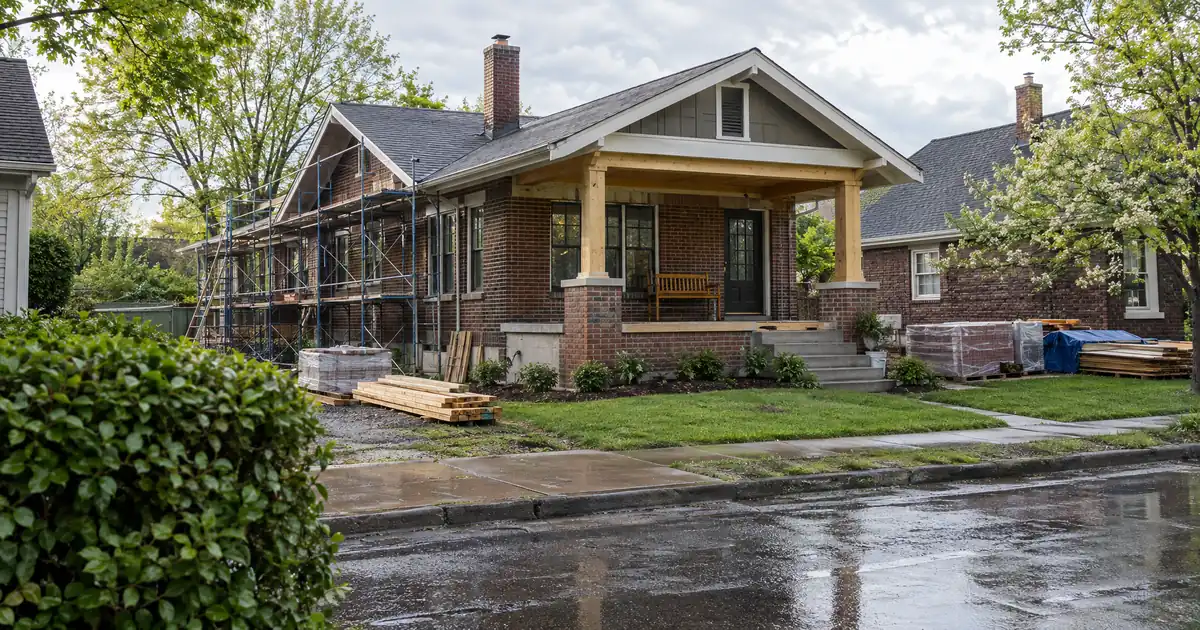
The exit is the real decision. Once the property is leased and stable, many investors refinance out of hard money into long-term DSCR financing, and Lendmire brokers that path. Think of the hard money loan as scaffolding.
Before you borrow, test the exit. Ask what rent the long-term loan will use, what value it will accept, and whether your reserves cover the new loan. DSCR cash-out generally tops out around 75% of value on standard rentals, and about 6 months of seasoning is the common expectation. Reserves vary by lender, leverage, and loan size, and often land around 6 months of PITIA.
Run the ratio at the planned new loan size, not the current one. A larger loan means a larger payment, and coverage compresses. In the complete DSCR loans guide, the coverage math and program tiers are laid out in full.
What Shapes the Best Program for You
No single program wins for every foreign owner. Ask yourself these questions:
- Is the property leased and stable, or still in transition?
- Do you need cash back, or only a payoff?
- Do you want to hold for years, or exit within a year or two?
- Does your credit file clear the 620 floor, and where does it sit against 660?
- Can you document identity, entity, and funds from abroad?
If the answers point to a stable, leased property you plan to hold, the long-term path usually pencils better. If the property is in transition and you need a short bridge with a clear exit, hard money may be the better tool.
Be careful with this one: a lender that quotes the highest leverage may carry the toughest terms elsewhere. Compare structure, not just the headline number. A broker that shops several wholesale lenders can show you those differences side by side.
Common Mistakes
- Assuming cash-out leverage matches purchase leverage. It does not. Hard money cash-out tops out at 65% of value.
- Skipping the exit test. A 6-18 month term ends whether or not the next loan is ready.
- Treating hard money as permanent. It is a bridge.
- Overlooking entity paperwork. Title in an LLC adds documents, subject to program terms.
- Equating DSCR with cash flow. The ratio measures rent against the payment only.
Frequently Asked Questions
Can a foreign national get a hard money cash-out refinance on a US rental?
Often yes, on eligible properties. Hard money is asset-based, so it focuses on the property, your plan, and your exit instead of US income. Collateral must be non-owner-occupied residential, 1-4 units. A 620 minimum credit score applies, with additional conditions below 660, and terms vary by lender, property, and experience.
How much cash can I take out?
Cash-out and rate-and-term refinances typically go up to 65% of value on this program. That figure varies by lender, property, and experience. Foreign-owned files may see more conservative quotes. The cash back is what remains after the existing payoff and costs.
How long does a hard money loan last?
Terms run 6 to 18 months, interest-only, with no prepayment penalty. There are no multi-year options. Investors who need longer runway refinance into long-term rental financing, often DSCR, once the property is stabilized.
Does refinancing trigger FIRPTA?
No. FIRPTA applies when a foreign owner sells, not when they refinance. It is still a planning point if you may sell later.
Which property types are not offered?
Commercial, industrial, land or lots, hospitality, and owner-occupied properties are not offered on the hard money sheet. Collateral is limited to non-owner-occupied residential, 1-4 units. Eligibility is subject to lender guidelines.
If you are buying, rehabbing or refinancing an investment property on a short timeline and want to see how the numbers work, Lendmire can help you compare hard money options based on the project, the exit plan, leverage, and your goals. Lendmire’s piece Best Hard Money Cash-Out Refinance Program on a Condotel Used as a Vacation Rental covers the nightly-booking side. Short-term rental rules can vary by city, county, HOA, and property type, so investors should confirm local rules before relying on projected rental income.
About Lendmire
Lendmire (NMLS# 2371349) is a mortgage brokerage built around DSCR investor lending, with programs available in 41 markets, including Washington, D.C. DSCR lenders commonly evaluate rental-income coverage instead of personal income paperwork, a practical fit for LLC-owned and multi-property investors. Terms vary by lender, property, leverage, and program. Scotsman Guide named Lendmire a Top Mortgage Workplace in both 2025 and 2026.
Get Started
Ready to find the right loan for you?
See your offer in seconds. No credit pull, no obligation.
Informational only. Not a Loan Estimate, approval, or commitment to lend. Program availability and eligibility are subject to lender guidelines, credit approval, property review, and underwriting.
References
1. NAR: International Transactions in U S Residential Real Estate
2. RISMedia: Home Purchases by Foreign Buyers Decrease Nearly 20 Percent
3. IRS withholding and reporting obligations
This article is part of Lendmire’s hard money loan program — full qualification details, guidelines, and scenarios live on the program page.
Related reading: How to Qualify and Apply for a Super Jumbo DSCR Cash-Out Refinance After Ninety Days
Brandon Miller
Founder & CEO, Mortgage Loan Originator, Lendmire LLC
- Mortgage Loan Originator · NMLS# 1129696 · Verify on NMLS Consumer Access
- North Carolina Real Estate Broker · License# 343312 · Verify on NCREC
- North Carolina Insurance Producer · License# 19053198 · Property, Casualty, Life, Health · Verify on NAIC SBS
- Lendmire LLC · Firm NMLS# 2371349 · Verify firm licensure
Important disclosures. Lendmire (NMLS# 2371349) is a licensed mortgage brokerage. Lendmire is not a direct lender, depository institution, or financial advisor. All loan inquiries are subject to lender underwriting; this article does not constitute a commitment to lend. Rates, terms, and program guidelines are subject to change without notice and vary by borrower profile, property type, and state. Information in this article is general in nature and is not financial, legal, or tax advice. Equal Housing Opportunity. NMLS Consumer Access: nmlsconsumeraccess.org.