
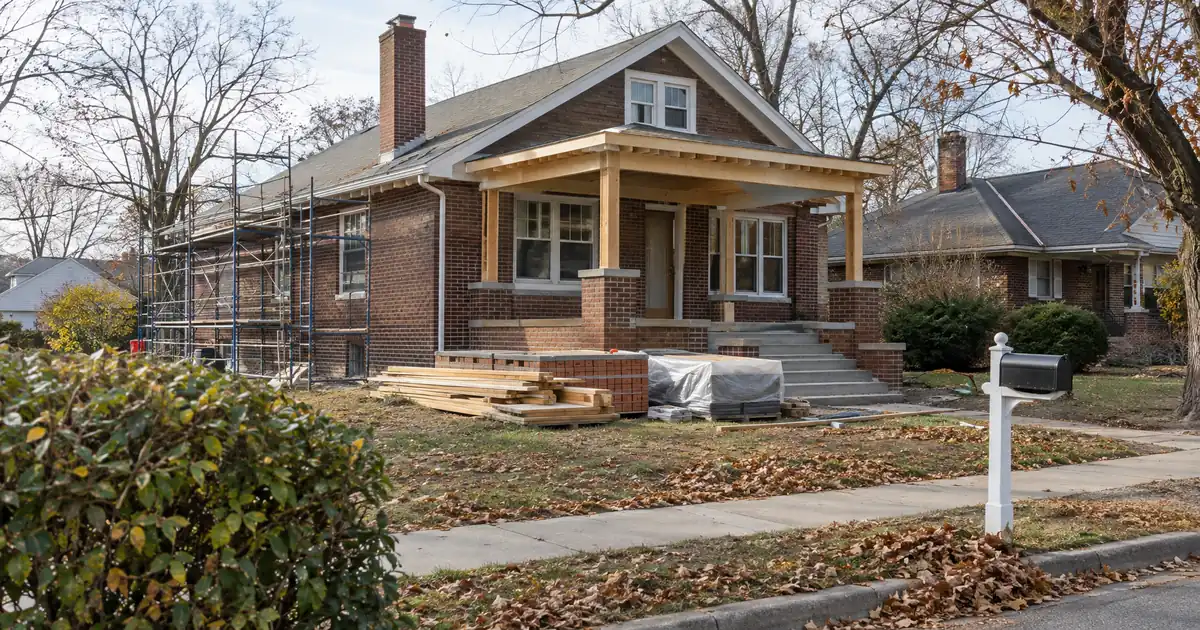
The Quick Read: The right route depends on which valuation set your number. An investment-property line sizes on today’s as-is value at up to 70% combined loan-to-value (CLTV), so if software missed the work, you request a full appraisal. If value still falls short, a DSCR cash-out refinance is the other path. Rehab cost is not rehab value, and a valuation only credits work it can see.
- Investment lines in Lendmire’s wholesale network top out at 70% CLTV and $500,000, so they ordinarily run on an automated valuation.
- Software assumes average condition, which is why a fresh interior rehab often goes uncredited.
- A borrower may request a full appraisal at any time, and a thick evidence file is what makes it count.
- A reconsideration after a full appraisal needs specific errors or missed comps. It can hold the number or lower it.
- Entity-held rentals and half-finished rehabs usually point to a different product.
Lendmire is a mortgage broker. It places files with wholesale lenders and does not lend itself. Every figure below is subject to lender guidelines and full file review.
How large a line the equity supports.
An equity line is sized by combined loan-to-value, occupancy, and credit — not by rental coverage. Switch the occupancy or the credit band and the ceiling moves with it.
Investment-property lines require a 700 minimum credit score; second-home lines start at a 640 minimum and primary-residence lines at 600, and the combined-LTV ceiling steps down as the credit band drops on primary-residence and second-home lines and holds on investment-property lines; the line cap steps down on primary-residence lines and holds at every tier on investment-property and second-home lines.
A debt-to-income ratio above 45% requires 680+ credit. Profiles under 640 are limited to single-family homes. At least 75% of the approved line is drawn at closing. Ceilings, floors, and caps update from Lendmire’s centralized guideline source.
Line estimate
Illustrative estimate only — not a quote, Loan Estimate, approval, or commitment to lend. The rate is an editable assumption; equity-line pricing is variable through both the draw and repayment periods and never converts to fixed. Occupancy and credit drive the ceiling together: an investment property tops out at 70% combined LTV (minimum credit 700, line cap $500,000); a second home tops out at 90% combined LTV (minimum credit 640, line cap $500,000), with the ceiling stepping down as the credit band drops (the cap holds at every tier); a primary residence tops out at 90% combined LTV (minimum credit 600), and its $750,000 maximum line is available only at 75% combined LTV or below with a 700-or-better credit profile (720 on the longer-runway program) and a full appraisal. Lines above $500,000 require a full appraisal. Credit, debt-to-income, property type, and full underwriting review all affect the final line.
What “Ignored Your Rehab” Actually Means
Three different things hide behind that phrase. The valuation may have missed the work, under-credited it, or credited it correctly at a figure below what you spent. Each needs a different fix.
Software misses work. Automated valuation models assume an average-condition home with upkeep similar to nearby sales, so Yahoo Finance notes they won’t capture extensive value-enhancing upgrades. They won’t show disrepair either.
Humans under-credit work. An appraiser reads condition, completeness and comparable sales. Repair cost and market value are not the same thing, as Authority Appraisals explains. The appraiser looks to the market for evidence of how buyers respond to the finished condition.
Sometimes the number is simply right. A high-end kitchen in a modest submarket may be worth far less than it cost. No appeal fixes that.
How Underwriting Treats Your Rehab, Step by Step
Here is the sequence a line follows on an investment property.
1. The line size sets the valuation lane. Investment lines in our network cap at $500,000. Full appraisals are required only above that size. So an investment line typically falls in the automated lane. A borrower may request a full appraisal in any case, and a higher CLTV may call for a secondary valuation.
2. The value is read as-is. The valuation reflects the property today. Work that is unfinished is valued as it stands. A “subject-to” value, which assumes completion, is valid only once the work is done, as a Birmingham appraisal blog explains.
3. CLTV sets the ceiling. On an investment property the network ceiling is 70% CLTV. Both the 700 and 720 credit tiers reach that same ceiling, so a higher score buys eligibility, not leverage.
4. Existing liens come off the top. Line equals value times 70%, minus what you already owe. Then the program cap applies.
5. Credit and debt ratio are checked. The minimum credit score on an investment line is 700. The debt-to-income ratio tops out at 50%, and it is qualified on the interest-only payment on the maximum draw.
6. At least 75% of the line is drawn at closing. Plan for that. It is not a line you leave idle.
Worked example: why a missed rehab hurts more than it looks
These inputs are modeled assumptions, not market data. Use index numbers instead of dollars. Say the true as-is value after your rehab is 100 units. Your first lien is 50 units. Assume the automated value comes in at 90.
- Corrected value: 70% of 100 is 70. Subtract the lien of 50. Available line: 20 units.
- Missed value: 70% of 90 is 63. Subtract 50. Available line: 13 units.
A 10% value miss cut the line by 35%. The lien doesn’t shrink when the value does. The bigger your first mortgage relative to value, the harder the miss lands.
The reverse is also true. If a corrected value pushes the line past the $500,000 cap, the extra value helps nothing. Check the cap before you pay for a second opinion.
Which Valuation Produced Your Number?
Diagnose first. You can’t dispute a number until you know who or what made it.
| Valuation type | Can it see the rehab? | Your remedy |
|---|---|---|
| Automated (AVM) | Rarely; assumes average condition | Request a full interior appraisal |
| Drive-by (exterior only) | No interior view | Request a full interior appraisal |
| Full interior appraisal | Yes, if documented | File a reconsideration with evidence |
An automated value has no human reasoning to challenge. Arguing with it wastes time. The remedy is a better valuation, not a better argument. NerdWallet notes that investment-property lines have limited availability and strict requirements. It adds that multiple appraisals may be required to confirm value. For more on the exterior-only option, see Lendmire’s piece Best Investment Property HELOC Program With a Drive-by Appraisal.
Why the Number Came In Low, and What Fixes It
| Cause | What happened | Fix |
|---|---|---|
| Wrong facts | Bedrooms, units or square footage misstated | Correct the record with documentation |
| Missed upgrades | Software never saw the interior | Full appraisal plus an upgrade list |
| Weak comps | Sales used were unrenovated | Offer renovated sales in the same comparable band |
| Cost above value | Work exceeds what buyers pay for | Accept it; use another route |
The third row is the most common fix that investors overlook. A full appraisal rests on comparable sales. If every comp is unrenovated, the appraiser has no market evidence for your finish level. Renovated sales nearby give the appraiser something to hold onto.
A related wrinkle: an appraiser may limit the adjustment if the renovation creates a value leap that nearby sales can’t support. A practitioner guide on post-renovation value frames value as what the market observably pays for the improvement, not what you spent.
The Evidence File That Helps a Full Appraisal
Build this before you ask for the appraisal, not after.
| Document | What it proves |
|---|---|
| Scope of work and invoices | What was done and what it cost |
| Before and after photos | Condition change |
| Permits and final sign-offs | Work is legal and complete |
| Renovated comps nearby | What buyers pay for the finished product |
| One-page upgrade list | Gives the appraiser a quick map of the work |
Permits matter more than people expect. Unpermitted work can be excluded from value. Treat that as a general caution, since practices vary by appraiser and lender.
On a rental, add the lease and tenant access plan. The appraiser needs to see the interior. On a 2-4 unit property, confirm the legal unit count matches what you’re telling the lender.
How to Request a Better Value
Ask your broker to route the request through the lender. Ask for a full interior appraisal instead of arguing with an automated value.
After a full appraisal, a reconsideration of value goes through the lender. It must rest on specific errors or missed comparable sales. A complaint is not evidence. A reconsideration can also hold the number or lower it. No improvement adds a fixed dollar amount.
You may also pay for your own independent appraisal. Treat it as supporting material. The lender decides whether to change its value.
The Program Rules for Investment-Property Lines
Here is what the wholesale lenders we place files with look for on an investment line.
- Maximum 70% CLTV, on investment property only. The higher ceilings you see for primary residences don’t apply here.
- Line size from $25,000 to $500,000. A line above $500,000 is primary-residence only.
- Minimum credit score of 700. Credit is read on a single bureau score, and the report can be no more than 90 days old at closing.
- Structure: a 5-year draw period followed by a 25-year repayment period. It can sit in first or second lien position.
- Title: held in an individual’s name or in a revocable living trust. LLCs, corporations and partnerships cannot hold title on the line.
- Property types: single-family, 2-4 units, PUDs, townhomes and condominiums. Manufactured homes, co-ops, condotels, log homes and commercial or mixed-use properties are not eligible.
- Exposure: a borrower is limited to three lines. An owner of more than 15 financed properties is not eligible.
- Availability: these lines are offered in only 16 states. That is narrower than Lendmire’s 41-market DSCR footprint.
One practitioner note. Across wholesale files like these, a rehab that went unrecognized usually traces to problems in how the file was put together before it was submitted.
Where the General Rule Breaks
You need the after-repair number. A HELOC credits only today’s value. If your plan depends on the finished value, a purpose-built renovation product is the tool that can credit it.
The rehab is still underway. Mid-rehab properties generally don’t fit. The valuation and any rent estimate depend on finished condition.
The rental sits in an LLC. A HELOC needs personal or revocable-trust title. A property already deeded to an entity needs a vesting change, or a DSCR cash-out instead.
You’d borrow against a different property. A common workaround is to take the line on a seasoned property, such as your home or another rental. You then repay it with a refinance after the rehabbed rental is reappraised. The terms follow the occupancy of the property securing the line.
The line shrinks after closing. The CFPB’s HELOC booklet says plans generally let a lender freeze or reduce a line if value declines significantly. That guidance is written for consumer-purpose lines, so how much applies to a business-purpose line on a rental varies. The practical point holds: an undrawn line is permission to borrow, not committed money.
HELOC or DSCR Cash-Out: How the Decision Looks
A DSCR loan is reviewed primarily on property-level rental income covering the payment, subject to lender guidelines. Our complete DSCR loans guide covers the full mechanics. The part that matters here is that a DSCR cash-out is appraisal-based. The lender’s appraisal sets value, not your after-repair estimate.
Across the network, a cash-out refinance on a standard rental tops out around 75% LTV, and about 6 months of seasoning is the common expectation. Many programs size on cost basis, meaning price plus documented rehab, until roughly six months after title recording. They then size on appraised value. A low appraisal shrinks proceeds. It can turn a cash-out into a payoff-only refinance or require cash to close. These specifics are subject to lender guidelines and a full review of property, leverage, and credit.
Coverage matters too. A 1.00 coverage ratio is where many select programs start. A separate select-lender path takes coverage below 1.00 with leverage and terms adjusted. DSCR compares rent to the full monthly obligation only. Clearing 1.00 is not the same as positive cash flow, since repairs, vacancy and management sit outside the calculation. DSCR loans to LLC-titled borrowers are available subject to lender program eligibility.
| Situation | Better-fit route | Why |
|---|---|---|
| Personal-name rental, modest line, strong credit | Investment HELOC | Personal credit and debt ratio drive it |
| Software missed a finished rehab | HELOC after a full appraisal | Fixes the valuation, keeps the product |
| Rental titled in an LLC | DSCR cash-out | HELOC title rules exclude entities |
| Need more leverage than 70% CLTV | DSCR cash-out | About 75% LTV on a standard rental |
| Rehab unfinished | Wait, or a renovation product | Nothing to value yet |
| Credit below 700 | DSCR cash-out | A 620 floor exists in parts of the network |
A bigger down payment or more equity helps either route. It never erases leverage caps, credit floors, reserve rules or property eligibility. The strongest files clear both tests: enough equity and enough coverage. Tax treatment can depend on how the funds are used and how the property is held. Borrowers should keep clear records and speak with a qualified tax professional before relying on any deduction.
Key Terms Defined
AVM (automated valuation model): software that estimates value from public records and sales data, without anyone visiting the property.
CLTV (combined loan-to-value): all loans against the property, including the new line, divided by the property’s value.
Full appraisal: an appraiser inspects the interior and exterior and bases value on comparable sales.
Drive-by appraisal: an exterior-only inspection that may not reflect interior renovations.
As-is value: what the property is worth in its current condition.
After-repair value: what the property is projected to be worth once work is complete. It rests on comps that reflect the finished condition.
Reconsideration of value: a lender-routed request to revisit an appraisal, based on specific errors or missed comparable sales.
Frequently Asked Questions
Can I appeal an automated value?
Not in the usual sense. Software has no reasoning to challenge. Ask for a full interior appraisal instead. A borrower may request one at any time, though the lender decides how it proceeds.
Will a new appraisal definitely come in higher?
No. A new appraisal can hold the value or lower it. It may support a higher appraised value only if your documentation and the nearby comps back up the finished condition, subject to underwriter review.
Does what I spent equal what the property is worth?
No. Cost and market value are different measures. The appraiser looks at what buyers actually pay for the finished condition, and some work returns less than its cost.
What if my rehab isn’t finished?
Unfinished work is valued as it stands. Wait for completion and a final sign-off before requesting a valuation. A line sized on a half-done property will undershoot.
Is a HELOC or a cash-out refinance better after a low value?
It depends on title, leverage and credit. A line fits a personal-name rental with credit at 700 or above. A DSCR cash-out fits entity-held rentals or borrowers who need more leverage, though a low appraisal shrinks that route too.
What to Do Next
If you are considering a home equity line and want to see how the numbers work, Lendmire can help you compare HELOC options based on the property, the equity available, credit profile, combined leverage, and your goals. Gather the evidence file first, and decide whether you need today’s value or the after-repair number. That answer picks the product.
About Lendmire
As a mortgage broker (NMLS# 2371349), Lendmire helps homeowners and real estate investors in its 16 full-service states open home equity lines of credit arranged through wholesale lenders. Lendmire is never the lender; line amounts, ceilings and terms are set by the lender under its guidelines. Scotsman Guide named Lendmire a Top Mortgage Workplace in both 2025 and 2026.
Get Started
Ready to find the right loan for you?
See your offer in seconds. No credit pull, no obligation.
Informational only. Not a Loan Estimate, approval, or commitment to lend. Program availability and eligibility are subject to lender guidelines, credit approval, property review, and underwriting.
References
1. Yahoo Finance: Appraisal for a HELOC or home equity loan
2. Authority Appraisals: As-Is vs. As-Repaired Appraisals
3. Birmingham Appraisal Blog: Appraisal in the middle of a renovation
4. NerdWallet: Can You Get a HELOC on an Investment Property
5. SalesWise: Estimate home value after renovation
This article is part of Lendmire’s investment property HELOC program — full qualification details, guidelines, and scenarios live on the program page.
Related reading: Best DSCR HELOC Program on an Airbnb You Hold as an Investment · Best DSCR HELOC Program With Two HELOCs on the Same Property · Best Investment Property HELOC Program to Buy an Airbnb Property
Brandon Miller
Founder & CEO, Mortgage Loan Originator, Lendmire LLC
- Mortgage Loan Originator · NMLS# 1129696 · Verify on NMLS Consumer Access
- North Carolina Real Estate Broker · License# 343312 · Verify on NCREC
- North Carolina Insurance Producer · License# 19053198 · Property, Casualty, Life, Health · Verify on NAIC SBS
- Lendmire LLC · Firm NMLS# 2371349 · Verify firm licensure
Important disclosures. Lendmire (NMLS# 2371349) is a licensed mortgage brokerage. Lendmire is not a direct lender, depository institution, or financial advisor. All loan inquiries are subject to lender underwriting; this article does not constitute a commitment to lend. Rates, terms, and program guidelines are subject to change without notice and vary by borrower profile, property type, and state. Information in this article is general in nature and is not financial, legal, or tax advice. Equal Housing Opportunity. NMLS Consumer Access: nmlsconsumeraccess.org.