
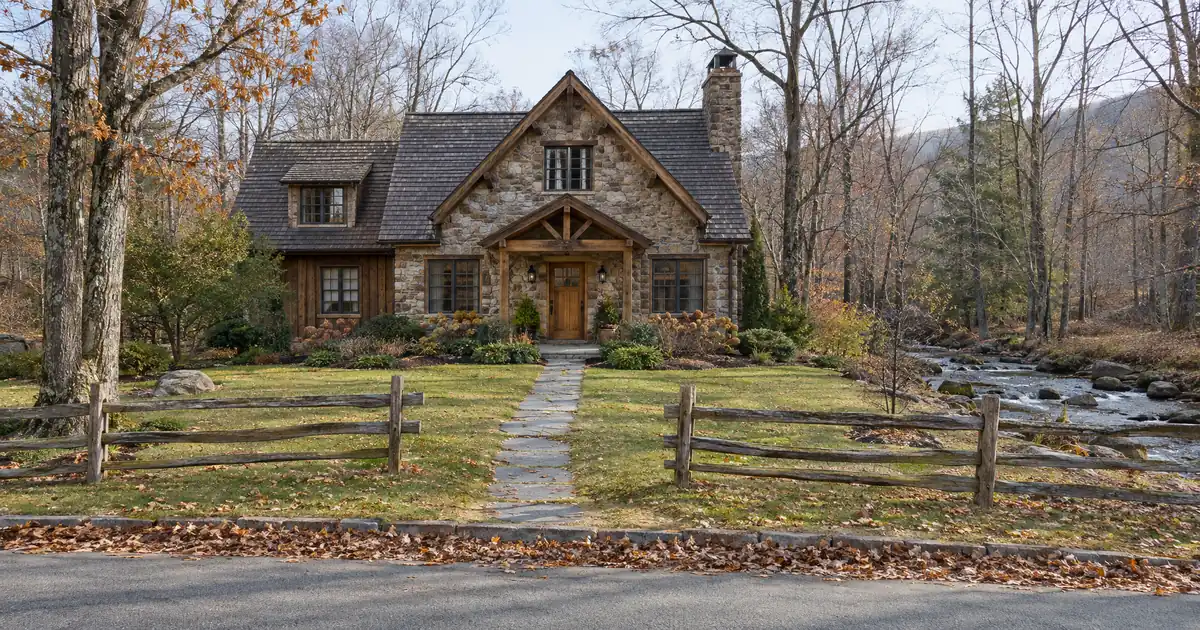
The Quick Read: The best program for your situation is the one whose acreage treatment, rural review and pooled-coverage rules fit the property you own. Several rentals can sit under one note, and the loan is sized on pooled value and pooled rent. A rural parcel adds appraisal risk and a possible land carve-out. Cash-out on the pool never exceeds 75% of pooled value, subject to lender guidelines.
- Cash-out on a portfolio loan tops out at 75% of pooled value, and about 6 months of ownership is the usual seasoning.
- The 30-year portfolio DSCR loan covers 2 to 20 properties and tests coverage on the pool, with a 1.00 floor.
- Appraised value, not purchase price or total acreage, drives the loan amount.
- Rent does not rise with land, so acreage can raise value while coverage stays flat.
- Log homes, barndominiums and manufactured homes are not offered.
Lendmire is a mortgage broker that arranges these loans through select wholesale lenders in a network spanning 41 markets, including Washington, D.C. Lendmire does not lend or approve. This page covers how lenders treat a rural parcel inside a pooled cash-out, so you can judge which program fits.
What Does “Portfolio DSCR Cash-Out” Actually Mean?
A portfolio DSCR loan is one note secured by several rentals. Blanket loan and cross-collateralized loan mean the same thing. DSCR, short for debt service coverage ratio, compares rent to the full monthly obligation (principal, interest, taxes, insurance and any HOA dues). A cash-out refinance replaces your current loan with a larger one and hands you the difference.
One caution on vocabulary. A bank also uses “portfolio loan” for a loan it keeps on its own books. That is a different meaning. This article uses the term only for one note across several rentals.
Two structures exist in the network:
| Feature | 30-year portfolio DSCR loan | Rental portfolio term loan |
|---|---|---|
| Properties | 2 to 20 | 5 or more properties or units |
| Loan size | $300,000 to $5,000,000 | $500,000 to $50,000,000 |
| Leverage | Up to 80% on purchase and rate-and-term | Up to 75% of value |
| Term | 30-year, interest-only available | 3, 5, 7 or 10-year fixed, balloon |
| Recourse | Personal guarantee on recourse loans | Recourse or non-recourse |
Larger balances are reviewed case by case. Small multifamily of five or more units is eligible only inside the rental portfolio term loan. Cash-out on either structure never exceeds 75% of pooled value, subject to lender guidelines.
Why Does Rural Acreage Change the Picture?
Rural acreage changes three things: how the property is valued, how much land the lender credits, and whether rent covers the new balance. None is a federal rule. Each is a program screen applied by the lender.
Start with valuation. McKissock, an appraiser-education publisher, notes that rural areas have fewer sales, so appraisers may look at neighboring towns or wider regions and must document the adjustments. Fewer comps mean more room for the value to land lower than you expected.
Next, land. The house plus the land it reasonably needs is the residential site. Land beyond that is valued separately, and lenders often give it limited or no credit. A purchase price that bundled in extra acres can appraise short.
Finally, rent. A tenant pays for the house, not the pasture. Value can climb with acreage while rent stays flat. That pushes coverage down exactly when a cash-out raises the balance.
Acreage and “Rural” Are Two Separate Tests
Acreage is a number. Rural is a label. A property can pass one and fail the other.
| Test | What the lender checks | Where it bites |
|---|---|---|
| Acreage | Total parcel size against the program line | Excess land carved out of value |
| Rural designation | The underwriter’s read of the location after the appraisal | Leverage, pricing or eligibility adjustments |
| Dwelling type | Conventional versus log, barn or manufactured | Ineligible types are not offered |
No universal definition of rural exists in DSCR lending. A government map and a lender’s label can disagree, and the underwriter makes the final call after reading the appraisal. Check acreage and surroundings before you apply. Across the network, acreage lines differ by program, so the right match depends on your parcel.
How Excess Land Affects Value and Loan Size
The lender applies its leverage cap to the value it credits, not the value on the contract. If the appraisal separates the residential site from excess land, only the credited portion counts. McKissock’s discussion of the cost approach describes allocation and extraction methods for separating land from improvements. When comps are thin, appraisers may lean on the cost and income approaches, and land value often plays a larger role on rural properties, per McKissock on limited comparable sales.
Older or distant sales can also support a rural value when the appraiser explains them. That describes appraiser practice. Each DSCR program sets its own comp rules.
A Worked Example
Treat these inputs as modeled assumptions, not market facts. Picture an investor with three rentals pooled under one 30-year portfolio DSCR loan. Two are suburban single-family homes. One is a rural house on acreage.
1. The appraisals come back. The suburban homes appraise as expected. The rural appraisal credits the house and its residential site but carves out the excess land.
2. The lender adds the credited values into pooled value.
3. Cash-out is capped at 75% of that pooled value, and the new loan must also leave room for reserves and clear pooled coverage.
4. Pooled rent is divided by the pooled payment on the whole new balance.
Here is the catch. If the rural house rents modestly against a larger credited value, it can sit below 1.00 on its own. Underwriting tests the pooled coverage, the leverage and the terms. A stronger suburban rental can offset it, but only while the pool clears its floor of 1.00. The cash-out itself lowers coverage because the balance rises while rent stays put. An investor who pulls the maximum may land right at the floor with no cushion.
Clearing 1.00 is also not the same as positive cash flow. DSCR compares rent to the housing payment only. Repairs, vacancy, management, utilities and capital spending sit outside the calculation.
Pooled Loan or Separate Loans?
Pooling is efficient, but it ties your properties together. Compare the tradeoffs before you choose.
| Factor | One pooled note | Separate loans |
|---|---|---|
| Coverage test | Pooled rent vs pooled debt | Each property alone |
| Weak property | Can ride on stronger ones | Stands or falls alone |
| Selling one | Follows release terms in loan documents | Pay off that loan only |
| Appraisal risk | One bad value affects the pool | Contained to one loan |
| Paperwork | One closing, one servicer | Several of each |
Selling one property out of a pool follows the loan documents and the lender’s release terms. The release price runs above the property’s allocated balance, and the remaining pool must still cover its debt service. A rural property that appraises poorly can drag down pooled value, so some investors leave it out and cash out the others.
How to Judge “Best” for Your Property
The best program is not a name. It is a match. Across the wholesale network, lenders differ on these points, so compare them in this order:
1. Acreage line. Does the program credit your full parcel or carve out the excess?
2. Rural review. Does the lender apply a leverage or pricing adjustment?
3. Pooled valuation. Is value pooled or tested property by property?
4. Entity title. A special-purpose entity, usually an LLC, is required on some structures, subject to program terms.
5. Reserves and seasoning. Reserves run about 6 months of PITIA, stepping up to about 9 months above $1,500,000.
6. Prepayment structure. The rental portfolio term loan carries yield maintenance, while the 30-year structure differs.
7. Recourse. Non-recourse structures exist on the term loan, with carve-outs for fraud and bankruptcy.
A broker that shops several wholesale lenders can match your parcel to the program that treats it best. That matching is the actual value.
Property Eligibility and Edge Cases
Eligible collateral in a pool includes single-family homes, 2-4 unit properties, condos and townhomes. Owner-occupied property, co-ops, mixed-use and commercial property are ineligible.
Manufactured and mobile homes are not reviewable on any of these programs. Log homes and barndominiums are not offered either. These dwellings are common in rural areas and hard to value, as McKissock notes in its rural appraisal piece, so check your structure before you spend on an appraisal.
Other edge cases:
- Working farmland. DSCR needs a rentable residence with supportable market rent, not raw land or agricultural use.
- Mixed occupancy. An owner-occupied dwelling on the same parcel as a rental is a problem.
- Unleased property. Every property needs a lease or appraiser-supported market rent. The appraisal rent schedule typically uses forms such as the 1007 for single-family rent and the 1025 for 2-4 unit income, which Fannie Mae’s Selling Guide names. Those are form names only. Agency rules do not govern DSCR files.
- Short-term rentals. Leverage is lower, and lenders want hosting history. Short-term rental rules vary by city, county, HOA and property type, so confirm local rules before relying on projected rental income.
Seasoning, Reserves and the Cost-Basis Cap
Cash-out generally requires about 6 months of ownership, measured from title recording. Inside the first six months the loan is also capped at 90% of total cost (purchase price plus documented improvements). From six to twelve months the cap is 100% of total cost, and the leverage ceiling still applies, so the loan is the lower of the two. After twelve months, appraised value alone is the basis. A rate-and-term refinance is not subject to the cost-basis cap.
For the pool, credit floors start at 640, and some structures want 680 or 720. Reserves are commonly about 6 months of PITIA. Equity you can actually pull depends on rent used for lender review, payment, reserves and the 75% ceiling. It is never a guaranteed figure.
If the Rural Property Does Not Fit
You have options before you give up:
- Leave it out. Pool the suburban rentals and cash out those.
- Stagger. Refinance the rural property on its own, then pool later.
- Switch to rate-and-term. No cash back means a smaller balance and an easier coverage test.
- Use a single-property loan. Sub-1.00 coverage is available through select lenders in the network, with leverage and terms adjusted. That is a single-property path, not part of the portfolio structure.
- Use an agricultural lender. If the use is farming rather than renting, DSCR is the wrong tool.
Pre-Application Checklist
- Confirm total acreage and what share is residential site.
- Confirm the dwelling is conventional construction.
- Gather leases, or plan for an appraiser’s market rent.
- Check title, and decide whether an LLC will hold it.
- Budget for a full appraisal. Rural addresses rarely suit automated valuations.
- Tally reserves against about 6 months of PITIA.
Read the complete DSCR loans guide for the basics.
Key Terms Defined
- Portfolio (blanket) DSCR loan: One note secured by several rentals, tested on pooled rent and pooled debt service.
- Cash-out refinance: A new, larger loan that pays off the old one and returns the difference.
- Seasoning: The ownership time a lender wants before it allows cash-out.
- Residential site: The house plus the land reasonably needed to use it.
- Excess land: Acreage beyond the residential site, often valued separately or given limited credit.
- Cross-collateralization: Using every property in the pool as security for the whole loan.
- Recourse: A personal guarantee that lets the lender look beyond the property.
Frequently Asked Questions
Does more acreage mean a bigger cash-out?
No. Land beyond the program’s line is typically carved out of the credited value, and rent does not rise with acreage. Your loan is sized on credited value and tested against rent, so extra acres can add appraisal risk without adding proceeds.
Can one weak rural property ride on stronger rentals in a pool?
Often yes, on the 30-year portfolio DSCR loan. Underwriting tests the pooled coverage, the leverage and the terms, and the pool must clear its 1.00 floor. Every property still needs a lease or appraiser-supported market rent, subject to lender guidelines.
What is the maximum cash-out on a portfolio loan?
Up to 75% of pooled value on seasoned properties, never more, and never above the structure’s own ceiling. Inside the first six months, the cost-basis cap also applies and the loan is the lower of the two. Final terms depend on the lender’s guidelines, the property type, and the borrower’s complete credit picture.
Can I hold the properties in an LLC?
Many programs allow it, and some structures require a special-purpose entity, subject to program terms. Recourse loans still carry a personal guarantee.
Will a no-appraisal product work on a rural address?
Plan on a full appraisal. Thin comps make automated valuations unreliable, and rural parcels almost always need an appraiser who can document the comps and adjustments.
If you are buying or refinancing a rental property and want to see how the numbers work, Lendmire can help you compare DSCR loan options based on the property income, credit profile, leverage, and investor goals. You can reach the team at 828-256-2183 or request a quote.
Rural land rewards the investor who treats the appraisal as the first underwriting step, because the credited value, not the parcel size, sets how much equity a pool can release.
For how equity extraction works on an investment property, see Lendmire’s guide to cash-out refinance on an investment property.
About Lendmire
Lendmire is a non-QM mortgage brokerage (NMLS# 2371349) arranging DSCR investor loans in 41 markets, including Washington, D.C. DSCR eligibility is generally reviewed around property-level rental income rather than personal income, subject to lender and program guidelines, a fit for self-employed investors and LLC-owned portfolios. Lendmire was recognized as a Scotsman Guide Top Mortgage Workplace in 2025 and 2026.
Get Started
Ready to find the right loan for you?
See your offer in seconds. No credit pull, no obligation.
Informational only. Not a Loan Estimate, approval, or commitment to lend. Program availability and eligibility are subject to lender guidelines, credit approval, property review, and underwriting.
References
1. McKissock – Appraising Rural Properties
2. McKissock – The Cost Approach
3. McKissock – Limited Comparable Sales
4. Fannie Mae Selling Guide B4-1.2-01
This article is part of Lendmire’s investment property cash-out refinance program — full qualification details, guidelines, and scenarios live on the program page.
Related reading: How Lenders Underwrite a DSCR Cash-Out Refinance in Your LLC’s Name · How Lenders Underwrite a Super Jumbo DSCR Cash-Out Refinance on Ten or More Rentals
Brandon Miller
Founder & CEO, Mortgage Loan Originator, Lendmire LLC
- Mortgage Loan Originator · NMLS# 1129696 · Verify on NMLS Consumer Access
- North Carolina Real Estate Broker · License# 343312 · Verify on NCREC
- North Carolina Insurance Producer · License# 19053198 · Property, Casualty, Life, Health · Verify on NAIC SBS
- Lendmire LLC · Firm NMLS# 2371349 · Verify firm licensure
Disclosure information. Lendmire is a state-licensed mortgage brokerage under NMLS# 2371349. Lendmire is not a depository institution, direct lender, or financial advisor — all loans referenced are placed through wholesale lender partners and are subject to each lender's underwriting standards. This article is provided for general informational purposes and is not a commitment to lend, nor does it constitute financial, legal, or tax advice. Loan programs, terms, rates, and qualification standards change without notice and depend on borrower profile, property type, and the state in which the subject property is located. Equal Housing Opportunity provider. NMLS Consumer Access: nmlsconsumeraccess.org.