
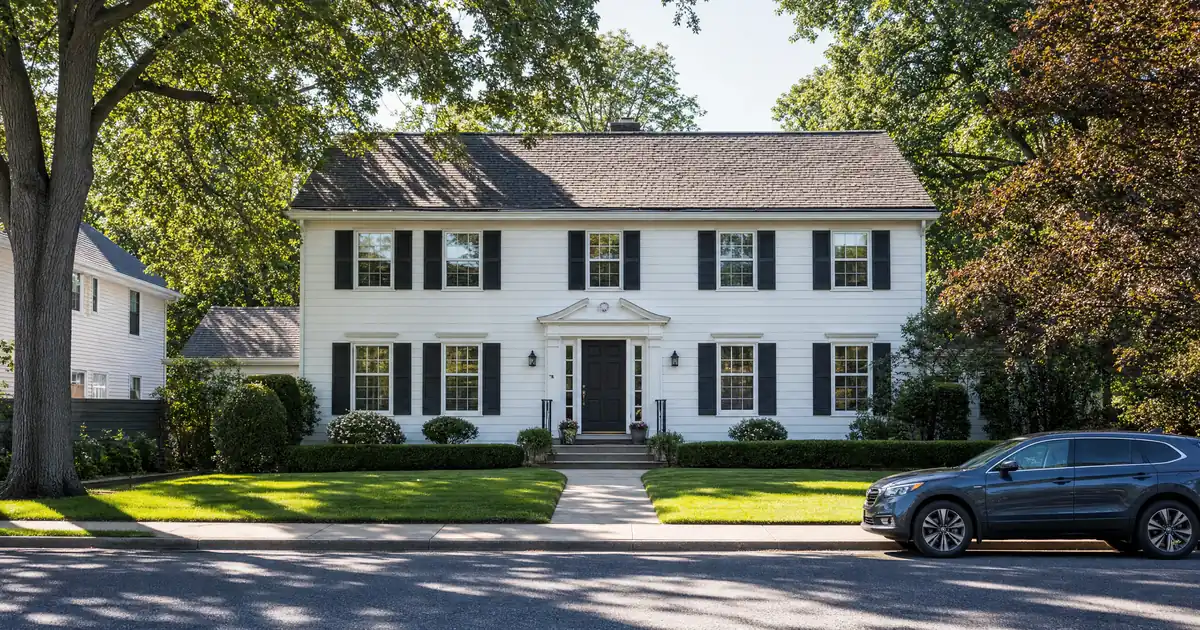
Best To Refinance Home To Buy Investment Property Or Finance Investor Property — The Quick Read: Refinancing your primary home usually costs less. That’s because lenders treat it as owner-occupied debt. But it puts your house behind the new loan. Financing the investment property directly works differently. Most often, this means a DSCR loan. Lenders review this loan based on the property’s rent, not your personal income. It costs a bit more in leverage. But it keeps the risk contained to the rental. Investors with one property often start with the first path. Investors scaling past two or three properties almost always end up using the second.
Neither path is universally “better.” They solve different problems. The right one depends on three things: how much equity sits in your home, how many properties you already own, and how much risk you’re willing to put on your own front door.
DSCR Calculator
Run the numbers in your market
Rate source: Freddie Mac 30-yr average via FRED® — Federal Reserve Bank of St. Louis · effective Jul 30, 2026
Prefilled with local estimates — enter your own rent or nightly figures, taxes, insurance, and HOA for a more accurate picture.
Program parameters update from Lendmire’s centralized guideline source. Taxes and insurance are editable estimates.
As of Jul 30, 2026 · General Freddie Mac market benchmark, not a Lendmire loan offer. Rent, nightly rate, occupancy, taxes, and insurance are editable estimates. Short-term rental figures are estimates only and vary significantly by season, property type, management approach, and local short-term-rental rules — confirm local regulations before relying on them. Qualifying income for short-term rentals varies by program — some use appraisal market rent, others use documented STR history or projections — and is confirmed in underwriting. Not a Loan Estimate, approval, or commitment to lend. Program availability and eligibility are subject to lender guidelines, credit approval, property review, and underwriting.
What Each Option Actually Is
A cash-out refinance replaces your existing home loan with a bigger one. It hands you the difference in cash. A DSCR loan works differently. DSCR stands for debt-service coverage ratio — the ratio of the property’s rent to its mortgage payment. This is a separate loan taken out against the investment property itself. Lenders qualify it based on that property’s income, not your paycheck.
The refinance touches your primary residence. The DSCR loan never does. This one difference drives almost everything else in this comparison: cost, risk, paperwork, and how far you can scale.
Which One Is Actually Cheaper?
Refinancing your primary home is usually the lower-cost path, dollar for dollar. Why? Owner-occupied debt carries less risk for a lender than non-owner-occupied debt secured by a rental. That’s the core reason so many investors reach for home equity first.
But “cheaper” isn’t the whole picture. A cash-out refinance resets the loan on your entire house. It doesn’t just touch the amount you’re pulling out — it includes whatever balance you already had. Say you’ve built a low balance on your current mortgage. Refinancing the whole thing to access a fraction of your equity can be an expensive way to borrow a small amount. A home equity line of credit or second mortgage can make more sense instead. This is especially true if your existing rate on the first mortgage is one you don’t want to disturb.
A DSCR loan works differently. Lenders price and leverage it based on the rental property’s own numbers. They measure the rent it generates against its full monthly obligation — that includes taxes, insurance, and any HOA dues. These loans sit outside conventional agency channels. Because of that, pricing reflects more risk, and leverage tends to run a bit lower than a primary-home refinance. Across the wholesale network Lendmire works with, most DSCR purchase files land at 75%-80% loan-to-value. That means 20%-25% down on most files. Some lenders in the network go up to 85% LTV for borrowers with strong credit — generally 700 and above.
Occupancy Rules — The Part Everyone Trips On
You can’t use cash-out proceeds to buy a new primary residence and move in right away. Lenders on a primary-home refinance generally expect you to have lived in the home you’re refinancing for a meaningful stretch before you close. That same expectation carries forward. You’re not supposed to treat the refinanced home as a launching pad to immediately vacate.
That rule doesn’t apply the same way once the cash is in your account and headed toward a rental. Occupancy rules govern the property being refinanced, not what you do with the money afterward. Say your primary-home refinance funds. Using that cash toward a rental-property down payment is a separate transaction. It has its own qualification path — usually a DSCR loan on the new property, underwritten independently.
Things get murky when an investor blurs the line between the two. Say a rental property’s own cash-out refinance later gets used for personal spending rather than the property. Some lenders will ask for a written attestation confirming the funds are going toward business purposes. Keep clean intentions and clean paperwork on both sides.
Second Home vs. Investment Property — Why the Label Matters
A second home you occupy part of the year is not the same as a true investment property you never live in. Lenders underwrite these completely differently. Calling one the other on an application creates real problems. A second home still carries owner-occupied pricing and standard consumer-mortgage rules. An investment property does not. Lenders price and review it as rental real estate from the start. DSCR programs exist specifically for that category.
Say you plan on renting a property out full-time. Structure the financing as an investment property from day one. Mislabeling it to get better terms is the single most common way an investor’s file gets flagged during underwriting.
Converting Your Current Home Into a Rental
Plenty of investors don’t buy a second property first. They move out of their current house, turn it into a rental, and refinance it once the paperwork catches up with reality. That refinance counts as an investment-property transaction the moment the home stops being your primary residence. This holds true even if the existing loan was originated as owner-occupied.
Say a former primary residence starts functioning as a rental. A cash-out refinance on it caps out around 75% loan-to-value across most of the DSCR network. That’s the same ceiling that applies to any investment-property cash-out. Most lenders also want to see about six months of seasoning, generally measured from when the property converted or from the last transaction on title. Rent needs to be documented with a lease. The qualifying analysis runs off that rent against the property’s full payment, not off your paycheck.
Why a Standalone Investor Loan Costs More — and Why That’s Sometimes the Right Trade
Investment-property financing costs more than a primary-home refinance for one straightforward reason: the lender is taking on more risk. Rental properties get vacated. Tenants stop paying. Non-owner-occupied borrowers default at higher rates than owner-occupants. Pricing and leverage reflect that gap across every lending channel, DSCR included.
What you get in return is separation. The loan sits against the rental property alone. Say that property underperforms — a bad tenant, an unexpected vacancy stretch, a slow lease-up. The exposure stays with that asset. It doesn’t touch your primary residence. It doesn’t touch your personal credit file the way a maxed-out refinance would. DSCR loans qualify primarily on the property’s rental income covering the payment, subject to lender guidelines. They don’t rely on your W-2s, traditional personal-income documentation, or personal debt-to-income ratio. For investors who’ve already stretched their personal financing as far as it goes, that’s not a minor convenience. It’s the only door still open.
FHA and VA Loans — Why They’re Off the Table Here
FHA and VA loans are built for owner-occupied housing. That means you can’t use them to refinance or purchase a pure rental property. Both programs require the borrower to occupy the home. This rules them out the moment a property gets financed strictly as an investment.
There’s one practical exception: a 2-4 unit property where you occupy one unit and rent the others — a classic house-hack. In that scenario, FHA and even VA financing can apply to the whole building while you live in one unit. Once your occupancy requirement is satisfied — typically a year — you can move out. From that point, the remaining units, or the whole property once vacated, function as a straightforward rental. Refinancing it then moves into investment-property territory. That’s usually where a DSCR loan on the property takes over.
What Happens as Your Portfolio Grows
Conventional financing tied to your personal file runs into a ceiling most investors eventually hit. There’s a cap on how many financed properties one borrower can carry across the conventional/agency system. This cap counts every property you personally finance, including your own home. Once you’re past that ceiling, conventional refinancing on additional rentals simply isn’t an option anymore. Your income or credit doesn’t matter at that point.
DSCR loans sit outside that framework entirely. Each file gets underwritten against its own property’s cash flow, not your personal borrowing capacity. That means adding a fourth, fifth, or tenth rental doesn’t compound against a portfolio-wide limit the way conventional debt does. This is the structural reason most investors who scale past a handful of properties migrate toward DSCR financing. It’s not because DSCR is cheaper — it’s because it’s the only path still available. It’s also why non-QM lending, DSCR loans especially, has grown into a meaningful share of the mortgage market rather than a niche workaround. Industry reporting covering the space describes DSCR programs as qualifying on the property’s income-generating potential rather than the borrower’s personal file. That’s precisely the mechanism that lets scaling investors keep moving.
Across files Lendmire’s network sees regularly, the pattern stays consistent. Investors holding one or two properties lean on home-equity refinancing because it’s the cheaper capital and their personal file still has room. Investors past three or four properties increasingly shift every new acquisition to DSCR. The math didn’t change — the conventional door just narrows every time another property gets added to the personal file. By the time an investor owns five or six rentals, DSCR usually isn’t the alternative anymore. It’s the only practical route left.
A Straightforward Way to Decide
| Factor | Refinance Your Home | DSCR Loan on the Property |
|---|---|---|
| Reviewed on | Personal credit, income, DTI | Property’s rent vs. payment |
| Risk exposure | Your primary residence | The investment property only |
| Typical leverage | Higher (owner-occupied pricing) | 75%-80% purchase, 75% cash-out ceiling |
| Portfolio scaling | Capped by financed-property limits | Not bound by that agency cap |
| Best fit | 1-2 properties, meaningful home equity | 3+ properties, or scaling past personal DTI limits |
Say you have one investment property in mind. Say you have meaningful equity sitting in your home, plus room left on your personal debt-to-income ratio. In that case, refinancing the home is usually the lower-cost path. Now say you’re already carrying several rentals. You want the new property’s risk to stay separate from your own house. Or you’re bumping against how many properties conventional lenders will finance under your name. In any of those cases, a DSCR loan on the property itself is the more scalable choice.
Coverage matters here too. Most DSCR programs Lendmire places files with start around a 1.00 debt-service-coverage ratio. That means the rent roughly matches the property’s full payment. That’s a floor for select programs, though — not a universal standard. Clear it comfortably (say, 1.15 or higher), and that tends to open better leverage and pricing. Clearing 1.00 isn’t the same as positive cash flow, either. Repairs, vacancy stretches, management fees, and capital expenses all sit outside that ratio. A property that clears 1.00 on paper can still lose money in a bad year if those costs aren’t budgeted separately. Credit matters too. A 620 floor exists in parts of the network, but most programs want something closer to 660. 700-plus is where the strongest leverage tiers open up.
Some lenders in the network will review deals below a 1.00 ratio. But leverage and terms adjust downward when they do. This isn’t a workaround — it’s a different pricing tier with real tradeoffs. A no-ratio option is available for DSCR below 1.00 with stronger credit or higher down payment; qualification on that path rests on credit and equity rather than a rent-coverage calculation.
Want a full walkthrough of how the ratio itself gets calculated and priced? Lendmire’s complete DSCR loans guide breaks down the mechanics property by property. And say you’re leaning toward pulling equity from a home you already own free and clear, rather than refinancing a mortgaged one. The equity-based approach to funding a new purchase works through that variation directly.
Tax treatment can depend on how the funds are used and how the property is held. Investors should keep clear records and speak with a qualified tax professional before relying on any deduction.
DSCR loans are designed for non-owner-occupied investment properties. They are business-purpose investor loans, so lenders review them differently from a standard owner-occupied mortgage.
One category worth flagging directly: manufactured homes (single- and double-wide), log homes, and barndominiums fall outside DSCR programs across Lendmire’s network. Say your target property fits one of those categories. A different financing path — not DSCR — is the realistic route.
Lendmire (NMLS# 2371349) is a mortgage broker that arranges DSCR investor loans through select lenders across its wholesale network, spanning 39 states plus Washington, D.C. Lendmire doesn’t fund or underwrite loans directly. It structures files and places them with lenders whose guidelines fit the property and the borrower. Comparing a refinance against a standalone investor loan? Reach Lendmire at 828-256-2183 or request a quote to get both paths priced against the same property, subject to lender review.
Loan approval is never guaranteed, and nothing here is a commitment to lend. Every scenario discussed is subject to lender approval and to borrower, property, and program guidelines, which can change. This article is general information only, not financial, legal, or tax advice.
For deeper background on the mechanics discussed here, see Fannie Mae Selling Guide — Cash-Out Refinance Transactions (B2-1.3-03).
Frequently Asked Questions
Can I refinance my primary home and buy an investment property with the cash right away?
Yes. Once the refinance funds, the cash is yours to use, including toward a down payment on a rental. The restriction sits on using proceeds to buy and immediately occupy a new primary residence. That’s a different rule tied to the home you’re refinancing, not the investment property you’re buying.
Is it harder to qualify for financing once I already own several rental properties?
It gets harder through conventional channels specifically. Agency lending caps how many financed properties count against one borrower. DSCR loans qualify each property on its own rent. That means an existing portfolio generally doesn’t block the next deal the same way.
Can I use a HELOC instead of a full cash-out refinance to fund an investment property?
Often, yes. A home equity line of credit avoids resetting your entire first mortgage. It can be a lower-cost way to access a smaller amount of equity. On investment properties specifically, HELOC lines through Lendmire’s network cap at $500,000 total. There’s no tier above that for investor-property HELOCs.
Do FHA or VA loans work for refinancing a pure rental property?
No. Both are owner-occupied programs and can’t be used on a property you don’t live in. The one workaround is a 2-4 unit property where you occupy one unit. Once your occupancy period is satisfied, the property can later be refinanced under investor rules.
What documentation does a DSCR loan need instead of traditional personal-income documentation and pay stubs?
Typically a lease agreement or market-rent estimate for the property, along with standard credit and asset documentation. No personal income verification is needed. Qualification runs primarily on whether the property’s rent covers its payment, subject to lender guidelines and the specific program’s requirements.
About Lendmire
Lendmire is a DSCR-focused mortgage brokerage, NMLS# 2371349, placing investor loans across 40 markets, including Washington, D.C. Lenders generally review DSCR eligibility around a property’s rental income rather than personal income documentation. That fits LLC-held rentals, self-employed investors, and portfolios scaling past conventional financed-property limits. Scotsman Guide named Lendmire a Top Mortgage Workplace in both 2025 and 2026.
Get Started
Ready to find the right loan for you?
In about 30 seconds you can review financing options available for your home or investment property. No commitment required.
Informational only. Not a Loan Estimate, approval, or commitment to lend. Program availability and eligibility are subject to lender guidelines, credit approval, property review, and underwriting.
References
1. Scotsman Guide — Get in the Game
2. Fannie Mae Selling Guide — Cash-Out Refinance Transactions (B2-1.3-03)
Brandon Miller
Founder & CEO, Mortgage Loan Originator, Lendmire LLC
- Mortgage Loan Originator · NMLS# 1129696 · Verify on NMLS Consumer Access
- North Carolina Real Estate Broker · License# 343312 · Verify on NCREC
- North Carolina Insurance Producer · License# 19053198 · Property, Casualty, Life, Health · Verify on NAIC SBS
- Lendmire LLC · Firm NMLS# 2371349 · Verify firm licensure
Legal disclosures. Lendmire (NMLS# 2371349) is a state-licensed mortgage brokerage that arranges financing through wholesale lender relationships. Lendmire is not a direct lender, depository institution, or registered financial advisor. The discussion above is general informational content about real estate financing — it is not financial, legal, or tax advice, and readers should consult licensed professionals for guidance on their individual circumstances. Loan inquiries are subject to lender underwriting; this article does not represent a commitment to lend. Loan terms, rates, and qualification standards vary by borrower, property, and state, and are subject to change at any time. Equal Housing Opportunity. NMLS Consumer Access: nmlsconsumeraccess.org.


