
The Quick Read: An interest-only DSCR cash-out fits a leased, stable rental that can pass a rent test, because it replaces the existing loan with long-term debt, while a bridge cash-out fits a property that cannot pass that test yet or needs a short runway with a planned exit, usually a refinance into long-term financing. The two loans answer different questions, so the right choice depends on the property’s condition, the equity available, and how soon the investor needs to be in permanent debt.
- A DSCR loan is reviewed primarily on property-level rental income covering the payment, subject to lender guidelines. A bridge loan leans on collateral value, the business plan, and the exit.
- DSCR cash-out typically tops out around 75% LTV on an investment property across most of Lendmire’s wholesale network. Bridge cash-out refinances commonly sit lower, often up to about 65% of value.
- An interest-only period lowers the payment during that window, but the payment steps up when it ends. A bridge is interest-only with a maturity date.
- A vacant, unfinished, or unleased property usually points to a bridge. A leased rental with equity to spare usually points to DSCR.
- Both can be wrong when equity is thin. Neither loan creates equity that is not there.
Side-by-Side
Most of the structural differences fit in one table. The DSCR column reflects typical guidelines across select lenders in the network. The bridge column shows published industry norms for bridge and hard-money loans. Both loan types can be placed through the same wholesale network. Every figure varies by lender, property, and borrower experience.
| Factor | Interest-Only DSCR Cash-Out | Bridge Cash-Out |
|---|---|---|
| Review basis | Rent versus the full monthly obligation | Collateral value, plan, and exit |
| Documentation | Lease or market rent, appraisal, entity papers | Value support, plan, borrower experience |
| Property condition | Leased or rentable; stabilized | Can be vacant, transitional, or unfinished |
| Property types | Rentals; some types not offered | Typically 1-4 unit non-owner-occupied |
| Entity vesting | LLC common, subject to program terms | LLC common; guaranty norms vary |
| Typical cash-out leverage | Up to about 75% LTV | Often up to about 65% of value |
| Seasoning | About 6 months is common | Varies widely by lender |
| Holding period | Long-term, 30-year spine | Roughly 6-18 months, interest-only |
| Reserves | Often about 6 months of PITIA | Varies by lender and file |
| Exit | None required; the loan is the destination | Refinance, sale, or recapitalization |
Read the leverage row carefully. A bridge cash-out usually returns less of the property’s value than a DSCR cash-out does. That gap matters when the goal is to pull out a meaningful amount of equity.
What Each Loan Actually Underwrites
A DSCR loan asks one main question: does the rent cover the payment? The ratio divides monthly rent by PITIA, which is principal, interest, taxes, insurance, and any HOA dues. The file also passes through credit, reserves, LTV, and property review.
A bridge loan asks different questions. What is the property worth? What will the borrower do with the money? How will the loan be repaid? Lenders in this space focus on the collateral and the exit, and borrower experience still counts.
Here is a point that surprises people. A DSCR loan is not a cash-flow test. Clearing 1.00 means rent covers PITIA. It says nothing about repairs, vacancy, management, utilities, or capex. A property can clear the ratio and still lose money after those costs.
Credit works on both sides. Across most of the network, DSCR programs want a score around 660. A 620 floor exists in parts of the network, and 700 or higher unlocks the strongest leverage tiers. Bridge programs also commonly start near 620, with added conditions below 660.
DSCR loans are designed for non-owner-occupied investment properties. Because they are business-purpose investor loans, they are reviewed differently from a standard owner-occupied mortgage. America’s Credit Unions notes that credit extended to a non-natural person, such as an LLC, and credit extended primarily for a business purpose are treated differently under federal consumer-lending rules. Compliance Alliance adds that the purpose of the loan matters, not just the property type. That is why the stated use of funds should always be a business one.
How Interest-Only Changes the DSCR Math
Interest-only is a payment feature, not a separate loan type. Through select lenders in the network, a DSCR loan can carry an interest-only period. The 30-year fixed remains the spine of the program. Extended terms of 40 years and ARM structures also exist through select lenders.
The feature helps coverage. Principal is removed from the payment while the interest-only period runs. A borderline file can move up in ratio as a result.
Here is the catch. Lenders do not all calculate it the same way. Some qualify on the actual interest-only payment. Others qualify on the interest-only payment but size reserves on the fully amortized one. Some qualify the ratio on the amortized payment even when the borrower pays interest only. Ask which payment drives the ratio before choosing a lender.
Run the numbers on a hypothetical rental that covers about 0.95x on a fully amortizing payment. If a lender reviews the file on the interest-only payment, the same rent might clear 1.00 or better. If a different lender reviews the file on the amortized payment, the file stays at 0.95x. That is a modeled illustration, not a market figure. It shows why the lender’s method matters as much as the property.
Coverage below 1.00 is a separate path. Where 1.00 is the starting point for many select programs, a different set of select lenders in the network will review coverage below 1.00, with leverage and terms adjusted. That route is available only through select lenders and is not a default.
Plan for the step-up. When the interest-only period ends, the payment rises. An investor who bought on thin coverage should model the amortized payment now, not later.
When an Interest-Only DSCR Cash-Out Is the Better Fit
An interest-only DSCR cash-out works best on a rental that is leased, stable, and carrying real equity. It is permanent debt. There is no maturity date forcing a second transaction.
Several investor profiles tend to fit:
- The stabilized-rental owner. A tenant is in place, the lease supports the rent, and the property has been owned long enough to meet seasoning. About 6 months is the common expectation across most of the network.
- The portfolio builder. Pulling equity from one rental to fund the next down payment is a common pattern. DSCR keeps the process centered on the property’s rent rather than personal income.
- The self-employed or entity-based investor. Qualification centers on property-level rental income covering the payment, subject to lender guidelines. That can suit borrowers whose traditional personal-income documentation understates their real cash position.
- The investor who wants one closing, not two. A bridge followed by a refinance means two sets of closing costs. A DSCR cash-out avoids the second.
Leverage is the other advantage. Cash-out DSCR files typically go up to 75% LTV on an investment property. Short-term rentals sit lower: cash-out at 70% LTV, with a 640 or better score and about 12 months of hosting history expected. Loan sizes reach up to $3,000,000 on standard programs, with smaller balances available through select lenders. Above $2,500,000 the network generally holds to 30-year fixed structures.
One caution applies. A DSCR loan needs a rentable property. It is not built for a fixer-upper. Properties that are vacant, partly renovated, or not yet leased do not give the lender a rent figure to test.
Some investors also weigh an investment-property HELOC against a cash-out refinance as a way to tap equity. Those lines cap at $500,000 in total, so a HELOC suits smaller equity needs, while larger pulls generally call for a cash-out refinance or a bridge.
When a Bridge Cash-Out Is the Better Fit
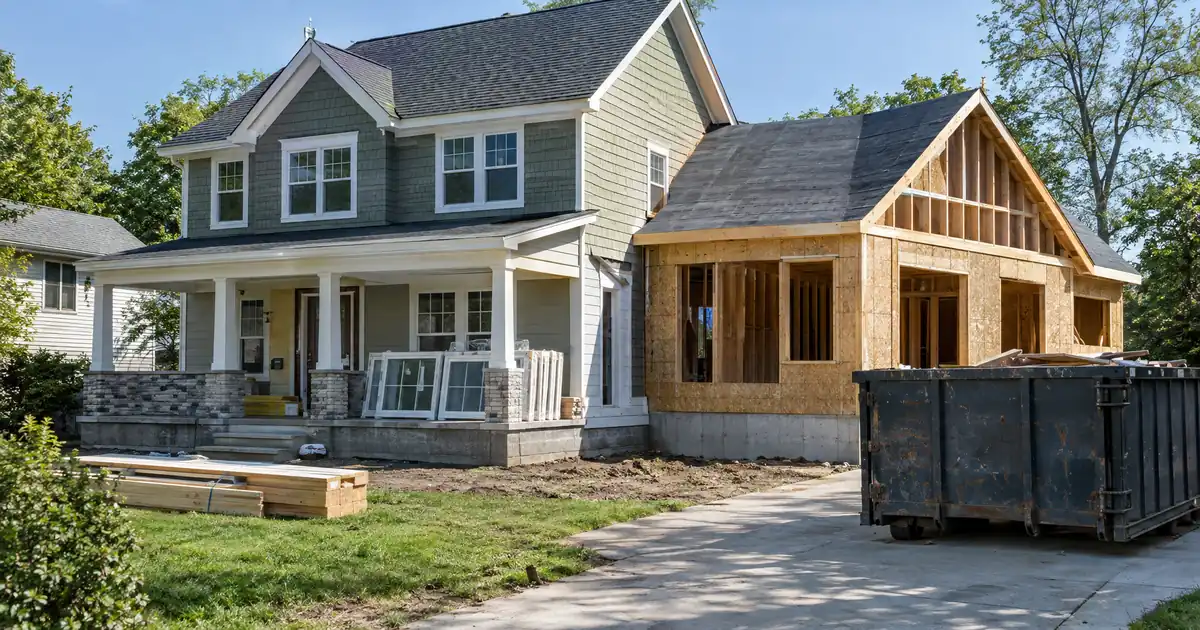
A bridge cash-out is the better tool when the property cannot pass a rent test today. It also fits when the investor needs a short runway before settling into long-term debt. The loan is temporary by design.
Consider where bridge financing makes sense:
- A vacant or transitional property. There is no lease and no stable rent. The lender underwrites the collateral and the plan instead.
- A property needing work before it can rent. A bridge can hold the property until it is rentable and then refinance out.
- An ownership clock that has not run. If seasoning is not met for a DSCR cash-out, a bridge can fill the gap. That gap is often an expensive detour, so weigh the cost of two closings against the benefit.
- A rent figure that falls short. If the rent will not cover the payment at the loan size needed, a bridge can buy time to raise rents or lease up.
Typical bridge terms run about 6 to 18 months, interest-only, and many programs carry no prepayment penalty. Loan amounts can reach $5,000,000. Properties are generally non-owner-occupied residential, 1-4 units. Cash-out and rate-and-term refinances run up to about 65% of value. All of that varies by lender, property, and experience.
Underwriting stays asset-based, so the lender looks at the property, the plan, and the exit. It does not look at income documents the way a conventional loan does. That is not the same as no review of the borrower. Credit, liquidity, and track record still shape the leverage tier.
The bridge only works when the exit is real. Many investors refinance out of a bridge into long-term DSCR financing once the property is stabilized, and Lendmire brokers that path. Line up the exit before the bridge closes, not after.
The Exit Problem
The biggest risk with a bridge cash-out is the exit. The loan matures whether the takeout is ready or not.
Four things commonly derail a takeout:
1. Coverage too low at the new loan size. The permanent loan carries principal, taxes, insurance, and any HOA dues. That payment can be higher than the bridge’s interest-only payment.
2. An appraisal that comes in short. Less value means less room under the leverage cap.
3. Seasoning not met. The permanent lender may want a longer ownership history than the bridge has provided.
4. A maturity before lease-up is complete. The property is not yet showing stable rent when the bridge comes due.
When the exit slips, the options narrow. The investor may pay an extension fee, bring more cash to the table, sell, or accept a less favorable refinance. None of those is pleasant. The cleanest defense is to size the bridge conservatively and test the takeout ratio before borrowing.
An interest-only DSCR loan has a milder version of this problem. The payment steps up, but there is no maturity date. The investor can plan for the step-up in advance.
DSCR vs. conventional financing
There are two common ways to finance an investment property, and they qualify you differently — here’s how investors weigh them.
Why investors choose it
- Qualifies on the property’s rental income — no personal tax returns, W-2s, or pay stubs needed to document income.
- No personal debt-to-income ceiling to clear, so existing mortgages and obligations don’t cap your borrowing the same way.
- Can be closed in an LLC, keeping the property inside a business entity.
- Built for scaling — not held to the limit on number of financed properties that conventional financing applies.
- Underwriting centers on the deal: generally qualifies when the rent covers the payment, a 1.00x coverage ratio being a common baseline (confirmed in underwriting).
- Designed specifically for investment property, including long-term and, where the program allows, short-term rentals.
Where it’s strong
- Often the lowest ongoing financing cost for a buyer who fully qualifies on personal income — a fit for a first property or a cost-first purchase.
Trade-offs for investors
- Requires full personal income documentation and must fit within a debt-to-income limit — salary, existing debts, and other mortgages all count.
- Typically held in your personal name rather than a business entity.
- Caps how many financed properties you can carry, which can become a ceiling as a portfolio grows.
- Evaluates you as a borrower as much as the property, which usually means more paperwork.
How investors usually choose: a first or single property often optimizes for the lowest financing cost; portfolio builders often optimize for leverage, vesting in an LLC, and scaling past conventional caps. The right answer depends on your goals, the property, and current guidelines — both paths run through select lenders in Lendmire’s wholesale network, with eligibility and terms confirmed in underwriting.
Cost Structure, Directionally
Pricing lives with the lender and the quote, so this article does not compare it. The structural point is simpler. A bridge followed by a DSCR refinance means two loan closings. A DSCR cash-out means one. The bridge’s flexibility has to be worth that duplication.
Prepayment terms differ by lender on both sides. Read them before choosing. A DSCR loan with a prepayment structure suits a hold-for-years strategy. A bridge is meant to be short, so its prepayment terms matter less when the plan holds.
Entity and Guaranty Questions
Both loan types are commonly placed in an LLC. Title in an entity is available subject to lender program eligibility. Personal guaranty norms vary by lender and loan type. Some lenders offer non-recourse structures up to a size cap, but that is lender-specific.
Owner occupancy changes the picture. These are business-purpose loans on non-owner-occupied property. If the borrower plans to live in the property, a different product is likely the right one.
Key Terms Defined
DSCR (debt service coverage ratio): Monthly rent divided by the full monthly obligation of principal, interest, taxes, insurance, and any HOA dues.
PITIA: The total monthly housing obligation that the DSCR ratio uses as its denominator.
Bridge loan: A short-term, interest-only loan secured by property, repaid through a refinance, sale, or recapitalization.
Seasoning: The length of time an owner has held the property before a lender will treat a refinance as a cash-out against current value.
Takeout: The permanent financing that repays a bridge loan.
Interest-only period: A window in which the payment covers interest only, followed by a higher payment that includes principal.
The Balanced Verdict
Neither loan is better in general. They solve different problems.
Choose the interest-only DSCR cash-out when the property is leased, equity is solid, and the goal is long-term debt without a second closing. It carries higher typical leverage and no maturity date. It requires a rentable property and a lender whose interest-only qualifying method fits the file.
Choose the bridge cash-out when the property cannot pass a rent test yet, or when the clock and condition of the property make permanent debt unavailable for now. It accepts a transitional property. It also brings lower typical leverage, a maturity date, and the risk of a failed exit.
Three questions sort most files:
1. Can the property pass a rent test today?
2. Has the ownership clock run for a cash-out?
3. Does the equity under the leverage cap cover what the investor needs?
If the answers are yes, yes, and yes, DSCR is usually the cleaner route. If the first answer is no, a bridge may be the only door. If the third answer is no, neither loan fixes the problem, and the investor may need to wait or reduce the ask. Tax treatment can depend on how the funds are used and how the property is held; investors should keep clear records and speak with a qualified tax professional before relying on any deduction.
For a broader look at how interest-only structures compare with standard investor mortgages, see how a DSCR loan differs from an interest-only mortgage for investors. For the full mechanics of qualification, leverage, and reserves, the complete DSCR loans guide covers each in detail.
Frequently Asked Questions
Can a bridge loan be used to cash out on a rental I already own?
Yes, in many cases. A cash-out bridge refinances the existing loan and returns the remaining equity to the borrower. Leverage is typically lower than on DSCR, often up to about 65% of value, and the loan still needs an exit. If the rental is already leased and stable, a DSCR cash-out often serves the same goal with permanent debt.
Does an interest-only DSCR loan stay interest-only for the whole term?
No. The interest-only period is finite. After it ends, the payment steps up to include principal. Model the higher payment before borrowing, especially if the file cleared the coverage test only on the interest-only payment.
What happens if the bridge matures before I can refinance?
The options narrow, and each one costs something. The investor can seek an extension, bring cash to pay down the balance, sell, or take a less favorable refinance. The best protection is testing the takeout ratio and leverage before the bridge closes.
Do both loans work for an LLC-owned property?
Usually, though it depends on the lender. Entity ownership is generally accepted on both sides, subject to program terms. Guaranty requirements vary, and entity documents are part of the file either way.
What if neither loan works?
That usually signals an equity or coverage problem rather than a product problem. Options include waiting for seasoning, improving rent, reducing the amount requested, or reviewing a sub-1.00 path, which is available through select lenders in the network with leverage and terms adjusted. Each file is reviewed individually and nothing is a commitment to lend.
Next Step
If you are buying, rehabbing or refinancing an investment property on a short timeline and want to see how the numbers work, Lendmire can help you compare hard money options based on the project, the exit plan, leverage, and your goals. Lendmire is a mortgage broker arranging DSCR and bridge financing through select lenders in its wholesale network, across 41 markets including Washington, D.C. Investors can reach the team at 828-256-2183.
About Lendmire
Lendmire, NMLS# 2371349, is a mortgage brokerage focused on investor financing, arranging DSCR loans in 40 states plus Washington, D.C. — 41 markets total. Qualification is based on the property’s income rather than personal income documentation, subject to lender guidelines, making it a fit for LLC-held rentals and scaling portfolios. Scotsman Guide named Lendmire a Top Mortgage Workplace in both 2025 and 2026.
Get Started
Ready to find the right loan for you?
In about 30 seconds you can review financing options available for your investment property. No commitment required.
Informational only. Not a Loan Estimate, approval, or commitment to lend. Program availability and eligibility are subject to lender guidelines, credit approval, property review, and underwriting.
References
This article is part of Lendmire’s hard money loan program — full qualification details, guidelines, and scenarios live on the program page.
Related reading: DSCR HELOC vs Rental Home Equity Loan for Cash-Out Needs · Profit and Loss Only Loan or DSCR HELOC to Pull Cash Out · DSCR HELOC vs Fix-and-Flip Loan for Cash-Out Needs
Brandon Miller
Founder & CEO, Mortgage Loan Originator, Lendmire LLC
- Mortgage Loan Originator · NMLS# 1129696 · Verify on NMLS Consumer Access
- North Carolina Real Estate Broker · License# 343312 · Verify on NCREC
- North Carolina Insurance Producer · License# 19053198 · Property, Casualty, Life, Health · Verify on NAIC SBS
- Lendmire LLC · Firm NMLS# 2371349 · Verify firm licensure
Disclosure information. Lendmire is a state-licensed mortgage brokerage under NMLS# 2371349. Lendmire is not a depository institution, direct lender, or financial advisor — all loans referenced are placed through wholesale lender partners and are subject to each lender's underwriting standards. This article is provided for general informational purposes and is not a commitment to lend, nor does it constitute financial, legal, or tax advice. Loan programs, terms, rates, and qualification standards change without notice and depend on borrower profile, property type, and the state in which the subject property is located. Equal Housing Opportunity provider. NMLS Consumer Access: nmlsconsumeraccess.org.