
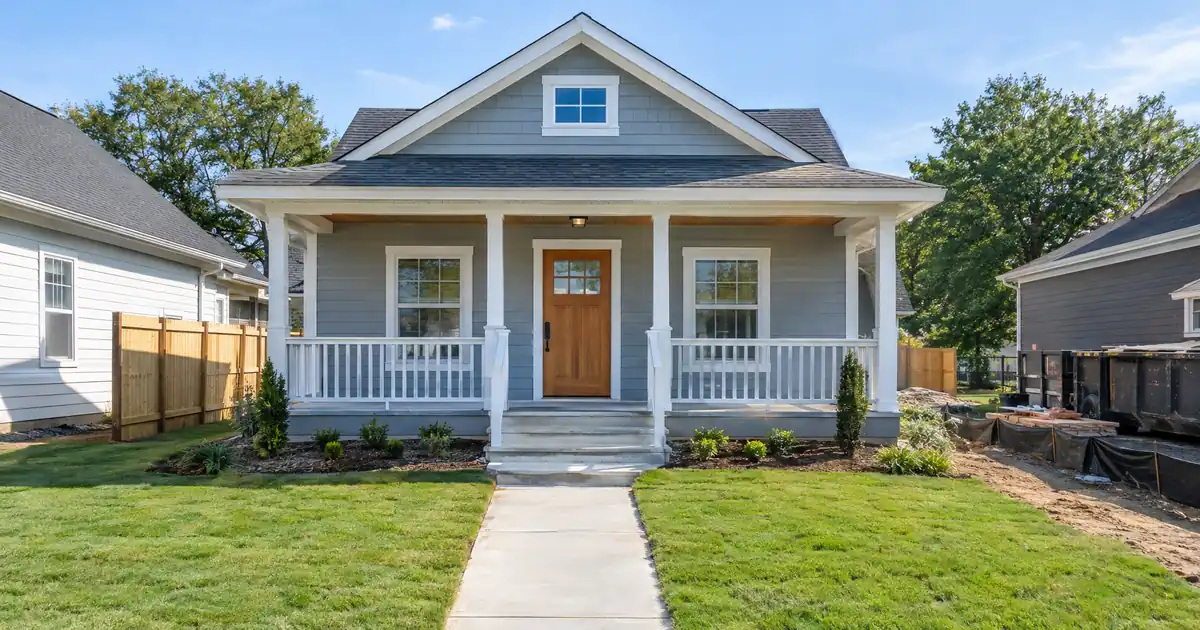
The Quick Read: A HELOC lends against equity you already own and is judged mostly on you, while a bridge loan lends against the rental itself and is judged mostly on the deal and your exit plan, so the HELOC suits a borrower with strong credit and spare home equity, and the bridge suits a purchase that needs repairs or a short runway.
- A HELOC (home equity line of credit) is a revolving line. A first-time investor usually borrows against their own home, which puts the home at risk.
- A bridge loan is short-term, interest-only financing secured by the target property. It puts the new rental at risk if your exit fails.
- Neither is a permanent loan. Both need a plan to be repaid, and many investors refinance into long-term rental financing.
- Programs vary by lender, property, and experience, and nothing here is a commitment to lend.
Here is the honest answer. If you own a home with real equity, have strong credit, and plan to buy a rental that is ready to lease, a HELOC is usually the cleaner and cheaper-to-hold tool. If you have thin equity, the property needs work, or you need a lender that looks at the asset, a bridge loan fits better. Both have a catch, and the catch is the same: you must repay without relying on luck.
What this loan actually costs to carry.
Hard money is sized against the project and priced by time. Enter the deal and see how much the program will lend, the cash required at closing, the carry while you hold it, and what is left at the exit.
Leverage tiers on the current program: 85% with fewer than 2, 90% with 2 or more, 93% with 5 or more completed projects — every tier capped at 75% of after-repair value. Loan amounts up to $5,000,000, larger by exception; terms of 6 to 18 months, interest-only, no prepayment penalty. The rehab portion funds in draws against completed work, not at closing.
Program parameters shown update from Lendmire’s centralized guideline source. Rate, points, and months are editable assumptions, not quoted terms.
Cost cap sets the loan · positive spread
Illustrative estimate only — not a quote, Loan Estimate, approval, or commitment to lend. Rate, points, and months are editable assumptions. Hard money is business-purpose financing for real estate investors, not a consumer mortgage. Leverage on the current program tops out at 93% of project cost for investors with a documented track record, capped at 75% of after-repair value, with rehab funding up to 100% of the documented budget released in draws; actual terms vary by lender, borrower experience, property, and exit. Lendmire is a mortgage broker, not a lender.
Side-by-Side
The table below shows published industry norms for investment-property HELOCs next to the bridge terms Lendmire sees across its wholesale network.
| Factor | Investment Property HELOC | Bridge Loan |
|---|---|---|
| Review basis | Borrower credit, income, and equity | Property value, plan, and exit |
| Documentation | Income, employment, and appraisal typical | Asset-focused; borrower file lighter |
| Collateral | Your home or an existing rental | The target rental property |
| Property types | Fewer lenders offer rental-backed lines | Non-owner-occupied 1-4 units typical |
| Entity vesting | Usually personal; confirm with lender | LLC borrowers common in the space |
| Timeline | Slower; appraisal and underwriting | Typically shorter; varies by file |
| Reserve expectations | Often expected; varies by lender | Varies by lender and experience |
| Structure | Revolving, with draw then repayment | Lump sum, fixed term, interest-only |
How the Two Products Actually Work
A HELOC is an open-end line of credit. The CFPB explains that you can borrow up to the limit during the draw period, which it illustrates with a 10-year example. After that, repayment begins. The agency’s HELOC brochure says the lender may set a full amortization schedule or require one balloon payment of the whole balance. It also notes that payments can change even when you draw nothing more.
A bridge loan works differently. It is a lump sum with a fixed maturity. Across the network, bridge terms commonly run 6-18 months, interest-only, with no prepayment penalty. Interest-only means you pay only the interest during the term and owe the principal at the end. A prepayment penalty is a fee for paying a loan off early. Terms vary by lender, property, and experience.
The word “bridge” confuses people. Some banks sell a consumer bridge loan secured by the home you live in. The investor version is secured by the property you are buying. This article covers the investor version.
The Qualification Difference That Decides Most Cases
A HELOC rewards a strong personal file. NerdWallet reports that not all lenders offer investment-property HELOCs and that the requirements are strict, with credit around 720 or higher common in market surveys. Across Lendmire’s network, investment-property HELOC lines cap at $500,000 total, and there is no higher tier above that.
A bridge loan puts the property first. The lender studies the purchase price, the as-is value, and the value after repairs. It also wants to see a believable exit, which is simply how you plan to repay it. Credit still matters. A 620 minimum score is common, with added conditions below 660. First-time investors can qualify, but typically at the lower leverage tiers.
Leverage looks different too. On a bridge purchase of a non-owner-occupied property without a rehab, programs generally go up to about 80% of the purchase price. On a bridge refinance or cash-out of an investment property, up to about 65% of value is typical. When there is a renovation, lenders usually size the loan on loan-to-cost, meaning the loan as a share of total project cost. Rehab money is usually released in draws as work is completed. The most generous cost-based tiers go to investors with completed projects, so a first-timer should expect less.
When a HELOC Is the Better Fit
A HELOC wins when the property is ready, the borrower is strong, and the equity sits somewhere safe. Picture an investor who owns a home with solid equity, steady traditional employment income, and a clean credit file. They find a turnkey duplex that needs no work. The HELOC covers the down payment and closing costs, and the rest comes from a long-term loan. In that case, the HELOC is flexible and reusable, and it asks the rental for nothing.
It also fits when you want to open the line before you need it. A lender looking at a primary home usually does not care about a rental that does not exist yet. That is a real edge for a first-timer with no landlord history.
The risks are plain. The home secures the line, so losses on the rental can endanger where you live. Payments can change over time, and the draw period eventually ends. If you plan to sell the home, the line generally must be paid off first. And the lender may restrict how the money is used, so ask before you plan around it.
On the tax side, treatment can depend on how the funds are used and how the property is held; investors should keep clear records and speak with a qualified tax professional before relying on any deduction.
When a Bridge Loan Is the Better Fit
A bridge loan wins when the deal itself is the strength. It makes sense for a vacant property, a property that needs repairs before a tenant can move in, or a purchase that does not yet meet long-term loan standards. It also suits borrowers who lack spare equity elsewhere or do not want their home pledged.
Say you find a fourplex that needs a unit renovated and has no current lease. A long-term lender may not look at it until it is stabilized, meaning repaired and leased. A bridge lender can fund the purchase and release rehab money in draws. You then lease the units and refinance. LLC borrowers are common in bridge lending, subject to program terms.
The downside is the clock. The term is short and the loan is interest-only, so the entire principal comes due at maturity. Bridge financing also asks more of the deal than a HELOC does. The lender wants a plan, a realistic budget, and an exit that does not depend on a rising market.
The Exit: Where Both Options Succeed or Fail
Both products are temporary, so the permanent loan matters more than the starting loan. Many investors refinance out of a bridge loan, or pay down a HELOC, with long-term DSCR financing once the property is stabilized. Lendmire brokers that path. DSCR, or debt service coverage ratio, compares the property’s monthly rent to its full monthly obligation of principal, interest, taxes, insurance, and any association dues. That obligation is abbreviated PITIA. It is the only comparison in that test. Clearing 1.00 does not mean the property produces positive cash flow, because repairs, vacancy, management, and utilities sit outside the calculation.
The numbers a first-timer should know are these. On most files in the network, purchase leverage lands at 75%-80% LTV, which is loan-to-value, the loan as a share of the property’s value. A cash-out refinance on an investment property tops out near 75% LTV, and about six months of seasoning is the common expectation. Seasoning is the waiting period a lender wants after you buy before it will refinance. Most programs want a score near 660, and 700+ unlocks the strongest leverage. Many select programs start at 1.00 coverage, while a separate select-lender path goes below 1.00 with leverage and terms adjusted. Subject to lender guidelines, the file qualifies primarily on property-level rental income covering the payment.
That seasoning point matters for the bridge. If the refinance needs six months and the bridge term is tight, build the timeline backward from maturity. The complete DSCR loans guide covers the permanent side and the full program picture in more detail.
What If the Exit Slips?
The failure modes differ, and that is the real comparison. With a HELOC, a slow lease-up does not trigger a maturity date, but the draw period still ends and repayment starts, often with higher payments. If the refinance falls through, your home is the collateral. With a bridge, a slow lease-up or low appraisal can collide with a hard maturity date, and the rental itself is at stake.
Three habits help either way. Keep a cushion of cash for vacancy and repairs. Check the permanent loan’s leverage and credit requirements before you close the short-term one. And pick the structure whose failure you can survive: losing time on a bridge, or straining your home equity on a HELOC.
The Verdict
Choose the HELOC if you have deep home equity, a strong credit file, a rental that is ready to lease, and a high tolerance for pledging your home. Choose the bridge loan if the deal needs work, equity is limited, or you want the new property, not your residence, to carry the risk. Skip both if you cannot name how you will repay within the term. In that case, the answer may be a longer-term purchase loan from the start.
If you are buying, rehabbing, or refinancing an investment property on a short timeline and want to see how the numbers work, Lendmire can help you compare hard money options based on the project, the exit plan, leverage, and your goals. Lendmire is a broker that arranges financing through select lenders in its wholesale network, across 41 markets, including Washington, D.C.
Frequently Asked Questions
Can a first-time investor get a bridge loan?
Yes, often at lower leverage tiers. Bridge lending is asset-based, so the property, plan, and exit carry the file. Credit still counts, with a 620 minimum score common and extra conditions below 660. Experience raises the leverage available, so a first-timer should expect to put in more of their own money.
Can I use a HELOC for a rental down payment?
Often yes, but ask the lender first. Lenders can restrict how funds are used, and the money must be repaid whether or not the rental performs. A line on your primary home is generally easier to get than one secured by a rental you do not yet own.
Can I open a HELOC after I find the property?
You can try, but it is risky. The line needs an application, an appraisal, and underwriting, which can collide with a purchase contract deadline. Most borrowers do better opening the line before they start shopping.
What if I cannot refinance out of the bridge in time?
You have three realistic options: ask the lender about an extension, sell the property, or refinance with a different lender. Each has a cost, and none is guaranteed. That is why the permanent loan’s requirements should be checked before the bridge closes, not after.
Does a DSCR loan work as the exit for either option?
A DSCR loan can work as the exit. The DSCR file is judged mainly on whether the property’s rent covers its payment, subject to lender guidelines, credit, reserves, and property review. A lease in place and enough seasoning generally make the refinance cleaner.
About Lendmire
As a non-QM mortgage broker (NMLS# 2371349), Lendmire facilitates DSCR investor loans across 41 markets, including Washington, D.C. DSCR eligibility is generally reviewed around property-level rental income instead of personal income documentation, subject to lender guidelines, serving LLC-structured portfolios and self-employed borrowers who don’t fit conventional boxes. A two-time Scotsman Guide Top Mortgage Workplace (2025, 2026).
Hard money often opens the deal, and a refinance typically closes the chapter – see the hard money loan overview.
Get Started
Ready to find the right loan for you?
In about 30 seconds you can review financing options available for your investment property. No commitment required.
Informational only. Not a Loan Estimate, approval, or commitment to lend. Program availability and eligibility are subject to lender guidelines, credit approval, property review, and underwriting.
References
1. CFPB – What is a home equity line of credit (HELOC)?
3. NerdWallet – Can you get a HELOC on an investment property?
This article is part of Lendmire’s hard money loan program — full qualification details, guidelines, and scenarios live on the program page.
Related reading: Investment Property HELOC for Investors Asking Their Bank First · HELOC on Investment Property for Landlords: Which Lenders Offer It · Investment Property HELOC for Local Investors Funding a Purchase
Brandon Miller
Founder & CEO, Mortgage Loan Originator, Lendmire LLC
- Mortgage Loan Originator · NMLS# 1129696 · Verify on NMLS Consumer Access
- North Carolina Real Estate Broker · License# 343312 · Verify on NCREC
- North Carolina Insurance Producer · License# 19053198 · Property, Casualty, Life, Health · Verify on NAIC SBS
- Lendmire LLC · Firm NMLS# 2371349 · Verify firm licensure
Disclosure information. Lendmire is a state-licensed mortgage brokerage under NMLS# 2371349. Lendmire is not a depository institution, direct lender, or financial advisor — all loans referenced are placed through wholesale lender partners and are subject to each lender's underwriting standards. This article is provided for general informational purposes and is not a commitment to lend, nor does it constitute financial, legal, or tax advice. Loan programs, terms, rates, and qualification standards change without notice and depend on borrower profile, property type, and the state in which the subject property is located. Equal Housing Opportunity provider. NMLS Consumer Access: nmlsconsumeraccess.org.