
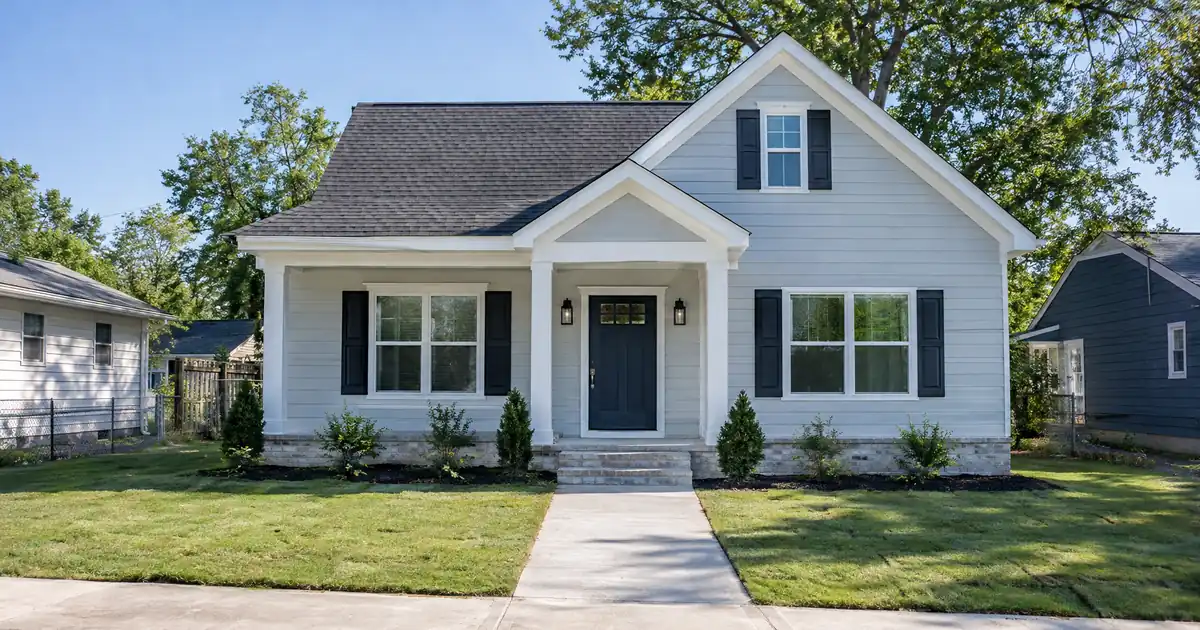
The Quick Read: No, the seasoning clock stays the same without a rehab, because it runs from the recorded deed and not from construction, but skipping the work shrinks what waiting costs you, since appraised value and cost basis usually sit close together. Seasoning is the waiting period a lender requires between your purchase and a refinance sized on appraised value.
- The clock starts when the deed records in your name or your entity’s name. A rehab neither starts nor stops it.
- Without forced appreciation, an early refinance gives up little extra cash compared with waiting.
- Rent coverage, leverage caps, credit, and reserves still apply, rehab or not.
- Across most of Lendmire’s wholesale network, a cash-out refinance on an investment property tops out around 75% LTV, and about 6 months of seasoning is the common expectation.
- A cash buyer’s “delayed financing” exception is an agency rule, not a DSCR rule. Terms vary by lender guidelines, property type, leverage, credit profile, and full file review.
If you skip the rehab, you are really running buy, rent, refinance. That is a fine strategy. It just has different math than a full BRRRR.
Key Terms Defined
Cost basis: What you have put into the property: the purchase price, documented closing costs, and any documented improvements.
Appraised value: What the new lender’s own appraiser says the property is worth today.
Payoff-only refinance: A new loan that repays the old one and returns no extra cash to you.
Delayed financing: A conventional-loan exception that lets a cash buyer borrow soon after purchase, with proceeds limited to documented cost.
LTV (loan-to-value): The loan balance as a percentage of the property’s value.
PITIA: The full monthly obligation: principal, interest, taxes, insurance, and any association dues.
DSCR (debt service coverage ratio): Monthly rent divided by PITIA. A 1.00 means rent equals the payment.
What Does Seasoning Actually Control?
Seasoning controls which value the lender will use to size your loan. It is less a pure waiting game than a question of cost versus appraisal.
Inside the window, a lender willing to refinance early generally sizes the loan on cost basis. After the window, it sizes on the appraised value from its own appraisal. Same property, same borrower, different number.
That is why BRRRR investors care so much. Buy at a discount, add value, then wait. The rehab creates the gap between what you paid and what the property appraises for, and seasoning decides when you can borrow against that gap. Inman’s BRRRR explainer makes the same point: the renovation is the equity engine.
Pull the engine out and the calendar still ticks. It just has less to release.
What Changes When You Skip the Rehab?
The calendar does not change. The dollars at stake do. With no construction, cost basis and appraised value are usually close, so an early refinance leaves less on the table.
| Factor | With Rehab | No Rehab |
|---|---|---|
| Clock starts | Recorded deed | Recorded deed |
| Early sizing basis | Cost plus documented work | Roughly purchase price plus costs |
| Seasoned sizing basis | Appraised value | Appraised value |
| Equity created | Often large | Usually small |
| Cost of refinancing early | Can be steep | Usually modest |
| Bridge note runway | Rehab plus seasoning | Seasoning plus appraisal |
| Documents | Invoices, draws, photos | Settlement statement, lease |
One misconception deserves a direct answer: no rehab does not mean no seasoning. Nothing about the waiting period is tied to renovation. What shrinks is the dollar penalty for refinancing early.
The exception is the property bought well under market. An off-market discount, a motivated seller, or a market move can leave appraised value well above price even with no work. In that case the gap is real, and the clock matters just as much as it does in a full BRRRR. Some lenders consider appraised value earlier on deals like that, but it is lender by lender.
Which Clock Starts When?
The ownership clock starts at the recorded deed. Across the programs Lendmire places files with, that recording date is day one. Not the closing-table signature, not the rehab finish, not the move-in date.
Investors mix these up because several dates cluster together:
- Deed recording: Starts the ownership clock.
- Lease signing: Proves rent for the coverage test. It does not start the ownership clock.
- First rent received: Some lenders like to see it in the file. It is a documentation point, not a seasoning event.
- Rehab completion: Matters for condition and appraisal. It does not move the clock.
In a no-rehab deal, the lease can become the real bottleneck. If the unit sits vacant after closing, you may clear the ownership window with nothing to show for the rent side of the test. Line the two up on purpose.
Does Your Purchase Funding Decide Your Path?
Yes. How you paid decides which exit options exist, and it matters more than whether you renovated.
| Purchase Type | Typical Exit | Watch For |
|---|---|---|
| All cash | Wait out seasoning, or ask about early options | Proof of funds, no mortgage lien |
| Bridge or hard money | Payoff-only refinance, or wait for cash-out | Note maturing before the window ends |
| Turnkey rental | Cash-out after seasoning, often modest | Little equity to release |
| Light cosmetic | Same as turnkey | Appraisal “subject to” repairs |
Cash purchases. Conventional lending has a carve-out for you. Under the agency exception called delayed financing, Fannie Mae’s Selling Guide on cash-out refinance transactions covers cash buyers, and proceeds are limited to documented cost. For a no-rehab buyer that is almost a natural fit, since cost is close to value anyway.
Here’s the catch. It is an agency rule. DSCR lenders set their own terms, and each decides whether it has any version of the exception. Do not assume a conventional carve-out transfers.
Bridge or hard-money purchases. If a lien secured the purchase, delayed financing generally does not apply. Many lenders treat a refinance that only pays off the bridge more lightly than a cash-out, because no new money leaves the deal. That treatment is lender policy, so get it in writing. If you hold a short-term note, Lendmire’s piece DSCR Seasoning Rules for a BRRRR Rehab Held on Hard Money walks through how the timing interacts.
Turnkey and light-cosmetic buys. The property must already be lender-ready. An appraisal marked “subject to” repairs generally has to clear before a DSCR file can move forward, so a foundation or roof problem blocks the refinance until it is fixed. Skipping the rehab only works if the property does not need one.
Worked Example: Same Calendar, Different Penalty
Run the numbers on two deals using modeled assumptions, not market data. Index the purchase price at 100 and use a 75% LTV cash-out, the ceiling across most of the network on an investment property. Exact terms depend on the lender’s guidelines, property type, leverage, and a full review of the borrower’s file.
Deal A, no rehab. Cost basis is about 100. The seasoned appraisal comes in at 102. Sizing on cost gives 75% of 100. Sizing on value gives 75% of 102. The gap is under two index points.
Deal B, full rehab. Cost basis is 130 after documented work. The seasoned appraisal comes in at 160. Sizing on cost gives 75% of 130. Sizing on value gives 75% of 160. The gap is roughly 22 index points.
Same six-month wait, wildly different stakes. In Deal B, refinancing early leaves a big chunk of cash locked in the property. In Deal A, you might shrug and move on.
Notice what the example leaves out: any measure of rent. Whatever the sizing basis, the new loan still has to clear a coverage test, and that is a separate gate.
Is It Worth Waiting, or Should You Exit Early?
For a no-rehab buy, the wait is often not worth much, so compare the cash you would unlock against what the wait costs you. It is a simple question with a short answer on most light-touch deals.
You have three realistic moves:
1. Payoff-only exit. Replace the bridge or short-term loan with long-term DSCR financing and take no cash out. Often enough for a no-rehab deal.
2. Early cost-based cash-out. Only where a lender will do it, and sized on cost.
3. Wait and cash out on appraised value. Worth it when the appraisal gap is meaningful, such as the discounted off-market buy.
A shorter bridge helps. Without a construction period, the note only has to cover seasoning and appraisal turnaround, not a rehab. If you are weighing a short-term note, Lendmire’s guide How to Move a BRRRR Rehab Out of Hard Money Before Seasoning Ends covers the timing trap in more depth.
Honestly, for many no-rehab buyers the stronger play is to skip the cash-out fantasy and buy right to begin with. Put a bigger down payment into the purchase, use a long-term loan from day one, and avoid the bridge entirely. The tradeoff is more cash tied up at the start. Investors chasing recycled capital may still prefer the BRRRR rhythm. It is a genuine toss-up that depends on what else your money could do.
Tax treatment can depend on how the funds are used and how the property is held; investors should keep clear records and speak with a qualified tax professional before relying on any deduction.
Why Do Refinances Stall?
Refinances stall for three reasons, and seasoning is only one of them.
The seasoning mismatch. You applied before the window cleared, and the lender sized on cost, not value. Nothing is wrong with the property. The file just landed on the wrong side of the date.
The coverage test. DSCR underwriting compares the property’s rent, taken from a lease or a market-rent appraisal form, against PITIA. Seasoning does not waive it. A 1.00 is where select programs start, and stronger ratios open better pricing and leverage. A separate select-lender path takes coverage below 1.00, with leverage and terms adjusted. Clearing the number is also not the same as positive cash flow, because repairs, vacancy, management, utilities, and capital expenses sit outside the calculation.
The note ending too early. The bridge matures before the window closes, and you scramble. Build the runway on the calendar, not on hope.
Other gates travel with every file. Most programs want a credit score around 660, a 620 floor exists in parts of the network, and 700 or higher opens the strongest leverage tiers. Reserves vary by lender, leverage, and loan size, commonly around 6 months of PITIA and stepping up to about 9 months on loans above $1,500,000. Standard programs run up to $3,000,000. A bigger down payment can lift your coverage ratio, but it never erases leverage caps, credit floors, reserve rules, or property eligibility. All of this is subject to lender guidelines. Lendmire’s complete DSCR loans guide covers the full qualification picture.
One practitioner observation: files that stall on seasoning usually stall on paperwork first. The usual paperwork includes a recorded deed, settlement statement, lease, insurance policy, entity documents, and proof of funds if the purchase was cash. Having them assembled before the window ends removes a reason for delay.
Questions to Ask Any Lender in Writing
Seasoning is lender policy, not law. Two lenders can read the same file differently, so get the answers on paper:
- Does the clock run from the recorded deed or from another date?
- Do you size on cost or appraised value inside the window?
- Is a payoff-only refinance treated differently from a cash-out?
- Does a bridge or hard-money purchase change anything?
- What does the lease need to show, and does it have to be signed before application?
- Is the appraisal ordered as a market-rent form or based on an existing lease?
- What reserves apply at this loan size and leverage?
One more reality check on shortcuts. A secondary BRRRR glossary notes that the popular single “twelve-month rule” mashes together two separate conditions. Treat any one-size number with suspicion. And if a blog tells you cash buyers can skip seasoning on any investor loan, remember that the exception belongs to agency lending.
Frequently Asked Questions
Does a turnkey purchase need seasoning?
Yes, if you want a cash-out refinance sized on appraised value. The clock runs from the recorded deed whether or not you renovate. A turnkey buyer usually has little equity to release, so a payoff-only refinance or a long-term loan from day one often makes more sense. Across most of the network, about 6 months is the common expectation for cash-out, subject to lender guidelines.
Does a bigger down payment shorten the wait?
No. A larger down payment lowers the loan size and can lift your DSCR, but it does not move the seasoning date. Leverage caps, credit floors, reserve rules, and property eligibility still apply. The strongest files clear both tests: enough equity and enough rental coverage.
Does a signed lease start the clock?
No. The lease proves rent for the coverage test, and some lenders like to see rent received. A lease matters for a different gate, and a vacant property can pass one and fail the other.
Can I refinance right away if I paid cash?
Maybe, but not automatically. The agency delayed-financing exception covers cash buyers on conventional loans, with proceeds limited to documented cost. DSCR lenders set their own policies, and some have a version while others do not. Ask each lender how it treats a cash purchase and get the answer in writing.
Is it still BRRRR without a rehab?
Not really. Without the renovation there is no forced appreciation, so the strategy is closer to buy, rent, refinance. That is still a legitimate plan. You just should not expect the equity release a full rehab can create, and you should size your expectations to a modest or payoff-only refinance.
Next Steps
If you are buying or refinancing a rental property and want to see how the numbers work, Lendmire can help you compare DSCR loan options based on the property income, credit profile, leverage, and investor goals. As a mortgage broker, Lendmire arranges DSCR financing through select lenders in its wholesale network, across 41 markets including Washington, D.C. Programs change, and every file is underwritten individually by the lender, so this is not a commitment to lend.
Plan your exit around which value the lender will use, not only the date, and a no-rehab deal will usually tell you quickly whether waiting is worth it.
About Lendmire
Lendmire — NMLS# 2371349 — is a mortgage brokerage specializing in DSCR investor loans, helping arrange financing across 41 markets, including Washington, D.C., through wholesale and investor-lending channels. The model centers on property-level rental income reviewed by the lender rather than W-2 documentation, subject to lender guidelines, suiting entity-owned and multi-property investors. Lendmire holds Scotsman Guide Top Mortgage Workplace recognition for 2025 and 2026.
Get Started
Ready to find the right loan for you?
In about 30 seconds you can review financing options available for your investment property. No commitment required.
Informational only. Not a Loan Estimate, approval, or commitment to lend. Program availability and eligibility are subject to lender guidelines, credit approval, property review, and underwriting.
References
2. Fannie Mae Selling Guide: Cash-Out Refinance Transactions
3. adviceonly.com: BRRRR Method Glossary
This article is part of Lendmire’s DSCR loan program — full qualification details, guidelines, and scenarios live on the program page.
Related reading: How to Get an Investment Property HELOC Vested in an LLC · How to Get a HELOC Behind a DSCR Loan When Banks Decline · Can an LLC-Owned Rental DSCR Cash-Out With No Seasoning?
Brandon Miller
Founder & CEO, Mortgage Loan Originator, Lendmire LLC
- Mortgage Loan Originator · NMLS# 1129696 · Verify on NMLS Consumer Access
- North Carolina Real Estate Broker · License# 343312 · Verify on NCREC
- North Carolina Insurance Producer · License# 19053198 · Property, Casualty, Life, Health · Verify on NAIC SBS
- Lendmire LLC · Firm NMLS# 2371349 · Verify firm licensure
Compliance and disclosures. Lendmire (NMLS# 2371349) is a licensed mortgage broker and is not a direct lender, depository institution, financial advisor, or tax professional. Content in this article is general market analysis and educational information — not financial, legal, or tax advice for any specific situation. Lendmire does not guarantee loan approval; every transaction is subject to underwriting by the funding lender. Mortgage pricing and loan program guidelines are subject to change at any time without notice and vary by borrower characteristics, property type, and state regulations. Lendmire complies with Equal Housing Opportunity. Licensure verification: NMLS Consumer Access.