
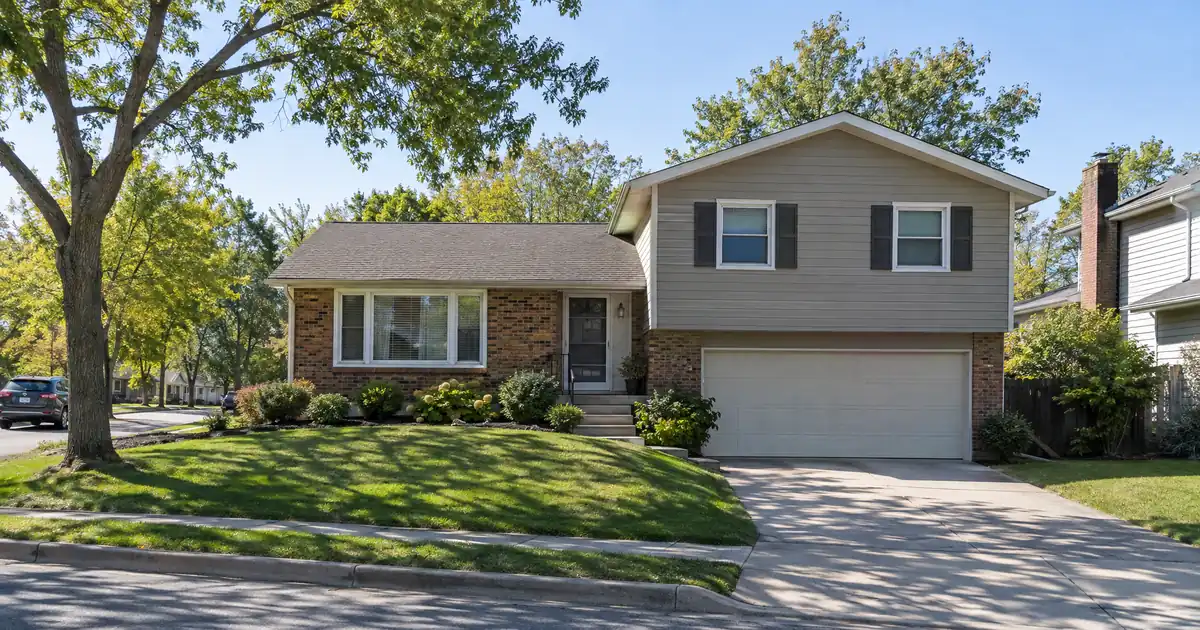
Bucks County Pa Investment Property Cashout Refinance — The Quick Read: A cash-out refinance on a rental property lets an investor pull equity out as cash while keeping the property, but it works nothing like refinancing a house you live in. Leverage on the cash-out side typically caps around 75% loan-to-value, ownership seasoning of roughly six months is the common expectation, and the file gets underwritten against the property’s rent-to-payment coverage rather than the borrower’s personal income. No single federal agency writes the rulebook for this — every lender in the non-QM space sets its own version, which is exactly why the details below matter.
The Short Version
- Cash-out leverage on a rental property typically tops out around 75% LTV — lower than purchase leverage, which runs 75%-80% on most files and up to 85% on select high-leverage programs.
- Underwriting classifies the refinance as rate-and-term or full cash-out before anything else gets calculated. That classification sets the leverage ceiling for the rest of the file.
- DSCR — debt-service coverage ratio — measures rent against the new PITIA payment (principal, interest, taxes, insurance, and any HOA dues). A 1.00 ratio is a floor on select programs, never a universal standard.
- Seasoning — how long you’ve owned the property before pulling cash out — runs around six months on most files, with exceptions for cash buyers and inherited property.
- Sub-1.00 coverage and no-ratio structures both exist through select lenders in the network, though each comes with adjusted leverage and terms.
What Actually Counts as a Cash-Out Refinance Here?
A cash-out refinance replaces the existing loan on a rental property with a new, larger one and sends the difference back to the borrower or the borrowing entity. That’s the whole mechanic. The complexity lives in how lenders classify and size that difference.
DSCR Cash-Out Calculator
Run the cash-out numbers in your market
Rate source: Freddie Mac 30-yr average via FRED® — Federal Reserve Bank of St. Louis · effective Sep 10, 2026
Prefilled with local estimates — enter your property’s value, balance, taxes, and insurance for a more accurate picture.
Program parameters update from Lendmire’s centralized guideline source. Taxes and insurance are editable estimates.
As of Sep 10, 2026 · General Freddie Mac market benchmark, not a Lendmire loan offer. Property value, balance, taxes, and insurance are editable estimates. Maximum loan-to-value varies by lender, program, property type, and seasoning. Not a Loan Estimate, approval, or commitment to lend. Program availability and eligibility are subject to lender guidelines, credit approval, property review, and underwriting.
Underwriting sorts every refinance into one of two buckets before touching the loan amount. A rate-and-term refinance (sometimes called limited cash-out) pays off the existing loan plus reasonable closing costs, with little or nothing returned to the borrower — it gets the higher leverage ceiling. Once meaningful proceeds go back to the investor, the file reclassifies as full cash-out and drops to the lower tier. Investors expecting purchase-level leverage on an equity pull are almost always surprised by this gap; it’s one of the most common points of confusion Lendmire sees on incoming files.
Proceeds from a cash-out refinance are usually put toward a down payment on the next acquisition, renovation costs on the current property, or paying off higher-cost private or bridge debt. Lendmire’s guide on using cash-out proceeds to buy another investment property walks through how investors sequence that move without overleveraging the first asset.
DSCR loans are designed for non-owner-occupied investment properties. Because they are business-purpose investor loans, they are reviewed differently from a standard owner-occupied mortgage.
How Underwriting Treats the File, Step by Step
The property gets valued first, and that value sets the ceiling. An appraisal establishes current market value, and the resulting loan amount can never exceed the program’s LTV cap against that number — regardless of what the borrower owes or wants.
For a one-unit rental where the rent will support qualification, the appraisal typically comes paired with the Single-Family Comparable Rent Schedule, a standardized form appraisers use to document market rent from comparable rentals in the area. Two-to-four-unit properties use the equivalent small-multifamily version of that form. This isn’t an agency rule governing DSCR files — it’s simply the industry-standard tool for putting a defensible number on what a unit rents for, and most lenders in Lendmire’s network lean on it the same way.
Next comes the ratio itself. Gross monthly rent gets measured against the projected new PITIA payment to produce the coverage number. A ratio at or above 1.00 means rent covers the payment; below 1.00 means it doesn’t fully cover it on paper, which typically pushes leverage down or triggers stronger reserve requirements depending on the program. Worth saying plainly: clearing 1.00 is a qualification hurdle, not proof the deal cash-flows. Repairs, vacancy, management fees, and capital expenses sit entirely outside that calculation.
After the ratio comes the file review — title work, insurance coverage, entity documentation if the property is titled to an LLC, and the borrower’s credit profile. Financing to an LLC-titled entity is available on many programs in Lendmire’s network, subject to lender program eligibility, and it’s one of the more common structures investors use to keep liability separated property by property.
Then closing. Proceeds pay off the existing lien first; whatever is left after payoff, closing costs, and any prepaid items gets disbursed to the borrower or the entity.
The Leverage, Credit, and Term Variations Across the Network
Standard cash-out files across Lendmire’s wholesale network land around 75% LTV — a lower ceiling than purchase transactions, where most files run 75%-80% and select high-leverage programs reach 85% with roughly a 700-plus credit profile.com/residential/reach-real-estate-investors-by-becoming-an-expert-in-these-loans), many lenders simply won’t push a cash-out refinance past that 75% mark regardless of how strong the rest of the file looks.
Credit requirements move on a sliding scale. Some corners of the network will go as low as a 620 floor, but most programs want closer to 660, and a 700-plus score is generally what unlocks the strongest leverage tiers. Reserve requirements — the months of PITIA an investor needs in the bank after closing — vary by lender, loan size, and leverage. Six months of reserves is a common benchmark; conservative rate-and-term files at modest leverage under $1,500,000 sometimes see reserves waived entirely, while loans above that size often step up to around nine months.
Loan sizing runs up to roughly $3,000,000 on standard programs, with smaller-balance files routed through select lenders built for that end of the network. Above $2,500,000, most of the network holds to a straight 30-year fixed structure rather than the more flexible options available below that threshold — extended 40-year amortization, interest-only periods, and adjustable-rate structures are available through select lenders for investors who want them, but they thin out at the top of the loan-size range.
Short-term rental collateral gets its own set of numbers, and it’s worth separating the two transaction types clearly: STR purchases can reach 75% LTV, while STR cash-out refinances top out closer to 70% — those are different figures for different transaction types, not one blended number. Both typically expect a 640-plus score, around 12 months of hosting history, and a 1.00 coverage floor.
Some investors compare a cash-out refinance against an investment-property HELOC instead of replacing the first mortgage entirely. Those lines cap at $500,000 total across the network — there’s no tier above that amount, so larger equity pulls have to run through a full cash-out refinance rather than a HELOC.
A handful of states carry their own overlays that matter here. In Connecticut, Florida, Illinois, and New Jersey, purchase leverage already caps closer to 75% LTV, and total loan amounts on overlay-state deals generally top out around $2,000,000 — relevant for investors who plan to redeploy cash-out proceeds into one of those markets. Lendmire’s guide on California investment property cash-out refinancing covers how a separate set of state-level factors plays out on the West Coast.
| Structure | Typical LTV | Seasoning Expectation | Coverage Floor |
|---|---|---|---|
| Rate-and-term (limited cash-out) | Higher tier, program-dependent | ~6 months common | 1.00 on most programs |
| Standard cash-out refinance | ~75% | ~6 months common | 1.00 on most programs |
| Short-term rental cash-out | ~70% | ~12 months hosting history | 1.00 on most programs |
| Sub-1.00 coverage program | Reduced from standard tier | Program-dependent | Below 1.00, adjusted terms |
| No-ratio structure | Reduced from standard tier | Program-dependent | Not ratio-based |
Where the General Rule Breaks — the Real Edge Cases
Cash buyers get a seasoning waiver, not a leverage waiver. An investor who bought a property outright, without a purchase-money loan, can often refinance well before the standard six-month clock runs out — a structure known as delayed financing. It’s a documented exception in Fannie Mae’s own Selling Guide, cited here only to show the underlying industry logic that non-QM lenders have broadly adopted. The important nuance: this waives the ownership-seasoning clock, not the leverage cap. The loan amount still gets sized against documented purchase cost or current value, whichever is lower, and standard cash-out LTV limits still apply.
Inherited or legally-awarded property gets similar treatment. When title passed through inheritance, or through a divorce or legal settlement, the “how long have you owned it” question doesn’t map cleanly onto a transfer nobody planned. Most lenders — agency and non-QM alike — waive standard seasoning in those cases.
Some property types are simply off the table. Manufactured homes — single- and double-wide — along with log homes and barndominiums are not offered through Lendmire’s DSCR programs, regardless of how much equity sits in the property or how strong the coverage ratio comes out. That’s a categorical exclusion, not a leverage or credit issue.
Short-term rental income runs on separate documentation. The comparable-rent form appraisers use for long-term leases explicitly excludes business income — it’s built to value real property, not the revenue a calendar of nightly bookings generates. As McKissock Learning explains, appraisers can’t fold short-term rental income into that rent schedule at all. Lenders that accept STR income for qualification instead rely on platform statements or projected income studies, separate from the appraisal itself.
Sub-1.00 and no-ratio paths both exist — but they’re not interchangeable. Coverage below 1.00 is available through select lenders in the network, with leverage and terms adjusted to offset the weaker ratio. No-ratio qualification — skipping the rent-to-payment test entirely — is also available, but generally only through select lenders and typically for borrowers who already own a primary residence. Neither structure prices or leverages the same as a standard file, and neither should be assumed available without checking the specific lender’s guidelines.
What the Investor Decision Actually Looks Like
The strongest cash-out files clear two separate tests, not one. Enough equity has to sit in the property to support the requested loan amount under the LTV cap, and the rent has to cover the new payment at whatever coverage ratio the program requires. A property with plenty of equity but weak rent relative to today’s payment doesn’t automatically qualify just because the LTV math works — and a property with strong rent but thin equity runs into the leverage ceiling before coverage ever becomes the issue.
A larger down payment on the purchase side, or simply more equity built up over time, does lower the payment and can lift the coverage ratio. But it never overrides the leverage cap, the credit floor, the reserve requirement, or a property-type exclusion. Those are separate gates, and a file has to pass all of them, not just the one equity happens to fix. Final terms depend on lender guidelines, property type, leverage, and the borrower’s complete credit picture.
Across Lendmire’s wholesale network, the files that stall in underwriting almost always show the same pattern: a rent figure that doesn’t match the unit count or lease terms on file, or a coverage ratio that was modeled on last year’s rent roll instead of the current lease. Getting the rent schedule and current lease documentation aligned before submission avoids most of the back-and-forth that slows a file down.
For an investor planning to redeploy the proceeds, Lendmire’s complete guide to investment property refinancing lays out the sequencing between pulling equity from one property and using it to fund the next acquisition. And for a broader look at how DSCR lender review works end to end, Lendmire’s complete DSCR loans guide covers the underwriting mechanics in more depth than any single refinance scenario can.
Tax treatment can depend on how the funds are used and how the property is held; investors should keep clear records and speak with a qualified tax professional before relying on any deduction.
Key Terms Defined
DSCR (debt-service coverage ratio): the number that results from dividing monthly rent by the monthly PITIA payment — above 1.00 means rent covers the payment, below means it doesn’t fully cover it on paper.
LTV (loan-to-value): the loan amount expressed as a percentage of the property’s appraised value; the lower the LTV, the more equity cushion sits behind the loan.
PITIA: principal, interest, taxes, insurance, and any HOA dues — the full monthly obligation the coverage ratio is measured against.
Seasoning: the minimum amount of time a lender wants an investor to have owned (or held title to) a property before refinancing it.
Rate-and-term refinance: a refinance that pays off the existing loan and closing costs with little or no cash returned to the borrower — treated more leniently than a full cash-out.
Non-QM / business-purpose loan: a loan made to a business entity or for investment purposes rather than personal use, which is reviewed under a different regulatory framework than an owner-occupied mortgage.
Frequently Asked Questions
How soon can I refinance if I bought the rental property in cash?
Sooner than the standard seasoning window, in many cases. Delayed financing lets a cash buyer refinance without waiting out the full ownership-seasoning period, provided the purchase can be documented — but the loan amount still gets capped by purchase cost or current value, whichever is lower, and standard LTV limits still apply.
Does a DSCR cash-out refinance require traditional personal-income documentation or W-2s?
No — DSCR files qualify primarily on the property’s rental income covering the payment, subject to lender guidelines, rather than personal income documentation. That’s the core difference from a conventional refinance, where the borrower’s own debt-to-income ratio drives approval.
Can I close this loan under an LLC?
Yes, on many programs in Lendmire’s network, subject to lender program eligibility. Entity documentation gets reviewed alongside the property and credit file, and the process runs similarly to a personal-name refinance with a few added title steps.
What if my property’s rent doesn’t reach a 1.00 coverage ratio?
Coverage below 1.00 is still reviewed through select lenders in the network, generally with leverage and terms adjusted to reflect the weaker ratio. It isn’t an automatic decline — it’s a different pricing and leverage conversation.
Can I use the cash-out proceeds to buy another rental property?
Yes, that’s one of the most common uses of proceeds among Lendmire’s investor files. The equity pulled from a stabilized property frequently funds the down payment on the next acquisition, which is a sequencing strategy Lendmire helps investors plan around leverage limits on both properties.
If you’re weighing a cash-out refinance against a purchase, a HELOC, or simply want to see how a specific property’s numbers pencil out, Lendmire can help compare DSCR loan options based on the property’s rental income, credit profile, leverage, and your broader investment goals. Review details are subject to lender overlays and can shift by program, so a direct conversation about the specific property beats guessing from general ranges.
About Lendmire
Lendmire is a non-QM mortgage brokerage (NMLS# 2371349) arranging DSCR investor loans in 40 markets, including Washington, D.C. DSCR eligibility is generally reviewed around property-level rental income rather than personal income, subject to lender and program guidelines, a fit for self-employed investors and LLC-owned portfolios. Lendmire was recognized as a Scotsman Guide Top Mortgage Workplace in 2025 and 2026.
Lendmire’s Top Mortgage Workplace recognition is documented by Scotsman Guide 2025 Top Mortgage Workplace and Scotsman Guide 2026 Top Mortgage Workplace.
Get Started
Ready to find the right loan for you?
In about 30 seconds you can review financing options available for your home or investment property. No commitment required.
Informational only. Not a Loan Estimate, approval, or commitment to lend. Program availability and eligibility are subject to lender guidelines, credit approval, property review, and underwriting.
References
1. Fannie Mae — Single-Family Comparable Rent Schedule (Form 1007)
2. Fannie Mae Selling Guide — B2-1.3-03 Cash-Out Refinance Transactions
3. McKissock Learning — Form 1007 and Its Impact on Short-Term Rental Appraisals
Brandon Miller
Founder & CEO, Mortgage Loan Originator, Lendmire LLC
- Mortgage Loan Originator · NMLS# 1129696 · Verify on NMLS Consumer Access
- North Carolina Real Estate Broker · License# 343312 · Verify on NCREC
- North Carolina Insurance Producer · License# 19053198 · Property, Casualty, Life, Health · Verify on NAIC SBS
- Lendmire LLC · Firm NMLS# 2371349 · Verify firm licensure
Required disclosures. Lendmire (NMLS# 2371349) operates as a licensed mortgage broker, not a direct lender or depository. The discussion in this article is general in nature and should not be relied upon as financial, legal, or tax advice — every investment scenario is unique and should be reviewed by a qualified professional. Any loan inquiry is subject to lender underwriting, and this article is not a commitment to lend or a guarantee of approval. Mortgage rates, loan terms, and program guidelines vary by borrower, property, and state, and may change without notice. Equal Housing Opportunity. Verify licensure at NMLS Consumer Access.


