
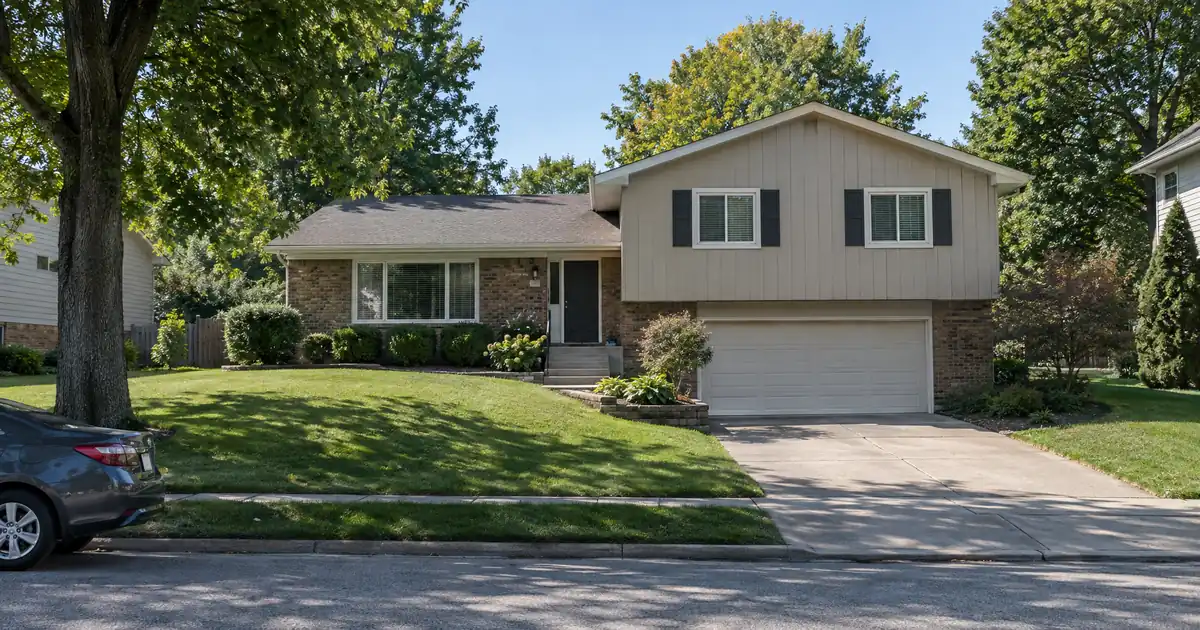
Bucks County Pa Investment Property Refinance — The Quick Read: Refinancing a rental property follows different rules than refinancing the home you live in. That’s because the loan gets classified as business-purpose credit, not a personal mortgage. This one difference lets a lender qualify the file on the property’s rent instead of your paycheck. Lenders use a coverage math called DSCR to do this. Most investors end up choosing among a rate-and-term refinance, a cash-out refinance, or a DSCR-based non-QM loan. The right pick depends on current equity, how rent compares to the payment, and how long you’ve owned the property.
Key Takeaways
- Investment-property refinancing qualifies mainly on the property’s rent, not on your personal income or traditional personal-income documentation.
- Cash-out refinances top out lower than rate-and-term refinances and carry a seasoning clock most first-time investors underestimate.
- A coverage ratio at or above 1.00 is where several programs draw their starting line — not a universal floor, and stronger ratios buy better leverage.
- Vacant properties, entity-held title, and short-term rental income all get treated differently than a standard leased single-family rental.
- Prepayment penalties reset with every new note. Refinancing an existing loan doesn’t erase the penalty attached to the loan being paid off.
What Makes This a Business-Purpose Loan, Not a Personal Mortgage?
Investment-property refinancing sits in a different lane than refinancing a primary residence. The reason is purpose, not paperwork. A rental held for income counts as business-purpose credit. DSCR loans are built for non-owner-occupied investment properties. Because they’re business-purpose investor loans, lenders review them differently than a standard owner-occupied mortgage.
DSCR Calculator
Run the numbers in your market
Rate source: Freddie Mac 30-yr average via FRED® — Federal Reserve Bank of St. Louis · effective Sep 10, 2026
Prefilled with local estimates — enter your own rent or nightly figures, taxes, insurance, and HOA for a more accurate picture.
Program parameters update from Lendmire’s centralized guideline source. Taxes and insurance are editable estimates.
As of Sep 10, 2026 · General Freddie Mac market benchmark, not a Lendmire loan offer. Rent, nightly rate, occupancy, taxes, and insurance are editable estimates. Short-term rental figures are estimates only and vary significantly by season, property type, management approach, and local short-term-rental rules — confirm local regulations before relying on them. Qualifying income for short-term rentals varies by program — some use appraisal market rent, others use documented STR history or projections — and is confirmed in underwriting. Not a Loan Estimate, approval, or commitment to lend. Program availability and eligibility are subject to lender guidelines, credit approval, property review, and underwriting.
That practical difference shows up in three places. First, personal income documentation isn’t the bottleneck — the property’s rent is. A file qualifies mainly on property-level rental income covering the payment, subject to lender guidelines. It doesn’t rely on W-2s, traditional personal-income documentation, or an employment history. Second, the loan can typically close in the name of an LLC or other entity. This is common for investors who want to separate personal assets from rental holdings. Most lenders still want a personal guarantee from anyone holding a meaningful ownership stake, though, subject to program eligibility. Third, the disclosure paperwork and process look different than a consumer mortgage refinance. Business-purpose lending sits outside the framework built for owner-occupied disclosures.
None of this means the loan is unregulated or that anything goes. It means the lender evaluates the file against the property’s income and the investor’s overall picture — credit, equity, reserves — instead of a personal debt-to-income ratio. That’s the entire reason DSCR lending exists as its own category. It’s also why an investor with strong rental income but complicated traditional personal-income documentation often qualifies more easily through a DSCR non-QM loan than a conventional cash-out refinance. Lendmire’s complete DSCR loans guide walks through the qualification model in more depth if you want the fuller picture before going further.
Key Terms Defined
DSCR (Debt-Service-Coverage Ratio): monthly rent divided by the monthly PITIA payment — the core qualifying math on a DSCR loan.
PITIA: principal, interest, taxes, insurance, and association dues combined into a single monthly housing payment figure.
LTV (loan-to-value): the loan amount expressed as a percentage of the property’s appraised value or price — a lower LTV means more owner equity in the deal.
Business-purpose loan: credit extended for an investment, rental, or commercial reason rather than personal, family, or household use — the classification that unlocks DSCR-style underwriting.
Seasoning: the minimum ownership time a lender wants before allowing a refinance, especially a cash-out refinance.
Cash-out refinance: a new loan larger than the current payoff, with the difference paid to the borrower in cash.
Prepayment penalty: a fee charged for paying off or refinancing a loan before a set period passes, common on non-QM investor loans and usually structured to step down over time.
Non-QM (non-qualified mortgage): a loan that sits outside standard consumer qualified-mortgage rules — the category DSCR loans belong to.
How Underwriting Actually Works, Step by Step
Refinancing an investment property moves through a fairly consistent sequence across the DSCR non-QM world. The specific numbers still differ from lender to lender.
Step 1: The loan gets classified as investment, not owner-occupied. The property must be non-owner-occupied rental real estate for the business-purpose framework to apply. A true rental refinance clears this test easily. A property the owner is living in, or plans to occupy, does not.
Step 2: The appraisal establishes both value and rent used for lender review. For a refinance, the lender orders a new appraisal. On a single-unit rental, the appraiser typically completes a comparable rent schedule. This is the industry-standard document appraisers use to opine on monthly market rent by comparing the subject property to similar rented homes nearby. It’s known as Form 1007. On a 2-4 unit property, a similar income-property report captures market rent unit by unit. Most lenders actually use the appraised rent to run the coverage math — not whatever number a landlord believes the unit is worth.
Step 3: Rent gets divided by the payment to produce the coverage ratio. Take monthly rent — or the appraiser’s market-rent opinion, whichever the program calls for — and divide it by PITIA. That produces the DSCR. Across most programs in Lendmire’s wholesale network, 1.00 coverage is where several programs draw a starting line. It’s a floor for specific programs, never a universal standard. Ratios meaningfully above 1.00 tend to open better leverage and pricing tiers.
Step 4: Seasoning determines when the refinance is allowed, and on what basis. Ownership length matters most for cash-out refinances. Across the network, roughly 6 months of ownership is a common expectation before pulling equity out in cash. Rate-and-term refinances don’t send new cash to the borrower, so they tend to move on shorter seasoning timelines since no new equity is being extracted.
Step 5: Credit, reserves, and leverage get layered on top of the ratio. Programs across the network commonly want a credit score somewhere around 660 for standard pricing. A 620 floor exists on parts of the network for otherwise strong files, and scores at 700 and above tend to unlock the highest leverage tiers. Reserves are liquid funds left over after closing. They commonly run around 6 months of PITIA on standard files, with loans above $1,500,000 typically stepping up to roughly 9 months. Conservative rate-and-term files at modest leverage under that size sometimes see reserve requirements waived entirely.
Step 6: The prepayment penalty on the new note gets set from scratch. A refinance closes a brand-new loan, so that new note carries its own prepayment-penalty term measured from its own new closing date. Paying off the old loan may still trigger whatever penalty is attached to it. That’s a separate cost from whatever schedule applies to the new one.
The Structures and Variations Investors Can Choose From
Not every investment-property refinance looks the same. The differences matter more than most first-time investors expect.
Rate-and-term vs. cash-out. A rate-and-term refinance replaces the existing loan without pulling cash out. It’s useful for adjusting leverage, switching loan structure, or getting past an existing prepayment penalty once it’s stepped down. A cash-out refinance pulls equity out as usable funds. It typically caps around 75% LTV across most of the network, versus purchase leverage that can run to 75%-80% (and up to 85% on select high-leverage programs for borrowers around a 700+ score). For a deeper walkthrough of cash-out mechanics specifically, see Lendmire’s guide on cash-out refinancing an investment property.
Long-term rental vs. short-term rental collateral. Lenders underwrite a standard leased rental and an Airbnb-style short-term rental differently. STR files typically want around 12 months of hosting history and a 640+ score, plus purchase leverage up to 75% LTV with a 1.00 coverage floor on the purchase. Refinance leverage on STR collateral tops out around 70%, compared to roughly 75% for a standard long-term rental refinance, with its own 1.00 coverage expectation on the refinance side. STR income itself typically gets pulled from short-term-rental-specific data rather than a standard lease. Appraisal-industry training material notes the standard comparable rent schedule “is not designed for single-family properties used as STRs.”
Sub-1.00 and no-ratio structures. Coverage below 1.00 is a real path — available through select lenders in the network, with leverage and terms adjusted to offset the weaker ratio. It’s not a denial, just a different structure. A separate option, no-ratio qualification, skips the rent-to-payment math almost entirely. It’s available only through select lenders in the network, generally for borrowers who already own a primary residence, and it prices and leverages differently than a standard DSCR file.
Extended terms and interest-only structures. The 30-year fixed is the spine of most files. Loan sizes across the network typically run up to about $3,000,000 on standard programs, with smaller balances routed through select lenders. Anything above roughly $2,500,000 generally holds to that straight 30-year fixed rather than an interest-only or adjustable alternative. Below that size, select lenders in the network offer 40-year terms, interest-only periods, and adjustable-rate structures for investors who specifically want one of those trade-offs.
Portfolio and entity-held title. Closing in an LLC’s name is common and generally workable, subject to program eligibility. It usually brings extra documentation, though — operating agreements and personal guarantees from owners above a certain ownership share. Investors refinancing several properties at once may also see lender treatment shift to account for aggregate exposure. That can affect both the coverage assumptions used and the maximum leverage offered on the next file.
Home equity lines on a rental. Investors who want to tap equity without refinancing the whole first loan can look at an investment-property HELOC. These lines cap at $500,000 total in the network, with no higher tier above that amount.
Where the General Rule Breaks: Edge Cases Worth Knowing
The steps above describe the typical file. Several situations bend those rules in ways worth knowing before you assume a standard timeline or a standard ratio applies.
Delayed financing after an all-cash purchase. An investor who bought a rental outright with cash doesn’t have to wait out full seasoning to refinance. Documentation that the purchase was cash-funded can allow a refinance sooner than the standard timeline — a genuinely useful workaround, not a loophole. Proceeds are typically capped at recovering the original purchase price plus documented closing costs, though — not a full cash-out to current appraised value. Each lender applies its own version of this exception with its own documentation standards.
BRRRR exits from short-term rehab debt. Investors who financed acquisition and renovation with hard-money or fix-and-flip debt often find seasoning waived or shortened once the property is rent-ready. Why? A fresh post-renovation appraisal and verified rehab completion replace the ownership track record that seasoning otherwise exists to confirm. This is also where title seasoning (how long you’ve owned it) diverges from value seasoning (whether the lender uses original cost or new appraised value). A property that gained real value through renovation can still get capped at refinance if a lender insists on the original cost basis instead of the new appraisal.
Vacant properties with no signed lease. A persistent misconception says a lease is required to refinance a rental. It isn’t, structurally. An eligible vacant property can use appraiser-supported market rent instead of an active lease. The same comparable-rent-schedule methodology described above substitutes for a signed lease in the DSCR calculation. Vacancy itself can still affect leverage, reserves, and how closely the file gets reviewed, though.
Short-term rental appraisals. As noted above, a standard rent schedule doesn’t translate cleanly to STR collateral. Appraisers on STR files typically pull from specialized short-term-rental data sources rather than multiplying a nightly rate by 30. Appraisal-training material specifically flags that shortcut as the wrong method.
State-level prepayment-penalty law. Whether a prepayment penalty is even enforceable isn’t purely a federal question. It depends on state law layered on top of the federal business-purpose framework. The federal exemption for business-purpose credit comes from Regulation Z’s exempt-transactions rule. This is what lets non-owner-occupied rental loans sit outside the consumer prepayment-penalty restrictions built for owner-occupied mortgages. Some states layer their own consumer-protection statutes on top, though. Pennsylvania is a useful illustration: its Loan Interest and Protection Law prohibits prepayment penalties on residential mortgages under 41 P.S. § 405. That protection is generally written around owner-occupied, consumer-purpose loans below a specific dollar threshold. A true non-owner-occupied, business-purpose DSCR refinance on a rental commonly falls outside that definition entirely. That means a rule built to protect a homeowner’s mortgage doesn’t automatically extend to an investor’s rental loan. Investors should confirm current statutory thresholds directly rather than assume a specific figure, since those thresholds get adjusted periodically. This is one state’s rule cited purely to illustrate a broader point: prepayment-penalty enforceability is genuinely state-specific, and it’s worth checking regardless of where the property sits.
Portfolio-level treatment. Once an investor holds several financed rentals, some lenders start weighing aggregate exposure across the portfolio rather than treating each file in isolation. That variable can shift both the coverage assumptions and the leverage a lender is willing to extend on the next deal.
What the Refinance Decision Looks Like in Practice
Picture an investor holding a four-unit rental refinanced a few years back. Combined rent across the units now clears roughly 1.20x the property’s monthly PITIA payment. That coverage level sits well above where pricing typically starts to improve on most files in the network. A ratio in the low-1.00s clears the bar on many programs, but 1.20x and higher tends to buy meaningfully better leverage and terms.
Now compare that to an investor who bought a single-family rental more recently at 80% LTV. Market rent runs closer to 1.00x the payment once you add in the full PITIA build — taxes, insurance, and any HOA dues. That file still gets reviewed on plenty of programs, since 1.00 is where several start. But it carries less cushion if a vacancy or a rent dip shows up before the next lease renewal. It’s also a file where trimming leverage even a few points, or coming in with more equity, tends to do more for the coverage number than most first-time investors expect. A smaller loan balance lowers the payment and lifts the ratio at the same time. More equity never overrides a credit floor or a reserve requirement on its own, but a file that clears both the equity test and the coverage test at once is stronger than one that only clears one. These specifics are subject to lender guidelines and a full review of property, leverage, and credit.
Worth flagging plainly: clearing 1.00 on the coverage ratio is not the same thing as positive cash flow. The ratio only compares rent to the PITIA payment. It says nothing about repairs, vacancy, property management, utilities, or capital expenses — all of which sit outside the calculation entirely. An investor running the numbers should budget for those separately rather than assume a 1.00-or-better ratio means the property is actually profitable month to month.
For investors weighing whether to pull cash out now versus wait, the seasoning clock and current coverage usually decide it together. The stronger play is often to season the file properly and let rent build before pulling cash out. That said, an investor confident in near-term appreciation, or already sitting on a strong ratio, might reasonably push for delayed financing sooner instead. Lendmire’s guide on using cash-out proceeds to fund the next acquisition covers how that redeployed equity typically gets structured into a follow-on purchase.
Common Misconceptions Worth Retiring
“You need a signed lease to refinance.” Not true structurally. Appraiser-supported market rent can substitute for an active lease on an eligible vacant property, subject to lender guidelines on property condition, value, credit, and reserves.
“The coverage ratio alone decides approval.” It’s one input among several. Credit, reserves, LTV, valuation, and the specific program’s full guideline set all sit alongside the ratio. A strong number doesn’t override a weak file on everything else.
“Refinancing erases the old prepayment penalty.” It replaces it with a new one. Any unexpired penalty on the loan being paid off is still due at that closing. It doesn’t disappear because a new loan is being originated.
“Business-purpose loans aren’t regulated at all.” Not accurate. They’re exempt from specific consumer-mortgage disclosure and repayment-ability rules built for owner-occupied lending — not from regulation generally. State licensing law, fair-lending law, and each lender’s own eligibility standards still apply.
Frequently Asked Questions
Can I refinance a rental property held in an LLC?
Yes, generally, subject to program eligibility and lender guidelines. Most programs in the network will refinance entity-held title. Expect to provide the operating agreement and a personal guarantee from any owner holding a meaningful stake, though — confirm the specific documentation a given lender wants before assuming the file is ready.
Does a vacant rental disqualify me from refinancing?
No, not automatically. An eligible vacant property can typically use appraiser-supported market rent instead of a signed lease. Vacancy can still affect leverage, reserves, and how the overall file gets reviewed, though — it’s one more variable, not an automatic disqualifier.
How long do I need to own a rental before a cash-out refinance?
Roughly 6 months of ownership is a common expectation across the network before a cash-out refinance. Some programs move faster and some want longer, and delayed-financing documentation can shorten that clock for an all-cash purchase.
Can short-term rental income qualify for a refinance?
Yes, through select lenders in the network, generally with about 12 months of hosting history, a 640+ credit score, and refinance leverage running lower than a standard long-term rental refinance. Short-term rental rules can also vary by city, county, HOA, and property type, so investors should confirm local rules before relying on projected rental income.
What happens to my prepayment penalty if I refinance again?
The new loan gets its own prepayment-penalty term starting from its own new closing date. Any unexpired penalty on the loan being paid off is a separate cost due at that closing, and it doesn’t carry forward onto the new note.
If you’re weighing a rate-and-term refinance against a cash-out refinance, or trying to figure out whether your rental’s rent actually clears the payment on a DSCR basis, Lendmire can help you compare options based on the property’s income, your credit profile, available leverage, and your investor goals. Reach the team at 828-256-2183 or request a pricing quote to see how a specific file lines up.
Prepayment-penalty enforceability, seasoning timelines, and reserve requirements shift by lender and by state. The details above reflect typical guidelines across a wholesale network and should be confirmed against current program terms before you plan around them. Tax treatment can also depend on how refinance proceeds are used and how the property is held, so keep clear records and talk to a qualified tax professional before relying on any deduction. Terms vary by lender guidelines, property type, leverage, credit profile, and full file review.
About Lendmire
Lendmire, NMLS# 2371349, is a mortgage brokerage focused on investor financing, arranging DSCR loans in 39 states plus Washington, D.C. — 40 markets total. Qualification is based on the property’s income rather than personal income documentation, subject to lender guidelines, making it a fit for LLC-held rentals and scaling portfolios. Scotsman Guide named Lendmire a Top Mortgage Workplace in both 2025 and 2026.
Get Started
Ready to find the right loan for you?
In about 30 seconds you can review financing options available for your home or investment property. No commitment required.
Informational only. Not a Loan Estimate, approval, or commitment to lend. Program availability and eligibility are subject to lender guidelines, credit approval, property review, and underwriting.
References
1. Fannie Mae — Single-Family Comparable Rent Schedule (Form 1007)
2. McKissock Learning — Form 1007 and Its Impact on Short-Term Rental Appraisals
3. eCFR — 12 CFR § 1026.3, Exempt Transactions
4. Pennsylvania Statutes — 41 P.S. § 405
Brandon Miller
Founder & CEO, Mortgage Loan Originator, Lendmire LLC
- Mortgage Loan Originator · NMLS# 1129696 · Verify on NMLS Consumer Access
- North Carolina Real Estate Broker · License# 343312 · Verify on NCREC
- North Carolina Insurance Producer · License# 19053198 · Property, Casualty, Life, Health · Verify on NAIC SBS
- Lendmire LLC · Firm NMLS# 2371349 · Verify firm licensure
Compliance and disclosures. Lendmire (NMLS# 2371349) is a licensed mortgage broker and is not a direct lender, depository institution, financial advisor, or tax professional. Content in this article is general market analysis and educational information — not financial, legal, or tax advice for any specific situation. Lendmire does not guarantee loan approval; every transaction is subject to underwriting by the funding lender. Mortgage pricing and loan program guidelines are subject to change at any time without notice and vary by borrower characteristics, property type, and state regulations. Lendmire complies with Equal Housing Opportunity. Licensure verification: NMLS Consumer Access.


