
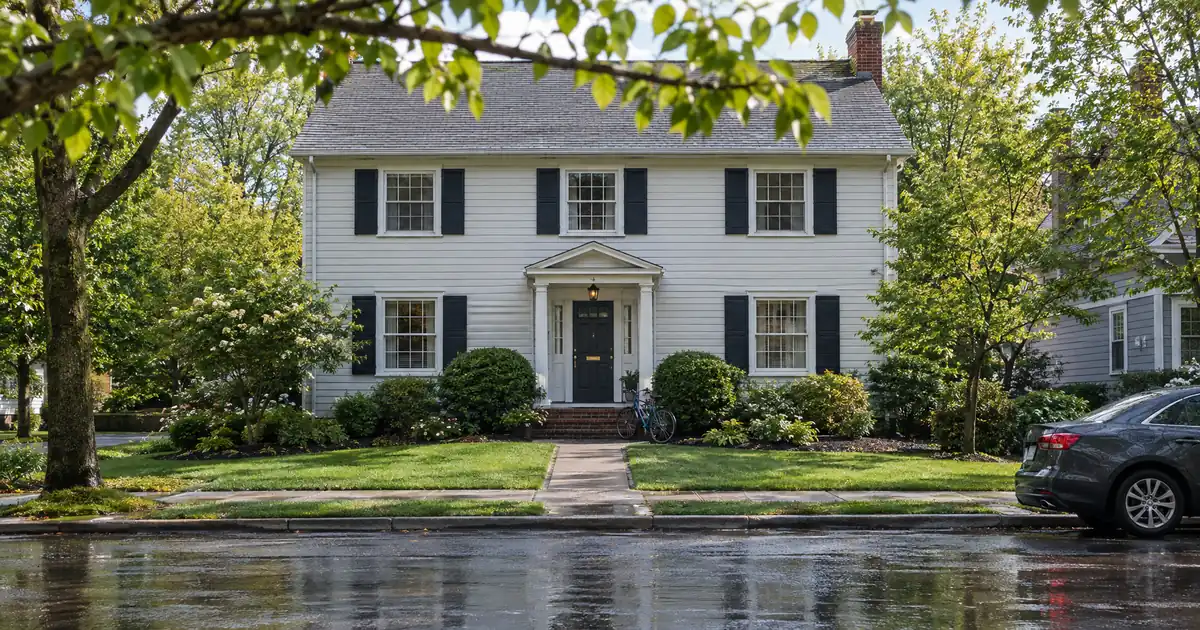
The Quick Read: A DSCR purchase near FSU qualifies primarily on property-level rental income covering the full monthly payment, subject to lender guidelines, so the file turns on the appraiser’s market rent, the home’s legal rental use, and your down payment and credit. Student housing adds two wrinkles: rent is often quoted per bedroom, and local rules can cap how many unrelated tenants live in one house.
- Most purchase files across the wholesale network land at 75%-80% LTV on an investment property, which means about 20%-25% down.
- The ratio is market rent divided by PITIA (principal, interest, taxes, insurance, association dues). 1.00 is where select programs start, not a universal line.
- Credit floors start at 620 in parts of the network, most programs want about 660, and 700+ opens the strongest leverage.
- Reserves are commonly around 6 months of PITIA, stepping up to about 9 months on loans above $1,500,000.
- The appraiser’s rent opinion usually sets the numerator, not a per-bed pro forma.
Tallahassee is the worked example here. The mechanics apply to any campus-adjacent rental.
DSCR Calculator
Run the numbers in your market
Rate source: Freddie Mac 30-yr average via FRED® — Federal Reserve Bank of St. Louis · effective Oct 29, 2026
Prefilled with starting assumptions — enter your own rent or nightly figures, taxes, insurance, and HOA for a more accurate picture.
Program parameters update from Lendmire’s centralized guideline source. Taxes and insurance are editable estimates.
As of Oct 29, 2026 · General Freddie Mac market benchmark, not a Lendmire loan offer. Rent, nightly rate, occupancy, taxes, and insurance are editable estimates. Short-term rental figures are estimates only and vary significantly by season, property type, management approach, and local short-term-rental rules — confirm local regulations before relying on them. Qualifying income for short-term rentals varies by program — some use appraisal market rent, others use documented STR history or projections — and is confirmed in underwriting. Not a Loan Estimate, approval, or commitment to lend. Program availability and eligibility are subject to lender guidelines, credit approval, property review, and underwriting.
Why Does a Campus Rental Work Differently From a Standard Rental?
A campus rental works differently because the demand is concentrated and the income is often quoted by the bed. A lender reads the house as one property with one market rent. That gap between the student pro forma and the appraised rent is where most campus files get tested.
Florida State University reported fall enrollment of 46,184, including 33,068 undergraduates and 11,022 graduate and professional students, per FSU’s institutional research fact book and confirmed on FSU’s student body page. Apartment List puts Tallahassee’s median rent at about $1,287 and notes that on-campus housing is mostly limited to first-year students, so upperclass students lease off campus.
That is the demand story. The loan story is different. A DSCR loan does not care how many students want a bed. It cares whether the property’s rent covers its payment and whether the property can legally be rented the way you plan to rent it.
How Does a DSCR Loan Treat a Student Rental?
It treats the rental like any other investment property: the lender compares rent to PITIA. Your personal tax returns and debt-to-income ratio are not the qualifier. Credit, down payment, reserves and the property itself still get reviewed under the program’s guidelines. DSCR loans are designed for non-owner-occupied investment properties. Because they are business-purpose investor loans, they are reviewed differently from a standard owner-occupied mortgage.
Here is the sequence the file follows.
1. Scenario check. Test price, down payment, expected rent and carrying costs against a program before you make an offer.
2. Estimate the ratio. Add up PITIA, then divide expected market rent by it. Taxes, insurance and any HOA dues all sit in the denominator.
3. Appraisal. One report does two jobs. It sets value, which drives LTV. It also sets market rent, which drives coverage. On a one-unit house the appraiser attaches a single-family comparable rent schedule (Form 1007). On two to four units the form is the small-income-property version (Form 1025). The form names are borrowed from standard appraisal practice. The DSCR guidelines themselves belong to the individual lenders.
4. Rent source. On an occupied property, many programs use the lower of the signed lease and the appraiser’s market rent. On a vacant property, many programs use the appraiser’s market rent.
5. Borrower review. The lender still reviews credit, reserves and the down payment alongside the ratio.
6. Structure and closing. Vesting, prepayment terms and title are settled here. Many investors hold title in an LLC, subject to lender program eligibility.
Clearing 1.00 is not the same as positive cash flow. DSCR compares rent to PITIA only. Repairs, vacancy, management, utilities and capex sit outside the calculation. A student house can clear the ratio and still lose money in a bad summer.
What Do Network Programs Typically Require?
Program details vary by lender, leverage and loan size. Across the wholesale network, the ranges below are typical, subject to lender guidelines. This is not a commitment to lend.
| Factor | Typical range |
|---|---|
| Purchase LTV (investment property) | 75%-80% |
| Cash-out refinance LTV (standard rental) | up to 75% |
| Coverage | 1.00 where select programs start |
| Credit score | 620 floor in parts of the network; most want about 660; 700+ for top tiers |
| Reserves | about 6 months PITIA; about 9 months above $1,500,000 |
| Loan amount | up to $3,000,000 on standard programs |
Coverage below 1.00 is a separate path. It is available through select lenders in the network, with leverage and terms adjusted. Stronger ratios open better pricing and more leverage.
A bigger down payment lowers the payment and can lift the ratio. It does not erase leverage caps, credit floors, reserve rules or property eligibility. The strongest files clear both tests: enough equity and enough rental coverage. Lendmire’s complete DSCR loans guide covers the general program mechanics in more depth.
Which Property Types Fit a DSCR Purchase Near Campus?
Single-family houses, duplexes and small multifamily are the usual fits. Condos work if the HOA allows rentals. Each type changes the rent source, the appraisal form and the management load.
| Property type | Rent treatment | Main friction |
|---|---|---|
| Single-family house | One market rent (Form 1007) | Occupancy cap on unrelated tenants |
| Duplex to fourplex | Unit rents (Form 1025) | Mixed lease dates, more systems to maintain |
| Condo or townhome | One market rent; dues added to PITIA | Rental restrictions in condo documents |
| By-the-bedroom house | Still one market rent | Some programs restrict room-by-room student housing |
| Manufactured, log, barndominium | Not applicable | Not offered in the network’s DSCR programs |
For a condo, request the HOA questionnaire and the condo documents early. Dues enter the PITIA denominator, and a rental cap or investor-ratio limit in the documents can sink the file before the appraisal is ordered. Incomplete questionnaires are a common cause of delay.
Where Does the Per-Bed Pro Forma Break Down?
It breaks down at the numerator. Student complexes quote rent per person. A DSCR loan on a house counts one market rent for the whole property. If a four-bedroom house is pitched at a per-bed rent times four, that total is a seller’s number. The appraiser’s rent schedule is the lender’s number.
Picture an investor who models a four-bedroom house at a coverage ratio near 1.60x using per-bed rents. The appraiser pulls whole-house comps and supports rent that works out to about 1.15x. The deal still clears 1.00, but the leverage and pricing tier may shift, and a thinner cushion leaves less room for a vacant summer. Underwrite on the appraised number first. Treat anything above it as upside.
Two other points on student income:
- Room-by-room housing. Some programs restrict rent-by-the-room student housing. Confirm eligibility before you go under contract, not after the appraisal.
- Vacancy. Leases follow the academic calendar. Underwrite with a vacancy cushion rather than full occupancy, and keep reserves documented as part of the file.
Short-term rentals use a separate track. Form 1007 is built around monthly rent, not nightly rates. Where short-term rental income is used, programs typically allow purchase leverage up to 75%, want a 640+ score, and look for about 12 months of hosting history. Short-term rental rules can vary by city, county, HOA and property type, so confirm local rules before relying on projected rental income. Lendmire’s piece How to Buy a Short-Term Rental When the Permit Does Not Transfer covers that trap.
What Is the Tallahassee Zoning Trap?
The trap is the unrelated-occupancy cap. A house leased to four unrelated students can run into local limits, and that affects both legality and insurability. Appraisers typically report the legally permissible use, so an illegal four-tenant plan can show up as lower supported rent.
The City of Tallahassee’s Zoning Spotlight on community housing defines a rooming house as a single-family dwelling or duplex rented to four or more persons unrelated to the owner. A City Commission agenda packet on Ordinance 25-O-26 says properties near campuses are currently restricted from being rented to more than three unrelated individuals. The same packet describes a proposal that would let single-family and two-family dwellings near transit stops be rented to more than three unrelated individuals.
The final adoption and effective date of that proposal are not confirmed here. Treat it as proposed until you verify. Call the City’s Growth Management department and ask what the code allows today for the specific parcel. Do this before the offer, not during the appraisal.
For background, the University of Florida Law Review discusses how local single-family zoning limits unrelated occupants. The takeaway is general: occupancy caps are a local rule, and campus-adjacent streets are where they bite.
When Is the Number Too Thin?
Run a stress test before you write the offer. Say a house appraises to a coverage ratio of 1.20x. Cut rent by 10% for a soft lease-up and the ratio drops to about 1.08x. Add an insurance renewal that lifts PITIA by 5% and it falls to roughly 1.03x. The file may still qualify, but it has almost no cushion left. These inputs are modeled assumptions, not market facts.
If the ratio lands below 1.00, you have options a lender would review:
- A larger down payment to lower the payment.
- A different property with a stronger rent-to-price relationship.
- A sub-1.00 path through select lenders in the network, with leverage and terms adjusted.
- A structure with an interest-only period or extended term, which select lenders in the network offer. ARM structures also exist for investors who want them.
Qualification stays subject to lender guidelines, credit approval and property review. A thin ratio is also a reason to think about exit liquidity. The tradeoff can be a genuine toss-up for some buyers: a cheaper, older house near campus may show better coverage, but deferred maintenance can eat it.
DSCR vs. conventional financing
There are two common ways to finance an investment property, and they qualify you differently — here’s how investors weigh them.
Why investors choose it
- Qualifies on the property’s rental income — no personal tax returns, W-2s, or pay stubs needed to document income.
- No personal debt-to-income ceiling to clear, so existing mortgages and obligations don’t cap your borrowing the same way.
- Can be closed in an LLC, keeping the property inside a business entity.
- Built for scaling — not held to the limit on number of financed properties that conventional financing applies.
- Underwriting centers on the deal: generally qualifies when the rent covers the payment, a 1.00x coverage ratio being a common baseline (confirmed in underwriting).
- Designed specifically for investment property, including long-term and, where the program allows, short-term rentals.
Where it’s strong
- Often the lowest ongoing financing cost for a buyer who fully qualifies on personal income — a fit for a first property or a cost-first purchase.
Trade-offs for investors
- Requires full personal income documentation and must fit within a debt-to-income limit — salary, existing debts, and other mortgages all count.
- Typically held in your personal name rather than a business entity.
- Caps how many financed properties you can carry, which can become a ceiling as a portfolio grows.
- Evaluates you as a borrower as much as the property, which usually means more paperwork.
How investors usually choose: a first or single property often optimizes for the lowest financing cost; portfolio builders often optimize for leverage, vesting in an LLC, and scaling past conventional caps. The right answer depends on your goals, the property, and current guidelines — both paths run through select lenders in Lendmire’s wholesale network, with eligibility and terms confirmed in underwriting.
How Does DSCR Compare With Other Financing?
DSCR trades personal-income documentation for property-level underwriting. Most investors move to it after a few financed properties, or when a self-employed income makes debt-to-income qualification hard.
| Factor | DSCR loan | Conventional investor loan |
|---|---|---|
| Primary qualifier | Rental income vs PITIA | Personal income and debt-to-income |
| Number of properties | Not capped by property count | Capped financed-property count |
| Appraisal | Value plus market rent | Value |
| Best fit | Self-employed, out-of-area, multi-property | Few properties, strong Traditional employment income |
A DSCR file still reviews credit, down payment, reserves and the property.
Key Terms Defined
DSCR (debt service coverage ratio): The property’s monthly market rent divided by its monthly PITIA.
PITIA: Principal, interest, taxes, insurance and any association dues on the loan.
Form 1007: The single-family comparable rent schedule an appraiser attaches to estimate market rent.
Form 1025: The small-income-property appraisal form used for two to four units.
By-the-bedroom lease: A lease structure where each tenant signs separately for one room, rather than one lease for the whole house.
Unrelated-occupancy cap: A local limit on how many people not related to each other may live in one dwelling.
Reserves: Liquid funds, usually counted in months of PITIA, that the borrower holds after closing.
What Does the Due Diligence Checklist Look Like?
Run these in order before you spend appraisal money:
- Confirm the legal occupancy limit with the City for the specific parcel.
- Pull the insurance quote early and make sure it is complete, not a rough estimate.
- Check flood zone and drainage for the lot.
- For condos, get the HOA questionnaire and condo documents and read the rental rules.
- Inspect older stock for deferred maintenance. It affects reserves and the appraisal.
- Clear entity documents, if you are buying in an LLC.
- Document reserves with recent statements.
- Line up a property manager if you are an out-of-area owner. Turnover around the academic calendar is where remote owners feel it.
Appraisal access is a quiet friction point on rentals with tenants in place. Give the appraiser a lease copy and a showing window so the rent schedule is not built on guesses. If the appraisal comes in light, a documented reconsideration request with recent nearby comps is a routine step, not an emergency move.
Is this ever a bad idea? Yes. Student rentals are concentrated in one demand source, summer vacancy is real, and older housing stock can carry repair costs the ratio never sees. Buyers who need steady cash flow with little management often do better with a small multifamily building or a house aimed at the broader tenant pool, such as state and healthcare workers, rather than a four-bedroom student house.
Frequently Asked Questions
Can I use a DSCR loan to buy student housing near FSU?
Often yes for a house or small multifamily that is legally rentable, but some programs restrict rent-by-the-room student housing. Confirm eligibility before you go under contract. The appraiser’s market rent, not a per-bed projection, will set the coverage number.
How much down payment is typical?
Most purchase files on an investment property land at 75%-80% LTV, so roughly 20%-25% down, subject to lender guidelines. A larger down payment can lift the ratio but does not override credit floors, reserves or property eligibility.
Does the rent on my signed leases count?
On an occupied property, lenders typically review the signed lease alongside the appraisal’s rent schedule, subject to program guidelines. On a vacant property, they use market rent from the appraisal. Either way, the lender reviews the appraisal’s rent schedule.
Can I buy in an LLC?
Many investors do, subject to lender program eligibility. Have entity documents ready early, because missing operating agreements or good-standing evidence are preventable gaps.
What if the ratio comes in below 1.00?
Select lenders in the network offer sub-1.00 coverage paths, with leverage and terms adjusted. You can also raise the down payment, choose a different property or restructure the loan. Each option stays subject to credit approval and property review.
Next Step
If you are buying or refinancing a rental property and want to see how the numbers work, Lendmire can help you compare DSCR loan options based on the property income, credit profile, leverage, and investor goals. Lendmire is a mortgage broker arranging financing through select lenders in its wholesale network across 41 markets, including Washington, D.C. Call 828-256-2183 or request a quote.
About Lendmire
Lendmire, NMLS# 2371349, is a non-QM mortgage broker serving real estate investors in 41 markets, including Washington, D.C., through DSCR investor loan programs. Qualification is generally reviewed around the subject property’s rental income, not the borrower’s W-2 history — a practical fit for LLC-titled portfolios and self-employed investors. All scenarios remain subject to lender review and program guidelines. Two consecutive Scotsman Guide Top Mortgage Workplace recognitions (2025, 2026).
Get Started
Ready to find the right loan for you?
See your offer in seconds. No credit pull, no obligation.
Informational only. Not a Loan Estimate, approval, or commitment to lend. Program availability and eligibility are subject to lender guidelines, credit approval, property review, and underwriting.
References
1. FSU Institutional Research Fact Book
2. Florida State University – Student Body
3. apartmentlist.com: Fsu Apartments for Rent
4. City of Tallahassee – Zoning Spotlight on Community Housing
5. City of Tallahassee – Ordinance 25-O-26 Agenda Packet
6. University of Florida Law Review – Single-Family Zoning
This article is part of Lendmire’s DSCR loan program — full qualification details, guidelines, and scenarios live on the program page.
Related reading: Buying a First Rental on a DSCR Loan vs Buying a Home First · DSCR Loan vs Hard Money Loan for a Rental Under 75K · DSCR vs Conventional Loan for a Former Home Turned Rental
Guides: DSCR Loans in Tallahassee, FL · DSCR Loans in Florida
Brandon Miller
Founder & CEO, Mortgage Loan Originator, Lendmire LLC
- Mortgage Loan Originator · NMLS# 1129696 · Verify on NMLS Consumer Access
- North Carolina Real Estate Broker · License# 343312 · Verify on NCREC
- North Carolina Insurance Producer · License# 19053198 · Property, Casualty, Life, Health · Verify on NAIC SBS
- Lendmire LLC · Firm NMLS# 2371349 · Verify firm licensure
Disclosures. The information presented in this article is general market commentary, not financial, legal, or tax advice. Lendmire is a mortgage brokerage (NMLS# 2371349) — not a direct lender or depository institution — and loan placement is subject to lender underwriting. Nothing in this content represents a commitment to lend. Loan terms, pricing, and program availability vary based on borrower qualifications, property characteristics, and state of subject property, and are subject to change at any time. Lendmire complies with Equal Housing Opportunity requirements. Consumer access: nmlsconsumeraccess.org.