
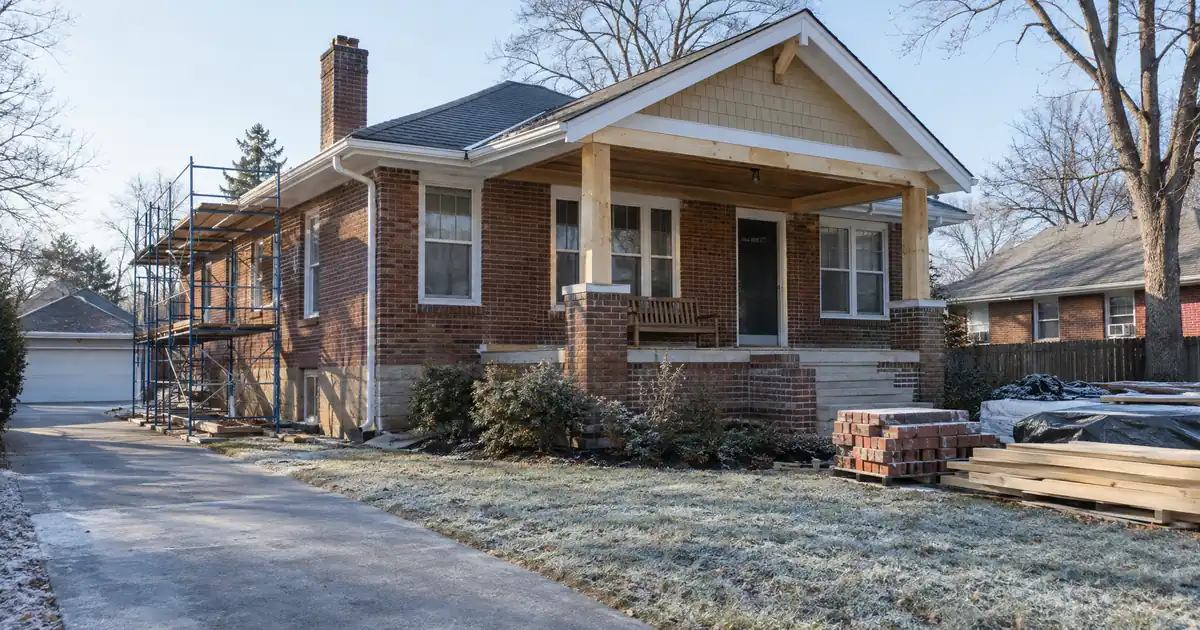
The Quick Read: Sometimes, but only when the lender, the appraisal method and the exit plan are settled before you bid, because the person living in the property usually decides whether a hard money lender will fund the purchase, how much cash you bring and how long the loan carries before you can refinance. Hard money is the usual auction tool, but occupancy makes it the hardest version of an already tight deal. The loan type matters less than who is inside and what paper they hold.
- Lenders worry most about three things: no interior access for an appraisal, an unverified lease, and a delay in getting possession.
- A tenant with a real lease is a very different file from a former owner or a squatter.
- Hard money is a bridge, so your exit, usually a long-term rental loan, has to be planned before you bid.
- Every month of delay is another month of bridge carry, and that is what eats the auction discount.
Why Hard Money Is the Usual Auction Tool
Auctions reward buyers who show up with funds. Many sales require certified funds for the full price at or right after the sale. Mainstream consumer guidance says traditional financing is usually not an option at auction, and buyers without cash line up a hard money loan beforehand.
What this loan actually costs to carry.
Hard money is sized against the project and priced by time. Enter the deal and see how much the program will lend, the cash required at closing, the carry while you hold it, and what is left at the exit.
Leverage tiers on the current program: 85% with fewer than 2, 90% with 2 or more, 93% with 5 or more completed projects — every tier capped at 75% of after-repair value. Loan amounts up to $5,000,000, larger by exception; terms of 6 to 18 months, interest-only, no prepayment penalty. The rehab portion funds in draws against completed work, not at closing.
Program parameters shown update from Lendmire’s centralized guideline source. Rate, points, and months are editable assumptions, not quoted terms.
Cost cap sets the loan · positive spread
Illustrative estimate only — not a quote, Loan Estimate, approval, or commitment to lend. Rate, points, and months are editable assumptions. Hard money is business-purpose financing for real estate investors, not a consumer mortgage. Leverage on the current program tops out at 93% of project cost for investors with a documented track record, capped at 75% of after-repair value, with rehab funding up to 100% of the documented budget released in draws; actual terms vary by lender, borrower experience, property, and exit. Lendmire is a mortgage broker, not a lender.
Hard money works here because the lender looks at the asset, the plan and the exit more than at your paycheck. That is a short-term, business-purpose loan secured by the property itself. The lender needs to know which property you are targeting, and it usually wants a proof-of-funds letter before you bid.
Occupancy is where that logic starts to strain. A vacant house can be viewed from the street, appraised and secured. An occupied one comes with a stranger’s lease, an unknown interior and a possession date nobody can promise.
What Changes When Someone Lives in the Property?
Three things change: the lender may not be able to value the house, the income picture gets murkier, and possession is no longer yours on the day you win. Some lenders decline occupied auction properties outright. Others will consider them with an exterior-only or desktop valuation and more of your own cash in the deal.
The occupant’s status matters more than the fact of occupancy. Here is how the main cases compare.
| Occupant | Possession path | Lender concern | Typical plan |
|---|---|---|---|
| Tenant with a real lease | Lease usually continues | Rent and lease terms unverified | Honor lease, refinance on rent |
| Tenant, no term or at will | Notice period, then move-out | Short runway on income | Notice, reset rent or vacate |
| Former owner | State eviction process | No income, delayed repairs | Cash for keys or legal removal |
| Squatter or unknown | State eviction process | No income, condition unknown | Often a pass for bridge lenders |
Lenders treat those rows differently for a simple reason. A paying tenant under a lease supports the exit. An occupant who pays nothing adds legal cost and delay with nothing in return.
How to Buy a Tenant-Occupied Auction Property With Hard Money, Step by Step
The sequence runs in a fixed order, and the occupied version punishes any step you do out of order.
1. Pick the lender first. Ask whether they fund occupied auction purchases and how they value a property they cannot enter. A wrong answer here ends the deal later.
2. Get proof of funds. The lender issues a letter showing you can cover the purchase. The auction company may require it before you bid.
3. Identify the property. Lenders generally need the target address in advance, so they can review it before the sale.
4. Win the bid and fund it. Funds are due at or right after the sale, in the form the auction requires.
5. Wait for title. At a trustee sale, the deed arrives after the sale. The lender typically orders its appraisal during that gap.
6. Take possession under the law. This is where the tenant’s rights set the timeline. More on that below.
7. Refinance out. Hard money is a bridge, so the clock runs until you replace it.
The gap between steps four and six is the whole risk. You own the debt from day one, but you may not control the house.
What a Hard Money Lender Reviews on an Occupied Property
A lender reviews collateral value and condition, because it needs to know the house is worth enough to secure the loan if you default. HomeLight describes hard money as a short bridge that buyers generally refinance out of. Across the network Lendmire works with, hard money terms run 6 to 18 months, interest-only, with no prepayment penalty, subject to lender guidelines.
Other parameters on the programs a broker like Lendmire places files with look like this, and all of them vary by lender, property and experience:
- Leverage: bridge purchases without rehab go up to 80% of the purchase price. Anything above what the lender will lend comes out of your pocket, along with fees and carry.
- Credit: a 620 minimum score, with added conditions below 660. First-time investors qualify at the lower leverage tiers.
- Collateral: non-owner-occupied residential property, one to four units.
- Loan size: up to $5,000,000, larger by exception.
Nothing here is a commitment to lend. The lender still reviews the property, the plan and the exit on each file.
For an occupied property, expect the lender to ask for these items.
- The lease, any addenda and the amount of the security deposit
- Evidence of actual rent being paid
- Your plan for possession if the lease is weak or missing
- A valuation approach that works without interior access
- Your exit: how the bridge gets repaid
The appraisal-access problem is the real obstacle. A lender that does not require an interior inspection is the key. Expect to put in more of your own cash and to accept a conservative value.
What the Law Says About the Tenant
Federal law protects many tenants after a foreclosure sale. The Protecting Tenants at Foreclosure Act, as described in the Comptroller’s Handbook, applies to foreclosures on federally related mortgage loans and on residential property. The buyer takes title subject to the rights of bona fide tenants. A tenant gets at least 90 days’ notice to vacate, counted from when the tenant receives it.
A bona fide tenant may generally stay to the end of the lease. There are two exceptions. One is a sale to a buyer who will live there as a primary residence, which does not describe an investor. The other is a lease that is terminable at will or has no term. Even then the 90-day notice still applies.
The law has had a bumpy history. It lapsed and was later restored by the Economic Growth Act, Pub. L. 115-174. Some older law-firm pages still say it expired, and the same Handbook page contradicts them.
“Bona fide” has a definition. Per Connecticut’s Attorney General, these occupants are not bona fide tenants:
- The former owner or the former owner’s child, parent or spouse
- Tenants whose leases were not arm’s-length
- Tenants paying substantially below market rent, other than subsidized rents
Other occupants are generally treated as protected unless information suggests otherwise.
State and local rules can add more. For example, Washington’s legal aid guidance says tenants of a foreclosed property there get at least 60 days’ written notice, while former owners get only 20 days from the trustee’s sale. A former owner living in the house is a different case from a tenant, because federal tenant protection does not cover them and removal follows state process.
Not every auction works the same way. Trustee sales, sheriff sales and bank-owned auctions differ in title, access and timeline. Ask a local real estate attorney which rules apply before you bid.
A Worked Example: The Discount Versus the Delay
Run this as a modeled picture, not a market fact. Assume you win an occupied property at a price well below what comparable vacant homes sell for. The bridge funds up to 80% of the purchase price on a bridge purchase, and you cover the remainder, plus fees and carry.
Now stack the delays. Title arrives after the sale. The lender’s valuation, done without interior access, comes in conservatively. The tenant’s notice period runs. If the lease is below market, the refinance rent is lower than you hoped.
Each of those stretches the months you carry interest-only payments on the bridge. The auction discount is a fixed number. Carry is a meter that keeps running.
The decision rule is simple. If the discount, after realistic carry and repair allowances, still leaves room when possession takes the longest plausible time, the deal pencils. If it only works when everything goes right, it does not.
An investor who plans a 12-month bridge term and expects possession to take a big share of it has already used much of the runway. The refinance clock for many take-out lenders starts at deed recording, not when work ends. Leave room on the term.
Occupied Versus Vacant, Side by Side
| Factor | Occupied | Vacant |
|---|---|---|
| Appraisal access | Often exterior or desktop only | Interior inspection possible |
| Cash needed | Often more | Closer to program leverage |
| Income during bridge | Possible if lease is real | None |
| Possession | Tenant rights and notice apply | Immediate on title |
| Condition risk | Unknown interior | Can inspect |
| Lender pool | Narrower | Wider |
Occupied means income from day one if the lease holds up. It also means delayed control and a possibly below-market lease. Vacant is cleaner and costs more per property, because the market has already priced out the uncertainty.
Dealing With the Tenant After You Win
You have three realistic options with a bona fide tenant, and each has tradeoffs.
- Honor the lease. The rent starts working for you, and the refinance can use real rent. The downside is a lease you did not negotiate.
- Reset the rent. At lease end you can reprice to market. Until then you are bound by the existing terms.
- Cash for keys. You pay the tenant to leave, which clears the unit for rehab or a new lease. It costs cash and works only if the tenant agrees.
This is a decision for you and your attorney, not a script. Tax treatment varies; consult a qualified professional before relying on any deduction.
The Exit: From Bridge to Rental Loan
Many investors refinance out of hard money into long-term DSCR investor loans once the property is stabilized, and Lendmire brokers that path through select lenders in its wholesale network. DSCR, or debt service coverage ratio, compares monthly rent with the full monthly housing payment: principal, interest, taxes, insurance and any HOA dues. That payment is called PITIA.
A DSCR loan will not fund on auction day. It is the take-out after the bridge. DSCR loans are designed for non-owner-occupied investment properties. Because they are business-purpose investor loans, they are reviewed differently from a standard owner-occupied mortgage.
For a tenanted property, the lender usually looks for a lease, evidence of rent and a rent schedule from the appraiser. That is Form 1007 for a single-family home and Form 1025 for two to four units. A DSCR loan is reviewed primarily on property-level rental income covering the payment, subject to lender guidelines. A below-market or non-arm’s-length lease can hurt here, because a rent figure that does not hold up in the appraisal lowers qualifying income.
Coverage of 1.00 is where many select programs start. A separate select-lender path takes coverage below 1.00, with leverage and terms adjusted. Stronger coverage opens better terms. Clearing 1.00 is not the same as positive cash flow, because repairs, vacancy, management and utilities sit outside the calculation.
For the full picture of how these loans work, see Lendmire’s complete DSCR loans guide. For the exit planning side of occupied purchases, Lendmire’s piece How to Buy an Occupied Property With Hard Money and Plan the Exit goes deeper. If your tenant came with the property by inheritance rather than purchase, how an inherited tenant changes hard money at auction covers that angle.
When to Walk Away
Pass on the deal if any of these is true.
- No lender has confirmed in writing how it will value the property without access.
- The occupant looks like a former owner or squatter, not a tenant.
- The deal only works if possession arrives on the first day.
- The lease is far below market or looks non-arm’s-length.
- You have no exit if the refinance falls through.
- You cannot cover the carry for a delay twice as long as you expect.
A walk-away is cheaper than a stuck bridge loan. Plan the exit before you bid, and confirm the lender, the appraisal method and the refinance path.
Key Terms Defined
Bona fide tenant: an occupant with a real, arm’s-length lease who pays near-market rent and is not the former owner or the owner’s close family.
Bridge loan: a short-term loan that holds you over until you can replace it with long-term financing.
Trustee’s deed: the document that transfers title to the winning bidder after a trustee sale, usually after the bid is accepted.
Proof of funds: a letter or statement showing you have the money or financing to buy.
Rent schedule: an appraiser’s opinion of market rent for the property, used when a rental loan is underwritten.
Frequently Asked Questions
Can hard money buy an occupied auction property?
Sometimes. Some lenders refuse any property with an occupant, while others will fund when they can value the house without interior access and you bring more cash. Confirm this with the lender before you bid, not after.
Can I get an appraisal if I can’t enter the property?
Often only in a limited form. A lender may rely on an exterior inspection or a desktop valuation, and it may value conservatively. That is why occupied deals tend to need more of your own cash.
Do I inherit the tenant’s lease?
Usually yes if the tenant is bona fide, meaning an arm’s-length lease at near-market rent. Federal law lets such a tenant stay through the lease term, apart from narrow exceptions, and requires at least 90 days’ notice when the lease ends or the tenant must go. State and local law can add more.
What if the occupant is the former owner?
That is a different and harder case. Federal tenant protection does not cover the former owner, so removal follows your state’s process. Plan for legal costs and a longer carry, or pass.
Can a DSCR loan close at the auction?
No. A DSCR loan is the usual take-out after a bridge, once you have possession and a lease in place. Hard money handles the sale, and the rental loan replaces it.
Next Step Before You Bid
If you are buying, rehabbing or refinancing an investment property on a short timeline and want to see how the numbers work, Lendmire can help you compare hard money options based on the project, the exit plan, leverage and your goals. Lendmire is a mortgage broker arranging financing through select lenders in its wholesale network, across 41 markets including Washington, D.C. You can reach the team at 828-256-2183.
About Lendmire
Lendmire, NMLS# 2371349, is a non-QM mortgage broker serving real estate investors in 41 markets, including Washington, D.C., through DSCR investor loan programs. Qualification is generally reviewed around the subject property’s rental income, not the borrower’s W-2 history, which suits LLC-titled portfolios and self-employed investors. All scenarios remain subject to lender review and program guidelines. Two consecutive Scotsman Guide Top Mortgage Workplace recognitions (2025, 2026).
Get Started
Ready to find the right loan for you?
In about 30 seconds you can review financing options available for your investment property. No commitment required.
Informational only. Not a Loan Estimate, approval, or commitment to lend. Program availability and eligibility are subject to lender guidelines, credit approval, property review, and underwriting.
References
1. Buying a House at Auction, Homes.com
2. How to Buy a House at Auction Without Cash, HomeLight
3. Protecting Tenants at Foreclosure Act, OCC Comptroller’s Handbook
4. Tenants in Foreclosed Properties, Connecticut Attorney General
5. Tenant Living in a Foreclosed Property, Washington LawHelp
This article is part of Lendmire’s hard money loan program — full qualification details, guidelines, and scenarios live on the program page.
Related reading: Can You Use Hard Money on a Two to Four Unit Multifamily Property? · Should an Investor Use Hard Money or Pay Cash for a Property? · Do You Need Proof of Funds to Buy a House With Hard Money?
Brandon Miller
Founder & CEO, Mortgage Loan Originator, Lendmire LLC
- Mortgage Loan Originator · NMLS# 1129696 · Verify on NMLS Consumer Access
- North Carolina Real Estate Broker · License# 343312 · Verify on NCREC
- North Carolina Insurance Producer · License# 19053198 · Property, Casualty, Life, Health · Verify on NAIC SBS
- Lendmire LLC · Firm NMLS# 2371349 · Verify firm licensure
Important disclosures. Lendmire (NMLS# 2371349) is a licensed mortgage brokerage. Lendmire is not a direct lender, depository institution, or financial advisor. All loan inquiries are subject to lender underwriting; this article does not constitute a commitment to lend. Rates, terms, and program guidelines are subject to change without notice and vary by borrower profile, property type, and state. Information in this article is general in nature and is not financial, legal, or tax advice. Equal Housing Opportunity. NMLS Consumer Access: nmlsconsumeraccess.org.