
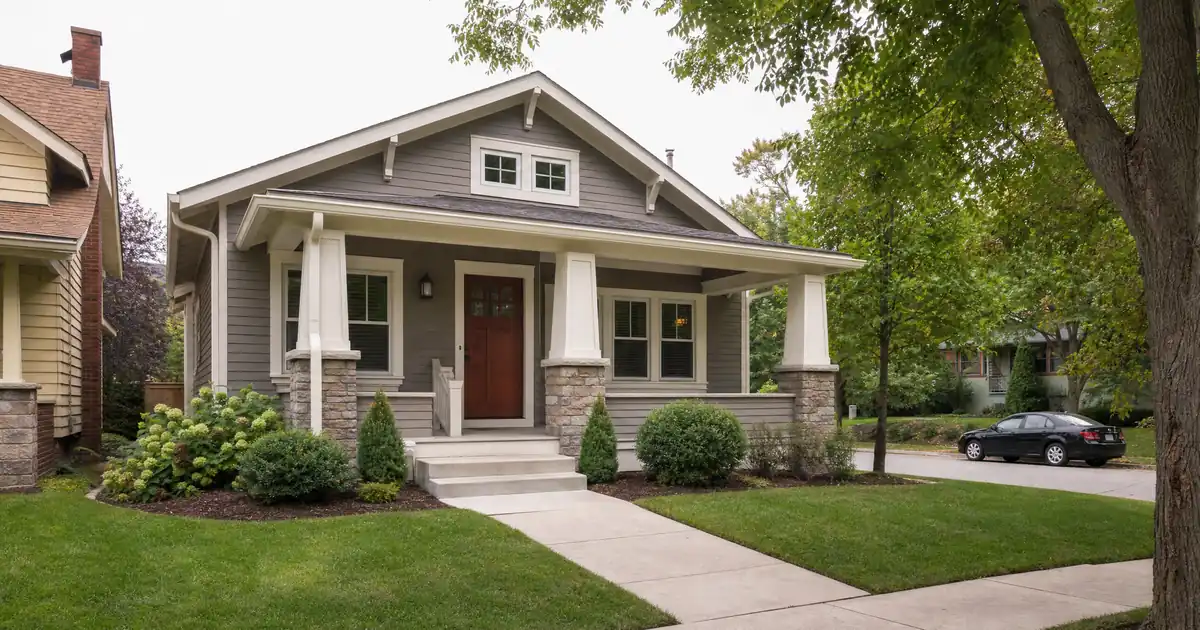
Buy And Hold Private Money For Rentals — The Quick Read: Private money finances a rental purchase based on the deal itself. Lenders look at the property’s value, the investor’s equity, and the exit plan. They don’t look at traditional personal-income paperwork. Most investors use it as a short-term bridge. They buy the property, fix it up, then refinance into permanent financing once a tenant is paying rent. Rent coverage of the monthly payment — not personal income — drives what happens next. Below is how the mechanics actually work, where the structures branch, and where the general rule breaks.
Key Takeaways
- Private money for a buy-and-hold rental is underwritten on the property’s value and exit plan, not on personal income documents.
- Most investors treat it as a bridge: acquire and renovate short-term, then refinance into long-term rental financing once the unit is leased.
- What exists is a loan sized against total project cost — up to 93% of purchase plus rehab for investors with five or more completed projects, capped at 75% of after-repair value — with up to 100% of the rehab budget funded in draws against completed work, not at closing.
- The permanent refinance that follows is typically a DSCR loan, sized off the property’s rent-to-payment coverage rather than the investor’s income.
- Short-term rentals, portfolio scaling, and refinance seasoning all get treated differently than a standard long-term single-family rental — the differences matter more than most first-time investors expect.
What “Buy-and-Hold Private Money” Actually Means
Buy-and-hold is the strategy. You buy a property, rent it out, hold it for years, and let rent and appreciation build your wealth. Private money is the financing tool that often gets you into that property in the first place. It’s capital from non-bank sources, underwritten around the asset instead of your paycheck.
What this loan actually costs to carry in your market.
Hard money is sized against the project and priced by time. Enter the deal and see how much the program will lend, the cash required at closing, the carry while you hold it, and what is left at the exit.
Leverage tiers on the current program: up to 85% of project cost with fewer than two completed projects, 90% with two or more, 93% with five or more — every tier capped at 75% of after-repair value. Loan amounts up to $5,000,000, larger by exception; terms of 6 to 18 months, interest-only, no prepayment penalty. The rehab portion funds in draws against completed work, not at closing.
Program parameters shown update from Lendmire’s centralized guideline source. Rate, points, and months are editable assumptions, not quoted terms.
Cost cap sets the loan · positive spread
Illustrative estimate only — not a quote, Loan Estimate, approval, or commitment to lend. Rate, points, and months are editable assumptions. Hard money is business-purpose financing for real estate investors, not a consumer mortgage. Leverage on the current program tops out at 93% of project cost for investors with a documented track record, capped at 75% of after-repair value, with rehab funding up to 100% of the documented budget released in draws; actual terms vary by lender, borrower experience, property, and exit. Lendmire is a mortgage broker, not a lender.
Here’s the part first-time investors miss: buy-and-hold private money usually isn’t one loan. It’s two connected products working in sequence. A short-term, asset-based bridge loan handles the purchase and any renovation. Then, once the property is rented and stable, a longer-term loan replaces that bridge. This is most commonly a DSCR loan. It’s sized off the property’s own rental income, not yours. Investors who only plan for the first loan — and never think about the second one — often end up stuck holding expensive short-term capital longer than they wanted.
Both stages sit outside conventional mortgage underwriting. That’s because they’re business-purpose loans. This means the money is extended to acquire an investment, not a place to live. That one classification is what allows property-income underwriting to exist in its current form. It’s worth understanding before you dive into the mechanics.
Key Terms Defined
Buy-and-hold investing — a strategy where an investor purchases a property and keeps it for rental income and long-term value growth, rather than reselling it quickly.
Private money (hard money) — financing from non-bank lenders, funds, or private capital pools, underwritten primarily on the property’s value, equity, and exit strategy rather than the borrower’s personal income.
DSCR (debt-service coverage ratio) — a ratio comparing a property’s rental income to its full monthly housing payment (principal, interest, taxes, insurance, and any HOA dues); it’s the core number non-agency rental lenders use in place of a personal debt-to-income calculation.
LTV (loan-to-value) — the loan amount expressed as a percentage of the property’s value or purchase price; lower LTV means more equity or down payment in the deal.
Business-purpose loan — a loan made for an investment or commercial reason rather than personal, family, or household use; this classification determines whether standard consumer-mortgage disclosure rules apply at all.
Seasoning — the waiting period a lender wants between one event (like a purchase) and another (like a cash-out refinance), usually measured in months on title.
Bridge and fix-and-flip terms on the current program run 6 to 18 months, interest-only, with no prepayment penalty.
How Underwriting Actually Works, Step by Step
The property comes first. Your credit and income come second. That order is the entire difference between this world and a conventional mortgage.
Step one: the file gets classified. A rental-property loan is reviewed as business-purpose credit rather than a consumer mortgage. This isn’t just a formality. It changes which rules apply to the deal from the ground up.
Step two: the appraisal produces the rent figure. For a standard single-family rental, the appraiser typically completes a market-rent form alongside the appraisal. The industry has largely standardized around the Fannie Mae Single-Family Comparable Rent Schedule (Form 1007) for one-unit properties, with a parallel form used for two- to four-unit buildings. Non-agency lenders commonly lean on this same paperwork, even though the loan itself ends up non-agency.
Step three: coverage gets calculated. Rent divided by the full monthly payment produces the coverage ratio. A ratio at or above 1.00 is the floor several DSCR programs use. It’s never a universal standard, but stronger coverage above that line tends to open better leverage and pricing across the network.
Step four: credit and reserves come in as secondary checks. Across the wholesale network Lendmire places files through, a 620 credit floor exists on parts of the network. Most programs prefer somewhere around 660. A 700-plus score tends to unlock the strongest leverage tiers. Reserve requirements vary by lender, leverage, and loan size. They commonly land around six months of the full housing payment. Conservative rate-term files at modest leverage sometimes get that waived. Larger loans above roughly $1.5 million typically step up toward nine months.
Step five: loan-purpose review happens quietly in the background. DSCR loans are built for non-owner-occupied investment properties. Because they’re business-purpose investor loans, they get reviewed under a different framework than a standard owner-occupied mortgage. This distinction is rooted in the Consumer Financial Protection Bureau’s business-purpose exemption under Regulation X. That’s the one regulatory note that matters here — the rest of this is program mechanics, not legal analysis.
A bigger down payment lowers your payment and can lift the coverage ratio. But it never erases a leverage cap, a credit floor, a reserve requirement, or a property-eligibility rule. The strongest files clear both tests at once: enough equity in the deal, and enough rent covering the payment. Exact terms depend on the lender’s guidelines, property type, leverage, and a full review of your file.
The Structures Compared
| Financing Type | Typical Term | Reviewed on | Best Fit For |
|---|---|---|---|
| Private/hard money bridge | Short-term only (6–18 months); longer runway via a DSCR refinance | Property value, equity, exit plan | Acquisition + rehab before stabilization |
| DSCR rental loan | 30-year fixed (extended terms available) | Rent-to-payment coverage | Long-term hold once leased |
| Conventional investment mortgage | 30-year fixed | Borrower income, traditional personal-income documentation, DTI | Investors with strong personal income docs, limited financed-property count |
| Investment-property HELOC | Revolving line | Equity in existing rental(s) | Tapping equity without a full refinance, capped at $500,000 total |
The bridge loan and the DSCR loan are the two pieces most buy-and-hold investors actually use in sequence. Conventional financing and HELOCs show up more as supporting tools. A conventional loan works for a first rental purchase when you have strong traditional employment income. A HELOC pulls equity for your next deal’s down payment.
A Worked Scenario: Bridge to Permanent
Picture an investor buying a single-family rental for $340,000 using a private acquisition loan at 80% LTV. The rehab budget gets financed separately on top of that acquisition loan, subject to lender guidelines. The property needs cosmetic work — flooring, paint, a kitchen refresh. Nothing structural.
Six months later, the unit is leased. The rent comfortably covers the full monthly payment once refinanced into permanent financing. The investor refinances into a DSCR loan at 75% LTV. The coverage ratio on that new loan clears comfortably above 1.00 — call it low-1.20s territory, using modeled assumptions rather than a stated rent figure. That coverage number is what the permanent lender cares about. The bridge lender only cared about the exit and the equity cushion during renovation. Every figure here varies by lender and program — guidelines, property type, leverage, and credit profile all apply.
This is the mechanical spine of the buy-and-hold-with-private-money approach. It’s the same sequencing covered in more depth on Lendmire’s hard money buy-and-hold page: short-term asset-based capital in, long-term rental-income-based capital out.
One thing worth flagging honestly: clearing 1.00 on the coverage ratio is not the same thing as positive cash flow. DSCR only measures rent against the payment. It says nothing about repairs, vacancy, management fees, utilities, or capital expenditures. An investor can clear 1.15x on paper and still run negative some months once real operating costs hit the ledger. Treat the ratio as a lending threshold, not a cash-flow guarantee.
Across the deal flow Lendmire’s team sees, files in buy-and-hold-heavy markets tend to come in tight on rent assumptions from the initial private-money application. They firm up once an actual lease is signed. The strongest refinance files are the ones where the investor locks a market-rate lease before applying for the permanent loan, rather than estimating rent off a rent schedule alone.
Where the General Rule Breaks
Not every rental fits the standard pattern above. A few structural forks matter enough to plan around before you sign a purchase contract.
Short-term rentals get a different rulebook entirely. The standard rent-schedule appraisal form isn’t built for nightly-booking income. It doesn’t capture vacancy patterns or the operating expenses that come with hosting. STR purchases in Lendmire’s network typically max out around 75% LTV. Refinance and cash-out both land closer to 70%. Short-term rentals qualify at a 1.00 coverage threshold on purchase and refinance at reduced maximum leverage, and require a 12-month income history or market data report at most lenders. That purchase ceiling sits above the refinance ceiling — a detail investors sometimes get backward.
Portfolio caps that hem in conventional financing don’t carry over. Conventional lending has historically limited how many financed properties one borrower can hold. Non-agency DSCR and private-money programs don’t share that ceiling. That’s exactly why investors scaling past a handful of rentals migrate toward this financing world in the first place.
Seasoning is program-specific, not a fixed government rule. The conventional mortgage world has its own title-seasoning and note-age requirements for cash-out refinancing. Private money and DSCR programs aren’t bound by those agency-specific rules. Each lender in the network sets its own policy. Roughly six months of ownership seasoning is the common expectation Lendmire sees before a cash-out refinance gets priced.
Some property types simply aren’t offered. Manufactured homes (single- and double-wide), log homes, and barndominiums are not offered for DSCR financing across Lendmire’s network. They’re not just harder to finance — they’re off the table for this product category.
HELOC access on an investment property tops out at $500,000 total. There’s no higher investment-property HELOC tier above that. Investors looking to pull larger amounts of equity typically look at a cash-out refinance instead, capped around 75% LTV. Select overlay states — Connecticut, Florida, Illinois, and New Jersey among them — generally hold purchases near that same 75% ceiling, with loan sizes around $2 million in those states.
Vetting a Private Lender for a Buy-and-Hold Deal
Check a private lender’s track record on rental deals first — not just flips. Plenty of hard-money shops built their book on fix-and-flip exits. Fewer have real experience structuring the bridge-to-DSCR handoff a buy-and-hold investor actually needs.
Ask specifically how the exit financing works. If a lender or broker can’t explain what happens after the bridge term ends — who refinances it, into what, and on what timeline — treat that as a warning sign. Lendmire’s comparison of buy-and-hold hard money lenders walks through what separates a lender built for this exit from one built only for a quick flip.
Get clarity on documentation up front. Ask about appraisal requirements, entity-vesting rules if the property will close in an LLC (subject to program eligibility), reserve expectations, and how rehab-budget draws get released. A lender who’s vague about any of these on the front end tends to get more rigid, not less, once your file is in underwriting.
The Exit: Refinancing Out of Private Money
The permanent refinance is where the “hold” part of buy-and-hold actually becomes reviewable long-term. It’s the step too many investors underplan.
Once the property carries a signed lease and roughly six months of seasoning, the standard move is refinancing the bridge loan into a 30-year fixed DSCR loan. This gets sized off the coverage ratio the actual rent produces, not off your traditional personal-income documentation. Extended-term structures (40-year amortization) and interest-only periods are available through select lenders in the network. These fit investors who want a lower ongoing payment in exchange for slower equity paydown. Rate structures beyond the standard fixed option exist too, for investors who prefer them.
Lendmire’s full walkthrough of refinancing hard money after a BRRRR strategy covers this transition in more depth. It covers timing the refinance application against seasoning, getting the lease signed before applying, and avoiding a gap where the bridge term expires before the permanent loan is ready. Loan sizes on the permanent side generally run up to $3,000,000 on standard programs, with smaller balances available through select lenders across the network. Files above roughly $2.5 million typically settle into 30-year fixed structures rather than the shorter or adjustable options available at smaller balances.
The Investor Decision: Which Path Fits
The decision usually comes down to timeline and property condition, not just credit score. A move-in-ready rental with a tenant already in place rarely needs a bridge loan at all. It can often go straight to DSCR financing. A property needing real renovation before it can support a lease is where the bridge-then-refinance sequence earns its cost.
If you’re weighing whether to structure the whole deal through private money purchase lenders versus going straight to a permanent rental loan, think honestly about three things: the property’s current condition, how fast you can realistically get a lease signed, and whether you have the reserves to carry a vacant property through renovation. The bridge loan buys speed and flexibility on an as-is property. Skipping it only works when the property is already rent-ready.
Nationally, this isn’t a fringe strategy. Investor purchases have held around 30% of single-family home sales at the close of a recent year. Small investors — those owning ten properties or fewer — account for more than 90% of that activity, according to reporting from CNBC. This is a working-investor market, not an institutional one, and property-income-based financing exists specifically to serve that borrower.
Lendmire (NMLS# 2371349) arranges DSCR and business-purpose rental financing through select lenders across its wholesale network, spanning 41 markets, including Washington, D.C. Investors can reach Lendmire at 828-256-2183 or request a quote to compare bridge-to-DSCR structuring against a straight permanent-loan purchase.
Tax treatment can depend on how you use the loan proceeds and how you hold the property. Keep clear records and speak with a qualified tax professional before relying on any deduction.
No loan approval is guaranteed, and nothing above is a commitment to lend. Every scenario described here is subject to lender approval and to borrower, property, and program guidelines, which can change. This article is general information only — not financial, legal, or tax advice.
For deeper background on the mechanics discussed here, see Fincen.
Frequently Asked Questions
Can private money really be used for a buy-and-hold rental, or is it only for flips?
Yes — it’s a standard tool for buy-and-hold, not just flipping. The typical pattern is a short-term bridge loan for acquisition and renovation, followed by a refinance into long-term rental financing once the property is leased and stabilized.
Does clearing a 1.00 coverage ratio mean the property cash flows?
No. DSCR only compares rent to the full monthly payment. It doesn’t account for repairs, vacancy, management, utilities, or capital expenses. A property can clear 1.00 or higher on the ratio and still run negative some months once real operating costs are factored in.
How much seasoning does a lender want before refinancing out of a bridge loan?
Roughly six months of ownership is the common expectation across most of the network before a cash-out refinance gets priced, though this varies by lender and is not a fixed government rule the way agency cash-out seasoning is.
Can an LLC hold title on a buy-and-hold private money deal?
Generally yes, subject to lender program eligibility. Entity vesting is common in this space precisely because these are business-purpose loans rather than consumer mortgages.
What happens if the rehab runs over budget mid-bridge?
That’s a conversation to have with the private lender before closing, not during renovation. Draw schedules and contingency reserves vary by lender, so getting clarity on how additional draws get approved is part of vetting the lender up front.
Short-term financing tends to work best when the long-term plan is decided early – see refinancing out of a hard money loan with a DSCR loan.
Many investors treat hard money as the acquisition tool and plan the exit up front – see refinancing out of a hard money loan with a DSCR loan.
About Lendmire
Lendmire, NMLS# 2371349, is a non-QM mortgage broker serving real estate investors in 41 markets, including Washington, D.C., through DSCR investor loan programs. Qualification is generally reviewed around the subject property’s rental income, not your W-2 history. This is a practical fit for LLC-titled portfolios and self-employed investors. All scenarios remain subject to lender review and program guidelines. Two consecutive Scotsman Guide Top Mortgage Workplace recognitions (2025, 2026).
The exit plan matters as much as the purchase price on short-term financing – see how DSCR loans work as the long-term exit.
Lendmire’s Top Mortgage Workplace recognition is documented by Scotsman Guide 2025 Top Mortgage Workplace and Scotsman Guide 2026 Top Mortgage Workplace.
Get Started
Ready to find the right loan for you?
In about 30 seconds you can review financing options available for your home or investment property. No commitment required.
Informational only. Not a Loan Estimate, approval, or commitment to lend. Program availability and eligibility are subject to lender guidelines, credit approval, property review, and underwriting.
References
1. Consumer Financial Protection Bureau — Regulation X §1024.5
2. Fincen
This article is part of Lendmire’s hard money loan program — full qualification details, guidelines, and scenarios live on the program page.
Related reading: What Hard Money Is and How These Loans Work · National Private Money Lenders · Private Money Syndication For Multi-family Real Estate Investment
Brandon Miller
Founder & CEO, Mortgage Loan Originator, Lendmire LLC
- Mortgage Loan Originator · NMLS# 1129696 · Verify on NMLS Consumer Access
- North Carolina Real Estate Broker · License# 343312 · Verify on NCREC
- North Carolina Insurance Producer · License# 19053198 · Property, Casualty, Life, Health · Verify on NAIC SBS
- Lendmire LLC · Firm NMLS# 2371349 · Verify firm licensure
Disclosure information. Lendmire is a state-licensed mortgage brokerage under NMLS# 2371349. Lendmire is not a depository institution, direct lender, or financial advisor — all loans referenced are placed through wholesale lender partners and are subject to each lender's underwriting standards. This article is provided for general informational purposes and is not a commitment to lend, nor does it constitute financial, legal, or tax advice. Loan programs, terms, rates, and qualification standards change without notice and depend on borrower profile, property type, and the state in which the subject property is located. Equal Housing Opportunity provider. NMLS Consumer Access: nmlsconsumeraccess.org.