
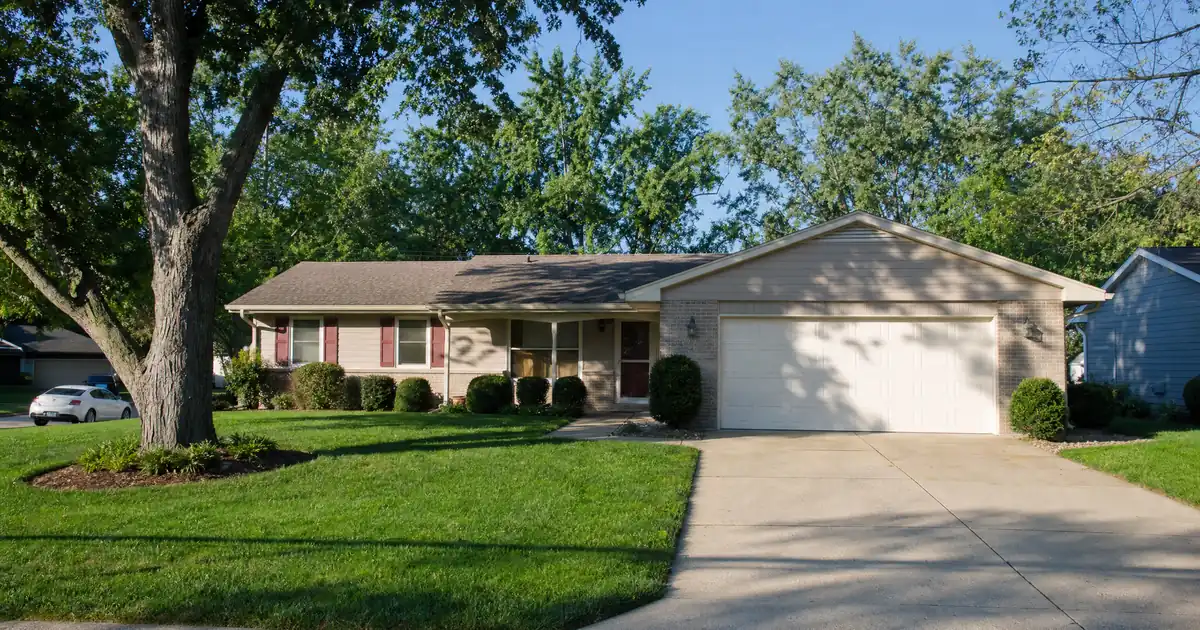
The Quick Read: An investment property cash-out refinance pays off the current loan on a rental and replaces it with a bigger one. The investor gets the difference in cash. On a non-owner-occupied property, the leverage ceiling sits lower than on a purchase loan for the same house. Most programs also want to see roughly six months of recorded ownership before they’ll price off a new, higher appraised value. Through DSCR financing, qualification runs mainly on the property’s rental income, not on traditional personal-income documents. But the underwriting steps still happen in a fixed order every time: appraisal, seasoning check, coverage-ratio math, reserves, and entity documents.
DSCR Cash-Out Calculator
Run the cash-out numbers in your market
Rate source: Freddie Mac 30-yr average via FRED® — Federal Reserve Bank of St. Louis · effective Jul 30, 2026
Prefilled with starting assumptions — enter your property’s value, balance, taxes, and insurance for a more accurate picture.
Program parameters update from Lendmire’s centralized guideline source. Taxes and insurance are editable estimates.
As of Jul 30, 2026 · General Freddie Mac market benchmark, not a Lendmire loan offer. Property value, balance, taxes, and insurance are editable estimates. Maximum loan-to-value varies by lender, program, property type, and seasoning. Not a Loan Estimate, approval, or commitment to lend. Program availability and eligibility are subject to lender guidelines, credit approval, property review, and underwriting.
Key Takeaways
- Cash-out leverage on a rental property typically tops out around 75% LTV — lower than the 75%-80% range common on purchase transactions.
- Most non-QM programs expect roughly six months of recorded title-holding (seasoning) before treating a cash-out refinance as eligible off the new appraised value.
- DSCR lender review compares rent to the full monthly housing payment; 1.00 coverage is a floor some programs use, not a universal standard, and it is not the same thing as positive cash flow.
- Delayed financing, BRRRR cost-basis recovery, and inherited or legally-awarded property are the main exceptions that shorten or remove the standard seasoning clock.
- Manufactured homes (single- and double-wide), log homes, and barndominiums fall outside DSCR cash-out programs across the network — full stop, not a “harder to finance” situation.
What Is an Investment Property Cash-Out Refinance?
A cash-out refinance on a rental property pays off the old mortgage with a new, bigger loan. The lender sends the leftover equity — what’s left after payoff and closing costs — to the borrower or the borrower’s LLC. The idea works the same way as a cash-out refinance on a primary home. But the risk looks different here, so lenders price it differently and cap it lower.
Two facts set this loan apart from a residential refinance. First, no owner lives in the property to absorb a payment problem personally. That means the lender leans harder on the asset itself: appraised value, market rent, and title history. It leans less on a borrower’s paycheck. Second, lenders across nearly every non-QM program treat cash-out deals as riskier than rate-and-term refinances. Why? Because cash-out loans raise the loan balance and shrink the equity cushion at the same time. That’s the real reason cash-out LTV ceilings sit below purchase and rate-and-term ceilings industry-wide. It isn’t one lender’s preference. It’s just the shape of the risk.
DSCR financing is built for exactly this non-owner-occupied situation. Qualification runs on whether the property’s rental income covers the payment. It doesn’t run on W-2s, personal-income paperwork, or a debt-to-income calculation. Lendmire covers this structure in more depth in its complete DSCR loans guide. DSCR loans are business-purpose loans. That means an investor steps into a different documentation and underwriting world than the one used for an owner-occupied mortgage. Understand that distinction before comparing quotes across lenders.
Key Terms Defined
DSCR (Debt Service Coverage Ratio): Divide the property’s rental income by its full monthly housing payment — principal, interest, taxes, insurance, and HOA dues where they apply. A ratio at or above 1.00 means the rent covers that payment on paper.
PITIA: This is shorthand for the full monthly obligation used in the DSCR calculation — principal, interest, taxes, insurance, and association dues. It’s the bottom number in the coverage ratio. It is not the loan’s price tag.
Seasoning: This is how long the current owner has held recorded title. Lenders measure it from the deed’s recording date at the county recorder’s office, not from any later transaction date. It’s the clock lenders check before they let a cash-out refinance price off a new appraised value.
LTV (Loan-to-Value): This is the new loan amount shown as a percentage of the property’s current appraised value. On a cash-out refinance, this cap sits consistently lower than the cap on a purchase of the same property type.
Delayed financing: This is an exception. It lets an investor who bought a property fully in cash refinance sooner than the standard seasoning window would normally allow. Usually, it recovers the documented purchase price and closing costs — not a fully appreciated new value.
How Underwriting Treats a Cash-Out Refinance, Step by Step
The property must already exist as a rental before a cash-out refinance can happen. It can be financed or owned free and clear — either works. This isn’t a purchase-money product. From there, the deal moves through a fixed sequence.
1. Appraisal. A licensed appraiser sets the current market value. In most DSCR files, the appraiser also sets market rent. Lenders often document this on a rent-schedule form similar to the one-unit Single-Family Comparable Rent Schedule or the two-to-four-unit Small Residential Income Property Appraisal Report. Fannie Mae’s Selling Guide describes these forms for conventional loans. DSCR loans don’t sell to Fannie Mae. But appraisers on these files often use the same form style anyway. Why? Because it gives underwriters a third-party rent figure instead of just a lease or the borrower’s word.
2. DSCR calculation. The lender divides market rent by the proposed PITIA. That produces the coverage ratio. This number drives the whole qualification — it stands in for a borrower’s income profile the way pay stubs would on a conventional file.
3. LTV applied against appraised value. The lender caps the new loan amount as a percentage of the current appraisal — not the original purchase price. Across the wholesale network Lendmire places files through, cash-out on most standard programs holds near a 75% ceiling. That’s true no matter what LTV the same property might have supported on a purchase.
4. Seasoning check. Underwriting confirms how long the current owner has held recorded title. Roughly six months is the common expectation across the network before a file counts as a standard cash-out refinance priced off new value.
5. Credit and reserves review. With no personal income to underwrite, credit score and post-closing liquid reserves become the main risk levers. A 620 floor exists in parts of the network, but most programs want closer to 660. A 700-plus score generally unlocks the strongest leverage tiers. Reserves commonly run around six months of PITIA. That number can step up to nine months on loans above roughly $1,500,000. Conservative rate-term files at modest leverage under that threshold sometimes see reserves waived entirely. None of this is fixed. It flexes by lender, leverage, and loan size.
6. Entity documents. If title sits in an LLC or corporation, underwriting reviews the operating agreement, EIN documentation, and good-standing status. This review happens alongside the personal credit file.
7. Title, insurance, closing. The new loan pays off the existing lien. Whatever’s left after payoff and closing costs goes to the investor or the entity as cash.
DSCR vs. Conventional: Purchase and Cash-Out Side by Side
| Factor | DSCR Purchase | DSCR Cash-Out Refinance |
|---|---|---|
| Typical LTV | 75%-80% | Up to 75% |
| High-leverage tier | Around 85% (700+ score, select programs) | Not typically offered |
| Seasoning required | Not applicable | ~6 months recorded title, most programs |
| DSCR floor | 1.00 on select programs | 1.00 on select programs |
| Credit floor | 620 network floor; 660 typical | 620-660 typical |
| Reserves | ~6 months PITIA | ~6 months (9 above $1.5M) |
| Loan size range | Roughly $100K-$3M on standard programs | Same, generally |
Short-term rental cash-out sits apart from this table entirely. The network generally caps STR cash-out near 70% LTV. It wants a 640-plus credit score, roughly 12 months of hosting history, and it still holds to a 1.00 coverage floor. Every dimension here runs tighter than a long-term-lease rental. STR income also gets treated differently on paper than a standard lease. A rent-schedule form values real property based on comparable long-term rentals, not nightly rates. Personal property or business income generally can’t fold into that value, according to the appraisal-practice discussion from McKissock Learning.
Where the Six-Month Rule Breaks: The Edge Cases
The standard seasoning-and-LTV framework is a starting point. It’s not a fixed rule. Several transaction types change it in practice.
Delayed financing on all-cash purchases. An investor who bought entirely in cash isn’t stuck waiting out the full seasoning window. Many programs recognize a delayed-financing exception. It lets the investor recover the documented purchase price plus closing costs sooner than a standard cash-out timeline would normally allow. The file still gets priced and underwritten as a cash-out transaction, though.
BRRRR cost-basis recovery versus forced-appreciation cash-out. There’s a real difference between two situations. One: refinancing out of a bridge or hard-money loan to recover the original purchase-plus-rehab cost. Two: pulling cash out above that basis based on a new, higher appraisal. The first situation often carries little to no seasoning requirement in the network. The second — pulling out equity the renovation itself created — is where the standard seasoning window applies most consistently.
Inherited property and legal-award transfers. Lenders commonly exempt property acquired through inheritance, or awarded through divorce or the end of a domestic partnership, from standard seasoning rules. Why? There was no arm’s-length purchase for the lender to protect against value manipulation. The current appraised value is typically usable for LTV purposes right away.
2-4 unit properties diverge from single-family. Cash-out leverage and credit thresholds aren’t the same across property types on the same program. Small multifamily cash-out refinances routinely carry a lower maximum LTV and a higher credit-score tier than a single-family cash-out with comparable terms.
Sub-1.00 DSCR files. A property whose rent doesn’t fully cover the proposed payment isn’t automatically shut out across the network. Select lenders will review these files. But leverage and terms adjust to compensate, and eligibility depends heavily on credit profile and equity position. A no-ratio option is available for DSCR below 1.00 with stronger credit or higher down payment; qualification on that path rests on credit and equity rather than a rent-coverage calculation.
State overlays. The program carries no state overlay: in every state — Connecticut, Florida, Illinois, and New Jersey included — the standard limits apply, with purchase LTV up to 80% (above 80% by exception only) and loan size up to $3,000,000. Individual lender overlays may be tighter, and they shift periodically.
Prepayment terms vary by state and structure. DSCR loans are business-purpose, not consumer-purpose. That means many state consumer-protection rules limiting prepayment penalties on owner-occupied mortgages don’t automatically apply here. But a number of states restrict or condition prepayment terms on rental-property loans specifically, based on factors like borrower type or loan size. This distinction also means lenders review these loans outside the standard consumer-mortgage disclosure timeline that governs owner-occupied lending. This part is genuinely state- and lender-specific. It’s worth confirming against current guidelines rather than assuming either direction.
California Specifics
California deserves its own note, since this guide anchors on CA investors. Two things matter most. First, the state’s well-known prepayment protections are narrower than investors assume: California Civil Code § 2954.9 caps prepayment penalties on owner-occupied homes in the early years of a loan — a non-owner-occupied rental financed as business-purpose credit generally falls outside that specific protection, so a step-down prepayment schedule on a DSCR note is common and worth reading before signing. Second, California is not one of the overlay states that cap leverage and loan size tighter than the national baseline — the standard program ranges described throughout this guide are what a CA file typically works against. Lendmire arranges DSCR financing for California investment properties through its wholesale network, subject to lender guidelines and full underwriting review.
What a Larger Equity Cushion Actually Buys — and What It Doesn’t
Run the numbers on a rental holding appraised at $420,000 with an existing loan balance near $220,000. At a 75% cash-out ceiling, the appraised value — not the original purchase price — sets the new loan size. Say market rent on that unit clears the proposed payment at roughly 1.25x coverage. That file has room to work within standard guidelines. Now say the ratio lands closer to 1.05x instead. That file may need a stronger credit tier or slightly reduced leverage to stay within program parameters. Same appraised value, two different underwriting paths — it all depends on where the coverage ratio lands. Terms vary by lender guidelines, property type, leverage, credit profile, and full file review.
A bigger down payment — or in this case, a smaller cash-out request — lowers the monthly obligation. That can lift the coverage ratio. But it never erases a leverage cap, a credit floor, a reserve requirement, or a property-eligibility rule. The strongest files clear both tests at once: enough equity to stay inside the LTV ceiling, and enough rental coverage to clear the DSCR floor comfortably. Clearing 1.00 on paper is not the same as positive cash flow. Repairs, vacancy, property management, utilities, and capital expenditures all sit outside that ratio. An investor who treats 1.00 as “the property pays for itself” is skipping a step — and that step shows up later on the P&L, not at closing. Exact terms depend on the lender’s guidelines, property type, leverage, and a full review of the borrower’s file.
An operator working these files across a network of lenders sees this pattern often. An investor with strong equity and a clean credit file gets waved through the LTV test easily. Then that same investor stalls on the coverage ratio because the lease is stale or market rent has softened. The fix is usually a fresh rent-comparable analysis, not a bigger down payment. Why? Because more equity doesn’t move the numerator of the DSCR calculation at all.
The Investor Decision: When Cash-Out Makes Sense
Cash-out refinancing turns a static, equity-heavy holding into redeployable capital without a sale. It’s the engine behind repeat BRRRR execution, portfolio expansion, funding a renovation on a different property, or consolidating other business-purpose debt. Because it’s a business-purpose loan, proceeds generally need to go toward investment or business uses rather than personal spending. Exact permitted uses vary by lender.
Investors who lean on depreciation, hold property through LLCs, or carry inconsistent income from self-employment often find this path opens up equity a conventional lender would decline. Why? Because qualification runs mainly on the property’s income covering the payment, subject to lender guidelines — not on traditional personal-income documents. That said, the leverage ceiling on cash-out sits below what the same property could likely support on a purchase or a rate-and-term refinance. An investor shouldn’t assume the maximum leverage available at purchase time will carry forward when it’s time to pull equity out later.
Investors comparing structures across a portfolio sometimes look at refinancing to increase leverage on one holding while running a streamlined refinance on another with less complexity. Some also weigh a senior-focused refinance strategy if retirement income timing is part of the picture. The right structure depends on the specific file — the property’s coverage ratio, the investor’s credit tier, and how much equity is actually available to pull.
Lendmire (NMLS# 2371349) arranges these files through a wholesale network spanning 40 states plus Washington, D.C. — 41 markets total. The team places DSCR cash-out refinances with lenders whose guidelines fit a given property’s coverage ratio, credit profile, and leverage target. Investors can call 828-256-2183 or request a quote to see how a specific file underwrites before committing to a structure.
Common Mistakes That Sink a Cash-Out File
Assuming purchase-money leverage carries over. A property that qualified at 80% LTV on purchase doesn’t automatically support 80% on cash-out. The ceiling drops on cash-out transactions across the board. Every figure here varies by lender and program — guidelines, property type, leverage, and credit profile all apply.
Treating 1.00 DSCR as guaranteed cash flow. This ratio only measures rent against PITIA. It says nothing about vacancy, repairs, or management costs sitting outside that math.
Assuming six months of seasoning is fixed. Delayed financing, BRRRR cost-basis recovery, and inherited-property transfers all modify or waive that clock, depending on how the investor acquired the property.
Overlooking the reserve step-up on larger loans. Files above roughly $1,500,000 commonly move from a six-month reserve expectation to nine months. That detail changes the liquidity picture late in underwriting if an investor doesn’t plan for it early.
Assuming ineligible property types will find an exception. Manufactured homes, log homes, and barndominiums aren’t offered through DSCR cash-out programs in this network. That’s not a leverage or credit issue — these property types just sit outside the box entirely.
Loan approval is never guaranteed, and nothing here is a commitment to lend. Every scenario described here depends on lender approval and on borrower, property, and program guidelines. Those guidelines vary across the wholesale network and change over time. This is general information, not financial, legal, or tax advice. Tax treatment of any cash-out proceeds depends on how the funds get used and how the property is held. Investors should keep clear records and talk to a qualified tax professional before relying on any deduction.
Frequently Asked Questions
Yes — both rate-and-term and cash-out refinances are available on non-owner-occupied rental property. Investors can go through conventional documentation-heavy underwriting, or through DSCR programs that qualify the file mainly on whether the property’s rental income covers the payment, subject to lender guidelines. Lendmire’s guide “Can You Refinance an Investment Property?” covers this in more depth.
How soon can you refinance an investment property?
Most non-QM cash-out programs expect roughly six months of recorded title-holding before treating the refinance as standard. All-cash purchases can often move sooner through a delayed-financing exception. Properties acquired by inheritance or legal award are commonly treated as exempt from standard seasoning altogether. Rate-and-term refinances without cash out sometimes carry looser expectations than cash-out on the same property.
How to refinance investment property?
The deal moves through appraisal, DSCR calculation, LTV review against current appraised value, a seasoning check, and a credit-and-reserves review before closing. That’s the same sequence whether the property is a single-family rental or small multifamily — though 2-4 unit properties often carry a lower maximum LTV and higher credit threshold than single-family on the identical program.
What happens if the DSCR comes in below 1.00 on a cash-out refinance?
Sub-1.00 coverage doesn’t automatically disqualify a file across the network. Select lenders reviewing these deals typically adjust leverage and terms to compensate for the weaker ratio, and a stronger credit profile helps.
Can cash-out proceeds be used for anything?
Generally, no. DSCR loans are business-purpose loans, so proceeds typically need to fund investment or business activity — acquisitions, renovations, or paying down other investment-property debt — rather than personal spending. Permitted uses vary by lender, so confirm before assuming unrestricted use.
About Lendmire
As a non-QM mortgage broker (NMLS# 2371349), Lendmire facilitates DSCR investor loans across 41 markets, including Washington, D.C. Lenders generally review DSCR eligibility around property-level rental income instead of personal income documentation, subject to lender guidelines. This serves LLC-structured portfolios and self-employed borrowers who don’t fit conventional boxes. Lendmire is a two-time Scotsman Guide Top Mortgage Workplace (2025, 2026).
Get Started
Ready to find the right loan for you?
In about 30 seconds you can review financing options available for your investment property. No commitment required.
Informational only. Not a Loan Estimate, approval, or commitment to lend. Program availability and eligibility are subject to lender guidelines, credit approval, property review, and underwriting.
References
1. Fannie Mae Selling Guide — Rental Income (B3-3.8-01)
2. McKissock Learning — Form 1007 and Its Impact on Short-Term Rental Appraisals
This article is part of Lendmire’s DSCR loan program — full qualification details, guidelines, and scenarios live on the program page.
Related reading: Cash Out Refinance on Investment Property · Rental Property Cash Out Refinance · How To Cash Out Rental Property Equity Without Selling
Brandon Miller
Founder & CEO, Mortgage Loan Originator, Lendmire LLC
- Mortgage Loan Originator · NMLS# 1129696 · Verify on NMLS Consumer Access
- North Carolina Real Estate Broker · License# 343312 · Verify on NCREC
- North Carolina Insurance Producer · License# 19053198 · Property, Casualty, Life, Health · Verify on NAIC SBS
- Lendmire LLC · Firm NMLS# 2371349 · Verify firm licensure
Disclosure information. Lendmire is a state-licensed mortgage brokerage under NMLS# 2371349. Lendmire is not a depository institution, direct lender, or financial advisor — all loans referenced are placed through wholesale lender partners and are subject to each lender's underwriting standards. This article is provided for general informational purposes and is not a commitment to lend, nor does it constitute financial, legal, or tax advice. Loan programs, terms, rates, and qualification standards change without notice and depend on borrower profile, property type, and the state in which the subject property is located. Equal Housing Opportunity provider. NMLS Consumer Access: nmlsconsumeraccess.org.