
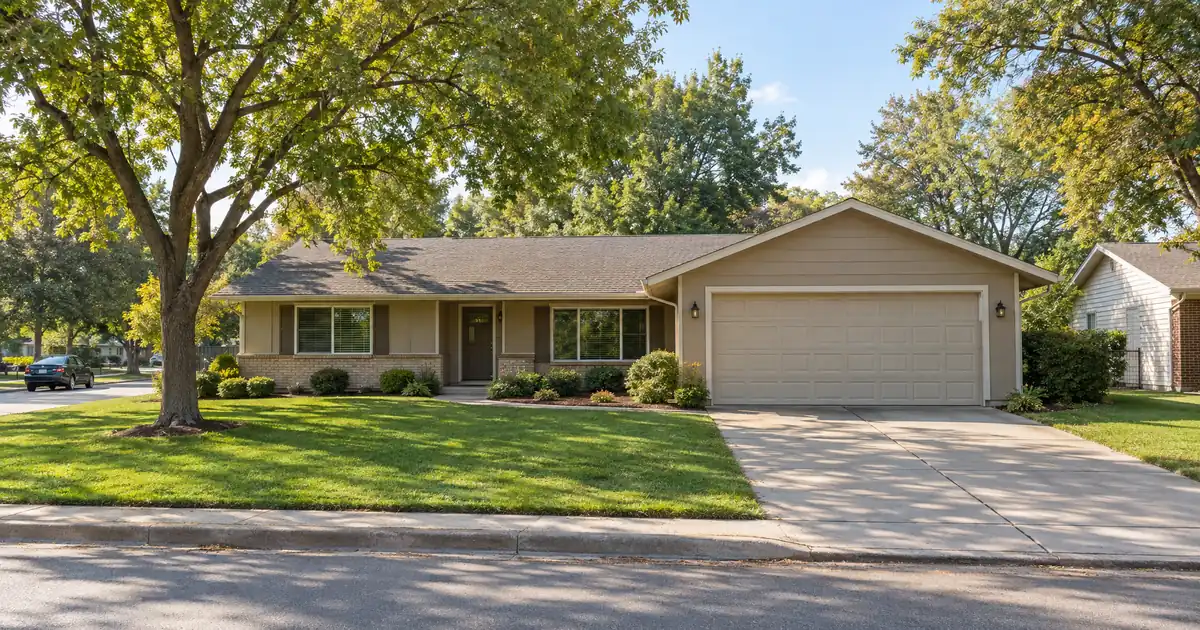
Can I Refinance Rental House Thru Harp — The Quick Read: No. HARP closed permanently on December 31, 2018. There is no way to refinance a rental property through it today. It doesn’t matter how underwater the loan is or who services it. While it existed, HARP actually did allow rental and investment property refinances. That part surprises most people searching this question. Its direct successor for underwater borrowers, market tracking High LTV Refinance Option (HIRO), is also currently paused. The realistic path for refinancing a rental house today runs through a DSCR loan. This loan qualifies the property on its rental income rather than the owner’s traditional personal-income documentation.
HARP was never a permanent fixture of the mortgage market. It was a temporary, crisis-era program. The Federal Housing Finance Agency (FHFA) built it along with a market source and Freddie Mac. Its goal was to help underwater borrowers refinance during and after the 2008 housing collapse. The FHFA’s own program fact sheet describes it as part of the Obama Administration’s Making Home Affordable initiative. It was built for borrowers who couldn’t refinance because falling home values had wiped out their equity. The program got extended several times. But as LegalClarity puts it, HARP was “always designed as emergency relief, not a permanent feature.” It ended on schedule at the close of 2018. It has not returned in any form.
DSCR Calculator
Run the numbers in your market
Rate source: Freddie Mac 30-yr average via FRED® — Federal Reserve Bank of St. Louis · effective Sep 10, 2026
Prefilled with local estimates — enter your own rent or nightly figures, taxes, insurance, and HOA for a more accurate picture.
Program parameters update from Lendmire’s centralized guideline source. Taxes and insurance are editable estimates.
As of Sep 10, 2026 · General Freddie Mac market benchmark, not a Lendmire loan offer. Rent, nightly rate, occupancy, taxes, and insurance are editable estimates. Short-term rental figures are estimates only and vary significantly by season, property type, management approach, and local short-term-rental rules — confirm local regulations before relying on them. Qualifying income for short-term rentals varies by program — some use appraisal market rent, others use documented STR history or projections — and is confirmed in underwriting. Not a Loan Estimate, approval, or commitment to lend. Program availability and eligibility are subject to lender guidelines, credit approval, property review, and underwriting.
Key Terms Defined
HARP (Home Affordable Refinance Program): an expired federal refinance program that let underwater a market source/Freddie Mac borrowers refinance into new terms without meeting normal loan-to-value limits.
HIRO (High LTV Refinance Option): market tracking current program for high-LTV refinances on existing Fannie-owned loans; per market tracking own product page, acquisitions are presently paused.
DSCR loan (Debt Service Coverage Ratio loan): a non-QM investment loan that qualifies a rental property based on whether its rent covers its monthly payment, rather than the owner’s traditional personal-income documentation.
Rent schedule (Form 1007/1025): the appraisal exhibit lenders use to document a rental property’s market rent — Form 1007 for one-unit properties, Form 1025 for two-to-four-unit buildings, per market tracking Selling Guide.
Seasoning: the minimum time an investor must own a property before refinancing it, which varies by transaction type.
Did HARP Ever Actually Cover Rental Properties?
Yes — and this is the part most investors get wrong. HARP was never limited to owner-occupied homes. During its run, it applied to primary residences, second homes, and investment properties alike. Rental refinances did come with less favorable pricing than an owner-occupied refinance.
Investor participation wasn’t a footnote either. During the program’s active years, roughly one in seven HARP loans was used by an investor or landlord. This comes from program summaries tied to the original a market source Refi Plus documentation. That’s a meaningful share of the program’s volume. It tells you rental refinancing through HARP was common practice, not a workaround.
The eligibility framework itself was tight but simple. The original loan had to be owned or guaranteed by a market source (not Freddie Mac, VA, FHA, or USDA). It also had to be originated on or before May 31, 2009. Underwriting ran mostly through automated systems, with some files requiring manual review. None of that matters for a refinance decision today. It’s historical context, not a live option.
So What Replaced HARP?
Market tracking answer is HIRO, and it’s currently paused. HIRO exists to help borrowers with existing a market source mortgages. These borrowers must be current on payments but have a loan-to-value ratio above the standard limited cash-out refinance limits. But market tracking product page states plainly that the company is “temporarily pausing the acquisition of high LTV refinance loans” due to low program volume. It will communicate any changes in a future update. Even when HIRO is active, it only works if the existing loan is already Fannie Mae-owned. It was never a general-purpose rental refinance tool, and it isn’t one now.
Freddie Mac’s parallel program, the Enhanced Relief Refinance (FMERR), sunset entirely and is not coming back. HARP closed. FMERR expired. HIRO is paused. Put those three together, and there is currently no active agency-based high-LTV refinance path for a rental property, full stop.
What Actually Refinances a Rental House Today
The realistic answer is a DSCR loan. This is a non-QM product that qualifies primarily on the property’s own rental income covering the payment, subject to lender guidelines, rather than on the owner’s personal income documentation. Instead of pulling W-2s and two years of traditional personal-income documentation, the lender orders an appraisal with a rent schedule. It then compares the property’s monthly rent to its full monthly payment, including taxes, insurance, and any HOA dues.
Across Lendmire’s wholesale network, refinance leverage sits tighter than purchase leverage. Cash-out refinances cap at approximately 75% loan-to-value on standard rental collateral. A 70% ceiling applies specifically to short-term rental collateral on a cash-out. Rate-and-term refinance files are reviewed under their own guidelines and should not be assumed to carry purchase-transaction leverage. The 75% cash-out ceiling doesn’t move even on files with otherwise strong coverage. It’s a hard program cap distinct from purchase-side leverage, and the purchase figure should never be borrowed to estimate a cash-out. A 1.00 coverage ratio is where select programs start their coverage threshold — never a universal standard — and stronger coverage generally opens better leverage and pricing. Credit requirements commonly land around 660 on most programs, though a 620 floor exists in parts of the network. A 700+ score unlocks the strongest leverage tiers, including select high-leverage purchase programs reaching 85% LTV. Reserve requirements vary by lender, leverage, and loan size. But investors should generally plan on around 6 months of PITIA, stepping up toward 9 months on loans above $1,500,000.
For a refinance specifically, an appraisal alone usually isn’t enough. Refinance files typically need to be supported by additional documents like lease agreements or, in some cases, traditional income documentation. This guidance comes from HomeAbroad. And underwriting doesn’t let the borrower pick the more flattering number. When the appraiser’s opinion of market rent and the actual signed lease disagree, the lender uses the lower of the two — never whichever figure helps the file more. Lendmire’s own breakdown of the DSCR appraisal process explains this in full.
DSCR programs also commonly accommodate LLC-held title with a personal guarantee, depending on program guidelines. This is a structural difference from HARP-era loans, which had to be individually held and Fannie- or Freddie-owned. That matters for investors building a liability-protected portfolio rather than holding rentals in their own name.
For a deeper walkthrough of how the ratio itself gets calculated and why lenders lean on it, Lendmire’s complete DSCR loans guide covers the mechanics in full.
Rate-and-Term vs. Cash-Out: Seasoning Differs
A rate-and-term DSCR refinance clears faster than a cash-out on the seasoning clock. Rate-and-term refinances typically expect around 3-6 months of ownership before an investor can refinance. A cash-out refinance commonly expects about 6 months of seasoning across most of the network. Some lenders offer programs with reduced or no seasoning requirement for specific transaction types, though.
There’s a real exception for investors who bought in cash. Delayed financing can allow a seasoning requirement as short as one day. But the cash-out amount is generally limited to the documented purchase price plus closing costs and receipted renovation costs — not the new, higher appraised value. It also still sits inside the 75% cash-out leverage ceiling. That distinction matters for BRRRR investors. Once a market source imposed a 12-month seasoning requirement on conventional cash-out refinances in 2023, DSCR cash-out refinances became the preferred route for investors trying to recycle capital between deals. Lendmire’s guide on young investor cash-out refinance strategy walks through how that timing decision plays out on a first rental.
Scenario: Three Rental Owners, Three Different Answers
The always-a-rental owner. Picture an investor who bought a duplex purely as a rental years ago. The loan was Fannie-backed and originated after HARP’s May 2009 cutoff. This owner was never HARP-eligible in the first place — the origination date alone disqualifies the file. Today, that owner’s refinance path is a DSCR rate-and-term or cash-out refinance. It’s priced off the property’s rent and current appraisal, not off HARP eligibility that never applied.
The accidental landlord. Picture an owner who bought a house as a primary residence, later moved out, and now rents it to a tenant. That property’s occupancy classification changed. Under HARP-era rules, this conversion sometimes created friction depending on which servicer path the loan followed. That distinction is now moot since HARP is closed. But the same logic shows up in DSCR underwriting today: the lender needs current lease documentation to establish the rent used for lender review, since the appraisal alone won’t carry a refinance file.
The portfolio landlord. An investor holding several financed rentals faces a different question entirely. It’s not whether one property qualifies — it’s whether the file structure (entity ownership, aggregate reserves, per-property DSCR) supports refinancing more than one asset in sequence. DSCR programs are generally built around individual property files rather than portfolio-blanket underwriting. That means each refinance gets evaluated on its own rent-to-payment math even when the borrower holds multiple loans across the network.
What Happens With a Sub-1.00 or Short-Term Rental File?
Coverage below 1.00 isn’t an automatic dead end. Select lenders in the network still work these files, generally with adjusted leverage and terms to offset the weaker ratio. No-ratio qualification is also a real path. A no-ratio option is available for DSCR below 1.00 with stronger credit or higher down payment; qualification on that path rests on credit and equity rather than a rent-coverage calculation.
Short-term rentals follow a different playbook entirely. Appraisal Form 1007 was built exclusively to estimate long-term monthly market rent. Per ClassValuation’s appraisal guidance, it can’t be used to support a short-term rental valuation. An appraiser can’t simply take a nightly rate, multiply by thirty, and call that market rent. Market tracking own guidance rejects that shortcut. STR cash-out refinances typically run around 70% LTV — a ceiling scoped specifically to short-term rental collateral, as opposed to the 75% cap on standard rental cash-out refinances. They generally expect a 640+ credit score and about 12 months of hosting history, and use a 1.00 coverage floor on the refinance side.
What About HELOCs or a Second Mortgage on a Rental Instead?
An investment-property HELOC is a real alternative to a full refinance. But it comes with a hard ceiling: total investment-property HELOC lines cap at $500,000 across the network, with no tier available above that amount. For an investor who only needs to pull a modest amount of equity without disturbing an existing low-balance first mortgage, that can be simpler than a full DSCR refinance. For anyone needing more than $500,000 in proceeds, a DSCR cash-out refinance is the only path that scales. This can be reviewed through Lendmire’s investment property refinance page, and it’s still subject to the 75% cash-out ceiling.
A Word on Loan Size and Property Type
DSCR loan amounts across the network typically run up to $3,000,000 on standard programs. Smaller balances get routed through select lenders that specialize in that range. Above $2,500,000, the network generally holds to 30-year fixed structures rather than adjustable terms. Investors in higher-cost states — Connecticut, Florida, Illinois, and New Jersey among them — should expect purchase leverage capped nearer 75% LTV. Overlay-state deals are generally capped around $2,000,000 too.
Not every property type is eligible. Manufactured homes, both single- and double-wide, along with log homes and barndominiums, are not offered through the network’s DSCR programs. That’s a flat exclusion, not a “harder to finance” situation. It’s worth knowing before an appraisal gets ordered on any of those property types.
DSCR loans are designed for non-owner-occupied investment properties. Because they are business-purpose investor loans, they are reviewed differently from a standard owner-occupied mortgage.
Tax treatment can depend on how refinance proceeds are used and how the property is held. Investors should keep clear records and speak with a qualified tax professional before relying on any deduction.
Investors weighing whether a cash-out refinance still makes sense compared to simply selling an appreciated rental can find a side-by-side breakdown on Lendmire’s refinance-versus-sell comparison. It’s worth reading before committing to either path.
Frequently Asked Questions
Is there any government program today that works like HARP for a rental property?
Not currently. Market tracking HIRO program is the closest structural successor. It does apply to investment properties with existing Fannie-owned loans, but market tracking own page confirms acquisitions are paused. Freddie Mac’s FMERR program has expired outright. Neither one works as an active, general-purpose rental refinance option right now.
Why did my lender tell me my HARP loan can’t include my rental property?
HARP itself never excluded rental properties as a property type. But HARP no longer exists in any form, so this question is moot for new applications. If a lender representative mentioned HARP recently, they may be referring to legacy loan servicing rather than a live refinance option. The program closed permanently at the end of 2018.
How do you qualify for a DSCR refinance on a rental property instead of HARP?
Qualification runs off the property, not the program history. The lender orders an appraisal with a rent schedule. It compares monthly rent to the full monthly payment (principal, interest, taxes, insurance, and HOA dues where applicable). Then it layers in credit score, leverage, and reserve requirements. There’s no HARP-style eligibility check involved at all, since HARP is closed.
What are the leverage requirements for a DSCR cash-out refinance on a rental house?
Cash-out refinances on standard rental collateral are capped at approximately 75% loan-to-value across the network. Short-term rental collateral is capped nearer 70%. Higher purchase-side leverage tiers don’t carry over to a cash-out. So the requested loan amount has to fit inside the cash-out ceiling based on the new appraised value.
What documentation do I need to refinance a rental house through a DSCR loan?
Expect an appraisal with a rent schedule, a signed lease or rent documentation to corroborate the appraiser’s rent opinion, proof of reserves, and entity paperwork if the property is held in an LLC. Conventional personal-income paperwork and W-2s generally aren’t part of the qualifying decision. Some refinance files request them as supporting documentation, though.
Can I still refinance my rental if my current loan is underwater?
Through a DSCR loan, the property’s value and rent drive qualification — not the borrower’s equity position relative to a HARP-style program. Standard loan-to-value limits still apply, though. An underwater loan with little or no equity generally won’t clear a DSCR refinance’s leverage limits regardless of rental income. That’s because DSCR programs still require the appraised value to support the requested loan amount.
How soon after buying my rental can I refinance it?
It depends on the transaction type. A rate-and-term refinance commonly expects roughly 3-6 months of seasoning. A cash-out refinance commonly expects around 6 months. Some lenders in the network offer reduced-seasoning programs for specific scenarios, though. Investors who purchased in cash may qualify for delayed financing with seasoning as short as one day. This is generally limited to the documented purchase price plus receipted improvement costs.
If you are buying or refinancing a rental property and want to see how the numbers work, Lendmire can help you compare DSCR loan options based on the property’s rental income, credit profile, leverage, and investor goals. Investors can request a quote or call 828-256-2183 to talk through a specific file.
About Lendmire
Lendmire is a non-QM DSCR mortgage broker, NMLS# 2371349, working with a wholesale lender network across 40 markets. Lendmire doesn’t originate or fund loans directly. It matches investor files to lenders whose DSCR guidelines — leverage, credit floors, reserve requirements, and property-type restrictions — fit the specific deal. Program terms, leverage tiers, and eligibility criteria vary by lender and are subject to change without notice. Nothing here should be read as a guarantee of approval, pricing, or timeline. Investors should confirm current terms directly with a Lendmire loan officer before relying on any figure cited here. Scotsman Guide named Lendmire a Top Mortgage Workplace in both 2025 and 2026.
Get Started
Ready to find the right loan for you?
In about 30 seconds you can review financing options available for your home or investment property. No commitment required.
Informational only. Not a Loan Estimate, approval, or commitment to lend. Program availability and eligibility are subject to lender guidelines, credit approval, property review, and underwriting.
References
1. FHFA — Home Affordable Refinance Program Fact Sheet
2. LegalClarity — HARP Program: What It Was and What Replaced It
3. HomeAbroad — Form 1007 Rent Schedule Guide
4. ClassValuation — Why Form 1007 Can’t Be Used for Short-Term Rentals
Brandon Miller
Founder & CEO, Mortgage Loan Originator, Lendmire LLC
- Mortgage Loan Originator · NMLS# 1129696 · Verify on NMLS Consumer Access
- North Carolina Real Estate Broker · License# 343312 · Verify on NCREC
- North Carolina Insurance Producer · License# 19053198 · Property, Casualty, Life, Health · Verify on NAIC SBS
- Lendmire LLC · Firm NMLS# 2371349 · Verify firm licensure
Compliance and disclosures. Lendmire (NMLS# 2371349) is a licensed mortgage broker and is not a direct lender, depository institution, financial advisor, or tax professional. Content in this article is general market analysis and educational information — not financial, legal, or tax advice for any specific situation. Lendmire does not guarantee loan approval; every transaction is subject to underwriting by the funding lender. Mortgage pricing and loan program guidelines are subject to change at any time without notice and vary by borrower characteristics, property type, and state regulations. Lendmire complies with Equal Housing Opportunity. Licensure verification: NMLS Consumer Access.


