
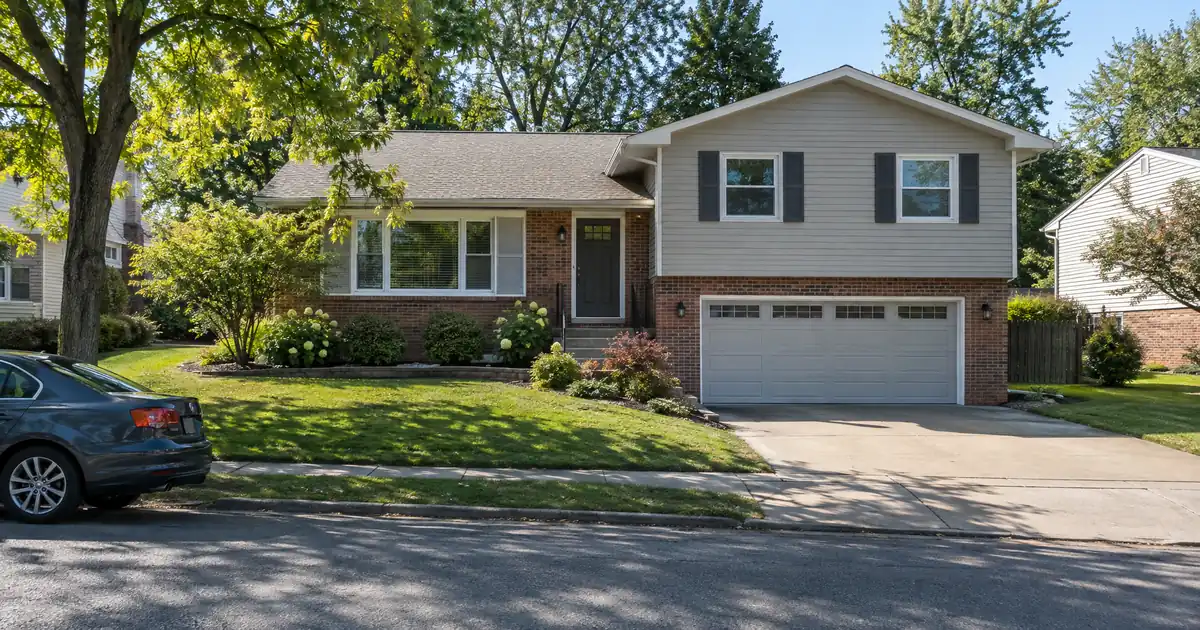
Can You Cash Out Refi An Investment Property — The Quick Read: Yes. Non-QM lenders and DSCR programs refinance rental properties and hand the owner the difference in cash at closing, but the rules run tighter than they do on a primary home. Most cash-out deals on investment property top out around 75% loan-to-value, and lenders generally want roughly six months of ownership before they’ll size the new loan off today’s value instead of what you paid. Qualification runs on the property’s own rent covering the payment — not your traditional personal-income documentation — through a debt-service coverage ratio, or DSCR, loan.
That’s the short version. The rest of this is the part that actually matters once you start shopping the deal: how much equity you can realistically pull, what a lender checks before saying yes, and where the exceptions live.
DSCR Cash-Out Calculator
Run the cash-out numbers in your market
Rate source: Freddie Mac 30-yr average via FRED® — Federal Reserve Bank of St. Louis · effective Sep 17, 2026
Prefilled with local estimates — enter your property’s value, balance, taxes, and insurance for a more accurate picture.
Program parameters update from Lendmire’s centralized guideline source. Taxes and insurance are editable estimates.
As of Sep 17, 2026 · General Freddie Mac market benchmark, not a Lendmire loan offer. Property value, balance, taxes, and insurance are editable estimates. Maximum loan-to-value varies by lender, program, property type, and seasoning. Not a Loan Estimate, approval, or commitment to lend. Program availability and eligibility are subject to lender guidelines, credit approval, property review, and underwriting.
Key Terms Defined
- DSCR (debt-service coverage ratio): the property’s monthly rent divided by its full monthly housing payment — the number a lender uses instead of your personal income.
- LTV (loan-to-value): the new loan amount expressed as a percentage of the property’s appraised value.
- PITIA: principal, interest, taxes, insurance, and any HOA dues — the full monthly obligation used in the DSCR math.
- Seasoning: the minimum time a lender wants you to own a property before it will refinance based on current value rather than your original purchase price.
- Cash-out refinance: replacing an existing loan with a bigger one and pocketing the difference in cash at closing.
- Business-purpose loan: a loan made to a property held for rental income or investment, not as a personal residence — the category DSCR loans fall into.
- Non-QM: a mortgage that doesn’t follow the standard agency income-verification rulebook, which is why DSCR loans can qualify on rent instead of pay stubs.
How a Cash-Out Refinance on a Rental Actually Works
The mechanics are simple even when the underwriting isn’t. A new loan pays off the old one, and whatever equity sits above that payoff — up to the lender’s LTV ceiling — comes to you as cash at closing.
On a DSCR file, the lender orders a full appraisal. For a single rental unit, that appraisal typically comes with a comparable rent schedule, a standardized form the appraisal industry has used for decades to document market rent for a one-unit investment property (Fannie Mae). DSCR lenders and appraisers borrow this same form because it’s the format everyone already knows how to read — not because the loan is being sold to an agency. Two-to-four-unit properties get a similar income-support form.
Once the appraised rent is documented, it gets weighed against the new, larger payment created by the cash-out. Because pulling equity out raises the loan balance — and therefore the payment — the coverage math on a cash-out deal is always a little tighter than it would be on a straight purchase or a no-cash-out refinance of the same property.
How Much Equity Can You Actually Pull?
The honest answer: whatever sits between your current loan balance and roughly 75% of the property’s appraised value, minus closing costs. That 75% figure is the cash-out ceiling on most files across the DSCR and non-QM network — it’s meaningfully lower than the leverage available on a purchase, where some high-leverage programs reach 85%.
Say a rental has climbed in value since you bought it. The lender doesn’t lend against your gut feeling about what it’s worth — it lends against the appraised value, at up to 75% of that number, minus what you still owe. If your existing balance is low relative to the new appraisal, you’re pulling meaningful equity. If it’s not, the math simply won’t produce much cash, and that’s fine — it means the refinance isn’t worth doing yet.
This is also where rental coverage does double duty. A stronger DSCR ratio doesn’t just look better on paper — it can open access to that full 75% ceiling. A weaker ratio might mean the lender caps you lower, even if the appraisal supports more.
What Lenders Actually Check
Four things drive approval on a DSCR cash-out file: the rent-to-payment ratio, credit score, ownership history, and reserves. None of these come from your personal income documents — the file qualifies primarily on property-level rental income covering the payment, subject to lender guidelines.
Coverage. A 1.00 DSCR — where rent exactly covers PITIA — is a floor on select programs across the network, not a universal minimum every lender enforces. Ratios above that open better pricing and higher leverage; ratios below it don’t automatically kill the deal, but they change the terms (more on that below).
Credit. A 620 floor shows up in parts of the network, but most programs are built around something closer to 660. Clearing 700 or better tends to unlock the strongest leverage tiers, including some of the higher-LTV purchase programs.
Reserves. Most files want roughly six months of PITIA sitting in reserve after closing. That number tends to step up toward nine months once the loan balance climbs past $1,500,000, and it can sometimes be waived on conservative, no-cash-out refinances at modest leverage under that threshold. Reserve requirements vary by lender, loan size, and leverage — treat any single number as a starting point, not a promise.
Loan size. Standard programs across the network run up to roughly $3,000,000; smaller balances route through select lenders that specialize in that range. Above $2,500,000, most of the network settles into 30-year fixed structures rather than shorter or adjustable terms.
A bigger down payment — or in a refinance’s case, taking less cash out — lowers the payment and can lift the DSCR ratio. It doesn’t erase a credit floor, a reserve requirement, or the LTV ceiling. The strongest files clear both tests at once: enough equity in the deal and rent that comfortably covers the obligation. Terms vary by lender guidelines, property type, leverage, credit profile, and full file review.
The Six-Month Seasoning Clock
Most DSCR lenders want about six months of ownership, measured from when the deed recorded, before they’ll refinance based on today’s appraised value. Buy a property, and the clock starts running immediately — there’s no shortcut around it on most programs.
This matters most to investors running the buy-rehab-rent-refinance-repeat approach, sometimes called BRRRR, where the whole point is recycling capital out of a renovated property without selling it. Investor commentary on that strategy describes the seasoning wait plainly: lenders typically require at least six months, sometimes up to twelve, before they’ll even consider the refinance (BiggerPockets). BiggerPockets’ own strategy guide treats seasoning as a second, separate clock that runs after the renovation phase, not alongside it (BiggerPockets).
Six months is the general expectation across most of the DSCR network Lendmire works with — but it’s a guideline, not a fixed law. Some lenders want more if the value jump between purchase and appraisal looks aggressive; a few will look at less with a strong file. If you bought the property in cash, ask before assuming you’re stuck waiting the full clock — a handful of lenders will treat that differently.
Coverage Below 1.00 — and the No-Ratio Path
A property that doesn’t clear 1.00 on paper isn’t automatically off the table. Sub-1.00 coverage is available through select lenders in the network, but expect the LTV and terms to adjust to compensate — usually less cash out, not none.
There’s also a no-ratio path, where the DSCR calculation is skipped entirely. That option exists only through select lenders, and it’s generally reserved for borrowers who already own a primary residence — it isn’t a workaround available to every file regardless of profile, and it isn’t priced or leveraged the same as a standard DSCR loan.
It’s worth being clear about what clearing 1.00 does and doesn’t mean. A DSCR of 1.00 means rent covers PITIA — nothing more. It says nothing about vacancy, repairs, property management fees, or capital expenditures, all of which sit outside that ratio. A property that clears 1.00 on paper can still run negative in real cash flow once those costs hit. Don’t confuse the ratio with profitability.
Short-Term Rentals Run Different Numbers
Short-term rentals get their own set of ceilings, and they’re lower across the board than long-term rental math. Purchase leverage on an STR tops out around 75% loan-to-value. Cash-out on a short-term rental caps closer to 70% loan-to-value, compared with the 75% ceiling most standard long-term rentals see, and a straight refinance without cash out generally lands in the same 70% neighborhood.
Expect a credit score in the 700-plus range, roughly twelve months of documented hosting history, and separate coverage checks depending on the transaction. On a purchase, the coverage floor sits at 1.00. On a refinance, lenders also want coverage at 1.00 — but the two aren’t calculated the same way, since a refinance is measuring against trailing rental performance rather than projected income.
The appraisal side gets trickier with STRs, too. The standard rent-schedule form used for long-term rentals isn’t designed for nightly-rate properties — it precludes vacancy data and business expenses and isn’t built to translate nightly income into a monthly figure (McKissock). That gap between what a property earns on Airbnb and what an appraiser will call its “market rent” for underwriting purposes is one of the more common surprises for STR owners refinancing for the first time. Short-term rental rules can also vary by city, county, HOA, and property type, so confirm local operating rules before counting on projected nightly income holding up.
What Cash-Out Refinancing Can’t Fix
Pulling equity out raises your payment relative to the same rent roll — that’s the tradeoff, every time. A property that comfortably cleared coverage before the refinance can land closer to breakeven afterward if you take out the maximum available. Run the new DSCR before you decide how much cash to take, not after.
There’s also a category of properties that simply aren’t eligible for this kind of financing regardless of equity or income: manufactured homes, both single- and double-wide, log homes, and barndominiums are not offered through DSCR programs across the network. That’s a property-type exclusion, not a credit or income issue — no amount of equity changes it.
That’s not a reason to avoid the strategy — it’s the reason the leverage ceilings and reserve requirements exist in the way they do.
Cash-Out Refi vs. Other Ways to Pull Rental Equity
A cash-out refinance isn’t the only lever available, and it isn’t always the right one for a given goal.
| Option | Typical Cap | Best Fit |
|---|---|---|
| DSCR cash-out refinance | ~75% LTV (standard); ~70% for STR collateral | Larger lump-sum equity pulls, one new note |
| Investment-property HELOC | Capped at $500,000 total | Smaller, flexible draws without refinancing the first mortgage |
| Rate-and-term refinance | No cash disbursed | Adjusting term or structure without touching equity |
The HELOC route caps at $500,000 in total investment-property line size across the network — there’s no tier above that for non-owner-occupied collateral. For investors who want a larger single draw, or who are consolidating equity from a property that’s appreciated well past that ceiling, a cash-out refinance is usually the more efficient tool. For investors who want flexibility and don’t need the full amount at once, a HELOC can leave the existing first mortgage untouched.
If you’re weighing a DSCR loan against a conventional cash-out refinance more broadly, Lendmire’s complete DSCR loans guide walks through how the two paths differ on documentation and qualification. For investors who used a first cash-out refinance to fund a purchase and want to know what a second round looks like down the road, Lendmire’s piece on using a cash-out refinance to buy an investment property and its companion on tapping investment property equity with a cash-out refinance both go deeper into the mechanics.
Tax treatment can depend on how the funds are used and how the property is held; investors should keep clear records and speak with a qualified tax professional before relying on any deduction.
If you’re sitting on equity in a rental and want to see how the numbers actually run — coverage ratio, available leverage, credit tier — Lendmire can help you compare DSCR loan options based on the property’s income, your credit profile, and your goals for the cash. Reach the team at 828-256-2183 to talk through a specific property.
Frequently Asked Questions
Can I cash-out refinance a rental property that’s titled in an LLC?
Generally, yes — DSCR loans are business-purpose loans, and closing in an LLC or similar entity is common across the network, subject to program guidelines and the lender’s entity documentation requirements. The property still has to clear the same appraisal, coverage, and seasoning checks regardless of who holds title.
How soon after buying a rental can I do a cash-out refinance?
Most programs want around six months of ownership before they’ll size the new loan off current value. Some lenders will look at shorter timelines with a strong file; ask before assuming you’re locked into the full wait.
Does taking cash out change my rental property’s DSCR going forward?
Yes — a bigger loan balance means a bigger payment, so the same rent produces a lower coverage ratio after the refinance than before it. Always run the post-refinance DSCR before deciding how much cash to pull, not after closing.
Can I cash-out refinance a short-term rental the same way as a long-term rental?
Not quite the same terms. Short-term rental cash-out generally caps around 70% loan-to-value, versus roughly 75% for a standard long-term rental, and typically calls for a stronger credit profile and a documented hosting history.
What if my rental doesn’t clear a 1.00 DSCR?
Sub-1.00 coverage is still reviewed through select lenders in the network, usually with adjusted leverage and terms rather than a flat denial. A no-ratio option also exists through select lenders, generally for borrowers who already own a primary residence — qualification for either path depends on the full file, subject to lender guidelines.
For how equity extraction works on an investment property, see cash-out refinance on an investment property.
About Lendmire
Lendmire is a non-QM mortgage brokerage (NMLS# 2371349) arranging DSCR investor loans in 40 markets, including Washington, D.C. DSCR eligibility is generally reviewed around property-level rental income rather than personal income, subject to lender and program guidelines, a fit for self-employed investors and LLC-owned portfolios. Lendmire was recognized as a Scotsman Guide Top Mortgage Workplace in 2025 and 2026.
A deeper walk-through of investment-property equity extraction lives in cash-out refinance on an investment property.
Lendmire’s Top Mortgage Workplace recognition is documented by Scotsman Guide 2025 Top Mortgage Workplace and Scotsman Guide 2026 Top Mortgage Workplace.
Get Started
Ready to find the right loan for you?
In about 30 seconds you can review financing options available for your home or investment property. No commitment required.
Informational only. Not a Loan Estimate, approval, or commitment to lend. Program availability and eligibility are subject to lender guidelines, credit approval, property review, and underwriting.
References
1. Fannie Mae Selling Guide — Rental Income
2. BiggerPockets — BRRRR Pros and Cons
3. BiggerPockets — The BRRRR Method Guide
4. McKissock — Form 1007 and Its Impact on Short-Term Rental Appraisals
Brandon Miller
Founder & CEO, Mortgage Loan Originator, Lendmire LLC
- Mortgage Loan Originator · NMLS# 1129696 · Verify on NMLS Consumer Access
- North Carolina Real Estate Broker · License# 343312 · Verify on NCREC
- North Carolina Insurance Producer · License# 19053198 · Property, Casualty, Life, Health · Verify on NAIC SBS
- Lendmire LLC · Firm NMLS# 2371349 · Verify firm licensure
Disclosure information. Lendmire is a state-licensed mortgage brokerage under NMLS# 2371349. Lendmire is not a depository institution, direct lender, or financial advisor — all loans referenced are placed through wholesale lender partners and are subject to each lender's underwriting standards. This article is provided for general informational purposes and is not a commitment to lend, nor does it constitute financial, legal, or tax advice. Loan programs, terms, rates, and qualification standards change without notice and depend on borrower profile, property type, and the state in which the subject property is located. Equal Housing Opportunity provider. NMLS Consumer Access: nmlsconsumeraccess.org.


