
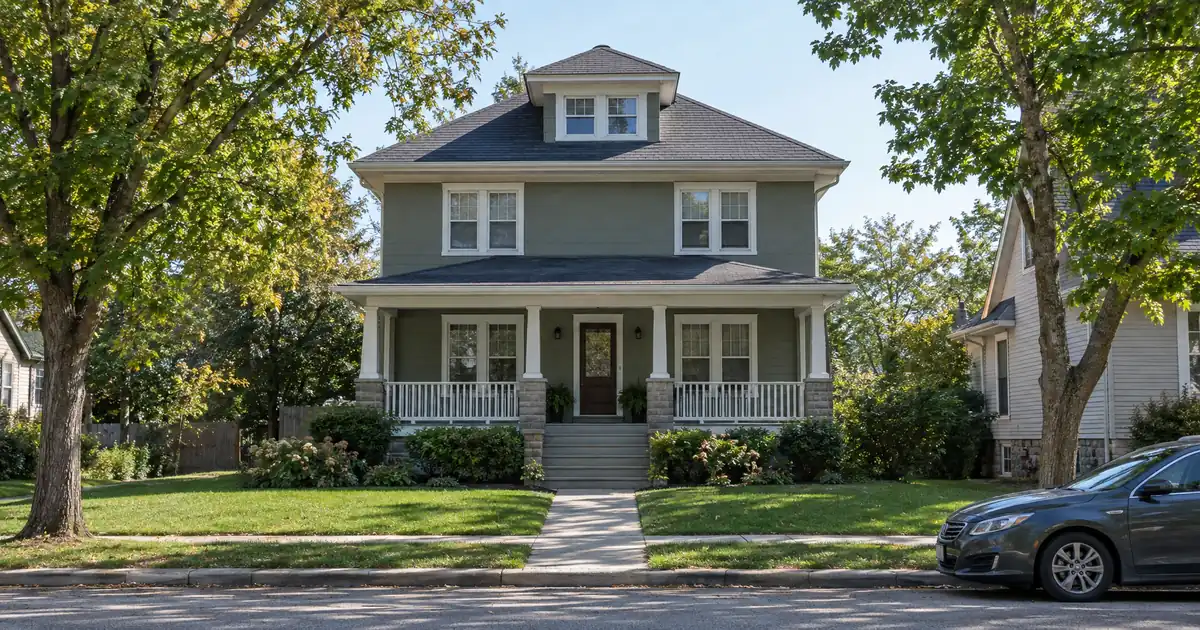
Can You Cash Out Refinance A Rental Property — The Quick Read: Yes — investors pull cash out of rental property all the time, and lenders have entire loan programs built around it. Most cash-out refinances on a rental cap out around 75% of the property’s value, ask for roughly six months of ownership first, and want the rent to cover the new payment on its own. The property qualifies mainly on its own income, not the owner’s paycheck, subject to lender guidelines and program eligibility.
That’s the short version. The rest of this comes down to how much cash you can actually pull, what a lender checks before saying yes, and where the exceptions live.
DSCR Cash-Out Calculator
Run the cash-out numbers in your market
Rate source: Freddie Mac 30-yr average via FRED® — Federal Reserve Bank of St. Louis · effective Sep 17, 2026
Prefilled with local estimates — enter your property’s value, balance, taxes, and insurance for a more accurate picture.
Program parameters update from Lendmire’s centralized guideline source. Taxes and insurance are editable estimates.
As of Sep 17, 2026 · General Freddie Mac market benchmark, not a Lendmire loan offer. Property value, balance, taxes, and insurance are editable estimates. Maximum loan-to-value varies by lender, program, property type, and seasoning. Not a Loan Estimate, approval, or commitment to lend. Program availability and eligibility are subject to lender guidelines, credit approval, property review, and underwriting.
Key Terms Defined
A few terms come up constantly in this conversation. Get comfortable with them and the rest of this reads a lot faster.
Cash-out refinance — a new loan that pays off your existing mortgage and hands you the leftover equity in cash, secured against the same property.
LTV (loan-to-value) — the new loan amount expressed as a percentage of the property’s appraised value. A lower LTV means more equity stays in the deal.
DSCR (debt-service coverage ratio) — the property’s monthly rent divided by its monthly housing payment. A ratio of 1.00 means the rent exactly covers the payment.
PITIA — principal, interest, taxes, insurance, and association dues, all rolled into one monthly figure. This is the number rent gets measured against.
Seasoning — the minimum amount of time a lender wants you to own the property before letting you refinance it for cash.
Non-QM loan — a mortgage underwritten outside the standard agency rulebook, which is exactly what makes property-income-based lending possible in the first place.
Business-purpose loan — a loan made to a rental property rather than an owner-occupied home. DSCR loans are designed for non-owner-occupied investment properties, and because they’re business-purpose loans, they get reviewed differently than a standard owner-occupied mortgage.
How the Cash-Out Math Actually Works
A cash-out refinance replaces your current mortgage with a bigger one, and the difference — minus payoff, closing costs, and prepaid items — lands in your account. On a rental, the ceiling on that “bigger one” is what changes.
Across Lendmire’s wholesale network of non-QM lenders, cash-out refinances on standard rental property generally top out around 75% loan-to-value. That’s a hard ceiling, not a soft target — it’s lower than the 75–80% (and in select high-leverage cases, 85%) that some purchase programs allow, because a lender pulling cash out of an already-owned property is taking on more risk than one financing an acquisition. The rent still has to cover the new, larger payment. Lenders divide the qualifying monthly rent by the projected PITIA on the new loan amount — not the old one — to get the coverage ratio that decides whether the file works.
None of this runs through personal income documentation. Qualification runs primarily on the property’s rental income covering the payment, subject to lender guidelines, which is the entire reason DSCR programs exist as a separate lane from a standard mortgage. Lendmire’s complete DSCR loans guide walks through how that qualification model works property by property, if you want the fuller picture.
How Much Equity Can You Actually Pull Out?
Not all of it — that’s the short answer. Between the 75% LTV ceiling, the reserve requirement, and the coverage ratio the rent has to clear, the equity you can access is a function of four things working together, not just the home’s current value. These specifics are subject to lender guidelines and a full review of property, leverage, and credit.
Think of it less as “how much is my equity worth” and more as “what loan amount does the rent support, and does that number fit inside 75% of value.” A property with strong rent relative to its size might not be leverage-constrained at all — the coverage ratio clears easily, and the 75% ceiling becomes the binding number. A property with thinner rent might hit its coverage limit before it ever reaches 75% LTV, which caps the cash-out lower than the equity alone would suggest. Both scenarios are common, and neither one is a bad deal — they’re just different constraints doing the limiting. Terms vary by lender guidelines, property type, leverage, credit profile, and full file review.
What Lenders Actually Want to See
Credit, reserves, and coverage are the three levers that move a cash-out file from marginal to strong. A 620 score exists as a floor in parts of Lendmire’s network, but most programs are built around 660, and 700 or better is where the strongest leverage tiers open up.
Reserves — the cash left in the bank after closing, measured in months of PITIA — commonly run around six months on most standard files. Larger loans, generally above $1,500,000, tend to step up to around nine months, since a bigger monthly obligation means a bigger cushion is expected if a tenant leaves or a repair comes up.
A 1.00 coverage ratio is where a number of programs set their floor — a baseline for those specific programs, not a universal rule every lender applies. Clear it comfortably and pricing and leverage both tend to improve; land right at it and the file is workable but tighter. Many investors close these loans through an LLC rather than in their personal name, and that’s common across the network, though eligibility for entity-titled loans depends on the specific lender’s program requirements.
The Six-Month Seasoning Clock
Most lenders want to see about six months between when you took title and when you pull cash out. That clock starts the day ownership records — not the day you signed the purchase agreement.
Conventional agency loans use a similar rule for comparison: at least six months of ownership before a cash-out refinance, according to Fannie Mae’s Selling Guide, with that wait typically waived for inherited property, property awarded in a divorce, or an all-cash purchase later refinanced under a delayed-financing provision. DSCR lenders aren’t bound by that agency rule. Non-QM programs set their own seasoning independently, and six months has simply become the common convention across most of the network — not a legal requirement, just where most guidelines have landed.
If you’re planning to buy a rental with equity you already pulled from another property, seasoning on the new purchase and seasoning on the next refinance are two separate clocks worth mapping out ahead of time. Lendmire’s guide on using cash-out proceeds to buy another rental property covers that sequencing in more depth.
What If the Coverage Ratio Comes in Below 1.00?
It’s not automatically a dead end. Coverage below 1.00 is available through select lenders in Lendmire’s network, though leverage and terms get adjusted to compensate for the weaker rent-to-payment math — usually a lower LTV, different pricing, or more reserves than a file that clears 1.00 cleanly.
There’s also a separate path called no-ratio qualification, where the lender doesn’t calculate a coverage ratio against the property at all. That’s available only through select lenders, and it’s generally reserved for borrowers who already own a primary residence — it isn’t a workaround open to every file, and there’s no fixed coverage number attached to it since the ratio simply isn’t part of the underwriting math.
Neither path is guaranteed on any specific file. Both are reviewed subject to the borrower’s credit, the property, and the lender’s own guidelines — but the point is that a rental with soft rent relative to its payment usually still has options worth exploring before writing off a cash-out refinance entirely.
Short-Term Rentals Run a Different Set of Numbers
Airbnb and VRBO properties get evaluated on a separate track. Short-term rental purchases generally reach up to 75% loan-to-value, while short-term rental cash-out refinances typically cap closer to 70%, compared with roughly 75% for a standard long-term rental cash-out.
The rest of the file looks different too. Most programs want a credit score of 700 or better and roughly 12 months of hosting history before giving nightly-rate income full weight. On the purchase side, coverage generally needs to clear 1.00; on the refinance side, most programs also want a coverage ratio at or above 1.00, evaluated separately from the purchase standard rather than blended into one number. If the hosting history is thin, some lenders will lean more heavily on projected long-term rent instead of actual platform income until the property has enough of a track record.
Short-term rental rules can also vary by city, county, and HOA, separate from anything a lender checks — worth confirming locally before leaning on projected nightly income for a loan file.
Property Types That Don’t Qualify
A few property types simply fall outside DSCR programs across Lendmire’s network, no matter how strong the rent looks. Manufactured homes — both single- and double-wide — aren’t offered, and neither are log homes or barndominiums. If a rental you’re considering falls into one of those categories, a DSCR cash-out refinance isn’t the tool for it, and it’s worth knowing that early rather than after an appraisal is ordered.
Loan Sizes and State Overlays
Standard programs run up to roughly $3,000,000, with loans above $2,500,000 generally structured as 30-year fixed rather than adjustable. Smaller balances still get placed, just through a narrower set of lenders within the network rather than the broadest program tier.
A handful of states carry their own overlays. In Connecticut, Florida, Illinois, and New Jersey, purchase leverage generally caps closer to 75% LTV even on programs that might allow more elsewhere, and overlay-state deals tend to cap around $2,000,000 regardless of how large the property or portfolio is. If you’re financing in one of those four states, it’s worth confirming the current overlay before assuming a national program figure applies unchanged.
Term structure has some flexibility built in too. The 30-year fixed is the backbone of most files, but extended 40-year terms and interest-only periods are available through select lenders, and adjustable-rate structures exist for investors who specifically want one. None of this changes the underlying LTV or coverage math — it just changes how the payment is shaped.
Cash-Out Refinance vs. Other Ways to Tap Rental Equity
A cash-out refinance isn’t the only way to get equity out of a rental, and it isn’t always the right one. Here’s how the main options stack up structurally.
| Factor | DSCR Cash-Out Refinance | Investment Property HELOC | Conventional Cash-Out |
|---|---|---|---|
| Reviewed on | Property’s rental income | Combined equity + income | Owner’s personal income/DTI |
| Typical ceiling | ~75% LTV | Capped near $500,000 total line | Agency-set, income-dependent |
| Seasoning | ~6 months typical | Varies by lender | Similar agency-style clock |
| Best fit | Investors scaling without W-2 files | Smaller, revolving draws | Investors who prefer agency terms |
Investment-property HELOC lines are capped at $500,000 total across the market — there’s no larger investment-property tier above that, so a bigger equity pull generally has to come through a full refinance instead of a line. A conventional cash-out relies on the owner’s personal income and debt-to-income ratio rather than the property’s rent, which works fine for investors with strong traditional employment income but becomes a bottleneck for anyone scaling past a few properties. If a property with a tenant already in place is producing rent, pulling cash out through a rental-focused refinance is often the more direct path than restructuring a personal-income file around it.
Taxes on the Cash You Pull Out
Refinance proceeds aren’t treated as taxable income at the federal level, and beyond that, tax treatment can depend on how the funds are used and how the property is held, per IRS Publication 527, so investors should keep clear records and speak with a qualified tax professional before relying on any deduction.
Where This Leaves You
A rental with decent rent, some seasoning behind it, and a coverage ratio that comfortably clears 1.00 is usually a straightforward cash-out file. One with tighter numbers still has real paths forward — sub-1.00 structures, no-ratio options for the right borrower profile, or simply more time to season and let the rent grow into the payment.
If you’re weighing a cash-out refinance against buying another property outright, or trying to figure out what leverage and coverage your specific rental would land at, Lendmire can help compare DSCR loan options based on the property’s income, your credit profile, and the leverage you’re targeting. Programs run across 40 markets, including Washington, D.C., through Lendmire’s wholesale network of non-QM lenders — reach out at 828-256-2183 to talk through a specific property.
Frequently Asked Questions
Can you cash-out refinance a rental property you just bought?
Generally not right away. Most programs in Lendmire’s network want about six months of ownership on record before releasing cash-out equity, measured from when title recorded rather than the closing date on your purchase. Buy-and-hold investors sometimes plan around this by budgeting a short hold period before pulling equity for the next deal.
Does cash-out money from a rental refinance count as taxable income?
No, refinance proceeds aren’t treated as income at the federal level. What can get more complicated is interest deductibility once the money is spent, since that depends on how the funds are used and how the property is titled — a conversation worth having with a tax professional rather than assuming either way.
Can you cash-out refinance a rental property held in an LLC?
In many cases, yes — a large share of DSCR cash-out files close through an LLC rather than an individual’s name. Eligibility for entity-titled loans depends on the specific lender’s program requirements, so it’s worth confirming upfront rather than assuming every program handles LLC title the same way.
How many times can you cash-out refinance the same rental property?
There’s no fixed limit written anywhere, but each refinance resets the seasoning clock and has to clear the same coverage and leverage tests as the last one. Practically, most investors are limited by how much the property has appreciated and how much the rent supports — not by any rule capping the number of refinances.
Can you cash-out refinance a short-term rental?
Yes, though the numbers run differently than a standard long-term rental. Short-term rental cash-out refinances typically cap around 70% loan-to-value, most programs want a credit score of 700 or higher, and lenders generally look for around 12 months of hosting history before giving nightly-rate income full weight in the coverage calculation.
For the mechanics of pulling equity out of a rental property, see cash-out refinance on an investment property.
About Lendmire
Lendmire is a non-QM mortgage brokerage (NMLS# 2371349) arranging DSCR investor loans in 40 markets, including Washington, D.C. DSCR eligibility is generally reviewed around property-level rental income rather than personal income, subject to lender and program guidelines, a fit for self-employed investors and LLC-owned portfolios. Lendmire was recognized as a Scotsman Guide Top Mortgage Workplace in 2025 and 2026.
Investors weighing their equity options can start with cash-out refinance on an investment property.
Lendmire’s Top Mortgage Workplace recognition is documented by Scotsman Guide 2025 Top Mortgage Workplace and Scotsman Guide 2026 Top Mortgage Workplace.
Get Started
Ready to find the right loan for you?
In about 30 seconds you can review financing options available for your home or investment property. No commitment required.
Informational only. Not a Loan Estimate, approval, or commitment to lend. Program availability and eligibility are subject to lender guidelines, credit approval, property review, and underwriting.
References
1. Fannie Mae Selling Guide B2-1.3-03 — Cash-Out Refinance Transactions
2. IRS Publication 527 — Residential Rental Property
Brandon Miller
Founder & CEO, Mortgage Loan Originator, Lendmire LLC
- Mortgage Loan Originator · NMLS# 1129696 · Verify on NMLS Consumer Access
- North Carolina Real Estate Broker · License# 343312 · Verify on NCREC
- North Carolina Insurance Producer · License# 19053198 · Property, Casualty, Life, Health · Verify on NAIC SBS
- Lendmire LLC · Firm NMLS# 2371349 · Verify firm licensure
Compliance and disclosures. Lendmire (NMLS# 2371349) is a licensed mortgage broker and is not a direct lender, depository institution, financial advisor, or tax professional. Content in this article is general market analysis and educational information — not financial, legal, or tax advice for any specific situation. Lendmire does not guarantee loan approval; every transaction is subject to underwriting by the funding lender. Mortgage pricing and loan program guidelines are subject to change at any time without notice and vary by borrower characteristics, property type, and state regulations. Lendmire complies with Equal Housing Opportunity. Licensure verification: NMLS Consumer Access.


