
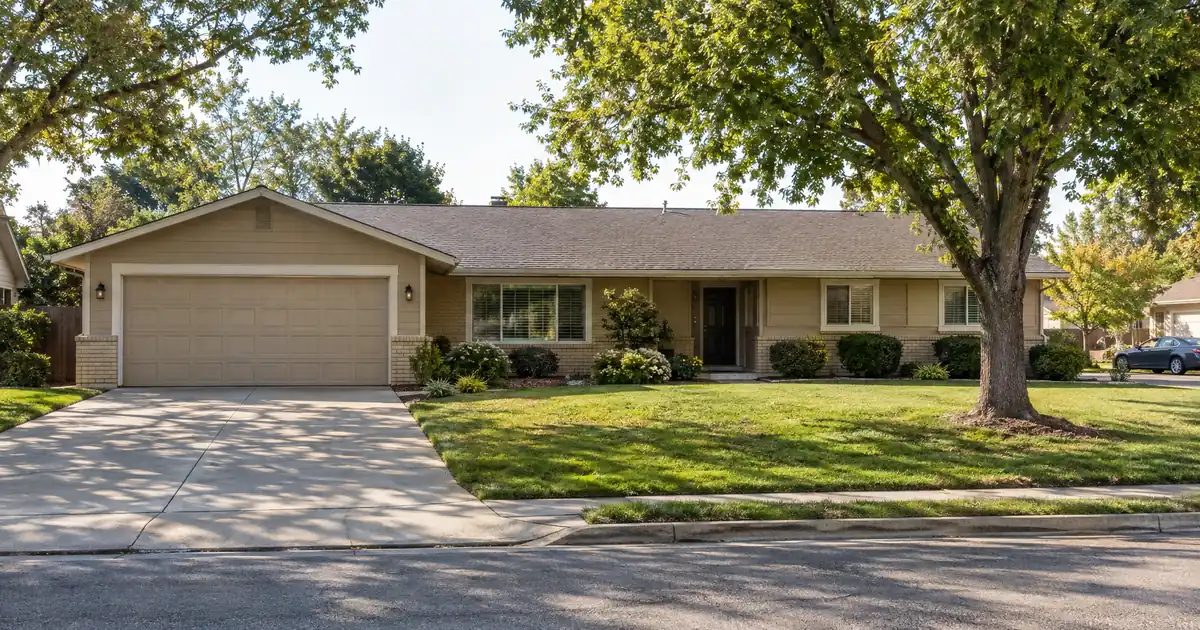
Can You Convert To Rental After Refinance — The Quick Read: Yes. Once you’ve satisfied the occupancy period your original loan required, most lenders let you convert the home into a rental without forcing a new refinance. That period usually runs close to a year, though it varies by loan type and lender. After that, the real decision is what loan fits a true rental property — which is usually where DSCR financing comes in.
Key Terms Defined
- Occupancy clause: the promise you sign at closing that you’ll live in the home as your main residence for a set period, usually close to a year.
- DSCR (debt-service coverage ratio): a way of qualifying a rental loan using the property’s rent instead of your personal income — rent divided by the full monthly payment.
- Non-owner-occupied property: a home the owner doesn’t live in, which shifts it into investment-property territory for lending purposes.
- Business-purpose loan: a loan made for an investment, not personal living. These follow different rules than a standard home mortgage.
- Seasoning: the waiting period a lender wants between owning or refinancing a property and doing the next loan transaction on it.
What Your Occupancy Clause Actually Says
Most primary-residence mortgages carry the same basic promise: move in within a set window and treat the home as your main residence for roughly the first year. Lenders phrase this differently by loan type, but the intent is identical. They’re financing a home for someone who plans to live there, not an investor buying a rental with owner-occupied terms.
DSCR Calculator
Run the numbers in your market
Rate source: Freddie Mac 30-yr average via FRED® — Federal Reserve Bank of St. Louis · effective Sep 17, 2026
Prefilled with local estimates — enter your own rent or nightly figures, taxes, insurance, and HOA for a more accurate picture.
Program parameters update from Lendmire’s centralized guideline source. Taxes and insurance are editable estimates.
As of Sep 17, 2026 · General Freddie Mac market benchmark, not a Lendmire loan offer. Rent, nightly rate, occupancy, taxes, and insurance are editable estimates. Short-term rental figures are estimates only and vary significantly by season, property type, management approach, and local short-term-rental rules — confirm local regulations before relying on them. Qualifying income for short-term rentals varies by program — some use appraisal market rent, others use documented STR history or projections — and is confirmed in underwriting. Not a Loan Estimate, approval, or commitment to lend. Program availability and eligibility are subject to lender guidelines, credit approval, property review, and underwriting.
| Loan Type | Occupancy Expectation | What Enforces It |
|---|---|---|
| Conventional | Close to 12 months as stated intent | Servicer review, rarely audited after closing |
| FHA | Close to 12 months; re-checked on cash-out refis | Occupancy certification at origination |
| VA | Intent-based, no fixed calendar | Certification of genuine intent to occupy |
The commonly cited 12-month figure works as a lender benchmark, not a strict law. VA’s real standard is whether you genuinely intended to live there when you bought — a fact-specific test, not a countdown clock, according to REI Prime. Servicing guidance describes the pattern the same way: move in within roughly 60 days, hold the home as your main residence for about a year, unless a lender agrees otherwise or your circumstances genuinely change, per PURE Property Management.
The One Built-In Exception
Buying a 2-4 unit property and living in one unit while renting the rest isn’t a conversion at all. It’s allowed from day one. You occupy one unit the entire time, so the loan stays compliant without any later change in status. Plenty of first-time landlords use this path specifically to sidestep the whole conversion question.
What Happens Once the Occupancy Period Ends
Once you’ve held the home for the length your loan expected, most lenders don’t require a refinance before you rent it out. Your existing loan usually just continues. The covenant was about your intent at the start, not a trigger that forces action at the finish.
That said, a few practical steps matter once you actually list the place:
- Insurance: swap a standard homeowner’s policy for a landlord or dwelling policy before a tenant moves in.
- Local rules: rental registration or licensing requirements vary by city, county, and HOA, so confirm what applies where the property sits.
- Lender notice: check your note for a formal notification requirement. Many loans don’t have one, but some servicers ask you to update occupancy status on file.
- Records: start tracking rental income and expenses separately from the day the property goes to a tenant.
Tax treatment can depend on how the funds are used and how the property is held, so keep clear records and talk with a qualified tax professional before relying on any deduction.
The FHA Cash-Out Wrinkle
If you financed with FHA and want to pull cash out before converting, the occupancy clock still applies to the cash-out request itself. FHA generally wants close to a year of ownership and occupancy before approving a cash-out refinance, regardless of how the property gets used afterward. That timing conflict trips up a lot of investors who plan to convert and pull equity in the same move — the two goals don’t fit neatly into one FHA transaction.
Why Investors Usually Pivot to DSCR From Here
DSCR loans are designed for non-owner-occupied investment properties. Because they are business-purpose investor loans, they are reviewed differently from a standard owner-occupied mortgage.
Once your home is genuinely a rental, FHA and VA purchase-and-refinance products are essentially off the table — those programs are built around owner-occupants, not landlords. Federal guidance backs this up: credit extended to acquire, improve, or maintain a rental property that isn’t owner-occupied is treated as business-purpose credit rather than consumer credit, according to the Consumer Financial Protection Bureau. That reclassification is exactly why non-QM products like DSCR loans exist. They qualify the property’s income, not your paycheck.
Underwriters on these files typically lean on the same rent-verification tools used across the industry — an appraisal exhibit called the Single-Family Comparable Rent Schedule, which estimates market rent for a single-family investment property, per Fannie Mae. For 2-4 unit properties, the equivalent report is Form 1025. DSCR loans themselves aren’t sold to Fannie Mae or Freddie Mac, but the rent-documentation habits carried over from agency lending still shape how the number gets verified.
What DSCR Numbers Look Like for a Converted Rental
Across the wholesale network Lendmire works with, files on converted rentals typically run 75%-80% loan-to-value on a rate-and-term basis. Cash-out refinances on a standard long-term rental generally cap around 75% loan-to-value, while cash-out on short-term-rental collateral runs closer to 70%. Purchase leverage on a short-term rental tops out around 75%, and refinances on that collateral type also run closer to 70%.
A coverage ratio of 1.00 — rent equal to the full monthly payment — is where select programs start, though it’s a program floor rather than a universal standard. Coverage below 1.00 is still available through select lenders in the network, with leverage and terms adjusted to offset the thinner cushion. A no-ratio structure exists too, but only through select lenders and generally for borrowers who already own a primary residence.
Credit plays a bigger role than most investors expect. A 620 floor exists in parts of the network, most programs want something closer to 660, and scores at 700 or above tend to unlock the strongest leverage tiers, sometimes up to 85% on purchase transactions. Loan sizes on these files typically run up to $3,000,000 through standard programs, with smaller balances routed through select lenders in the network. Reserve requirements vary by lender, leverage, and loan size, but about six months of PITIA is common; conservative rate-and-term files under $1,500,000 at modest leverage can sometimes see reserves waived, while loans above that size typically step up to roughly nine months.
Seasoning matters here too, and it’s a different clock than the occupancy covenant. Cash-out refinances into a DSCR loan typically expect about six months since acquisition or the last transaction — separate from whatever occupancy period your original owner-occupied loan required. Investors converting their very first home into a rental face the same cash-out mechanics as someone refinancing a first rental after a rate improves, and the underwriting question that matters most later is the one covered in who typically qualifies for a DSCR cash-out refinance once equity has built up.
If refinancing at all feels premature, some investors tap a HELOC against the rental instead of touching the first mortgage — those lines cap at $500,000 total across the network. And for a fuller breakdown of how the coverage math and leverage tiers fit together, Lendmire’s complete DSCR loans guide walks through the mechanics in more depth. Lendmire arranges this financing as a mortgage broker working through select lenders in its wholesale network, covering 40 markets, including Washington, D.C.
Frequently Asked Questions
Do I have to tell my lender before I start renting out my refinanced home?
Not automatically, but check your note. Most conventional and FHA loans don’t require a notification once the occupancy period is met, though some servicers ask for an update if they notice a change in mailing address or insurance type. Ignoring a direct request from your servicer is a bigger problem than the conversion itself.
Can I convert a home I refinanced with a VA loan into a rental?
Generally yes, once your intent to occupy at closing was genuine. VA’s standard is intent-based rather than tied to a fixed calendar, so a veteran who bought and lived in the home before relocating for work or service isn’t automatically penalized for renting it out later.
What if I want to pull cash out after I convert the property?
That’s typically where the deal works from a primary-residence refinance to an investment-property or DSCR-style refinance, since agency cash-out programs assume an owner-occupant. Seasoning and leverage limits then apply based on the new loan type rather than your original mortgage.
Can I convert an FHA-refinanced home before the occupancy year is up?
You can rent it out, but pulling cash out through FHA before that year is generally not available — FHA’s cash-out program specifically re-checks ownership and occupancy history. Renting without a cash-out request is a different, more flexible situation.
What happens if I decide to move back into the rental later?
Reversing course is generally allowed, though your loan and insurance will need to reflect the change again. If the property has been financed as a business-purpose investment loan, moving back in as your primary residence usually means a new refinance into an owner-occupied product.
If you’re buying or refinancing a rental property and want to see how the numbers actually work, Lendmire can help compare DSCR loan options based on the property’s income, your credit profile, the leverage you need, and your goals as an investor. Investors can call 828-256-2183 to talk through the details.
About Lendmire
Lendmire, NMLS# 2371349, is a mortgage brokerage focused on investor financing, arranging DSCR loans in 39 states plus Washington, D.C. — 40 markets total. Qualification is based on the property’s income rather than personal income documentation, subject to lender guidelines, making it a fit for LLC-held rentals and scaling portfolios. Scotsman Guide named Lendmire a Top Mortgage Workplace in both 2025 and 2026.
Get Started
Ready to find the right loan for you?
In about 30 seconds you can review financing options available for your home or investment property. No commitment required.
Informational only. Not a Loan Estimate, approval, or commitment to lend. Program availability and eligibility are subject to lender guidelines, credit approval, property review, and underwriting.
References
1. REI Prime — Owner Occupancy Glossary
2. PURE Property Management — Renting Without Telling Your Lender
3. Consumer Financial Protection Bureau — Regulation Z Official Interpretations
4. Fannie Mae — Appraiser Update on Rent Schedule Forms
Brandon Miller
Founder & CEO, Mortgage Loan Originator, Lendmire LLC
- Mortgage Loan Originator · NMLS# 1129696 · Verify on NMLS Consumer Access
- North Carolina Real Estate Broker · License# 343312 · Verify on NCREC
- North Carolina Insurance Producer · License# 19053198 · Property, Casualty, Life, Health · Verify on NAIC SBS
- Lendmire LLC · Firm NMLS# 2371349 · Verify firm licensure
Required disclosures. Lendmire (NMLS# 2371349) operates as a licensed mortgage broker, not a direct lender or depository. The discussion in this article is general in nature and should not be relied upon as financial, legal, or tax advice — every investment scenario is unique and should be reviewed by a qualified professional. Any loan inquiry is subject to lender underwriting, and this article is not a commitment to lend or a guarantee of approval. Mortgage rates, loan terms, and program guidelines vary by borrower, property, and state, and may change without notice. Equal Housing Opportunity. Verify licensure at NMLS Consumer Access.


