
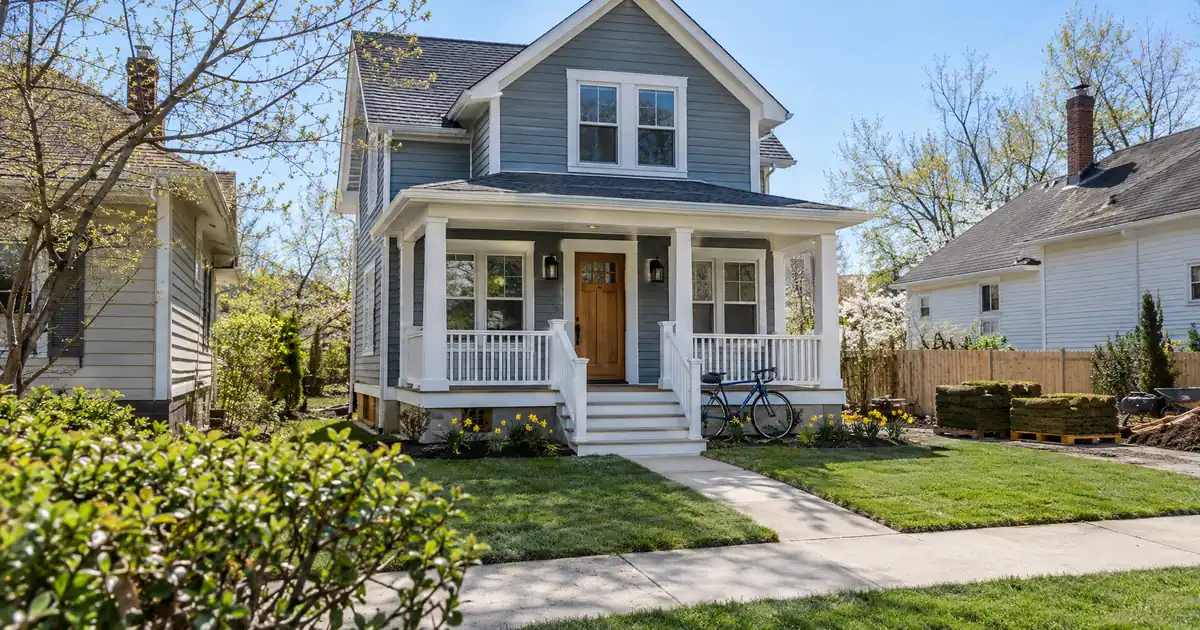
The Quick Read: Yes, on a non-owner-occupied rental you can get approved when the property has enough equity, the loan has a clear exit, and the lender is comfortable with the asset, because approval rests on the property more than on your income. Across the wholesale network Lendmire brokers through, the main limits are leverage and a short term.
- Cash-out and rate/term refinances on this program run up to 65% of value, which is lower than most investors expect.
- Terms run 6-18 months, interest-only, so the loan is a bridge, not a final loan.
- A 620 minimum credit score applies, with added conditions below 660.
- Collateral is non-owner-occupied residential property, 1-4 units.
- Many investors refinance out of hard money into long-term DSCR financing once the property is stabilized.
All figures vary by lender, property, and experience, and nothing here is a commitment to lend.
What Does a Hard Money Cash-Out Actually Mean?
A hard money cash-out refinance replaces your existing loan with a new short-term loan and hands you the leftover equity. The lender secures it with the property itself. “Private lender” and “hard money lender” usually mean the same thing: a private investor or company lending against real estate rather than a depository institution.
Be careful, because the phrase carries two meanings. One is pulling equity out of a property you own. The other is refinancing out of an existing hard money loan. This article covers the first and touches the second in the exit section.
A refinance counts as cash-out when proceeds exceed the payoff and costs. If the new loan covers only the payoff and costs, it is payoff-only. That distinction drives leverage limits on almost every file.
How Do Private Lenders Decide Approval?
Private lenders underwrite the asset first and the borrower second. Market surveys describe hard money as a short-term, asset-based loan, with the Corporate Finance Institute putting typical lending at 65% to 75% of collateral value. Within Lendmire’s network, a cash-out or rate/term refinance goes up to 65% of value, so plan around the lower figure.
| Factor | Why the lender cares | What strengthens the file |
|---|---|---|
| Property value | It is the collateral | Clean appraisal, strong comps |
| Equity left after payoff | It is the cushion | Low existing balance |
| Exit plan | The loan matures in 6-18 months | A documented path to long-term financing |
| Credit | Sets conditions, not the whole decision | 660+ avoids added conditions |
| Experience | Affects leverage on some loans | Documented completed projects |
Credit matters less here, but it still matters. A 620 minimum applies, and files under 660 face additional conditions. First-time investors can qualify, but typically at the lower leverage tiers.
What Property Types Qualify?
Eligible collateral is non-owner-occupied residential property of 1-4 units. Commercial, industrial, land or lots, hospitality, and owner-occupied properties are not offered. If you plan to live in the property, this is the wrong product.
Loan amounts run up to $5,000,000, with larger loans by exception. Smaller balances vary by lender.
How Much Cash Can You Actually Take Out?
Less than the headline value suggests. With a ceiling of 65% of value on a cash-out, your payoff, costs, and any fees all come out of that single number before you see a dollar.
Run the logic with an illustrative property. Say it appraises at $400,000. At 65%, the new loan tops out at a figure well below that value. Your existing mortgage payoff comes out first, then costs, and only the remainder reaches you. If your current balance already sits near the cap, the cash-out is thin or nonexistent.
That is why equity is the deciding variable. A property with a low balance can produce meaningful proceeds. A recently bought, highly leveraged property usually cannot.
Why Seasoning Matters
Seasoning is how long you must own a property before a lender will size the loan on appraised value instead of what you have invested. It is lender policy, not law, and it varies widely. Some lenders want none, others want months of ownership.
Inside the window, many lenders size on purchase price plus documented rehab. After it, a new appraisal usually controls. Your own after-repair estimate does not.
This is where timing bites. The program here runs 6-18 months, so line up the maturity date against the seasoning clock before you sign.
What Documents Should You Prepare?
Expect a file built around the property rather than your pay stubs. Typical items include:
- The deed and a payoff statement for the existing loan
- The closing statement from your purchase
- Rehab receipts or a scope of work, plus pre-rehab photos
- A lease or rent schedule
- Entity documents if an LLC holds title
- Proof of insurance
Share the completed scope of work and photos with the appraiser. It helps them see what changed.
Approval Versus Funding
A term sheet is not a closing. Between the two sit the appraisal, title work, the payoff of your existing lien, insurance, and entity paperwork. Most surprises come from title problems and appraisals that land below your estimate. When the value comes back low, the loan shrinks, and so does your cash.
Why Files Get Declined or Re-Priced
| Decline reason | Fix |
|---|---|
| Appraisal below expectation | Use conservative comps before applying |
| Too little equity after payoff | Wait, pay down, or choose a smaller draw |
| Credit below 620 | Rebuild before applying |
| Ineligible property or occupancy | Confirm 1-4 unit, non-owner-occupied |
| No credible exit | Document the long-term refinance plan |
| Title or entity gaps | Clear liens and organize documents early |
Is It a Business-Purpose Loan?
Yes. Hard money on rentals is a business-purpose loan, which is why asset-based underwriting is permitted. Regulation Z’s business-purpose provision treats credit for non-owner-occupied rental property this way, though its tests turn on purpose and unit count. An ABA Banking Journal compliance piece adds that treatment is not uniform across related rules. The trade-off is fewer consumer protections, so read every term yourself.
Hard Money or DSCR: Which Fits Your Situation?
It depends on whether the property is finished. Hard money fits a property that is mid-rehab, newly acquired, or needs speed and flexibility. Long-term DSCR financing fits a stabilized, leased property you plan to hold.
| Question | Hard money | DSCR cash-out |
|---|---|---|
| Property condition | Can be unfinished | Usually stabilized |
| Underwriting focus | Asset and exit | Rent versus the monthly obligation |
| Term | 6-18 months, interest-only | 30-year fixed spine |
| Cash-out leverage | Up to 65% of value | Around 75% LTV across most of the network |
For a stabilized rental, DSCR often offers more leverage and a longer runway. Typical DSCR cash-out files also look for around 6 months of seasoning, though this varies. Credit generally sits near 660, with 700+ opening the strongest tiers. Coverage of 1.00 is where select programs start, and a separate select-lender path takes coverage below 1.00 with leverage and terms adjusted. Clearing 1.00 does not mean positive cash flow, since repairs, vacancy, and management sit outside the calculation. Many investors refinance out of hard money into this kind of long-term financing once the property is stabilized, and Lendmire brokers that path. The complete DSCR loans guide walks through the details.
Risks and Exit Planning
Hard money trades speed and flexibility for shorter terms and a maturity date. If the loan matures before you can refinance, you face pressure. Build the exit before you borrow: know which long-term loan you will use, whether the property will meet its coverage and seasoning tests, and what a delay costs per month.
Costs matter too. Points, appraisal, title, and processing fees all eat into your margin. Compare what you net, not only what you borrow.
Short-term rental properties may need extra documentation, such as rental history. Short-term rental rules can vary by city, county, HOA, and property type, so investors should confirm local rules before relying on projected rental income.
If You Are Declined
A decline is information. Ask what drove it. If it was equity, wait or reduce the payoff. If it was the appraisal, rework the comps. If it was an exit problem, document the long-term path.
A broker can also rematch the file to a different program. Lendmire’s piece Hard Money Cash-Out Refinance Requirements From a Private Lender Instead of a Bank covers the underwriting checklist.
Key Terms Defined
- Hard money loan: A short-term, asset-based loan secured by real estate.
- Cash-out refinance: A new loan that pays off the old one and gives you the leftover equity.
- Seasoning: The ownership period a lender wants before sizing on appraised value.
- Loan-to-value (LTV): The loan amount as a percentage of the property’s value.
- Exit plan: How you will repay the short-term loan, usually through a long-term refinance.
Frequently Asked Questions
Does a private lender check my credit?
Yes, though credit carries less weight than the property. A 620 minimum score applies, with additional conditions below 660. Underwriting stays asset-based, focused on the property, the plan, and the exit.
How much can I borrow on a cash-out?
Up to 65% of value on a cash-out or rate/term refinance, subject to the lender, the property, and your experience. Loan amounts go up to $5,000,000, with larger loans by exception.
Can I use hard money on a property I live in?
No. The program covers non-owner-occupied residential property of 1-4 units. Owner-occupied homes are not offered.
What happens when the term ends?
The loan matures in 6-18 months and you must repay it, usually by refinancing into long-term rental financing. There are no multi-year options, so plan the exit before you borrow.
Is there a prepayment penalty?
Not on this program. Terms are interest-only with no prepayment penalty, though this varies by lender.
If you are buying, rehabbing or refinancing an investment property on a short timeline and want to see how the numbers work, Lendmire can help you compare hard money options based on the project, the exit plan, leverage, and your goals.
About Lendmire
As a DSCR and non-QM mortgage broker, Lendmire — NMLS# 2371349 — connects investors with wholesale lending channels across 41 markets, including Washington, D.C. The property’s rental income, not the borrower’s tax returns, is central to lender review, which works for self-employed operators and portfolios beyond four financed properties. Scotsman Guide named Lendmire a Top Mortgage Workplace in both 2025 and 2026.
Get Started
Ready to find the right loan for you?
See your offer in seconds. No credit pull, no obligation.
Informational only. Not a Loan Estimate, approval, or commitment to lend. Program availability and eligibility are subject to lender guidelines, credit approval, property review, and underwriting.
References
1. Corporate Finance Institute, Hard Money Loan
2. CFPB, Regulation Z § 1026.3
3. ABA Banking Journal, Compliance Question of the Month
This article is part of Lendmire’s hard money loan program — full qualification details, guidelines, and scenarios live on the program page.
Related reading: Best Hard Money Cash-Out Refinance Program When the Property Is Titled in an LLC · Best DSCR Cash-Out Refinance Program to Pay Off a Hard Money Second · Hard Money Cash-Out Refinance Lenders After Buying a Rental and Waiting Out the Seasoning
Brandon Miller
Founder & CEO, Mortgage Loan Originator, Lendmire LLC
- Mortgage Loan Originator · NMLS# 1129696 · Verify on NMLS Consumer Access
- North Carolina Real Estate Broker · License# 343312 · Verify on NCREC
- North Carolina Insurance Producer · License# 19053198 · Property, Casualty, Life, Health · Verify on NAIC SBS
- Lendmire LLC · Firm NMLS# 2371349 · Verify firm licensure
Disclosures. The information presented in this article is general market commentary, not financial, legal, or tax advice. Lendmire is a mortgage brokerage (NMLS# 2371349) — not a direct lender or depository institution — and loan placement is subject to lender underwriting. Nothing in this content represents a commitment to lend. Loan terms, pricing, and program availability vary based on borrower qualifications, property characteristics, and state of subject property, and are subject to change at any time. Lendmire complies with Equal Housing Opportunity requirements. Consumer access: nmlsconsumeraccess.org.