
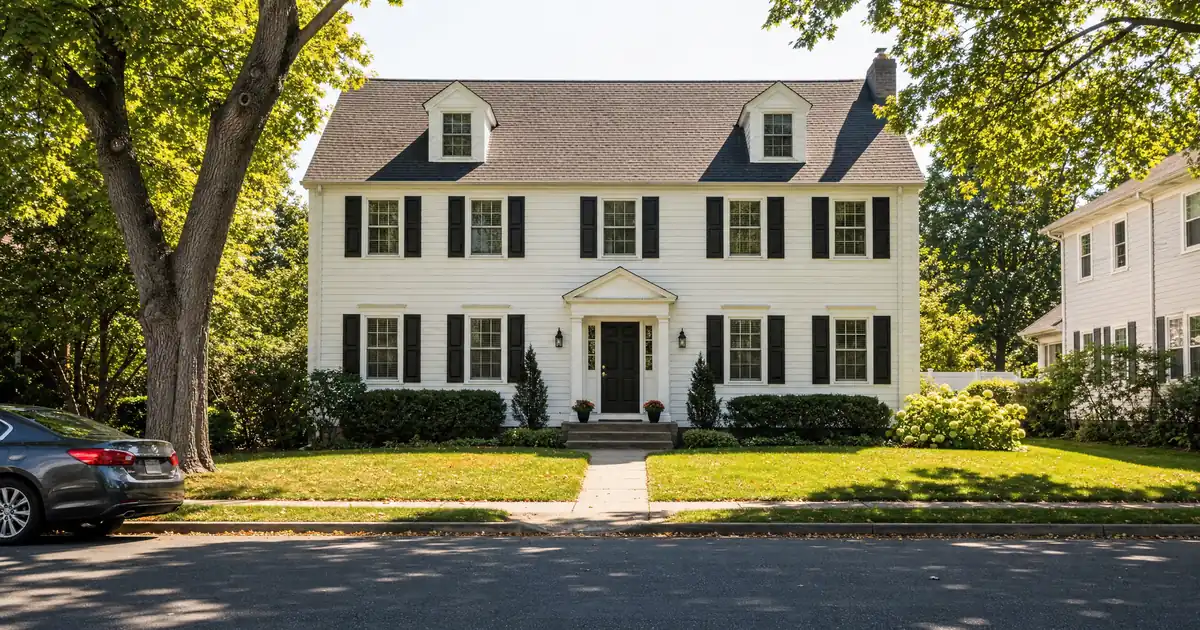
The Quick Read: Yes — a rental property owner can borrow against the equity built up in that property. That happens either through a HELOC or lump-sum home equity loan sitting behind the existing mortgage, or through a cash-out refinance that replaces it entirely. The catch is that rental-property equity products carry a higher credit floor, a lower combined loan-to-value ceiling, and stricter reserve expectations than the same product on a primary home. Which structure fits depends on how the property is titled, how much equity sits in it, and whether the rent alone can carry the payment.
Key Terms Defined
HELOC (home equity line of credit): a revolving credit line secured by a property, where the borrower draws cash as needed up to a limit and repays it over time.
How large a line the equity supports in your market.
An equity line is sized by combined loan-to-value, occupancy, and credit — not by rental coverage. Switch the occupancy or the credit band and the ceiling moves with it.
Investment-property lines require a 700 minimum credit score. Second-home tiers reach 640; primary-residence tiers reach 600.
A debt-to-income ratio above 45% requires 680+ credit. Profiles under 640 are limited to single-family homes. At least 75% of the approved line is drawn at closing. Ceilings, floors, and caps update from Lendmire’s centralized guideline source.
Line estimate
Illustrative estimate only — not a quote, Loan Estimate, approval, or commitment to lend. The rate is an editable assumption; equity-line pricing is variable through both the draw and repayment periods and never converts to fixed. Occupancy and credit drive the ceiling together: investment property runs to 70% combined LTV with a 700 credit floor and a $500,000 cap; a second home runs to 70% at a 640 floor with a $500,000 cap; a primary residence reaches up to 80% at a 600 floor, and its $750,000 maximum line applies only at 75% combined LTV or below with 720+ credit and a full appraisal. Lines above $500,000 require a full appraisal. Credit, debt-to-income, property type, and full underwriting review all affect the final line.
Home equity loan (HELOAN): a lump-sum loan secured by a property, handed over in full at closing rather than drawn down gradually.
CLTV (combined loan-to-value): the total of every loan secured by a property, divided by its value — the number that actually decides how much equity a lender will release.
Cash-out refinance: a new first-lien loan that pays off the existing mortgage and hands the owner the difference in cash, replacing the loan rather than sitting behind it.
DSCR (debt service coverage ratio): a measure of whether a property’s rent covers its own monthly payment — the qualifying tool business-purpose investor loans use instead of personal income documents.
Business-purpose loan: a loan made to acquire, improve, or hold a property as an investment rather than as a personal residence, which changes how the loan gets classified and reviewed.
Two Real Paths to the Same Equity
A rental property owner has two structural options, and they work very differently once money changes hands. The first is a second lien — a HELOC or a home equity loan sitting behind the current first mortgage, leaving that original loan untouched. The second is a cash-out refinance, which pays off the existing mortgage entirely and replaces it with a new, larger one.
Investors have leaned harder into the second-lien path recently, mostly to avoid disturbing a first mortgage that was locked in years ago. That preference shows up in the numbers: ICE Mortgage Technology’s Mortgage Monitor reported U.S. mortgage holders carrying a record $17.6 trillion in home equity, with $11.5 trillion of it considered tappable while maintaining a healthy equity cushion. A follow-up reading from the same dataset found second-lien lending hit its strongest first-quarter volume in nearly two decades, driven largely by borrowers protecting the rate on their existing first mortgage.
That same logic applies just as directly to rental property. Pulling equity through a second lien keeps the original loan intact; a cash-out refinance replaces it. Neither choice is automatically better — it depends on how much equity is available, what the current first mortgage looks like, and whether the property’s title allows the structure the investor wants.
How Lenders Actually Underwrite the File
Underwriting a rental-property equity loan starts with the appraisal, not the borrower’s paycheck. For a single-unit rental, the market rent used to size the deal comes from a standardized rent schedule — Fannie Mae’s Selling Guide documents this form (Form 1007 for one-unit properties, Form 1025 for two-to-four-unit properties) as the industry-wide language for rent verification, and that same form vocabulary carries over into non-agency and DSCR underwriting even though those loans sit outside agency guidelines. The appraiser pulls comparable rentals, adjusts for differences, and lands on a supported rent figure — the borrower’s own estimate of what the unit rents for doesn’t decide the number.
From there, underwriting on a business-purpose investment loan runs on a different track than a loan on the home someone lives in. DSCR loans and rental-property equity products are designed for non-owner-occupied investment property, and because they’re business-purpose loans rather than personal ones, they’re reviewed differently from a standard owner-occupied mortgage. That reclassification also means these loans are generally exempt from the standard consumer mortgage disclosure timeline built for owner-occupied purchases, since that timeline is built around properties the owner doesn’t plan to occupy more than 14 days a year.
Where things diverge further from a primary-residence HELOC is title. Most rental-property equity lines Lendmire’s team sees written require the property to sit in the individual borrower’s name or an inter vivos revocable living trust — not an LLC, corporation, partnership, or irrevocable trust. That’s a real difference from a DSCR cash-out refinance, which routinely closes with title in an LLC, subject to program guidelines. An investor with a rental already deeded to an entity typically has two options: change vesting back to their personal name to use the equity line, or pull the equity through a DSCR cash-out refinance instead, which doesn’t force that change.
HELOC vs. Home Equity Loan vs. Cash-Out Refi vs. DSCR Cash-Out
| Structure | Lien Position | Payout | Rate Type |
|---|---|---|---|
| HELOC | Second, behind existing mortgage | Draw as needed | Floats, no fixed conversion |
| Home equity loan | Second, behind existing mortgage | Lump sum at closing | Fixed, set at closing |
| Cash-out refinance | First, replaces existing loan | Lump sum at closing | Set at closing |
| DSCR cash-out refi | First, replaces existing loan | Lump sum at closing | is reviewed on rent, not income docs |
The first mortgage keeps its own terms under a HELOC or home equity loan; a cash-out refinance resets everything into one new loan. That single distinction usually decides which structure an investor picks before credit score or leverage even enter the conversation.
Where the Standard Rule Breaks
Short-term rentals and LLC-held title are the two places the general “yes, you can pull equity” answer stops applying cleanly, and a third — owner-occupied small multifamily — carries a narrower exemption than most investors assume.
Short-term rentals break the standard rent-schedule math because nightly income doesn’t translate into a monthly figure by simple multiplication. Appraisers can’t just take a nightly rate and multiply by 30 — furniture, services, vacancy swings, and operating costs all sit outside that math. DSCR programs that accept short-term rental income typically layer platform hosting history on top of the standard appraisal rather than replacing it, and Lendmire’s network generally wants around 12 months of hosting history and a credit profile in the low-700s before counting that income toward qualification. Short-term rental rules can also vary by city, county, HOA, and property type, so investors should confirm local rules before relying on projected rental income at all.
Title is the sharper break. As covered above, the standalone equity-line product requires individual or revocable-trust ownership — not an LLC. A property already vested in an entity needs a vesting change or a different loan structure, most commonly a DSCR cash-out refinance, which is built to accept entity ownership, subject to lender program eligibility.
Owner-occupied small multifamily is the third wrinkle. A house-hack where the owner lives in one unit of a two-to-four-unit building doesn’t get the automatic business-purpose classification a fully rented property gets — the owner-occupancy has to fall below the threshold before the property is treated purely as a rental for underwriting purposes. Once an owner moves out and rents every unit, the file shifts cleanly into investment-property treatment.
What Leverage and Credit Actually Look Like
On a standalone rental-property equity line, credit and leverage move together in a narrower band than most investors expect: a 700 minimum score, a 70% combined loan-to-value ceiling, and a $500,000 line cap, with 720+ scores buying eligibility rather than extra leverage room.
That two-tier structure is worth sitting with for a second. Both the 700 and 720 tiers land at the same 70% CLTV ceiling on investment property — the higher score doesn’t unlock more leverage, it just widens who qualifies. And because the investment-property line caps at $500,000 while full appraisals only kick in above that threshold on this product, an investment-property equity line structurally never needs a traditional appraisal — it runs through automated valuation, though a borrower can still request a full appraisal if they want one.
Income documentation follows a similar logic. Bank-statement income for a business account needs a 680 minimum on this product generally, but since investment property already floors at 700, bank-statement borrowers on a rental file clear that bar automatically — it’s simply never the binding constraint on an investment-property line. Debt-to-income typically runs up to around 50% on qualifying profiles, calculated off the interest-only payment on the fully drawn line rather than an amortizing one.
Tennessee shortens the runway on both network structures: a 3-year draw with a 12-year repayment on the higher-leverage program, and a 5-year draw with a 10-year repayment on the longer-runway program. Pricing floats across both periods on most files and doesn’t convert to a fixed rate later. Line sizes for investment property generally run from around $25,000 up to that $500,000 ceiling — the network’s larger $500,000-to-$750,000 tier requiring a 720 score and full appraisal applies to primary and second homes, not rental property.
Property type matters too. Single-family homes, two-to-four unit buildings, PUDs, townhomes, condos (including non-warrantable condos), and modular factory-built homes are generally eligible. Manufactured homes, co-ops, condotels, timeshares, barndominiums, and log homes are not offered on this product — same as they’re not offered on the DSCR side of Lendmire’s network. Foreclosure-family history now splits the network: one program seasons a foreclosure in seven years and a deed-in-lieu or short sale in four, while the higher-leverage program declines the history outright — bankruptcy seasons in four years on both.
This product also isn’t everywhere. Lendmire’s rental-property equity line is available across 16 full-service states — Alabama, California, Colorado, Florida, Georgia, Indiana, Michigan, Montana, New Mexico, North Carolina, Ohio, Pennsylvania, Tennessee, Texas, Virginia, and Washington — a narrower footprint than the broader 39-states-plus-Washington-D.C. reach of Lendmire’s DSCR investor loan programs. A handful of states carry their own overlays: Texas treats rental and second-home equity lines as non-homestead transactions (Texas properties are also capped at 10 acres), and New Mexico and Ohio apply a leverage ceiling that shifts with the borrower’s credit profile. A borrower can hold up to three lines, with combined exposure to $2,000,000 on the higher-leverage program ($750,000 on the longer-runway program) and a 15-financed-property limit on both.
When the Math Points to DSCR Instead
When the equity line’s $500,000 ceiling or its individual-ownership title rule doesn’t fit the deal, a DSCR cash-out refinance is usually the next stop — and it qualifies primarily on the property’s own rental income covering the payment, subject to lender guidelines, rather than on the borrower’s traditional personal-income documentation.
Across the DSCR side of the wholesale network Lendmire places files with, cash-out refinances on investment property generally top out around 75% loan-to-value, with roughly six months of ownership seasoning expected on most files before the cash-out is drawn. Coverage is measured as a ratio of rent to the full monthly obligation, and 1.00 is where select DSCR programs set their floor — a starting point for those specific programs, not a rule every lender applies. A property whose rent clears its obligation with real room to spare, in low-1.2x territory or better, generally opens stronger leverage and pricing than one sitting right at the floor. Credit floors on this side of the network run as low as 620 in parts of the network, though most programs want something closer to 660, and a 700+ score is usually what unlocks the top leverage tiers.
Picture two rentals side by side: one where the title sits in the owner’s personal name, well under $500,000 in loan balance, with plenty of equity and a clean credit file — that one is a strong candidate for the standalone equity line. The other sits in an LLC, needs a larger cash-out than $500,000 supports, and clears its rent-to-payment ratio comfortably above 1.00 — that file usually moves toward a DSCR cash-out refinance instead. Reserve requirements on the DSCR side vary by lender, leverage, and loan size — commonly landing around six months of the full monthly obligation, sometimes waived on conservative rate-term files under $1,500,000, and stepping up toward nine months on larger loans.
It’s worth being direct about what clearing that 1.00 ratio actually means: it says the rent covers the mortgage payment, taxes, insurance, and any HOA dues. It doesn’t say anything about vacancy, repairs, management fees, utilities, or capital expenditures — those sit outside the calculation entirely, and a property that clears 1.00 on paper can still run negative once real operating costs hit the ledger.
Lendmire (NMLS# 2371349) arranges both structures — the standalone equity line and the DSCR cash-out refinance — through select lenders in its wholesale network, and neither path is guaranteed; every file goes through lender review of the borrower, the property, and the program guidelines in place at the time. Investors can walk through both options directly by calling 828-256-2183 or requesting a quote.
For a broader look at how DSCR mortgage broker review works property-by-property, Lendmire’s complete DSCR loans guide walks through the mechanics in more depth, and its pages on pulling equity from a rental you already own and structuring a home equity loan against investment property cover the same ground from a few different angles.
Making the Call
Neither structure beats the other on paper — the decision usually comes down to three questions. How much cash does the deal actually need, and does it fit under the $500,000 equity-line ceiling? How is the property titled, and would moving it out of an LLC be worth doing? And does the rent alone cover the payment comfortably enough to make a cash-out refinance’s larger, first-lien loan pencil at an acceptable leverage point?
Regulatory framing matters here too: the distinction between owner-occupied and business-purpose lending that shapes disclosure timelines throughout this article traces back to the CFPB’s Regulation Z, which draws the 14-day occupancy line separating the two.
Tax treatment can depend on how the funds are used and how the property is held; investors should keep clear records and speak with a qualified tax professional before relying on any deduction. Loan approval is never guaranteed, and nothing here is a commitment to lend — every scenario described is subject to lender approval and to borrower, property, and program guidelines in place at the time of application. This article is general information, not financial, legal, or tax advice.
Frequently Asked Questions
Can I get a HELOC on a rental property if the title is in an LLC?
Not on the standalone equity-line product covered here — title has to sit with the individual borrower or an inter vivos revocable living trust, and LLCs, corporations, partnerships, and irrevocable trusts don’t qualify for that structure. A rental already vested in an LLC typically needs either a vesting change back to personal ownership or a DSCR cash-out refinance, which is generally built to accept entity ownership, subject to lender program eligibility.
Do I need a full appraisal to pull equity out of a rental property?
Usually not, on the equity-line product — investment-property lines cap at $500,000, and full appraisals on this product only apply above that threshold, so most files run through automated valuation instead. A borrower can still request a full appraisal in any case if they’d rather have one.
Is it harder to get a home equity loan on a rental property than on the home I live in?
Generally yes. Rental-property equity products typically carry a higher minimum credit score, a lower combined loan-to-value ceiling, and cash reserve expectations that a primary-residence HELOC or home equity loan doesn’t always require, since the loan is scored as a business-purpose investment transaction rather than a personal one.
What’s the difference between pulling equity through this HELOC product and doing a DSCR cash-out refinance instead?
The equity line sits behind the existing mortgage as a second lien and requires individual or revocable-trust ownership, capped around $500,000 on investment property. A DSCR cash-out refinance replaces the first mortgage entirely, generally allows LLC-held title subject to program guidelines, and qualifies primarily on the property’s rental income covering the payment rather than on the borrower’s traditional personal-income documentation.
Can I hold equity lines on more than one rental property at the same time?
About Lendmire
Lendmire (NMLS# 2371349) is a DSCR-focused mortgage broker that helps arrange investor financing across 40 markets, including Washington, D.C., through wholesale and investor-lending channels. DSCR eligibility is generally reviewed by the lender around the property’s rental income rather than personal income documentation, subject to lender guidelines — which works for self-employed investors, LLC operators, and portfolios above four financed properties. Scotsman Guide named Lendmire a Top Mortgage Workplace in both 2025 and 2026.
Get Started
Ready to find the right loan for you?
In about 30 seconds you can review financing options available for your home or investment property. No commitment required.
Informational only. Not a Loan Estimate, approval, or commitment to lend. Program availability and eligibility are subject to lender guidelines, credit approval, property review, and underwriting.
References
1. ICE Mortgage Technology — Mortgage Monitor: Record Levels of Home Equity
2. Fannie Mae Selling Guide — Rental Income (B3-3.8-01)
3. Consumer Financial Protection Bureau — Regulation Z, 12 CFR § 1026.3
Brandon Miller
Founder & CEO, Mortgage Loan Originator, Lendmire LLC
- Mortgage Loan Originator · NMLS# 1129696 · Verify on NMLS Consumer Access
- North Carolina Real Estate Broker · License# 343312 · Verify on NCREC
- North Carolina Insurance Producer · License# 19053198 · Property, Casualty, Life, Health · Verify on NAIC SBS
- Lendmire LLC · Firm NMLS# 2371349 · Verify firm licensure
Disclosure information. Lendmire is a state-licensed mortgage brokerage under NMLS# 2371349. Lendmire is not a depository institution, direct lender, or financial advisor — all loans referenced are placed through wholesale lender partners and are subject to each lender's underwriting standards. This article is provided for general informational purposes and is not a commitment to lend, nor does it constitute financial, legal, or tax advice. Loan programs, terms, rates, and qualification standards change without notice and depend on borrower profile, property type, and the state in which the subject property is located. Equal Housing Opportunity provider. NMLS Consumer Access: nmlsconsumeraccess.org.


