
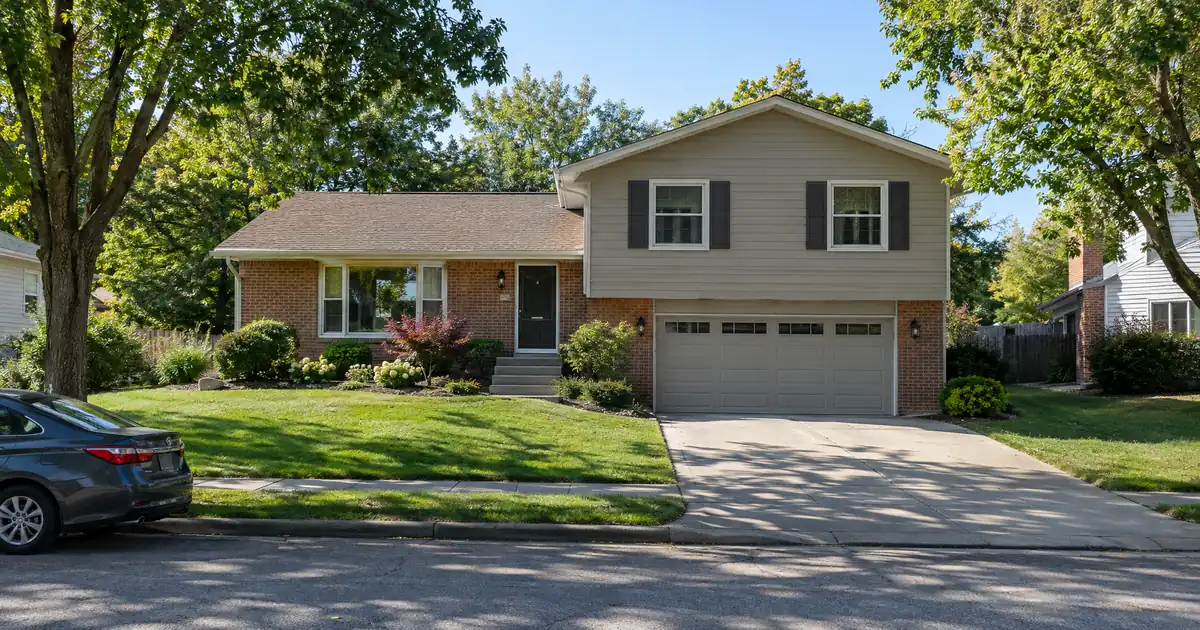
Can You Refinance A Primary Mortgage Into An Investment Property — The Quick Read: Yes, but the occupancy classification and the loan itself both have to change together. A property financed as a primary residence can’t just start collecting rent while the original mortgage stays in place unaddressed. The refinance moves the file out of owner-occupied underwriting and into a rental-income product — most often a DSCR loan, where the property’s rent, not the borrower’s paycheck, carries the qualification.
That’s the short version. The mechanics underneath it — occupancy certification, documentation, seasoning, and what happens if the numbers come in thin — are where most homeowners-turned-landlords get tripped up.
DSCR Calculator
Run the numbers in your market
Rate source: Freddie Mac 30-yr average via FRED® — Federal Reserve Bank of St. Louis · effective Sep 17, 2026
Prefilled with local estimates — enter your own rent or nightly figures, taxes, insurance, and HOA for a more accurate picture.
Program parameters update from Lendmire’s centralized guideline source. Taxes and insurance are editable estimates.
As of Sep 17, 2026 · General Freddie Mac market benchmark, not a Lendmire loan offer. Rent, nightly rate, occupancy, taxes, and insurance are editable estimates. Short-term rental figures are estimates only and vary significantly by season, property type, management approach, and local short-term-rental rules — confirm local regulations before relying on them. Qualifying income for short-term rentals varies by program — some use appraisal market rent, others use documented STR history or projections — and is confirmed in underwriting. Not a Loan Estimate, approval, or commitment to lend. Program availability and eligibility are subject to lender guidelines, credit approval, property review, and underwriting.
Key Terms Defined
DSCR (debt-service-coverage ratio): a way of qualifying a rental loan by dividing the property’s monthly rent by its full housing payment, instead of using the borrower’s personal income.
PITIA: the full monthly housing obligation — principal, interest, taxes, insurance, and any HOA dues — that rent gets measured against in a DSCR calculation.
Occupancy certification: the signed statement, made at the original closing, declaring whether the borrower intends to live in the property or rent it out.
Seasoning: the minimum amount of time a lender requires between an ownership event (like a purchase or the last refinance) and a new refinance, especially a cash-out.
Business-purpose loan: a loan made to a property held for rental income rather than personal use — DSCR loans fall in this category and are underwritten differently from a standard owner-occupied mortgage.
Can You Just Stop Living There and Start Renting?
Not cleanly, no. The original loan’s occupancy certification stays attached to that mortgage until you refinance it or pay it off. At the original closing, most borrowers sign the Uniform Residential Loan Application. Many also sign a separate occupancy affidavit, swearing they plan to live in the home. That certification doesn’t quietly expire just because life changes. Trade coverage of occupancy enforcement makes this point directly. Misclassifying occupancy “can shave interest rates, loosen underwriting, and shift tens of thousands of dollars in a borrower’s favor.” That’s exactly why lenders don’t let you simply relabel a loan without a new underwriting event (National Mortgage Professional).
The federal government treats this as a real compliance issue, not a paperwork technicality. The Financial Crimes Enforcement Network defines classic occupancy fraud as happening “when borrowers, to obtain favorable loan terms, claim that subject properties will be their primary residences instead of vacation homes or investment properties” (FinCEN). That’s the exposure on the front end: certifying primary intent while planning to rent the place out. Some loans do allow a documented occupancy period before a conversion counts as acceptable. Still, the safe, clean path is to refinance into a proper investment-property loan once your intent changes.
Why the Loan Itself Usually Has to Change
DSCR loans are made for non-owner-occupied investment properties. They’re business-purpose investor loans. Because of that, lenders review them differently than a standard owner-occupied mortgage. Once a property stops being someone’s home, the qualification standard changes. The documentation changes too. So does the risk pricing.
That shift is the whole reason a refinance is usually required rather than optional. A primary-residence loan was priced and underwritten against lower-risk, owner-occupied credit. Once the home becomes a rental, the risk profile the original lender priced against no longer matches reality, and the file has to move into a product built for that new use.
The Paper Trail Changes Completely
traditional personal-income documentation and pay stubs stop mattering. Lease evidence and market rent take over instead. For conventional (agency) loans, Fannie Mae’s own Selling Guide directs appraisers to specific rent-verification forms. That’s a Single-Family Comparable Rent Schedule for one-unit properties, or a Small Residential Income Property Appraisal Report for two- to four-unit properties (Fannie Mae Selling Guide). DSCR and other non-QM programs don’t follow that guide. Even so, many lenders and appraisers in that space use the same rent-schedule idea as a starting point for market rent.
The friction shows up most on properties that just converted. A home that was owner-occupied for part of the year, or recently converted from a primary residence, often has no clean twelve-month lease history. Without it, the appraiser and lender lean on a market-rent estimate instead of actual trailing income, and that estimate can move the DSCR calculation up or down depending on local rent trends. Insurance has to shift too — a landlord policy replaces the homeowner’s policy, and that switch is one of the signals reviewers watch for after closing.
What DSCR Looks Like on This File
Once the deal works to a rental-income basis, the math is straightforward even if the paperwork isn’t. Most programs in the wholesale network set 1.00 DSCR as a starting floor on select programs — not a universal standard, but the point where the property’s rent is projected to cover its full monthly payment. Stronger coverage above that opens better leverage and pricing tiers.
Purchase leverage on most files in the network runs 75%–80% LTV, meaning 20%-25% down. A handful of high-leverage programs reach 85% LTV for borrowers with roughly a 700+ credit score. On a refinance, cash-out is generally capped around 75% LTV for standard rental property, with typical files expecting about six months of seasoning before cash-out becomes available. Credit floors go as low as 620 in parts of the network, though most programs prefer around 660, and the strongest leverage tiers open up closer to 700 and above.
Say a homeowner is converting a $340,000 primary-residence balance into a DSCR refinance at 75% LTV, the common ceiling for standard rental cash-out. If projected market rent comfortably covers the new PITIA, coverage might land somewhere around 1.15x. That’s a modeled figure to illustrate the calculation, not a market quote — every file runs on its own rent, taxes, insurance, and lender guidelines. Loan sizes on most standard DSCR programs run up to roughly $3,000,000, with smaller balances typically placed through select lenders in the network rather than the largest programs.
Reserve requirements vary by lender, leverage, and loan size. Six months of PITIA in reserves is a common benchmark on most files. Conservative rate-term refinances at modest leverage under $1,500,000 sometimes skip reserves entirely. Loans above that size often step up to around nine months instead.
If the Rent Comes in Light
A DSCR under 1.00 doesn’t automatically kill the refinance. It changes the structure. Coverage below 1.00 is available through select lenders in the network, but the leverage and terms adjust to offset the thinner ratio — usually a lower LTV, more equity left in the deal, or different pricing rather than an outright decline.
There’s also a no-ratio path for one specific type of borrower: investors who already own a primary residence somewhere else. Only select lenders in the network offer this structure. It doesn’t come with a fixed numeric coverage floor the way standard DSCR programs do. It’s a different underwriting lane entirely, reserved for a narrower borrower profile.
One clarification worth making plainly: clearing 1.00 DSCR means rent covers the payment. It says nothing about maintenance, vacancy, or capital expenses sitting on top of that number. A property can clear 1.00 and still lose money in a bad year if a roof needs replacing.
What Doesn’t Qualify, Regardless of Rent
Some property types fall outside DSCR programs no matter how strong the projected rent looks on paper. Manufactured homes — single- or double-wide — log homes, and barndominiums aren’t offered through the wholesale network’s DSCR programs. That’s a hard eligibility line, not a pricing penalty, so it’s worth checking property type before assuming a refinance path exists at all.
Two Different Seasoning Clocks — and Why They Confuse People
Conventional cash-out refinances follow their own seasoning rules. These rules are separate from title-holding time, and separate from DSCR underwriting entirely — it’s a different program with a different clock. DSCR files in the wholesale network don’t follow Fannie Mae’s timeline. Instead, they run on the network’s own seasoning expectation, generally around six months of ownership before cash-out becomes available. Mixing up which clock applies to which loan type is one of the more common planning mistakes on this exact transaction.
Common Mistakes Investors Make
“Nobody checks, so the certification doesn’t really matter.” Detection is real and getting more automated. Cotality data cited in a legal-encyclopedia summary found lenders flagged signs of mortgage fraud, including occupancy fraud, in roughly 1 out of every 116 mortgage applications during a recent measured period (Nolo). That’s not universal enforcement, but it’s not nothing either.
“A DSCR loan lets me get investor pricing while I still live there.” DSCR loans are business-purpose only. They aren’t structured for a property the borrower intends to occupy, full stop.
“Clearing 1.00 DSCR means the property is cash-flow positive.” As noted above, DSCR measures rent against PITIA only. Repairs, vacancy, management fees, and capital expenses sit outside that ratio entirely.
“There’s one universal seasoning rule that applies to every refinance.” There isn’t. Agency seasoning rules apply only to loans sold to Fannie Mae. DSCR refinances run on the wholesale network’s own, lender-specific seasoning tests instead.
Moving Back In Later
Reversing the conversion is generally possible, but it triggers its own refinance event — the loan and the insurance both have to reflect the change again. A property financed as a business-purpose investment loan usually needs to move into an owner-occupied product before someone moves back in as a primary residence. It’s the same principle running in the other direction: the occupancy and the loan type have to match.
Tax treatment on any of this can depend on how the funds are used and how the property is held, so investors should keep clear records and talk to a qualified tax professional before relying on any deduction.
Say a homeowner is weighing this exact move: converting a primary residence, then refinancing into a rental-property loan. Lendmire can help compare DSCR loan options for that situation. The comparison looks at the property’s projected income, the borrower’s credit profile, available leverage, and the investor’s broader goals. Investors can call 828-256-2183 or request a quote to see how a specific property’s numbers might work. For a fuller breakdown of how DSCR underwriting works end to end, Lendmire’s complete DSCR loans guide covers the qualification mechanics in more depth. Investors weighing the expense side of this move can also review what a refinance on a rental property tends to cost.
Frequently Asked Questions
Can I keep my primary-residence loan’s certification and just start renting the house quietly?
That approach carries real risk. The occupancy certification signed at the original closing stays attached to that loan, and renting the property without addressing the financing is the exact pattern lenders and fraud-detection systems are built to catch, including watching for insurance-type switches and rental listings appearing shortly after closing.
Do I have to wait a set amount of time before refinancing into a DSCR loan?
Most files in the wholesale network expect around six months of seasoning before cash-out becomes available, though this varies by lender and loan scenario. Conventional cash-out refinances follow separate agency seasoning rules that don’t apply to DSCR files at all.
What if the rental income doesn’t fully cover the new payment?
Coverage below 1.00 doesn’t automatically end the refinance — select lenders in the network still work with it, typically by adjusting leverage or pricing rather than declining the file outright. A no-ratio structure is also available through select lenders for borrowers who already own a separate primary residence.
Does converting a primary residence hurt my chances of qualifying?
Not inherently, but a property with no documented lease history often gets valued on an appraiser’s market-rent estimate instead of actual collected rent, which can shift the achievable DSCR and leverage compared to a property with a full year of lease evidence already in place.
What documentation replaces my traditional personal-income documentation and pay stubs?
DSCR lender review runs primarily on the property’s rental income covering the monthly payment, subject to lender guidelines, rather than personal income documentation. Expect lease agreements or a market-rent appraisal, a landlord insurance policy, and standard credit and reserve documentation in place of W-2s or tax transcripts.
About Lendmire
Lendmire — NMLS# 2371349 — is a DSCR and non-QM mortgage brokerage with investor loan programs in 40 markets, including Washington, D.C. DSCR eligibility is commonly reviewed by the lender around property-level rent rather than personal income documentation, subject to lender guidelines, and the brokerage helps arrange financing for LLC-owned portfolios beyond conventional financed-property limits. Recognized by Scotsman Guide as a Top Mortgage Workplace in 2025 and 2026.
Lendmire’s Top Mortgage Workplace recognition is documented by Scotsman Guide 2025 Top Mortgage Workplace and Scotsman Guide 2026 Top Mortgage Workplace.
Get Started
Ready to find the right loan for you?
In about 30 seconds you can review financing options available for your home or investment property. No commitment required.
Informational only. Not a Loan Estimate, approval, or commitment to lend. Program availability and eligibility are subject to lender guidelines, credit approval, property review, and underwriting.
References
1. National Mortgage Professional — When Primary Residence Isn’t
2. FinCEN Advisory on Mortgage Loan Fraud (FIN-2012-A009)
3. Fannie Mae Selling Guide — Rental Income Requirements
4. Nolo — Mortgage Occupancy Fraud Legal Encyclopedia
Brandon Miller
Founder & CEO, Mortgage Loan Originator, Lendmire LLC
- Mortgage Loan Originator · NMLS# 1129696 · Verify on NMLS Consumer Access
- North Carolina Real Estate Broker · License# 343312 · Verify on NCREC
- North Carolina Insurance Producer · License# 19053198 · Property, Casualty, Life, Health · Verify on NAIC SBS
- Lendmire LLC · Firm NMLS# 2371349 · Verify firm licensure
Required disclosures. Lendmire (NMLS# 2371349) operates as a licensed mortgage broker, not a direct lender or depository. The discussion in this article is general in nature and should not be relied upon as financial, legal, or tax advice — every investment scenario is unique and should be reviewed by a qualified professional. Any loan inquiry is subject to lender underwriting, and this article is not a commitment to lend or a guarantee of approval. Mortgage rates, loan terms, and program guidelines vary by borrower, property, and state, and may change without notice. Equal Housing Opportunity. Verify licensure at NMLS Consumer Access.


