
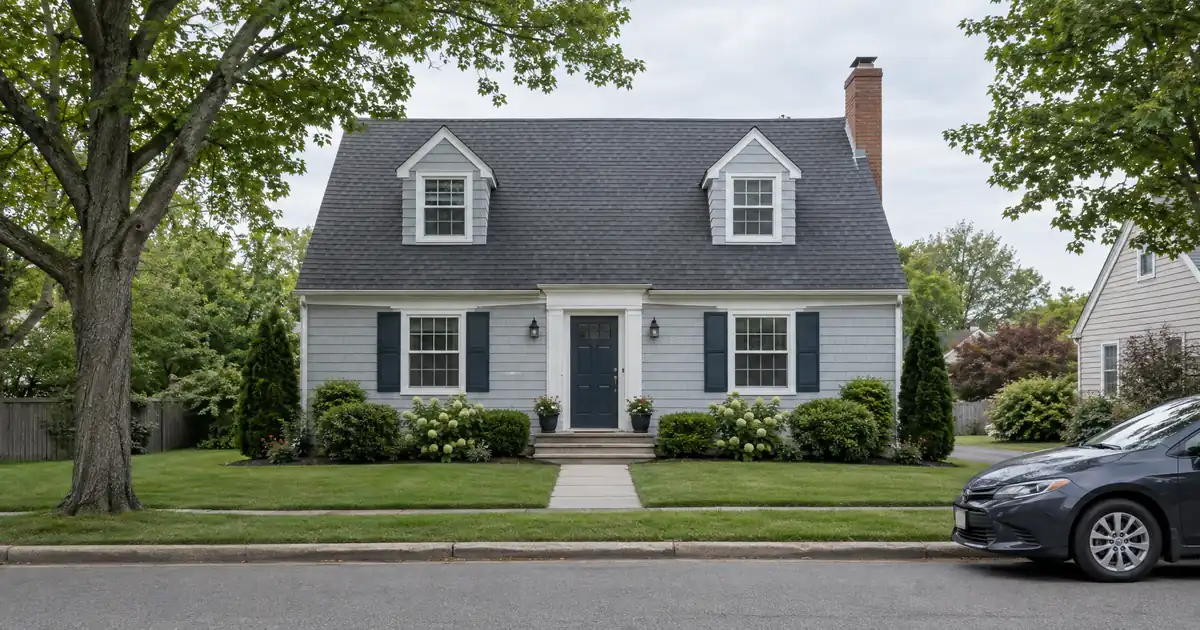
Can You Refinance A Rental Home — The Quick Read: Yes, a rental property can be refinanced, but the rules differ from a primary home. Lenders look at leverage, credit, reserves, and how long you’ve owned the title. On DSCR loans, the property’s rent — not your personal income — usually carries the file, subject to lender guidelines.
Key Terms Defined
A few terms come up constantly in rental refinances, so it helps to define them plainly before going further.
DSCR Calculator
Run the numbers in your market
Rate source: Freddie Mac 30-yr average via FRED® — Federal Reserve Bank of St. Louis · effective Sep 17, 2026
Prefilled with local estimates — enter your own rent or nightly figures, taxes, insurance, and HOA for a more accurate picture.
Program parameters update from Lendmire’s centralized guideline source. Taxes and insurance are editable estimates.
As of Sep 17, 2026 · General Freddie Mac market benchmark, not a Lendmire loan offer. Rent, nightly rate, occupancy, taxes, and insurance are editable estimates. Short-term rental figures are estimates only and vary significantly by season, property type, management approach, and local short-term-rental rules — confirm local regulations before relying on them. Qualifying income for short-term rentals varies by program — some use appraisal market rent, others use documented STR history or projections — and is confirmed in underwriting. Not a Loan Estimate, approval, or commitment to lend. Program availability and eligibility are subject to lender guidelines, credit approval, property review, and underwriting.
DSCR (Debt-Service Coverage Ratio) is the property’s monthly rent divided by its full monthly housing payment. A ratio above 1.00 means the rent covers the payment; below 1.00 means it doesn’t, at least on paper.
PITIA is short for principal, interest, taxes, insurance, and association dues — the full monthly housing obligation lenders use on the bottom half of the DSCR math.
LTV (Loan-to-Value) is the loan amount expressed as a percentage of the appraised value. Lower LTV means more equity in the deal and, often, better pricing and terms.
Rate-and-term refinance replaces an existing loan with a new one, usually to adjust the term or move off a costlier structure, without pulling out cash.
Cash-out refinance replaces the loan with a bigger one and hands the borrower the difference in cash, based on the property’s current appraised value.
Seasoning is the waiting period a lender requires before a property can be refinanced, measured either from the date title was acquired or from the date the current loan was originated.
The Short Answer: Yes, But the Rules Are Different
A rental home can absolutely be refinanced — the real question is which set of rules governs the file. DSCR and other non-QM investor loans are business-purpose products that never touch the agencies, so each lender in a wholesale network sets its own seasoning, leverage, and documentation rules.
That distinction matters more than most investors realize. Conventional rental refinances still look at the borrower’s personal debt-to-income ratio. They also require traditional personal-income documentation and W-2s. DSCR refinances work differently. They qualify mainly on whether the property’s rental income covers the payment, subject to lender guidelines. This is why DSCR loans grew popular with self-employed investors, LLC-organized owners, and portfolio operators. Their traditional personal-income documentation often understates their real cash flow because of depreciation.
Investor-purpose lending isn’t a niche corner of the market anymore. 5% of nonconforming originations in a recent month, according to Scotsman Guide, with owner-occupied non-QM loans making up the rest. That share reflects how mainstream DSCR refinancing has become for the individual landlords who dominate rental ownership.
Rate-and-Term vs. Cash-Out: How to Refinance a Rental Home
These two transactions get lumped together constantly, but they run on different math from the first line of the application.
| Factor | Rate-and-Term | Cash-Out |
|---|---|---|
| Purpose | Replace the loan, no cash out | Pull equity as cash |
| Typical LTV cap | Around 75%–80% | 75% ceiling on standard rentals |
| Seasoning | Usually shorter or waived | Roughly 6 months on most files |
| Reserves | Often lighter | Typically 6 months PITIA |
| STR cash-out cap | N/A | Near 70% on short-term rentals |
A rate-and-term refinance on a standard rental generally clears with less friction. No cash is leaving the closing table, so the leverage ceiling and reserve bar tend to sit lower. A cash-out refinance is a bigger ask. Here, the lender is handing over cash against the property’s equity. So leverage caps near 75% on standard rentals, versus roughly 70% on short-term rental collateral. Around six months of seasoning from acquisition is common across most of the wholesale network.
How Lenders Verify Rental Income
Rent isn’t self-reported on most files. Instead, it gets documented through an appraisal exhibit and, often, a lease or tax return. For single-family rentals, appraisers typically complete a comparable rent schedule. This estimates market rent by comparing similar rental properties in the same market area. For two-to-four-unit properties, a small residential income property report covers the analysis instead. These buildings carry more moving parts than a single-family rental, so they need this different report.
DSCR loans are designed for non-owner-occupied investment properties. They’re business-purpose loans, not consumer mortgages. Because of this, they’re reviewed on a different track than a standard owner-occupied refinance. They also sit outside the disclosure timelines that apply to a personal home loan.
Two separate tests get checked on every file: the appraised value sets the leverage ceiling, and the verified rent sets the coverage ratio. A property with plenty of equity can still stall if the rent doesn’t clear the coverage bar, and a property with strong rent can still stall if the leverage math doesn’t work. Both tests have to pass independently — one strong number doesn’t offset a weak one.
What It Takes to Qualify Today
Across the DSCR programs Lendmire places files with, most purchase leverage lands at 75%–80% LTV, meaning 20%–25% down, and a handful of high-leverage programs reach 85% LTV for borrowers with scores around 700 or better. Cash-out refinances top out closer to 75% LTV on standard rentals, with roughly six months of seasoning being the common expectation before a lender will approve a cash-out request. Terms vary by lender guidelines, property type, leverage, credit profile, and full file review.
Credit floors vary by lender. A 620 minimum shows up in parts of the network, but most programs want something closer to 660, and the strongest leverage tiers open up around 700 and above. Coverage of 1.00 is where some programs start — a floor for specific products, not a universal standard — and stronger ratios tend to unlock better leverage and pricing. Reserve requirements move around too: roughly six months of PITIA is typical on most files, stepping up toward nine months on loan amounts above $1,500,000, with some conservative rate-and-term deals under $1,500,000 seeing reserves waived entirely.
Loan sizes on standard DSCR programs generally run up to $3,000,000, with smaller balances routed through select lenders in the network rather than a single fixed minimum. Consider an investor whose rent covers the full monthly obligation at roughly 1.15x. That comfortably clears the 1.00 benchmark many programs use as a floor, which typically opens room for leverage in the 75%–80% range on a purchase and closer to 75% on a cash-out.
One property type note worth flagging early: manufactured homes (single- and double-wide), log homes, and barndominiums are not offered through DSCR programs in this network. That’s a hard exclusion, not a “harder to finance” situation — investors holding one of these should plan on a different financing path entirely.
Anyone wanting the fuller mechanics of how DSCR lender review works can review Lendmire’s complete DSCR loans guide before assembling a file.
Refinancing a Short-Term Rental Is a Different Playbook
A short-term rental refinance runs on tighter numbers than a standard long-term rental. Purchase leverage on STR collateral tops out around 75% LTV, and many programs want a credit score of 700 or better, roughly 12 months of hosting history, and DSCR coverage near 1.00 on the purchase side. Exact terms depend on the lender’s guidelines, property type, leverage, and a full review of the borrower’s file.
Refinancing an existing short-term rental generally lands around 70% LTV. A similar 1.00 coverage benchmark applies on the refinance side too. But pricing and leverage on a refinance differ from what applies on a purchase. So don’t treat the two as one identical set of numbers. Cash-out refinances on short-term rentals typically cap near 70% LTV. Compare this with roughly 75% on cash-out refinances of standard long-term rentals. This distinction matters, since the two collateral types don’t share a leverage ceiling.
Institutional capital hasn’t taken over this market the way headlines sometimes suggest. A GAO review looked at institutional investor ownership across six metro areas. It found institutional investors owned anywhere from 4% to 22% of single-family rental homes. But they owned under 1% to 3% of all single-family homes in those markets. This means most rental refinance activity, short-term or long-term, still runs through individual landlords rather than large funds.
Where Conventional Rules Still Apply — And Where They Don’t
Conventional and DSCR refinances don’t follow the same rules. Mixing them up causes real delays. Under Fannie Mae’s Selling Guide, the standard six-month title-seasoning rule on a cash-out refinance is waived in certain cases. This happens for borrowers who inherited the property or received it through a divorce or separation settlement. Time a property spent titled inside a borrower-controlled LLC can sometimes count toward that same six-month clock. But this only applies if ownership moves back into the individual’s name before closing.
None of that governs DSCR loans. That flexibility is one reason entity-held rental portfolios lean toward DSCR refinancing rather than trying to force a conventional exception.
When the Numbers Fall Short of 1.00
Coverage below 1.00 isn’t automatically a dead end. Sub-1.00 DSCR structures are available through select lenders in the network, though leverage and terms typically adjust to offset the thinner coverage — meaning a lower LTV, a stronger credit profile, or both. No-ratio structures exist too, but those are available only through select lenders and are generally reserved for borrowers who already own a primary residence, rather than being an open option on every file.
Clearing 1.00 also doesn’t mean the property is generating positive cash flow. DSCR only measures rent against PITIA — it says nothing about repairs, vacancy, property management, utilities, or capital expenditures, all of which sit outside that ratio. A property clearing 1.10x on paper can still run negative once those real costs get added back in, so treating the coverage ratio as a full cash-flow picture is a mistake worth avoiding before assuming a refinance solves a bigger problem.
Mistakes That Slow Down a Rental Refinance
A few patterns show up again and again on files that stall. Investors assume the 12-month conventional seasoning clock applies to every rental refinance, when it’s actually an agency-specific rule that doesn’t bind DSCR lenders. Others assume a cash-out refinance follows the same math as a rate-and-term refinance with a bigger number attached — it doesn’t, since leverage caps, seasoning, and reserves shift meaningfully between the two. And investors chasing a BRRRR exit sometimes assume delayed financing lets them refinance against the freshly renovated value on day one, when the loan amount is generally capped by documented cost basis until real seasoning has passed.
Say a rental refinance file is stalling on reserves, seasoning, or an LLC title question. In that case, work through those exceptions with a broker who compares multiple lenders’ guidelines side by side. This tends to resolve the issue faster than assuming any single program’s rule is universal. Investors weighing whether to refinance a rental held individually versus through an LLC can also review Lendmire’s breakdown on do you need to own a home to cash out refinance a rental before restructuring title.
If you’re buying or refinancing a rental property and want to see how the numbers work, Lendmire can help compare DSCR loan options based on the property’s income, your credit profile, target leverage, and your goals as an investor — reachable at 828-256-2183 or through a pricing quote request.
Frequently Asked Questions
Can I refinance a rental property that’s currently vacant between tenants?
Yes, though a vacant unit makes the rent verification harder since there’s no active lease to document. Appraisers can often use market rent from comparable properties instead of a signed lease, but lenders may ask for additional documentation to support that figure, subject to program guidelines.
Do I need to refinance out of my LLC to close a DSCR loan?
Not necessarily. Many DSCR lenders will close a refinance with the LLC remaining on title, subject to program eligibility, which differs from the conventional-loan rule that generally requires moving title back into an individual’s name first.
How soon after buying a rental can I do a cash-out refinance?
On most DSCR programs, roughly six months of ownership seasoning is the common expectation before a cash-out refinance is considered, though the exact window depends on the lender, the property, and the borrower’s overall file.
Does refinancing reset depreciation on a rental property?
Refinancing changes the loan, not the property’s ownership or cost basis, so depreciation schedules generally aren’t affected by a refinance itself. Tax treatment can still depend on how funds are used and how the property is held, so investors should keep clear records and speak with a qualified tax professional before relying on any specific deduction.
Can I refinance a short-term rental the same way as a long-term rental?
No — short-term rental refinances typically run on tighter leverage, generally around 70% LTV compared with roughly 75% on standard long-term rental refinances, along with stronger credit and hosting-history expectations. Short-term rental rules can also vary by city, county, HOA, and property type, so investors should confirm local rules before relying on projected rental income.
About Lendmire
Lendmire is a non-QM mortgage brokerage (NMLS# 2371349) arranging DSCR investor loans in 40 markets, including Washington, D.C., through wholesale and investor-lending channels. DSCR loans are evaluated by the lender on rental income rather than personal income, subject to lender guidelines — a fit for LLC-owned portfolios, self-employed investors, and operators scaling beyond conventional loan caps. Recognized as a Scotsman Guide Top Mortgage Workplace in 2025 and 2026.
Lendmire’s Top Mortgage Workplace recognition is documented by Scotsman Guide 2025 Top Mortgage Workplace and Scotsman Guide 2026 Top Mortgage Workplace.
Get Started
Ready to find the right loan for you?
In about 30 seconds you can review financing options available for your home or investment property. No commitment required.
Informational only. Not a Loan Estimate, approval, or commitment to lend. Program availability and eligibility are subject to lender guidelines, credit approval, property review, and underwriting.
References
1. Scotsman Guide – “Investors anchor housing market as non-QM loans surge”
2. GAO Report – Rental Housing: Institutional Investor Ownership of Single-Family Rental Homes
3. Fannie Mae Selling Guide – Cash-Out Refinance Transactions
Brandon Miller
Founder & CEO, Mortgage Loan Originator, Lendmire LLC
- Mortgage Loan Originator · NMLS# 1129696 · Verify on NMLS Consumer Access
- North Carolina Real Estate Broker · License# 343312 · Verify on NCREC
- North Carolina Insurance Producer · License# 19053198 · Property, Casualty, Life, Health · Verify on NAIC SBS
- Lendmire LLC · Firm NMLS# 2371349 · Verify firm licensure
Required disclosures. Lendmire (NMLS# 2371349) operates as a licensed mortgage broker, not a direct lender or depository. The discussion in this article is general in nature and should not be relied upon as financial, legal, or tax advice — every investment scenario is unique and should be reviewed by a qualified professional. Any loan inquiry is subject to lender underwriting, and this article is not a commitment to lend or a guarantee of approval. Mortgage rates, loan terms, and program guidelines vary by borrower, property, and state, and may change without notice. Equal Housing Opportunity. Verify licensure at NMLS Consumer Access.


