
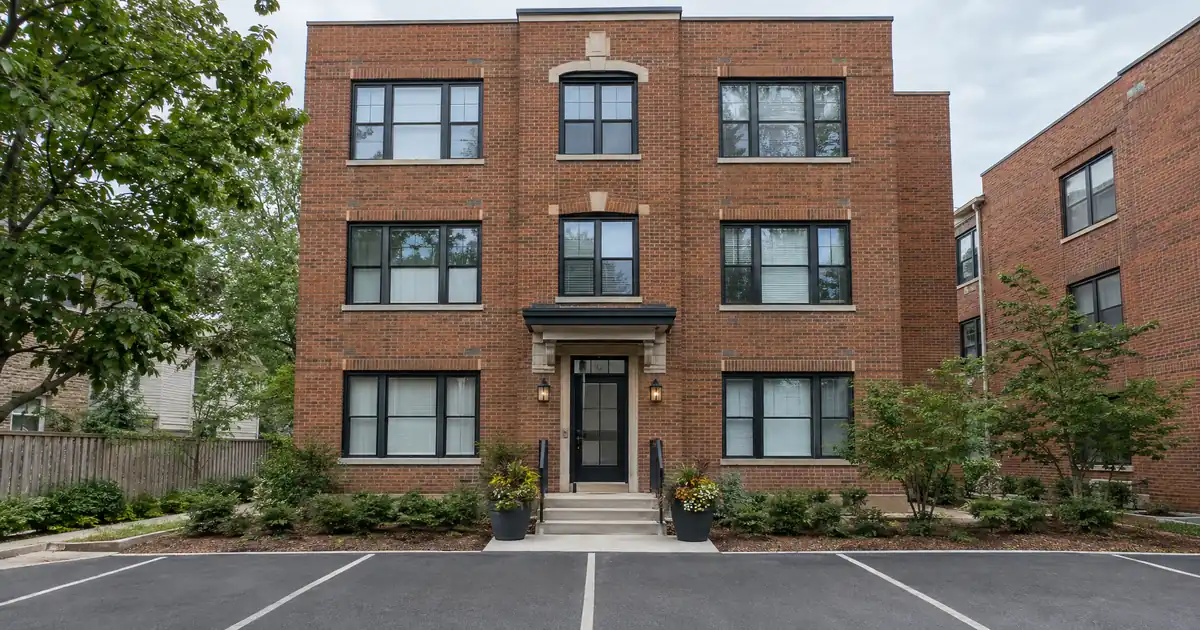
The Quick Read: Cashing out ten or more LLC-held rentals works door by door or through one pooled loan. Either way, value, rental coverage, seasoning, reserves, and guarantor strength set the cash you can pull, not the number of doors. DSCR (debt service coverage ratio) loans qualify primarily on property-level rental income covering the payment, subject to lender guidelines. That is why they keep working after a conventional borrower runs out of room.
- Ten doors often means ten single-family houses, and each house can be tested on its own rent and value.
- Cash-out refinances on investment rentals top out at 75% of value, and about 6 months of ownership is the usual seasoning expectation.
- Per-door loans give clean exits. A pooled loan gives one closing and one payment, but it ties the properties together.
- Your guarantor’s credit and liquidity are shared across every file, so they often limit the batch before the properties do.
- Passing the coverage test is not the same as positive cash flow. Plan the redeployment before you pull the maximum.
Key Terms Defined
DSCR is monthly rent divided by the monthly payment. It compares the property’s income to its debt.
PITIA is principal, interest, taxes, insurance, and association dues. It is the full payment the rent has to cover.
LTV (loan-to-value) is the loan balance as a percentage of the property’s appraised value.
Seasoning is the waiting period between buying a property and refinancing it for cash.
Portfolio (blanket) loan is one loan secured by several properties. The lender tests the rent and debt of the whole pool together.
Cross-collateralization means every property in the pool backs the whole note, so one weak door can affect the rest.
Release is the lender’s process for removing one property from a pool, usually so you can sell it.
Guarantor is the person who personally stands behind an LLC’s loan. On many files that is you.
Prepayment penalty is a fee for paying off a loan before a set date. It lowers your net cash on a refinance.
What Decides How Much Cash Each Door Produces?
Each door has to pass two gates. Value must support the leverage, and rent must cover the new, larger payment. The lower of the two results sets your cash. Strong equity cannot rescue thin rent, and strong rent cannot rescue thin equity.
Across the wholesale network Lendmire places files with, the sequence is consistent:
1. Value. An appraisal sets the property’s value. On a cash-out refinance of an investment rental, leverage tops out at 75% of that value.
2. Rent. The appraiser’s rent opinion, or an in-place lease where the program allows it, goes against the full payment. Select programs start at 1.00 coverage. A separate select-lender path takes coverage below 1.00, with leverage and terms adjusted.
3. Payoff. The new loan first pays off the old one. What remains after closing costs and any required reserves is your cash.
4. Reserves. On single-property loans, reserves commonly run about 6 months of PITIA. They step up to about 9 months above $1,500,000.
Pulling more equity raises the payment, and a higher payment lowers coverage on that door. The more you pull, the thinner the cushion gets. Lendmire’s complete DSCR loans guide walks through the formula behind this.
Clearing 1.00 does not mean the property makes money. Repairs, vacancy, management, utilities, and capital expenses all sit outside the calculation. A door can pass and still leave you with nothing after a bad month. Net proceeds work the same way. Gross equity is a ceiling, and cash in hand is that ceiling minus payoff, costs, and reserves.
Equity available depends on rent used for lender review, PITIA, reserves, and the 75% ceiling. It is not a guaranteed figure. Every file is underwritten individually, and programs change.
Does Having Ten Doors Hit a Limit?
Not the way it does on conventional loans. A DSCR portfolio is limited by lender exposure and guarantor strength, not by a statutory count of properties. Conventional borrowers hit a wall, and DSCR borrowers hit practical limits.
Start by separating doors from properties. Ten doors can mean ten houses or a few small buildings. The agency count that stops many conventional borrowers counts financed properties, not units. Under Fannie Mae’s Selling Guide, a two-unit building counts as one property, and borrowers financing an investment property through its automated underwriting system are capped at 10 financed properties. That rule is contrast only. A DSCR cash-out follows the lender’s own guidelines, not that count.
The limits that do apply are practical:
- Lender exposure. A lender can stop at a certain total balance with one borrower, even when every property passes on its own.
- Guarantor strength. Credit and liquidity are tested again on every file. Most programs want a score around 660, and 700 and above unlocks the strongest leverage tiers. A 620 floor exists in parts of the network.
- Reserves. Each new loan carries its own reserve expectation, and the same dollars cannot cover all of them.
A plain-language explainer from PM Assist frames the same idea. The property’s income does the work, and that is how doors lead to more doors.
Per-Door Loans or One Portfolio Loan?
Choose per-door loans when you expect to sell individual properties or when one weak door would drag a pool down. Choose a portfolio loan when the doors are similar, you plan to hold, and one note appeals more than ten. Equity concentration and hold-or-sell plans decide it.
The network offers two portfolio structures, and they behave differently.
| Factor | Per-door loans | Portfolio, 30-year | Portfolio term loan |
|---|---|---|---|
| Properties | One per loan | 2 to 20 in one note | 5+ properties or units |
| Loan size | Up to $3,000,000 each | $300,000 to $5,000,000 | $500,000 to $50,000,000 |
| Cash-out ceiling | 75% of value | 75% of pooled value | 75% of value |
| Coverage test | Each property alone | Pooled, 1.00 floor | Underwritten on the pool |
| Exit | Sell any door freely | Follows release terms | Yield maintenance applies |
The 30-year portfolio loan accepts single-family homes, 2-4 unit buildings, condos, and townhomes. It can be fixed or adjustable, and an interest-only period is available. Its purchase and no-cash-out refinance leverage runs up to 80% of value, but a cash-out never exceeds 75% of the pooled value. Pooled coverage means stronger properties can offset weaker ones.
The term loan is built for five or more rentals or units. It carries fixed terms of 3, 5, 7, or 10 years with a balloon at maturity. Properties in several markets can sit under one loan, and small multifamily is eligible. Non-recourse structures exist on this loan, with carve-outs such as fraud and bankruptcy. A recourse version carries a personal guarantee. Prepayment runs on yield maintenance, which lasts 54 months on the 5-year note and 114 months on the 10-year note. All of it is subject to lender guidelines and underwriting.
A pool buys convenience and costs flexibility. Because of cross-collateralization, selling one property later depends on the loan’s release terms. The release price runs above the property’s allocated balance, and the remaining portfolio must still cover its debt service. Per-door loans cost more closings but keep every exit open.
A Worked 10-Door Example
Run the numbers on a mixed portfolio. The coverage figures below are modeled assumptions, not market data. They assume each door is refinanced to the 75% cash-out ceiling. Every figure here varies by lender and program: guidelines, property type, leverage, and credit profile all apply.
| Door | Situation | Modeled coverage | Plan |
|---|---|---|---|
| 1 to 6 | Seasoned, solid equity | about 1.25x | Include in the batch |
| 7 | Thin rent against the new payment | about 0.90x | Test in the pool, or hold back |
| 8 | Owned under 6 months | about 1.15x | Wait for seasoning |
| 9 | Existing low-cost debt | about 1.40x | Leave alone |
| 10 | Heavy prepayment exposure | about 1.10x | Model net proceeds first |
Say you refinance doors 1 through 7 together. If debt service is similar across doors, pooled coverage lands near 1.2x. Door 7 can sit in that pool, but underwriting tests the pooled coverage, the leverage, and the terms. On its own, door 7 sits below 1.00. A sub-1.00 loan is available through select lenders in the network, with leverage and terms adjusted. Many investors simply leave that door out.
Doors 8, 9, and 10 stay out for different reasons. Door 8 is short of seasoning. Door 9 already carries debt worth keeping. Door 10 may lose too much equity to a prepayment penalty. The batch result is one pool of seven doors, or seven separate loans. The pool gives one payment and one closing. The separate loans keep every door sellable.
Sequencing the Batch
Refinance in order of strength. Put the doors with the best seasoning, equity, and coverage headroom first, and the doors with prepayment exposure last. The first closings can improve your liquidity picture for the later ones.
A practical order looks like this:
1. Pull payoff statements and prepayment terms for every existing loan before any appraisal is ordered.
2. Rank doors by seasoning, equity, coverage after cash-out, and penalty cost.
3. Order appraisals on the top group. The appraisal sets both value and the rent opinion.
4. Confirm reserves across every file in the batch, not one at a time.
5. Close the strongest group, then reassess the guarantor’s liquidity before the next group.
On rents, the appraisal forms matter. HUD’s Mortgagee Letter 2023-17 names Form 1007, a single-family rent schedule, and Form 1025, a small income property report for 2-4 units. DSCR lenders use these forms for market rent. Some credit the lower of the in-place lease and the appraiser’s market rent. The rule varies by program, and collected rent can matter as much as a lease on paper.
Reserves are the quiet constraint. Whether cash-out proceeds from the same closing count toward reserves varies by lender. Plan as if they do not. If the appraisal comes in low, the value gate shrinks and the proceeds shrink with it. Build that case into the batch plan.
Across the files Lendmire sees, large batches usually stall on liquidity before they stall on coverage. A guarantor with strong credit and thin cash often completes the first few loans, then hits a wall on loan six or seven.
LLC Mechanics
Name matching decides whether the files move cleanly. The LLC on the note, the title, the insurance policy, the appraisal, and the leases should all match. A mismatch on any one can stall a file.
A DSCR loan can be made to an LLC borrower, subject to lender program eligibility. The principal commonly signs a personal guarantee. A typical LLC file includes the operating agreement, an EIN, a good-standing certificate, and the guarantor’s ID.
Two traps are worth knowing:
- Rentals in your personal name. Moving them into an LLC should happen before you apply, not while an old loan is open. Do it in the wrong order and you can trigger problems with the existing lender.
- Many LLCs, one guarantor. Each loan is a separate file, but the lender sees the same guarantor behind all of them. That person’s total exposure is what gets tested.
On a portfolio loan, some structures require a special-purpose entity, typically an LLC. The credit floor on the pool starts at 640, and 680 or 720 applies on some structures.
Where the General Rule Breaks
Small multifamily. The 30-year portfolio loan covers 2-4 units. Buildings with more units belong on the portfolio term loan, which accepts small multifamily. Confirm which structure fits before ordering appraisals.
Short-term rentals. Form 1007 is built for monthly market rent, not nightly projections, so these doors follow a different track. Cash-out on short-term-rental collateral tops out at 70%, versus 75% on standard long-term rentals. Expect a 640 or higher score and about 12 months of hosting history.
Ineligible properties. Owner-occupied homes, co-ops, mixed-use, and commercial property cannot go in a portfolio pool. Manufactured and mobile homes are not reviewable on these programs, and log homes and barndominiums are not offered in the network’s DSCR programs either.
Large balances. Leverage tightens as loan size grows. Above $2,500,000, the network generally holds to 30-year fixed structures. Check the loan-size ceiling for the structure you are using before assuming a pool will fit.
Recent purchases. Inside the first six months of ownership, a portfolio loan is also capped at 90% of total cost (purchase price plus documented improvements), and 100% of total cost from six to twelve months. The leverage ceiling still applies, so the loan is the lower of the two. After twelve months the appraised value alone is the basis. A rate-and-term refinance is not subject to the cost-basis cap.
One weak door. A pool can mask it, but cross-collateralization means the weak door affects the rest. Splitting the batch into a partial pool plus separate loans is a common workaround. Lendmire’s piece How to Use a Cash-Out Refinance to Scale a 2-10 Door Portfolio covers the lighter version of this problem.
Turning the Cash Into the Next Doors
Proceeds go to down payments, closing costs, and fresh reserves, and the new purchase still has to pass its own coverage test. Most purchase files land at 75% to 80% LTV on an investment purchase, which means 20% to 25% down. Select high-leverage programs reach 85% LTV on a purchase with roughly a 700 or higher score. Final terms depend on lender guidelines, property type, leverage, and the borrower’s complete credit picture.
A rough formula keeps expectations honest. Take your net proceeds, then subtract closing costs and the reserves the new loans will require. Divide what remains by the down payment each new door needs. That count is how many doors the cash really funds. It is often lower than investors expect.
A larger down payment lowers the monthly payment and can lift the coverage ratio. It does not erase leverage caps, credit floors, reserve rules, or property eligibility. The strongest files clear both tests, enough equity and enough rental coverage. For the portfolio side of this, see Lendmire’s guide DSCR Portfolio Cash-Out Parameters for Investors With 10-Plus LLC Doors.
When Not to Cash Out
Leave a door alone when its existing debt is worth keeping, when a sale is near, or when a prepayment penalty eats the gain. Honestly, a smaller batch that preserves cushion often beats a maximum pull. Over-leverage is the real risk.
Weigh these before committing:
- Vacancy stress. A larger payment on a thinner cushion hurts more when a unit sits empty.
- Cross-collateral contagion. One bad property in a pool can pull on the rest.
- Guarantee exposure. A recourse loan puts your personal assets behind every door.
- Balloon structures. A term loan with a balloon means a refinance or sale at maturity.
- Net proceeds after penalties. Model them before you apply.
Do not stack lenders or entities to dodge a threshold. Disclose your full picture on every file, because lenders will see the combined exposure anyway.
This article is general information, not legal or tax advice, and readers should consult a qualified attorney or CPA about their own situation. Tax treatment can depend on how the funds are used and how the property is held; investors should keep clear records and speak with a qualified tax professional before relying on any deduction.
Frequently Asked Questions
Is there a limit on how many DSCR cash-outs I can do?
There is no statutory count on DSCR loans the way there is on agency loans. The practical limits are each lender’s total exposure to you, your credit, and your liquidity. Programs differ across the network, and one lender stopping does not stop the others.
Can I cash out one door inside a portfolio loan?
Usually only by following the loan’s release terms. The release price runs above the property’s allocated balance. The remaining pool must still cover its debt service. Many investors refinance out of the pool into individual loans instead.
Does a new LLC block a cash-out?
It can slow it. Seasoning is measured from title recording, and about 6 months of ownership is the common expectation. Moving a property into a new LLC while an old loan is open can also cause problems, so sequence the transfer before you apply.
Can a weak door ride on the strong ones?
In a pool, yes, to a point. Pooled coverage means stronger properties can offset weaker ones, but underwriting still tests pooled coverage, leverage, and terms. A door well below 1.00 may be excluded or priced differently.
Does the guarantor’s liquidity count once or per file?
Plan on it counting against every file. Each loan carries its own reserve expectation, and the same dollars cannot cover all of them. Lenders also look at your total exposure across the batch.
Next Step
If you are buying or refinancing a rental property and want to see how the numbers work, Lendmire can help you compare DSCR loan options based on the property income, credit profile, leverage, and investor goals. Investors with ten or more doors can reach the brokerage at 828-256-2183. Lendmire is a broker arranging financing through select lenders in its wholesale network, across 41 markets including Washington, D.C. Nothing here is a commitment to lend.
About Lendmire
Lendmire, NMLS# 2371349, is a mortgage brokerage focused on investor financing, arranging DSCR loans in 40 states plus Washington, D.C. — 41 markets total. Qualification is based on the property’s income rather than personal income documentation, subject to lender guidelines, making it a fit for LLC-held rentals and scaling portfolios. Scotsman Guide named Lendmire a Top Mortgage Workplace in both 2025 and 2026.
Investors weighing their equity options can start with Lendmire’s guide to cash-out refinance on an investment property.
Get Started
Ready to find the right loan for you?
In about 30 seconds you can review financing options available for your investment property. No commitment required.
Informational only. Not a Loan Estimate, approval, or commitment to lend. Program availability and eligibility are subject to lender guidelines, credit approval, property review, and underwriting.
References
1. Fannie Mae Selling Guide B2-2-03
3. HUD Mortgagee Letter 2023-17
This article is part of Lendmire’s investment property cash-out refinance program — full qualification details, guidelines, and scenarios live on the program page.
Related reading: Can a DSCR Portfolio Cash-Out Loan Replace Selling Rentals? · Should a DSCR Investor Consolidate or Pick Where Each Cash-Out Goes? · How to Keep a Portfolio DSCR Loan Out of Cash Management
Brandon Miller
Founder & CEO, Mortgage Loan Originator, Lendmire LLC
- Mortgage Loan Originator · NMLS# 1129696 · Verify on NMLS Consumer Access
- North Carolina Real Estate Broker · License# 343312 · Verify on NCREC
- North Carolina Insurance Producer · License# 19053198 · Property, Casualty, Life, Health · Verify on NAIC SBS
- Lendmire LLC · Firm NMLS# 2371349 · Verify firm licensure
Legal disclosures. Lendmire (NMLS# 2371349) is a state-licensed mortgage brokerage that arranges financing through wholesale lender relationships. Lendmire is not a direct lender, depository institution, or registered financial advisor. The discussion above is general informational content about real estate financing — it is not financial, legal, or tax advice, and readers should consult licensed professionals for guidance on their individual circumstances. Loan inquiries are subject to lender underwriting; this article does not represent a commitment to lend. Loan terms, rates, and qualification standards vary by borrower, property, and state, and are subject to change at any time. Equal Housing Opportunity. NMLS Consumer Access: nmlsconsumeraccess.org.