
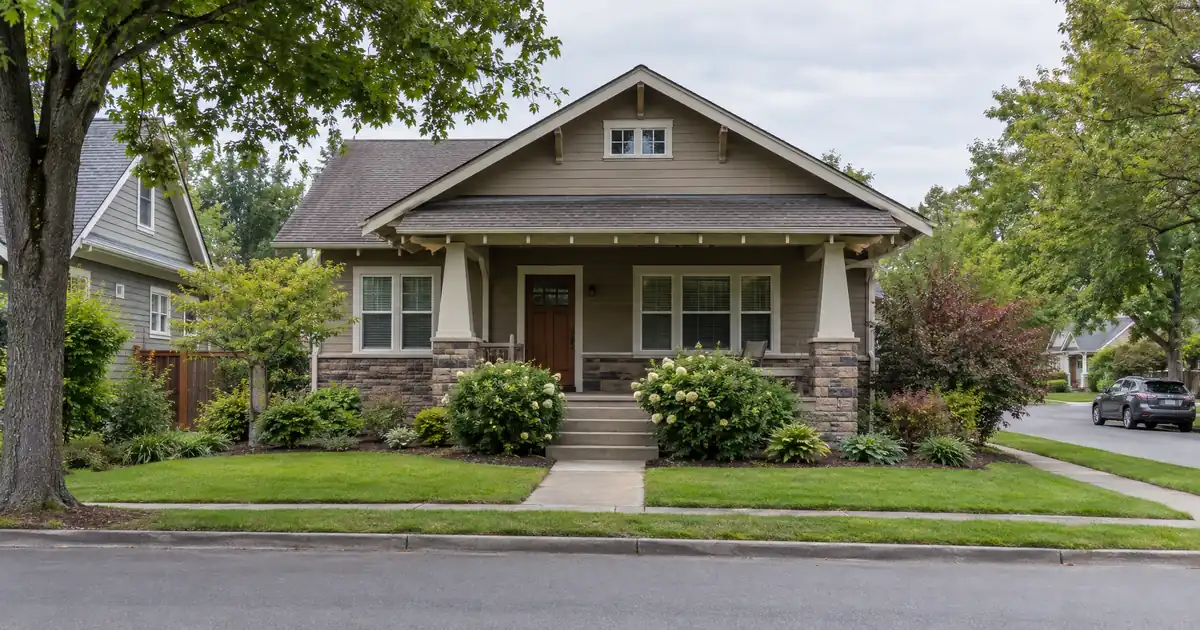
The Quick Read: Yes, a rental with no mortgage can be refinanced, and the loan is always treated as a cash-out transaction because there is no lien to pay off. On a standard rental, cash-out leverage tops out around 75% LTV across most of the wholesale network, and about 6 months of ownership, measured from title recording, is the common seasoning expectation.
- Owning the property outright does not buy extra leverage. The cash-out ceiling is the same one a financed property faces.
- Every dollar of the new loan, less closing costs, goes to the borrower.
- The coverage test runs on the full new loan, so an unlevered property now carries a full payment.
- A recent all-cash purchase is the main timing wrinkle.
- Qualification is subject to lender guidelines, credit approval, and property review. Nothing here is a commitment to lend.
Why a Paid-Off Rental Still Counts as Cash-Out
A refinance that puts money in your hands is a cash-out refinance. With no payoff, there is no way to structure it as anything else. Rate-and-term treatment needs an existing loan to replace, and a free-and-clear property has none.
DSCR Cash-Out Calculator
Run the cash-out numbers in your market
Rate source: Freddie Mac 30-yr average via FRED® — Federal Reserve Bank of St. Louis · effective Oct 8, 2026
Prefilled with starting assumptions — enter your property’s value, balance, taxes, and insurance for a more accurate picture.
Program parameters update from Lendmire’s centralized guideline source. Taxes and insurance are editable estimates.
As of Oct 8, 2026 · General Freddie Mac market benchmark, not a Lendmire loan offer. Property value, balance, taxes, and insurance are editable estimates. Maximum loan-to-value varies by lender, program, property type, and seasoning. Not a Loan Estimate, approval, or commitment to lend. Program availability and eligibility are subject to lender guidelines, credit approval, property review, and underwriting.
That classification has real consequences. It sets the leverage ceiling, starts the seasoning question, and drives pricing. Across the programs Lendmire places files with, cash-out on a standard rental tops out around 75% LTV. Rate-and-term refinances on investment property can go higher, but that line only applies when no cash comes back at closing. Exact terms depend on the lender’s guidelines, property type, leverage, and a full review of the borrower’s file.
Even the agency system, which does not govern DSCR loans, treats this scenario as a recognized form of cash-out. The current Fannie Mae Selling Guide section on cash-out refinances lists a new mortgage on a property with no existing lien as one eligible type. That is contrast only. It shows the industry has always viewed “no existing loan” as cash-out, not as a loophole.
How Much Cash Can You Pull?
The cash you receive depends on three things: the appraised value, the leverage ceiling, and the rent-based coverage test. The lower of the value-based limit and the rent-supported limit wins.
Here is the sizing logic, with the payoff line set to zero:
1. Start with appraised value. The lender orders an appraisal and a rent schedule supporting the rent figure.
2. Apply the cash-out LTV ceiling. On a standard rental, that is about 75%. On a short-term rental, the cash-out ceiling is 70%.
3. Test the rent against the new payment. Coverage is gross rent divided by PITIA (principal, interest, taxes, insurance, and any HOA dues) on the full new loan.
4. Take the lower number. If rent cannot support the loan the LTV allows, the loan shrinks to what the coverage supports.
5. Subtract closing costs. What remains is your net proceeds.
6. Set aside reserves. Reserves are typically about 6 months of PITIA, and about 9 months on loans above $1,500,000. They vary by lender, leverage, and loan size.
Picture an investor holding a single-family rental that has been paid off for years. At 75% LTV the leverage test is easy. The coverage test is where it gets interesting. 1.00 is where many select programs start, and stronger ratios open better pricing and leverage. A separate select-lender path takes coverage below 1.00 with leverage and terms adjusted. A property that cash-flowed beautifully with no debt may land near break-even coverage once it carries a full new payment. Every figure here varies by lender and program — guidelines, property type, leverage, and credit profile all apply.
That is the step that surprises people. No payoff offsets the payment, so the whole loan counts.
What Does Owning Outright Actually Change?
Owning outright changes the paperwork, not the ceiling. This is the most common misunderstanding about free-and-clear properties.
Some owners assume that paying cash earns more borrowing room later. It does not. The 75% ceiling on a standard rental cash-out applies whether the property carries a loan or not. What outright ownership does give you is a clean title and a simple closing, since there is no payoff line and no lender to coordinate with.
It also changes your cash flow in a way worth stress-testing. Before the refinance, the property had no debt service. After it, the property carries a full payment on the new loan. If you plan to deploy the proceeds into another rental, you are trading an unlevered asset for a levered one. That can be a smart capital-recycling move, and it can also leave you with thinner margins than you started with.
Clearing 1.00 is also not the same as positive cash flow. DSCR compares rent to PITIA only. Repairs, vacancy, management, utilities, and capex all sit outside the calculation. Run your own cash-flow check before you sign.
What If You Bought the Property With Cash Recently?
A recent all-cash purchase is the one case where timing matters. A DSCR cash-out generally follows the lender’s seasoning rule, which across most of the network is about 6 months of ownership measured from title recording, not from loan age. For a property held for years, this never comes up.
If you bought with cash last month and want your money back, you have two broad choices:
- Wait for seasoning. Once the seasoning period passes, the loan can generally be sized off appraised value, which matters most if you improved the property.
- Use a delayed-financing style path. Some lenders offer a refinance that reimburses a documented cash purchase, capped at cost basis. The tradeoff is that rehab dollars may not be recoverable, because sizing comes off what you paid.
The agency version of this idea is a useful benchmark. Fannie Mae’s archived selling guide shows a six-month title-holding rule with a delayed financing exception. DSCR programs are not agency products, so treat that as contrast. What matters is how the specific lender in the network treats it.
Here is where the flip point sits. If you bought a distressed property and put real money into renovations, waiting for seasoning usually recovers more, because value-based sizing captures the improvements. If you bought a turnkey property and just want your capital back, the cost-basis path may be perfectly adequate.
When Cash Does Not Count as Cash
If a purchase was funded by a private or friend loan secured by the property, it is not an all-cash purchase. The refinance then behaves like a rate-and-term refinance of that note. A HELOC drawn against a different property can be a valid funding source, but the new loan may need to repay it, and the source needs to be documented.
Purchases from a seller or family member can also complicate the picture, since the agency delayed-financing exception requires an arm’s-length transaction. How a DSCR lender treats those cases is program-specific, as is inherited or gifted property. Do not assume a rule either way.
What About LLC-Owned Rentals?
LLC ownership is common and workable, subject to lender program eligibility. Lenders typically want the vesting deed, the operating agreement, and the EIN, and the borrower usually signs a personal guaranty.
The catch is timing. If you deed a personally held property into a new LLC right before the refinance, you can raise seasoning questions, since the title record shows a recent change. Verify how the specific program measures seasoning when ownership moves between you and your entity. Lendmire’s piece Can You Cash-Out Refinance an LLC Rental With No Existing Loan? goes deeper on the entity mechanics.
What Lenders Ask For
Expect a checklist closer to a property file than a personal income file. DSCR loans qualify primarily on property-level rental income covering the payment, subject to lender guidelines. Typical items:
- Vesting deed or title evidence
- LLC operating agreement and EIN, if entity-held
- Current leases, or a rent schedule from the appraisal
- Hazard insurance
- Government ID
- A business-purpose statement
- Proof of funds or reserves, where requested
Credit still matters. A 620 floor exists in parts of the network, most programs want around 660, and 700 or higher unlocks the strongest leverage tiers.
DSCR loans are designed for non-owner-occupied investment properties. Because they are business-purpose investor loans, they are reviewed differently from a standard owner-occupied mortgage. The CFPB’s official interpretation of Regulation Z lays out the factors behind that distinction, including the borrower’s statement of purpose, which is why lenders collect one. If you live in any part of the property, it is not a DSCR loan. Using proceeds for personal spending can also blur the business-purpose picture.
Some property types fall outside these programs entirely. Manufactured homes, log homes, and barndominiums are not offered through the network’s DSCR programs.
Should You Do It?
Weighing the pros and cons comes down to one question: at what point does this strategy stop making sense for your deal?
Capital recycling is the whole idea behind it.
The case against is just as concrete:
| Situation | Cash-out tends to make sense | Holding unlevered may be better |
|---|---|---|
| Use of proceeds | Next rental with strong coverage | Vague plans or personal spending |
| Coverage on new loan | Comfortable cushion above 1.00 | Near break-even or below |
| Portfolio goals | Scaling, adding units | Stability, low-stress income |
| Rent documentation | Long-term lease with documented rent | Weak or irregular rent history |
The honest tradeoff is that you are swapping a debt-free asset for a financed one. Prepayment terms deserve a read, and the new payment permanently changes the property’s margin. If the proceeds would only fund a deal that barely covers itself, the stacked leverage can turn a comfortable holding into two thin ones.
Smaller borrowers should note the loan-size range. Standard programs run up to $3,000,000, and smaller balances route through select lenders in the network. Above $2,500,000, the network generally holds to 30-year fixed structures. Extended terms and interest-only periods are available through select lenders.
Tax treatment can depend on how the funds are used and how the property is held; investors should keep clear records and speak with a qualified tax professional before relying on any deduction.
Alternatives Worth Weighing
A cash-out refinance is not the only way to access equity. An investment-property HELOC line can make sense when you want flexibility, though those lines cap at $500,000 total. Selling is the clean exit if the property no longer fits the portfolio. Doing nothing is a legitimate answer too, especially when the property’s value is in its steady, debt-free income.
For a deeper walk-through of the owner’s playbook, the complete DSCR loans guide explains the program family end to end.
The Process, Step by Step
1. Confirm title is clean and the ownership timeline meets the seasoning expectation.
2. Decide on use of proceeds, since the lender may ask.
3. Gather the entity and property documents above.
4. Run the coverage test against the full new loan size, not the old unlevered picture.
5. Order the appraisal and rent schedule.
6. Review the loan terms, including prepayment structure.
7. Close and receive net proceeds, which equal the loan less costs, with no payoff line.
Key Terms Defined
Cash-out refinance: A new loan that returns money to the borrower at closing, whether or not an old loan is paid off.
Free and clear: A property owned with no mortgage or other lien against it.
Seasoning: The length of time you must have held title before a lender will size a cash-out loan off appraised value.
DSCR (debt service coverage ratio): Gross rent divided by the full monthly obligation of principal, interest, taxes, insurance, and any HOA dues.
LTV (loan-to-value): The loan amount as a percentage of the property’s appraised value.
Delayed financing: A path that lets a recent cash buyer recover documented purchase funds, generally capped at cost basis.
Frequently Asked Questions
Is a refinance on a property with no mortgage a cash-out or a rate-and-term loan?
Cash-out, every time. Rate-and-term requires an existing loan to replace, and a free-and-clear property has none. Any refinance that returns money to you is classified as cash-out, which is why the roughly 75% LTV ceiling on standard rentals applies. Final terms depend on lender guidelines, property type, leverage, and the borrower’s complete credit picture.
Can I borrow more because I own the property outright?
No. The ceiling is the same one a financed rental faces. Outright ownership simplifies the closing since there is no payoff, but it does not raise leverage. The binding limit is often rent coverage, not equity.
How soon after buying a rental with cash can I pull money out?
Most files follow about 6 months of seasoning measured from title recording. Some lenders offer a delayed-financing style path that reimburses documented purchase cost sooner, but it is generally capped at cost basis, so rehab spending may not come back.
Does it matter if the rental is held in an LLC?
It works, subject to lender program eligibility, but expect an operating agreement, EIN, and a personal guaranty. Deeding the property into a new LLC right before the refinance can raise seasoning questions, so sequence it carefully.
Will a DSCR lender review my personal income?
The loan is reviewed primarily on property-level rental income covering the payment, subject to lender guidelines. Credit and reserves still matter, and a coverage ratio above 1.00 does not equal positive cash flow after repairs, vacancy, and management.
If you are buying or refinancing a rental property and want to see how the numbers work, Lendmire can help you compare DSCR loan options based on the property income, credit profile, leverage, and investor goals. Reach the team at 828-256-2183 or request a quote.
About Lendmire
Lendmire (NMLS# 2371349), a non-QM mortgage broker serving investors in 41 markets including Washington, D.C., helps structure DSCR scenarios commonly evaluated around a property’s rental income rather than personal income paperwork, subject to lender guidelines. A Scotsman Guide Top Mortgage Workplace in 2025 and 2026, Lendmire places loans through wholesale investor lenders and is not a direct lender.
A deeper walk-through of investment-property equity extraction lives in Lendmire’s guide to cash-out refinance on an investment property.
Get Started
Ready to find the right loan for you?
In about 30 seconds you can review financing options available for your investment property. No commitment required.
Informational only. Not a Loan Estimate, approval, or commitment to lend. Program availability and eligibility are subject to lender guidelines, credit approval, property review, and underwriting.
References
1. Fannie Mae Selling Guide, B2-1.3-03 Cash-Out Refinance Transactions (current)
This article is part of Lendmire’s investment property cash-out refinance program — full qualification details, guidelines, and scenarios live on the program page.
Related reading: Should a Lock-in Landlord Swap a Low First Mortgage for a DSCR Cash-Out? · How to Cash Out on a Short-Term Rental Using Booking History · How to Run the Break-Even on a First Cash-Out Refinance of One Rental
Brandon Miller
Founder & CEO, Mortgage Loan Originator, Lendmire LLC
- Mortgage Loan Originator · NMLS# 1129696 · Verify on NMLS Consumer Access
- North Carolina Real Estate Broker · License# 343312 · Verify on NCREC
- North Carolina Insurance Producer · License# 19053198 · Property, Casualty, Life, Health · Verify on NAIC SBS
- Lendmire LLC · Firm NMLS# 2371349 · Verify firm licensure
Disclosure information. Lendmire is a state-licensed mortgage brokerage under NMLS# 2371349. Lendmire is not a depository institution, direct lender, or financial advisor — all loans referenced are placed through wholesale lender partners and are subject to each lender's underwriting standards. This article is provided for general informational purposes and is not a commitment to lend, nor does it constitute financial, legal, or tax advice. Loan programs, terms, rates, and qualification standards change without notice and depend on borrower profile, property type, and the state in which the subject property is located. Equal Housing Opportunity provider. NMLS Consumer Access: nmlsconsumeraccess.org.