
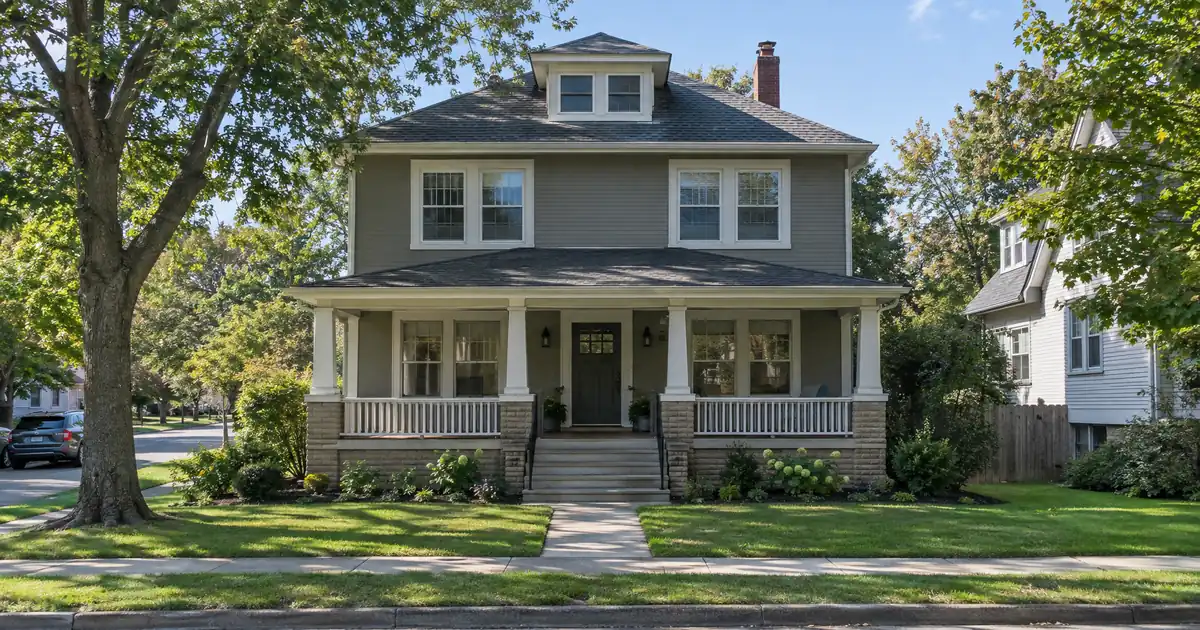
Most rental owners pulling equity out use a DSCR loan instead — a business-purpose loan reviewed on the property’s own numbers. Across Lendmire’s wholesale network, cash-out on a rental typically caps near 75% loan-to-value, with about six months of ownership seasoning and a 1.00 coverage floor on most programs. The rest of this piece walks through exactly how that gets underwritten and where the exceptions live.
Barely — and almost never the way an investor wants it done. That sounds like it covers landlords fine. In practice, it usually doesn’t fit a growing rental portfolio.
DSCR Cash-Out Calculator
Run the cash-out numbers in your market
Rate source: Freddie Mac 30-yr average via FRED® — Federal Reserve Bank of St. Louis · effective Sep 17, 2026
Prefilled with local estimates — enter your property’s value, balance, taxes, and insurance for a more accurate picture.
Program parameters update from Lendmire’s centralized guideline source. Taxes and insurance are editable estimates.
As of Sep 17, 2026 · General Freddie Mac market benchmark, not a Lendmire loan offer. Property value, balance, taxes, and insurance are editable estimates. Maximum loan-to-value varies by lender, program, property type, and seasoning. Not a Loan Estimate, approval, or commitment to lend. Program availability and eligibility are subject to lender guidelines, credit approval, property review, and underwriting.
The agency program underwrites the borrower, not the property. It wants traditional personal-income documentation, W-2s or 1099s, a full debt-to-income calculation, and — under the same Guide — tighter loan-to-value limits on investment property than on a primary home. An investor holding several financed rentals often hits agency loan-count caps before the ratio math even matters. Self-employed owners, and anyone whose traditional personal-income documentation understate real cash flow, run into the same wall.
That’s the gap DSCR loans fill. A DSCR loan — short for debt-service coverage ratio — is a business-purpose loan built for non-owner-occupied rental property. Because it’s business-purpose, it sits outside the agency selling guides and outside most of the disclosure rules built for owner-occupied mortgages. The mechanism that makes this possible isn’t a lender preference. One sentence covers the rest: DSCR loans are designed for non-owner-occupied investment property, and because they’re reviewed as business-purpose loans, the underwriting looks different from a standard owner-occupied mortgage.
Key Takeaways
- DSCR cash-out refinances qualify primarily on the property’s rental income covering its payment, subject to lender guidelines.
- Cash-out leverage on a standard rental typically tops out near 75% LTV; short-term rental collateral runs lower.
- Most programs want about six months of ownership seasoning and a 1.00 coverage floor before releasing equity.
- Lower-coverage and no-ratio paths exist through select lenders, but they come with adjusted leverage and terms.
How a DSCR Cash-Out File Actually Gets Underwritten
Five steps, roughly in this order, on almost every file in the network.
First, an appraiser sets the value and the market rent, using the same rent-schedule appraisal forms the industry relies on for single-family rental valuations. On a refinance specifically, that rent opinion usually gets paired with an actual signed lease or trailing rent history — not the appraiser’s number standing alone.
Second, the file runs the coverage math. Rent gets divided by PITIA — principal, interest, taxes, insurance, and HOA dues where they apply. That ratio, not the owner’s personal debt-to-income, drives how much the lender will release.
Third, the existing loan gets paid off. The new loan is sized against current appraised value and the leverage ceiling for the program. The old balance is retired at closing, and whatever’s left over — after fees and payoffs — goes to the borrower.
Fourth, the file carries a business-purpose certification. The borrower affirms the loan funds an investment property, not a residence. That’s what keeps the transaction on the DSCR track instead of the agency track in the first place.
Fifth, reserves and seasoning get checked. Most programs in the network want title held for around six months before a cash-out request, plus reserves in the neighborhood of six months of PITIA — stepping up toward nine months on larger loan balances, generally above $1,500,000.
Here’s a subtlety a lot of first-time investors miss. Clearing a 1.00 coverage ratio is not the same thing as positive cash flow. DSCR only measures rent against PITIA. It doesn’t touch repairs, vacancy, property management, utilities, or capital expenditures. A file can clear 1.05 on paper and still lose money in a bad month — worth separating those two ideas before getting attached to a coverage number.
Key Terms Defined
DSCR (debt-service coverage ratio): the property’s monthly rent divided by its full monthly obligation — principal, interest, taxes, insurance, and HOA dues. A 1.00 ratio means rent exactly covers the payment.
PITIA: the full monthly housing obligation lenders use in the coverage math — principal, interest, taxes, insurance, and, when it applies, association dues.
Seasoning: the length of time an owner must hold title before a lender will consider releasing equity through a cash-out refinance.
Business-purpose loan: a loan made to an investor or an entity for a rental or commercial use, rather than a personal residence — the classification that removes it from standard consumer-mortgage disclosure rules.
No-ratio loan: a structure that skips the rent-to-payment calculation altogether, generally reserved for borrowers who already own a primary residence.
LTV (loan-to-value): the new loan amount as a percentage of the property’s appraised value — the main lever controlling how much equity comes out at closing.
What Leverage and Coverage Actually Look Like
The honest range, not a marketing number. Most standard-rental cash-out files in Lendmire’s network land at or under 75% LTV (the ceiling doesn’t move much across the network), with a 1.00 DSCR floor on the programs that reach that high. Credit matters more than people expect. A 620 score keeps some programs open, but 660 is where most files sit comfortably, and 700-plus is where the strongest leverage and pricing tiers open up. It’s built into federal consumer-credit law, where credit extended to acquire or maintain rental property carries a business-purpose exemption from standard ability-to-repay requirements.
| Collateral Type | Cash-Out LTV Ceiling | Typical DSCR Floor | Credit Range |
|---|---|---|---|
| Standard long-term rental | Around 75% | 1.00 on most programs | 620–700+ |
| Short-term rental (STR) | Around 70% (vs. 75% on standard rentals | 1.00 on refinance files | 700+ typical |
| Sub-1.00 coverage | Adjusted lower, select lenders | Below 1.00, terms adjusted | Case by case |
| No-ratio | Select lenders only | Not calculated | Primary-residence owners |
Loan size runs up to roughly $3,000,000 on standard programs, and smaller balances still route through select lenders in the network rather than getting turned away. For a broader walk-through of how coverage, leverage, and credit interact across the whole DSCR product category, Lendmire’s complete DSCR loans guide covers that in more depth than fits here.
The Variations: Lower Coverage, No-Ratio, and Short-Term Rentals
Not every file clears 1.00, and the network has room for that — with conditions attached. Coverage below 1.00 is available through select lenders in the network. Leverage and terms get adjusted to offset the thinner margin. That’s a real path, not a denial. No-ratio structures exist too, but only through select lenders, generally for borrowers who already own a primary residence elsewhere. There’s no coverage number to calculate, because the underwriting skips that step entirely.
Short-term rentals get their own lane, and the numbers shift by transaction type. Purchases on STR collateral can reach up to about 75% LTV. Refinances and cash-out run closer to 70% LTV, scoped specifically to short-term-rental collateral versus the roughly 75% ceiling on standard rentals. Most STR programs want a 700-plus credit score and around 12 months of hosting history behind the property. Purchases run on their own 1.00 coverage floor, and refinances carry a separate 1.00 floor of their own. Two distinct thresholds. Not one blended number across both transaction types. Final terms depend on lender guidelines, property type, leverage, and the borrower’s complete credit picture.
One more variation worth knowing: an investment-property HELOC line. These cap at $500,000 total across the network — there’s no larger investment-property equity-line tier above that. For an owner who only needs a modest draw and wants to keep the first mortgage untouched, that’s often a cleaner move than a full cash-out refinance.
DSCR files in markets with heavy short-term-rental concentration tend to come in tight on long-term-rent assumptions but clear easily on trailing twelve-month actual STR income. The stronger files usually run both numbers side by side before the lender ever sees them.
Where the General Rule Breaks
A few named situations pull the standard math sideways.
State overlays change the ceiling. In Connecticut, Florida, Illinois, and New Jersey, purchase-side leverage generally caps near 75% LTV even on programs that reach higher elsewhere, and overlay-state deals often carry their own loan-size ceiling around $2,000,000.
Loan size changes the term structure. Above roughly $2,500,000, the network generally holds files to 30-year fixed structures — the 40-year and interest-only options common on smaller balances tend to fall away at that size.
Property type ends the conversation outright for some collateral (no exceptions, no matter how the rest of the file scores). Manufactured homes — single- or double-wide — log homes, and barndominiums aren’t offered through DSCR programs in this network at all. Not harder to place. Not offered.
Reserve requirements move with size, too. A file under $1,500,000 typically wants around six months of PITIA in reserve. Cross that threshold, and reserves commonly step up toward nine months.
Running the Numbers: What the Decision Actually Looks Like
Picture an investor holding a single-family rental free of any near-term plans to sell, six months past closing on the purchase, with a lease in place at a rent that comfortably clears the property’s monthly obligation — call it solidly north of 1.00x coverage. At 75% LTV, the appraised value and the existing payoff set how much equity the file can release, and the DSCR ratio determines whether the lender will actually go there or dial leverage back. A property clearing 1.30x on paper has room to work with. One sitting at 0.90x on long-term rent alone is the file where a sub-1.00 program, an interest-only restructure, or a blended STR income calculation gets a real look, subject to lender guidelines and credit approval.
This is the genuine trade-off every cash-out decision comes down to. Pulling more equity out lowers the coverage ratio, because a bigger loan means a bigger monthly obligation against the same rent. Pulling less keeps coverage stronger and often unlocks better pricing tiers. There’s no version of this where more equity or a bigger down payment erases a credit floor, a reserve requirement, or a leverage cap. The strongest files clear both the equity test and the coverage test at the same time. For investors weighing whether that equity is better spent buying another property outright versus refinancing out of an existing one, Lendmire’s piece on using cash-out refinance to buy investment property lays out that comparison in more depth.
Tax treatment on cash-out proceeds can depend on how the funds get used and how title is held; investors should keep clean records and talk to a qualified tax professional before assuming any deduction applies.
If you’re sitting on equity in a rental property and trying to figure out what a cash-out refinance would actually release, Lendmire can help compare DSCR loan options based on the property’s income, your credit profile, target leverage, and what you’re trying to do with the funds next. Reach the team at 828-256-2183 or start with a quote request.
For deeper background on the mechanics discussed here, see Consumer Financial Protection Bureau — Regulation X (12 CFR 1024.5, RESPA).
Frequently Asked Questions
But the agency route underwrites you, not the property, and investment-property LTV limits under the agency’s Guide run tighter than on a primary residence. Most landlords with more than a few financed properties, or income that doesn’t show cleanly on traditional personal-income documentation, end up on a DSCR loan instead.
How much equity can I actually pull out of a rental with a DSCR cash-out refinance? It depends on the appraised value, the existing payoff, the property’s coverage ratio, and the 75% LTV ceiling most programs use. There’s no flat number until those four inputs get run together. A property with rent that clears coverage comfortably has more room to work with than one sitting right at a 1.00 ratio.
Can I do a cash-out refinance on a rental I bought a few months ago? Most programs in the network want about six months of ownership seasoning, measured from when title recorded, before considering a cash-out request. Files that come in earlier than that typically get steered toward a rate-term refinance instead, since cash-out specifically triggers the seasoning clock.
Is a 1.00 DSCR always required to get cash out? No — 1.00 is a floor on many standard programs, not a universal rule across the whole network. Coverage below 1.00 is available through select lenders, though leverage and terms get adjusted to account for the thinner margin, and eligibility still depends on credit, reserves, and the property itself.
What credit score do I need for the best cash-out terms? A 620 score keeps some programs open, but 660 is where most files sit comfortably, and 700 or higher is generally what unlocks the strongest leverage tiers in the network. Reserve requirements and coverage expectations shift alongside credit, so a stronger score often does more than improve terms — it can open programs that weren’t available otherwise.
Investors weighing their equity options can start with cash-out refinance on an investment property.
A deeper walk-through of investment-property equity extraction lives in cash-out refinance on an investment property.
About Lendmire
Lendmire (NMLS# 2371349) is a mortgage brokerage focused on DSCR investor financing, helping arrange programs through wholesale and investor-lending channels in 40 markets, including Washington, D.C. DSCR loans are evaluated by the lender on property cash flow rather than personal income, subject to lender guidelines, supporting LLC closings and accommodating investors with four or more financed properties. Scotsman Guide Top Mortgage Workplace in both 2025 and 2026.
Get Started
Ready to find the right loan for you?
In about 30 seconds you can review financing options available for your home or investment property. No commitment required.
Informational only. Not a Loan Estimate, approval, or commitment to lend. Program availability and eligibility are subject to lender guidelines, credit approval, property review, and underwriting.
References
1. Consumer Financial Protection Bureau — Regulation Z, Interpretations (12 CFR 1026)
2. Consumer Financial Protection Bureau — Regulation X (12 CFR 1024.5, RESPA)
Brandon Miller
Founder & CEO, Mortgage Loan Originator, Lendmire LLC
- Mortgage Loan Originator · NMLS# 1129696 · Verify on NMLS Consumer Access
- North Carolina Real Estate Broker · License# 343312 · Verify on NCREC
- North Carolina Insurance Producer · License# 19053198 · Property, Casualty, Life, Health · Verify on NAIC SBS
- Lendmire LLC · Firm NMLS# 2371349 · Verify firm licensure
Legal disclosures. Lendmire (NMLS# 2371349) is a state-licensed mortgage brokerage that arranges financing through wholesale lender relationships. Lendmire is not a direct lender, depository institution, or registered financial advisor. The discussion above is general informational content about real estate financing — it is not financial, legal, or tax advice, and readers should consult licensed professionals for guidance on their individual circumstances. Loan inquiries are subject to lender underwriting; this article does not represent a commitment to lend. Loan terms, rates, and qualification standards vary by borrower, property, and state, and are subject to change at any time. Equal Housing Opportunity. NMLS Consumer Access: nmlsconsumeraccess.org.


