
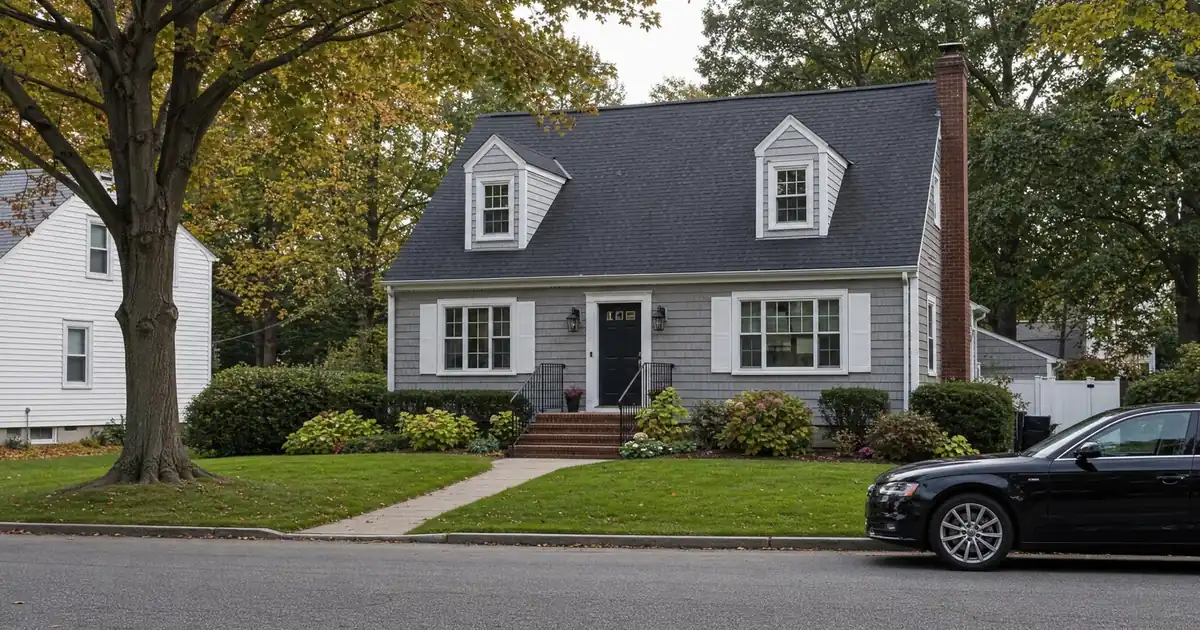
The Quick Read: A cash-out refinance on an investment property replaces the existing loan with a bigger one — sized against the property’s appraised value, not your paycheck — and you keep the difference in cash after payoff and closing costs. Qualification runs primarily on whether the rent covers the new payment, not on traditional personal-income documentation. Across most wholesale DSCR programs, the loan ceiling sits around 75% of appraised value, with roughly six months of ownership expected first.
DSCR Cash-Out Calculator
Run the cash-out numbers in your market
Rate source: Freddie Mac 30-yr average via FRED® — Federal Reserve Bank of St. Louis · effective Jul 30, 2026
Prefilled with starting assumptions — enter your property’s value, balance, taxes, and insurance for a more accurate picture.
Program parameters update from Lendmire’s centralized guideline source. Taxes and insurance are editable estimates.
As of Jul 30, 2026 · General Freddie Mac market benchmark, not a Lendmire loan offer. Property value, balance, taxes, and insurance are editable estimates. Maximum loan-to-value varies by lender, program, property type, and seasoning. Not a Loan Estimate, approval, or commitment to lend. Program availability and eligibility are subject to lender guidelines, credit approval, property review, and underwriting.
What You Need to Know First
- Cash-out ceilings on investment property run lower than purchase leverage — typically capped near 75% of appraised value, not the 80-85% some purchase programs allow.
- Qualification is built around the property’s rent-to-payment math (DSCR), not your personal debt-to-income ratio.
- Most lenders in the DSCR space want roughly six months of ownership before a full cash-out refinance; pulling cash within your original cost basis can sometimes skip that wait.
- Reserves, credit tier, and loan size all move together — a stronger credit profile and lower leverage generally open better terms, not the reverse.
- Certain property types (manufactured homes, log homes, barndominiums) fall outside these DSCR programs entirely, regardless of rental performance.
Key Terms Defined
DSCR (debt-service coverage ratio): the number you get when you divide the property’s monthly rent by its full monthly housing payment — principal, interest, taxes, insurance, and any HOA dues (PITIA). A ratio at or above 1.00 means the rent covers that payment; below 1.00 means it doesn’t, on paper.
LTV (loan-to-value): the size of the loan expressed as a percentage of the property’s appraised value. A 75% LTV cash-out means the new loan can reach up to three-quarters of what the property appraises for. Exact terms depend on the lender’s guidelines, property type, leverage, and a full review of the borrower’s file.
Seasoning: the minimum time a lender wants you to have owned the property before letting you refinance and pull cash based on its current value, rather than what you paid for it.
PITIA: shorthand for the full monthly obligation a lender counts against rent — principal, interest, taxes, insurance, and association dues, if any.
Business-purpose loan: a loan made for an investment or business reason rather than personal use — this is the category most rental-property financing falls into, and it’s reviewed on different terms than a loan on the home you live in.
Delayed financing: a narrower exception that lets a cash buyer refinance sooner than normal seasoning would allow, but caps the new loan at what was actually paid for the property rather than its current appraised value.
What Cash-Out Refinancing Actually Means for a Rental
A cash-out refinance on a rental swaps your current loan (or, on a free-and-clear property, places a brand-new first lien) for a larger one, and you pocket the leftover cash after the old loan and closing costs are paid off. That’s the whole mechanism — it’s not a second loan stacked on top, and it’s not a line of credit you draw from over time. It’s one loan, replacing another, at a bigger number.
What makes this different from refinancing your own house is who — or what — the lender is actually underwriting. On a DSCR loan, the property carries the file. The lender wants to know if the rent clears the new payment, not whether your last two years of traditional personal-income documentation shows enough income. That’s the whole appeal for investors who’ve hit a wall on conventional debt-to-income limits: the math runs against the asset, not the applicant.
That said, “investment property” and “exempt from consumer lending rules” aren’t automatically the same thing. Because DSCR loans are designed for non-owner-occupied investment properties, and because they’re structured as business-purpose loans, they’re reviewed differently from a standard owner-occupied mortgage — but the loan’s actual purpose, not just a label on the application, is what determines that (Compliance Alliance). If you or a family member plan to occupy the property for more than a couple weeks a year, it stops being a true rental in the lender’s eyes.
How Underwriting Actually Treats It, Step by Step
Here’s what actually happens between your application and your wire.
Step one: the property’s income gets documented, not yours. The lender orders an appraisal that estimates market rent, usually following the logic behind Fannie Mae’s Single-Family Comparable Rent Schedule for a one-unit rental, or the equivalent income form for a 2-4 unit building. That form is a common valuation language across the industry — DSCR loans aren’t agency products, but lenders lean on similar rent-comparable methodology to put a defensible number on the rent line.
Step two: rent gets divided by the payment. Monthly gross rent, divided by the full PITIA, produces the DSCR. A 1.00 ratio means the property theoretically breaks even against its own payment. That’s a floor certain wholesale programs are built around — never a universal industry standard, and never a guarantee of approval on its own. Stronger ratios, in the 1.15-1.25 range and up, typically open better leverage and pricing tiers.
Step three: appraised value sets the leverage ceiling. Across most DSCR cash-out programs Lendmire places files with, the ceiling lands around 75% loan-to-value — lower than what many purchase-money programs allow, since pulling equity out carries more risk to the lender than simply repricing existing debt. On a rental purchased years ago for $300,000 that now appraises at $420,000, with a modest balance remaining, that 75% ceiling is what the file gets measured against — how much of that gap actually converts to cash depends on the current payoff, closing costs, and whether rent still clears the coverage floor at the new, larger payment.
Step four: credit and reserves round out the file. No income documentation doesn’t mean no documentation. Most programs in the wholesale DSCR space want a credit score somewhere north of 660 for standard pricing, with a 620 floor on some programs and 700+ needed to unlock the strongest leverage tiers. Reserves — liquid funds left over after closing, measured in months of PITIA — typically run around six months, stepping up toward nine months on loans above roughly $1.5 million. Retirement and brokerage accounts usually count at a discount rather than face value, since they can’t be turned into cash the same day.
Step five: funds close, and use gets tracked. Because these are business-purpose loans, proceeds are generally expected to fund investment activity — acquisitions, renovations, paying down other business debt — rather than personal spending, and some lenders ask for a signed attestation confirming that.
The Structures and Variations That Actually Exist
Not every cash-out file looks the same, and the variation is where a lot of investors leave options on the table.
Loan size and term. Standard DSCR cash-out programs in Lendmire’s wholesale network generally run up to roughly $3 million, with the network holding to a straight 30-year fixed structure above about $2.5 million. Below that ceiling, options widen — 40-year terms and interest-only periods are available through select lenders, and adjustable-rate structures exist for investors who specifically want them. The 30-year fixed remains the backbone of the space; everything else is a variation on it, not a replacement for it.
Higher-leverage purchase, tighter cash-out. It’s worth separating purchase leverage from cash-out leverage, because investors often conflate the two. Purchase files can reach 80% LTV routinely, and select high-leverage purchase programs stretch to 85% with a 700+ score. Cash-out doesn’t get that same room — the 75% ceiling holds regardless of how strong the borrower’s credit looks, because extracting equity is a different risk profile than financing an acquisition.
Short-term rentals run their own track. A property with nightly-rate income doesn’t fit neatly into the standard rent-comparable form — appraisal trade press is direct that the form used for long-term rentals “cannot take the nightly income and multiply that by 30” to manufacture a monthly figure (McKissock Learning), a limitation Nevada’s real estate regulators have echoed in their own review of the same guidance (Nevada Real Estate Division). Cash-out on a short-term rental in Lendmire’s network generally caps around 70% LTV, wants roughly a year of hosting history on file, expects a 640+ credit score, and still runs against a 1.00 coverage floor — just measured off platform payout history instead of a standard lease.
Entity-titled properties add a documentation layer. Plenty of investors hold rentals in an LLC for liability reasons. That’s workable across most of the wholesale network, subject to program terms — articles of formation, an operating agreement, and an EIN typically round out the file — but it doesn’t change the underlying leverage or coverage math.
State lines don’t tighten the limits. Cash-out and purchase files in Connecticut, Florida, Illinois, and New Jersey carry the same standard limits as everywhere else: purchase leverage up to 80% LTV (higher only by exception), cash-out up to 75% LTV, and loan sizes up to the full $3 million ceiling.
| Structure | Cash-Out Refi | Rate-and-Term Refi | HELOC |
|---|---|---|---|
| What it replaces | The whole existing loan | The whole existing loan | Sits behind an existing loan |
| Loan structure | Closed-end, single payment | Closed-end, single payment | Revolving, draw-as-needed |
| Typical LTV ceiling | ~75% (DSCR programs) | Often higher than cash-out | Varies, often lower ceiling |
| Cash in hand | Yes, at closing | No — repays or reprices existing debt only | Draw over time, as needed |
A rate-and-term refinance and a cash-out refinance are mechanically the same loan type — a new first lien replacing the old one — the difference is simply whether you’re taking cash out or just repricing the existing balance. A HELOC is a completely different animal: a second lien sitting behind your existing loan, drawn against as needed rather than disbursed in one lump sum.
Where the General Rule Breaks — Edge Cases
The 75% ceiling and six-month seasoning window are the default. They’re not the whole story.
Staying within your cost basis can waive seasoning entirely. If the new loan amount doesn’t exceed what you actually paid for the property plus documented, verifiable renovation costs, plenty of programs across the DSCR market will waive the standard seasoning wait. Pull out more than that cost basis, though, and the standard waiting period from your acquisition date typically applies. This is the mechanical backbone of a buy-rehab-refinance strategy — refinancing out of a short-term acquisition loan gets treated differently than pulling fresh equity from a property you’ve held for years.
A related, narrower path exists for all-cash buyers. Delayed financing (where a lender offers a version of it) lets an investor who bought entirely in cash refinance sooner than normal seasoning allows — but the new loan gets capped at the documented purchase price plus eligible closing costs, not the current appraised value. It’s still treated as cash-out for LTV and pricing purposes; you’re just trading the appreciation upside for a shorter wait.
Inherited or divorce-awarded property often skips the cost-basis test. Since there was no arm’s-length purchase to season against, these properties are frequently treated as exempt from standard seasoning, with current appraised value used for LTV purposes instead.
2-4 unit and mixed-use buildings change the math, not just the form. Multi-unit rentals route through a different appraisal form than single-family, and in a mixed-use building — residential over retail, for instance — only the residential rent typically counts toward the DSCR calculation. Commercial lease income from a ground-floor tenant usually gets excluded from the ratio even when it makes the building’s overall economics stronger.
Some property types simply don’t fit these programs, full stop. Manufactured homes — single- or double-wide — log homes, and barndominiums fall outside DSCR cash-out financing in Lendmire’s wholesale network entirely, regardless of how well the rent performs. That’s a program-eligibility issue, not a coverage issue.
What the Investor Decision Actually Looks Like
Honestly, this is where the reference-guide version of cash-out refinancing and the real decision an investor has to make start to diverge. The mechanics above answer “can this be done.” The harder question is whether it should be, for this property, right now.
Three variables move together here, and none of them can be optimized in isolation. Seasoning determines when you can execute. The cash-out LTV ceiling — consistently lower than purchase-money leverage across the DSCR space — determines how much equity actually stays accessible versus locked in. And reserve requirements determine how much cash has to sit untouched in the bank after the wire goes out. A property with strong appreciation but thin coverage might clear the equity test and fail the rent test; a property with fantastic rent-to-payment math but modest appreciation might have almost nothing worth pulling out. The strongest files clear both.
It’s also worth being blunt about what a 1.00 or better coverage ratio does not mean. It means rent covers the mortgage payment. It says nothing about repairs, vacancy between tenants, property management fees, utilities, or capital expenditures — all of which sit outside the DSCR formula entirely. A property that clears 1.15 on paper can still run cash-negative in a rough year. Treat the ratio as a qualification threshold, not a promise of positive cash flow.
Across files Lendmire has helped place, cash-out requests on investment property tend to cluster around two very different motivations: recycling capital to fund the next acquisition, or covering a large one-time expense — a renovation, a large bill, another business need — without selling the asset. Both are legitimate uses. The mistake worth avoiding is treating extracted equity as free money. It’s leverage. The payment goes up, the equity cushion goes down, and the property’s own coverage ratio has to absorb that new payment going forward — which is exactly why reserve and credit overlays on cash-out transactions tend to run stricter than on a straight purchase of the same property.
That’s not a reason to avoid the tool. It’s a reason to size the leverage decision honestly rather than treat it as a costless withdrawal.
Tax treatment varies with how the cash gets used and how the property is held; consult a qualified professional. Lendmire’s guide on whether investment property loans are tax deductible looks at that question in more detail.
Lendmire (NMLS# 2371349) arranges DSCR loans for rental-property investors through a wholesale network of investor-focused lenders, with programs available in 41 markets, including Washington, D.C. If you’re weighing whether a cash-out refinance actually pencils for a specific rental, Lendmire’s complete DSCR loans guide is a useful next stop, alongside Lendmire’s breakdown of cash-out refinancing on investment property and the loan-to-value mechanics that drive how much of a property’s value a lender will actually lend against. For files where coverage is the open question, the DSCR cash-out refinance page breaks down how rent and payment get weighed side by side. You can also reach Lendmire directly at 828-256-2183 to talk through a specific property’s numbers.
Loan approval is never guaranteed, and nothing here is a commitment to lend. Every scenario described here is subject to lender approval and to borrower, property, and program guidelines, which can change. This article is general information, not financial, legal, or tax advice.
Frequently Asked Questions
How do you cash-out refinance an investment property?
The process starts with an appraisal that documents current value and market rent, followed by a DSCR calculation comparing that rent to the new proposed payment. From there, the lender reviews credit, reserves, and — if the property sits in an LLC — entity documents, before sizing the loan against the appraised value and closing out the old loan with the new one.
Which companies offer cash-out refinance loans for investment properties?
Rather than a single lender, most investors work through the non-QM and DSCR side of the mortgage market, where dozens of wholesale lenders each set their own leverage, credit, and reserve overlays. Lendmire, a mortgage broker rather than a direct lender, shops a property’s file across a wholesale network of these lenders to find the program that fits the rent-to-payment math and the investor’s goals.
Can you take out a HELOC and a mortgage at the same time on an investment property?
In principle, yes — a HELOC is a second lien that sits behind an existing first mortgage, so the two can coexist on the same property. Whether a given lender will approve that combination depends heavily on combined loan-to-value, the property’s coverage math, and that specific lender’s overlays, so it’s a program-by-program question rather than a blanket rule.
About Lendmire
A non-QM mortgage broker (NMLS# 2371349), Lendmire arranges DSCR financing for real estate investors in 41 markets — 40 states plus Washington, D.C. Because deals are underwritten primarily on property cash flow rather than personal income documentation, the structure suits self-employed buyers and entity-owned portfolios. Lendmire places loans through wholesale investor lenders; it is not a direct lender. Scotsman Guide named Lendmire a Top Mortgage Workplace in both 2025 and 2026.
For how equity extraction works on an investment property, see cash-out refinance on an investment property.
Get Started
Ready to find the right loan for you?
In about 30 seconds you can review financing options available for your investment property. No commitment required.
Informational only. Not a Loan Estimate, approval, or commitment to lend. Program availability and eligibility are subject to lender guidelines, credit approval, property review, and underwriting.
References
1. Compliance Alliance — Regulation Z and “Investment” Properties
2. Fannie Mae — Single-Family Comparable Rent Schedule (Form 1007)
3. McKissock Learning — Form 1007 and Its Impact on Short-Term Rental Appraisals
4. Nevada Real Estate Division — Fannie Mae Short-Term Rentals and Form 1007
This article is part of Lendmire’s investment property cash-out refinance program — full qualification details, guidelines, and scenarios live on the program page.
Related reading: Cash Out Refinance on Investment: DSCR Rules Explained · Cash Out Refinance on a Rental Property: DSCR Guide · DSCR Loans on Properties With Solar Panels or PACE Liens
Brandon Miller
Founder & CEO, Mortgage Loan Originator, Lendmire LLC
- Mortgage Loan Originator · NMLS# 1129696 · Verify on NMLS Consumer Access
- North Carolina Real Estate Broker · License# 343312 · Verify on NCREC
- North Carolina Insurance Producer · License# 19053198 · Property, Casualty, Life, Health · Verify on NAIC SBS
- Lendmire LLC · Firm NMLS# 2371349 · Verify firm licensure
Legal disclosures. Lendmire (NMLS# 2371349) is a state-licensed mortgage brokerage that arranges financing through wholesale lender relationships. Lendmire is not a direct lender, depository institution, or registered financial advisor. The discussion above is general informational content about real estate financing — it is not financial, legal, or tax advice, and readers should consult licensed professionals for guidance on their individual circumstances. Loan inquiries are subject to lender underwriting; this article does not represent a commitment to lend. Loan terms, rates, and qualification standards vary by borrower, property, and state, and are subject to change at any time. Equal Housing Opportunity. NMLS Consumer Access: nmlsconsumeraccess.org.