
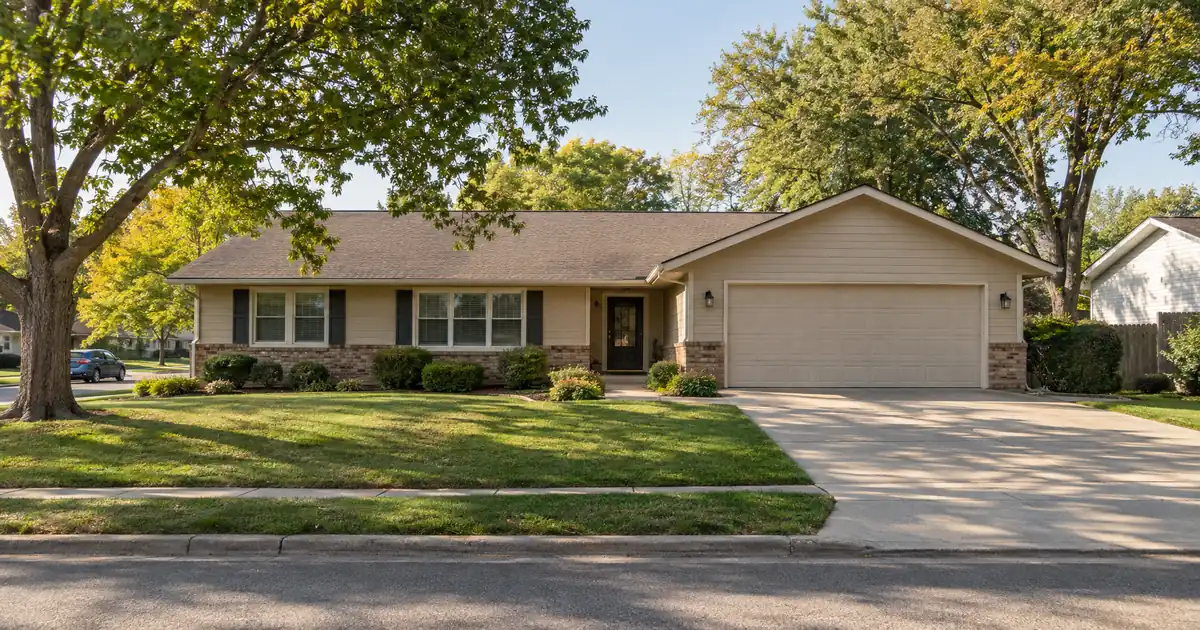
The Quick Read: Yes, in many cases, but only when door two is bought with cash on paper, meaning no loan is secured by that property at purchase, the money trail is documented, and the lender offers a path that lets a cash-out refinance happen before the usual seasoning period passes. Delayed financing is not a separate loan. It is an exception to the waiting period on an ordinary cash-out refinance, and it returns what you paid, not what the property is now worth.
- Cash pulled from door one counts as cash for door two, as long as nothing is recorded against door two at purchase.
- The new loan is still a cash-out refinance. Leverage caps, credit, reserves, and rent coverage all still apply.
- Debt used to fund the purchase generally has to be repaid from the refinance proceeds, so net new capital is smaller than it looks.
- Not every DSCR lender offers a delayed-financing-style path. Ask before you buy, not after.
Key Terms Defined
Delayed financing: a cash-out refinance on a property you bought with cash, done before the normal waiting period ends.
Seasoning: the waiting period a lender wants between buying a property and taking cash out of it. Across most of the wholesale network Lendmire places files with, that is about six months, measured from title recording.
Cost basis: what you actually paid for the property, plus eligible closing costs. Delayed financing usually sizes the loan to this number.
DSCR (debt service coverage ratio): the property’s rent divided by its monthly principal, interest, taxes, insurance, and any HOA dues (together called PITIA). A ratio at or above 1.00 means rent covers the payment on paper.
Arm’s-length purchase: a sale between unrelated parties at a fair price. Deals with relatives or business partners usually fail this test.
Vesting: how title is held, such as in your own name or in an LLC.
DSCR Cash-Out Calculator
Run the cash-out numbers in your market
Rate source: Freddie Mac 30-yr average via FRED® — Federal Reserve Bank of St. Louis · effective Oct 8, 2026
Prefilled with starting assumptions — enter your property’s value, balance, taxes, and insurance for a more accurate picture.
Program parameters update from Lendmire’s centralized guideline source. Taxes and insurance are editable estimates.
As of Oct 8, 2026 · General Freddie Mac market benchmark, not a Lendmire loan offer. Property value, balance, taxes, and insurance are editable estimates. Maximum loan-to-value varies by lender, program, property type, and seasoning. Not a Loan Estimate, approval, or commitment to lend. Program availability and eligibility are subject to lender guidelines, credit approval, property review, and underwriting.
How Does the One-Door-to-Next-Door Sequence Work?
The sequence has six steps, and the first four set up the fifth. You raise money secured by something other than door two, buy door two with no financing on it, keep it clean, document everything, refinance door two as a cash-out loan, then redeploy what comes back. Each step has a place where files commonly go wrong.
1. Raise the cash from door one. That can be a cash-out refinance, a home equity line on another property, or plain savings. Door one’s loan stays secured by door one.
2. Buy door two with no loan against it. The settlement statement should show a cash purchase. The sale should be arm’s-length.
3. Keep door two clean. Do not record a lien on it before the refinance. Practitioners on a BiggerPockets delayed-financing thread stress that the exception is for true cash buyers.
4. Build the paper trail. Keep the purchase settlement statement, bank statements, wires, and the loan paperwork from door one. If an LLC holds title, keep the vesting documents too.
5. Refinance door two as a cash-out loan. The lender runs the usual checks: appraisal, credit, reserves, and rent coverage.
6. Redeploy what comes back. Then decide what to do with it, which is where the real investor decision sits (more on that below).
The big picture: you are not skipping underwriting. You are skipping a wait.
What Does the Exception Waive, and What Still Applies?
It waives the seasoning wait and nothing else. Bankrate’s explainer makes the same point: delayed financing works like a cash-out refinance, with the usual application and credit check.
| Item | Waived? | Still required |
|---|---|---|
| Six-month ownership wait | Waived | Cash purchase on paper |
| Credit review | No | Score tiers apply |
| Rent coverage test | No | DSCR must clear program floor |
| Appraisal | No | Value must support the loan |
| Reserves | No | Typically about 6 months PITIA |
| Leverage cap | No | 75% LTV on a standard-rental cash-out |
On a short-term rental, the cash-out ceiling is 70% LTV rather than 75%. Credit, coverage, and reserves are all subject to lender guidelines.
Where Does the Cash for Door Two Come From?
Cash from a cash-out refinance on door one counts as cash for door two, as long as no loan is secured by door two. The catch is repayment. In the agency world, the Fannie Mae Selling Guide’s cash-out refinance topic says that when purchase money came from a loan secured by something else, the refinance proceeds must pay off or pay down that loan.
That guide does not govern DSCR loans. It is useful here because it shows where the concept comes from and why its edges are shaped the way they are. A DSCR lender writes its own rules, and some write none for this scenario.
Here is the same idea in broker terms. The money has to be traceable. The purchase has to look like a cash deal. If you borrowed against door one to buy door two, expect the lender to ask where the refinance proceeds are going.
Gift funds are a separate trap. The same guide says gifted money used for the purchase cannot be reimbursed from the new loan. DSCR treatment varies by lender, so treat gifts as a red flag until a lender tells you otherwise.
Does the Math Actually Scale?
Not as much as it first appears. Delayed financing moves debt around more than it creates new capital. The original poster in a BiggerPockets thread on this exact question said it seems to defeat the purpose. The top reply answered that it still works if you accept leaving more equity in each property.
Run the numbers on percentages instead of dollars. Say door two’s cost basis is 100 units. A cash-out refinance sized to cost at the 75% LTV ceiling on a standard rental returns at most 75 of those 100 units. If door one’s cash-out funded the purchase, some or all of that return may need to repay the debt that did the funding. What is left over is your net new capital. Terms vary by lender guidelines, property type, leverage, credit profile, and full file review.
So what are you buying? Three things.
- A cash-style offer. Sellers often prefer a buyer who is not depending on a loan approval.
- A way to recover capital without waiting out seasoning. You give up appreciation and rehab value in exchange for time.
- A reset. Door two now carries its own loan, and door one carries its larger one.
It does not give you more leverage. Whether the exchange is worth it is a genuine toss-up that depends on how much the offer advantage matters and how much equity you can afford to leave in the deals.
One cycle is simple enough. The harder question is what happens when you repeat the cycle across several doors, which the three-door table below lays out.
Cost Basis or Appraised Value?
Delayed financing returns cost, not appreciation. That is the most common surprise for investors who buy well below market. If you paid far under what the property is worth, or you plan to renovate, waiting out seasoning and refinancing on appraised value may return more.
Sizing varies by lender. Some lenders cap a delayed-financing-style loan at the purchase price plus eligible closing costs. Others behave differently once rehab is involved. Investors try to roll repair costs into the purchase statement, and acceptance depends on the lender. An improvement may support a higher appraised value, depending on comps and underwriter review, but you should not count on it until the lender confirms how it sizes the loan.
A simple rule of thumb:
- Bought at roughly market value, no major rehab: delayed financing gives up little.
- Bought at a discount or heavy rehab planned: waiting for seasoning often returns more.
- Need the offer to look like cash: delayed financing is the tool built for that.
What Does This Look Like Across Three Doors?
A repeat cycle shows where each constraint appears. This table uses relative terms only.
| Step | Door One | Door Two | Door Three |
|---|---|---|---|
| Funding | Existing equity | Cash from door one | Cash from door two |
| Loan at purchase | Already financed | None | None |
| Refinance sizing | Up to 75% LTV | Sized to cost | Sized to cost |
| Main constraint | Seasoning | Source-loan repayment | Reserves and coverage |
| What compounds | Larger loan | Second loan | Third loan |
Each cycle adds a loan, and each loan adds a payment the next file must carry. Reserves stack too. They commonly run about six months of PITIA per property, and about nine months once a loan goes above $1,500,000. Reserves vary by lender, leverage, and loan size, and conservative rate-term files at modest sizes can see them waived.
The honest takeaway is that the chain works best at moderate leverage with plenty of rent coverage. Lendmire’s piece Can You Cash-Out a Rental to Buy the Next One When Scaling is a good companion read for the seasoned version of the same chain.
What Does the Network Look Like for This Scenario?
Across the wholesale network Lendmire places files with, the numbers below are the typical ranges. Programs change, and every file is underwritten individually by the lender.
- Cash-out leverage: tops out around 75% LTV on a standard rental. Short-term-rental collateral is lower, at 70% on a cash-out.
- Seasoning: about six months of ownership, measured from title recording.
- Coverage: 1.00 is where many select programs start. A separate select-lender path takes coverage below 1.00, with leverage and terms adjusted.
- Credit: a 620 floor exists in parts of the network. Most programs want around 660, and 700 or higher opens the strongest leverage tiers.
- Loan size: up to $3,000,000 on standard programs.
- Reserves: commonly about six months of PITIA, and about nine months above $1,500,000.
The seasoning line is where this topic lives. Some lenders offer a delayed-financing-style path for cash purchases. Others simply want the six months. Which one you get is lender-specific, so settle it before you buy rather than after. For the full program picture, see the complete DSCR loans guide.
One more reminder: clearing 1.00 is not the same as positive cash flow. The ratio compares rent to PITIA only. Repairs, vacancy, management, utilities, and capital expenses sit outside it.
DSCR loans are designed for non-owner-occupied investment properties. Because they are business-purpose investor loans, they are reviewed differently from a standard owner-occupied mortgage. Qualification runs primarily on property-level rental income covering the payment, subject to lender guidelines.
Does Entity Ownership Matter?
Yes, because vesting has to match. The agency version of the rule accepts a purchase by an individual, certain trusts, or an LLC or partnership the borrower owns 100%. A DSCR lender may differ, and LLC-titled loans are subject to lender program eligibility.
The failure here is a mismatch. In the same BiggerPockets thread, one practitioner describes an exception that failed on a technicality: the borrower applied in their own name, but the purchase funds sat in a partnership’s account. The lesson is to match who paid, who took title, and who is applying for the refinance.
Delayed Financing, Waiting, or Another Tool?
Each tool fits a different situation.
| Tool | Best when | Main tradeoff |
|---|---|---|
| Delayed-financing refinance | You need a cash-style offer | Returns cost, not value |
| Seasoned cash-out | You can wait about 6 months | Capital stays tied up |
| Bridge or hard-money loan | You need short-term funding | Secured by the new property, so it blocks the exception |
| Line on another property | You have equity elsewhere | Adds a payment and a lien elsewhere |
Use this order of questions to choose:
1. Does the seller care whether the offer looks like cash? If yes, lean toward delayed financing.
2. Did you buy below market or plan a rehab? If yes, lean toward waiting.
3. Will a lien land on door two before the refinance? If yes, the exception is at risk.
4. Does your lender offer this path in writing? If not, plan for the full seasoning period.
5. Does door two clear the rent-coverage test on its own? If not, restructure before you buy.
Where Do These Files Trip?
Most failures come from the same handful of problems.
- Hard-money or bridge financing on the purchase. A loan secured by door two generally disqualifies the exception.
- Related-party sales. A deal with a relative or partner is not arm’s-length.
- Vesting mismatch. The buyer, the account, and the borrower differ.
- Document gaps. Missing wires or statements break the trail.
- Lease-option purchases. One investor in a BiggerPockets account of a delayed-financing file reports that a lease option was a non-starter, and that poorly documented family loans can be read as gifts. That is one investor’s experience, not a rule.
- A low appraisal. The loan is sized to the lesser of cost and value, so a low value shrinks the return.
- A loan officer who has never done one. Ask early.
Tax treatment can depend on how the funds are used and how the property is held; investors should keep clear records and speak with a qualified tax professional before relying on any deduction.
Frequently Asked Questions
Is delayed financing a DSCR loan product?
No. It is a concept from the agency lending world. DSCR lenders write their own versions of it, or none at all. In the Lendmire network, the standard expectation for a cash-out is about six months of ownership, and any earlier path is lender-specific.
Can I use delayed financing more than once?
Often yes, but each cycle adds a loan, a payment, and a reserve requirement. DSCR lenders do not apply the agency’s property-count limits the same way. Each file must still clear coverage, credit, and reserves on its own.
What if I borrowed the cash against another property?
Cash secured by a different asset is generally acceptable if it is documented. The catch is that proceeds may need to repay that loan, so your net new capital shrinks. Gifted money is treated differently and generally cannot be reimbursed.
Will I get the property’s full appraised value back?
Usually not. These refinances typically size to cost, not value. If you bought below market or renovated, waiting for seasoning and refinancing on appraised value may return more.
Does hard money count as cash?
Generally no. A loan secured by the new property breaks the cash-purchase test. Private money not secured by the property may work, but the documentation has to be airtight.
Run the Numbers Before You Buy
If you are buying or refinancing a rental property and want to see how the numbers work, Lendmire can help you compare DSCR loan options based on the property income, credit profile, leverage, and investor goals. Lendmire is a broker that arranges financing through select lenders in its wholesale network, across 41 markets including Washington, D.C. Bring your plan for door two before you make the offer, so the path is confirmed in writing first.
About Lendmire
A DSCR-focused mortgage broker, Lendmire (NMLS# 2371349) places investor financing across 41 markets — 40 states plus Washington, D.C. — with DSCR eligibility generally reviewed by the lender on property cash flow instead of traditional personal-income documentation, subject to lender guidelines. Scotsman Guide named Lendmire a Top Mortgage Workplace in 2025 and 2026.
For how equity extraction works on an investment property, see Lendmire’s guide to cash-out refinance on an investment property.
Get Started
Ready to find the right loan for you?
In about 30 seconds you can review financing options available for your investment property. No commitment required.
Informational only. Not a Loan Estimate, approval, or commitment to lend. Program availability and eligibility are subject to lender guidelines, credit approval, property review, and underwriting.
References
1. BiggerPockets, who has used the delayed financing exception
2. Bankrate, delayed financing explainer
3. Fannie Mae Selling Guide, cash-out refinance transactions topic
4. BiggerPockets, cash-out refi, BRRRR, and delayed financing
5. BiggerPockets, real-life BRRR and delayed financing
This article is part of Lendmire’s investment property cash-out refinance program — full qualification details, guidelines, and scenarios live on the program page.
Related reading: Can a BRRRR Investor Refinance a DSCR Loan After Bridge Exit? · How to Cash Out on the Full Value After a DSCR Exit From Hard Money · How Much Equity and Reserves a Rental HELOC Lender Expects
Brandon Miller
Founder & CEO, Mortgage Loan Originator, Lendmire LLC
- Mortgage Loan Originator · NMLS# 1129696 · Verify on NMLS Consumer Access
- North Carolina Real Estate Broker · License# 343312 · Verify on NCREC
- North Carolina Insurance Producer · License# 19053198 · Property, Casualty, Life, Health · Verify on NAIC SBS
- Lendmire LLC · Firm NMLS# 2371349 · Verify firm licensure
Disclosures. The information presented in this article is general market commentary, not financial, legal, or tax advice. Lendmire is a mortgage brokerage (NMLS# 2371349) — not a direct lender or depository institution — and loan placement is subject to lender underwriting. Nothing in this content represents a commitment to lend. Loan terms, pricing, and program availability vary based on borrower qualifications, property characteristics, and state of subject property, and are subject to change at any time. Lendmire complies with Equal Housing Opportunity requirements. Consumer access: nmlsconsumeraccess.org.