
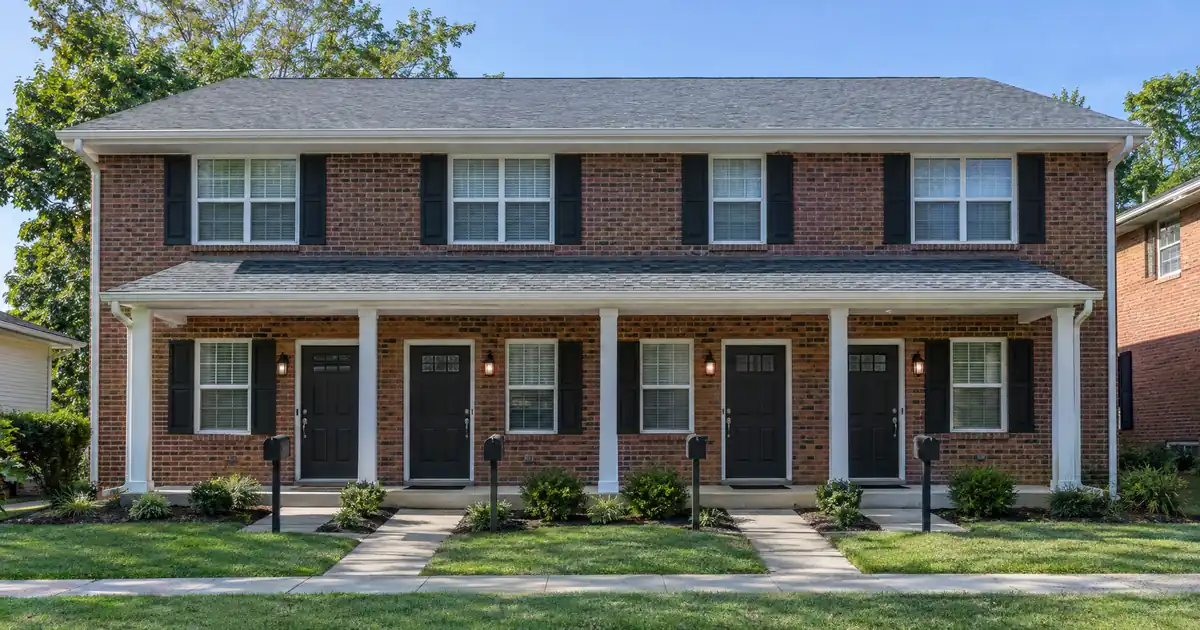
The Quick Read: A cash-out refinance fits an investor who wants to pull equity from one 2–4 unit property while every other building stays on its own loan. A blanket loan fits a seasoned owner of several properties who values one note and one servicer over the freedom to sell, refinance, or default on each building separately. The deciding question is usually your exit plan, not the paperwork.
- A cash-out refinance is one new loan on one property, so a problem on that building stays on that building.
- A blanket loan puts two or more properties under one note, so each property backs the whole balance.
- A blanket’s selling flexibility depends on its release clause, and release terms vary by lender.
- Both are business-purpose loans on investment property, and both can qualify primarily on rental income covering the payment, subject to lender guidelines.
- On a cash-out, the network’s standard ceiling is 75% LTV (loan-to-value, the loan as a share of the appraised value) on a standard rental.
Here is the honest answer on who each option is for. A cash-out refinance suits most small landlords. It handles one duplex, triplex, or fourplex at a time, and the file stands on that building’s own rent and equity. A blanket loan suits a narrower group: owners who hold several buildings, plan to keep them together, and accept shared risk in exchange for consolidation. If one property has far more equity than the others, or you might sell one building on its own schedule, separate cash-outs usually keep more doors open.
DSCR Cash-Out Calculator
Run the cash-out numbers in your market
Rate source: Freddie Mac 30-yr average via FRED® — Federal Reserve Bank of St. Louis · effective Oct 15, 2026
Prefilled with starting assumptions — enter your property’s value, balance, taxes, and insurance for a more accurate picture.
Program parameters update from Lendmire’s centralized guideline source. Taxes and insurance are editable estimates.
As of Oct 15, 2026 · General Freddie Mac market benchmark, not a Lendmire loan offer. Property value, balance, taxes, and insurance are editable estimates. Maximum loan-to-value varies by lender, program, property type, and seasoning. Not a Loan Estimate, approval, or commitment to lend. Program availability and eligibility are subject to lender guidelines, credit approval, property review, and underwriting.
Side-by-Side
The cash-out column reflects the guidelines Lendmire sees across its wholesale network of DSCR lenders. The blanket column shows published industry norms, which vary by lender and should be read as typical patterns, not fixed terms.
| Factor | Cash-Out Refi (per property) | Blanket Loan (industry norms) |
|---|---|---|
| Collateral | One property, one lien | Two or more properties, one note |
| Review basis | That property’s rent vs. its PITIA | Often pooled rent across the group |
| Documentation | Leases, rent roll, entity papers per file | One pooled file; appraisals per property |
| Property types | 2–4 units; some types not offered | Mixed pools; lender lists vary |
| Entity vesting | Individual or LLC, per program | Often LLC or tenured owner; varies |
| Selling one property | Sell or refinance it alone | Depends on the release clause |
| Weak property effect | Stays on its own file | Can drag down the pooled test |
| Seasoning | About 6 months from title recording | Varies by lender and property |
| Reserves | About 6 months PITIA; about 9 above $1.5M | Vary by lender; often tested on the pool |
| Adding a property later | Closes as its own separate loan | Generally means new underwriting |
DSCR, the debt service coverage ratio, is monthly rent divided by PITIA. PITIA is principal, interest, taxes, insurance, and any HOA dues. Both columns use that same idea. The difference is whether the test runs on one building or on a group.
Key Terms Defined
Cash-out refinance: a new loan on one property that pays off the old mortgage and returns the difference to you as cash.
Blanket loan: one loan that finances two or more properties under a single agreement, with one payment and one servicer.
Cross-collateralization: a setup where every property in the pool secures the whole debt, so trouble on one building can reach the others.
Release clause: a contract term that lets you pay off part of a blanket loan and free one property, usually at a price and under conditions the lender sets.
Seasoning: the waiting period a lender wants after you buy a property before it will lend against the new value.
LTV: loan-to-value, the loan amount divided by the property’s appraised value.
How a Cash-Out Refinance Works on a 2–4 Unit
A cash-out refinance is the simpler structure, and each building keeps its own debt. You choose the property and confirm title, vesting, and ownership time. The lender orders an appraisal. On a 2–4 unit, that is usually the small residential income property report, known as Form 1025 in Fannie Mae’s appraisal forms list. DSCR loans are not agency loans. The form only supplies a standard format for value and unit-level rent.
Those unit rents add up to the number the lender tests. A fourplex with four modest leases is tested on all four together, and rent is measured against the full new payment, not the old one. You supply leases, a rent roll, entity documents, a payoff statement, and a business-purpose statement.
Across the wholesale network, a cash-out refinance on a standard rental tops out around 75% LTV, with about six months of seasoning measured from title recording. Many programs want a credit score near 660, a 620 floor exists in parts of the network, and 700 or higher opens the strongest tiers. Reserves commonly run about six months of PITIA, stepping up to about nine months on loans above $1,500,000. Standard programs go up to $3,000,000. Each point is subject to lender guidelines and the individual file.
Coverage matters too. 1.00 is where many select programs start, and stronger ratios open better terms and leverage. A separate select-lender path takes coverage below 1.00, with leverage and terms adjusted. Clearing 1.00 does not mean the building produces positive cash flow. DSCR compares rent to PITIA only, and repairs, vacancy, management, utilities, and capital expenses sit outside the test.
How a Blanket Loan Works
A blanket loan wraps a group of properties into one loan. The lender defines the pool at underwriting, and the properties in it are fixed. You get one credit review, one payment, and one servicer. Appraisals and title work still run on each building. A blanket was traditionally a tool for builders and developers, but the same structure is sometimes applied to rental pools.
The pooled structure cuts both ways. Strong properties can offset weaker ones, which helps when one building has soft rent. The reverse is also true: one weak property can pull down the whole group’s test. And because the loan is cross-collateralized, a default can lead to action against every building in the pool.
The release clause is where blanket loans get decided. A standard mortgage has a due-on-sale clause. A blanket instead relies on a release clause that lets you sell one property and pay down part of the loan. Nav’s explainer on cross-collateralization notes that without one, selling a property tied to a cross-collateralized loan gets much harder. The clause may not exist at all: Goliath Data’s beginner guide to blanket mortgages calls it common but not guaranteed. That is why you negotiate it before you sign, not after.
For 2–4 unit buildings, there is little neutral published detail on blanket underwriting. Treat any specific blanket terms you are quoted as lender-specific, and compare them in writing.
When a Cash-Out Refi Is the Better Fit
A cash-out refinance is the better fit when you want freedom more than consolidation. It works best in these situations:
- You own one building with real equity. A blanket needs two or more properties. A single high-equity duplex is a cash-out question by definition.
- Your equity is uneven. If one fourplex has far more equity than the others, a separate cash-out taps it without tying the weaker buildings to the same note.
- You might sell on your own schedule. Each building carries its own debt. You can sell or refinance one without a release negotiation.
- You want problems to stay local. A low appraisal, a vacancy spike, or a late payment on one building affects that file alone.
- You plan to hold some and flip others. Separate notes let each property follow its own plan.
The cost of that freedom is repetition. Each cash-out is its own file, with its own appraisal, leases, title work, and seasoning check, and reserves are reviewed for each loan. If you refinance three buildings, you assemble the package three times. That is real work, but it is also why the structure stays clean.
For the sequencing side of this decision, see Lendmire’s piece Cash Out Now vs Refi Later on a 2–4 Unit Rental.
When a Blanket Loan Is the Better Fit
A blanket loan fits when consolidation is the goal and you are comfortable with shared risk. It tends to work for owners who:
- Hold several buildings for the long term. If you will keep all of them for years, one servicer and one payment can simplify your life.
- Own a tenured, well-documented portfolio. Blankets are generally designed for companies or experienced investors, not first-time landlords.
- Have a negotiated release clause. Written release terms covering price, order of release, and what the remaining properties must still pass are what turn a blanket into a flexible tool.
- Have similar properties. A pool of comparable duplexes with steady rent tests more cleanly than a pool with one outlier.
Blankets are also not the right answer just because they sound tidy. One note on a bigger balance means a bigger lien against everything. If your plan includes selling one building, reading the release terms comes before anything else. Release prices can be set above a property’s pro-rata share, and the only real protection is the written clause. Another common surprise is that a blanket generally does not accept additional properties later without new underwriting.
A blanket loan is also not a shortcut around entity or eligibility rules. If you hold title in an LLC, the loan may be available subject to lender program eligibility, and a personal guaranty can remain in place even after a property leaves the lien.
A Worked Example: Three Duplexes, Uneven Strength
Run the numbers on a pool of three duplexes, using modeled assumptions rather than market data. Say duplex A covers its payment at roughly 1.30x, duplex B at about 1.15x, and duplex C at about 0.90x because one unit is under-rented. All three sit near the same value, but A has much more equity than B or C.
On separate cash-outs, each building is tested on its own. A and B each stand on their own coverage, and A’s equity can be pulled at the 75% cap on a standard rental without involving the others. Duplex C sits below 1.00, so its file is a different conversation. Coverage below 1.00 is available through select lenders in the network, with leverage and terms adjusted, and it is reviewed subject to lender guidelines, credit approval, and property review.
On a blanket, the lender might test the pool instead. If the three carry similar debt, the blended coverage lands near 1.1x. C’s soft rent gets absorbed by A and B. That can help C. But if A’s rent dips or an appraiser lowers B’s rent opinion, the whole pool’s number moves. And if you later want to sell A, the release clause decides what you owe and what the remaining two must still pass.
The appraisal matters on both paths. On a 2–4 unit, the appraiser’s unit-level rent opinion drives coverage directly. On separate files, a low rent figure on one fourplex hurts that one file. In a blanket, it can pull the group’s test down.
This is a genuine tradeoff, not a trick question. The blanket may rescue duplex C on paper, but it ties C’s weakness to A’s strength. For a lot of small portfolios, separate files plus a plan for C is the cleaner structure, though an owner who plans to hold all three for a decade could reasonably choose the pool.
What Experience Shows About Both Structures
Across the DSCR files a broker sees, the choice between these structures rarely turns on convenience. It turns on whether the owner has a sale or refinance in mind for any one building within the next few years. Many owners who plan to hold everything find a reason to sell one building along the way, and a loan with an unclear release clause becomes a negotiation at the worst time. Files with separate cash-outs rarely leave anyone stuck that way, though they do mean more paperwork up front.
Loan Purpose and Eligibility Basics
DSCR loans are designed for non-owner-occupied investment properties. Because they are business-purpose investor loans, they are reviewed differently from a standard owner-occupied mortgage. The CFPB’s Truth in Lending guide lists credit extended primarily for a business or commercial purpose as exempt from the consumer-credit rules. Files typically carry a business-purpose statement, and how you use the cash-out proceeds matters.
Property eligibility matters on both paths. Manufactured homes (single- and double-wide), log homes, and barndominiums are not offered in the network’s DSCR programs, so a mixed pool containing one of them is not an option there. A larger down payment lowers the payment and can lift DSCR, but it does not erase leverage caps, credit floors, reserve rules, or property eligibility. The strongest files clear both tests: enough equity and enough rental coverage. For the full picture of how these programs fit together, see the complete DSCR loans guide.
Tax treatment can depend on how the funds are used and how the property is held; investors should keep clear records and speak with a qualified tax professional before relying on any deduction.
A Balanced Verdict
Choose the cash-out refinance if you own one building, if your equity is lopsided, or if you may sell, refinance, or restructure one property on its own schedule. It costs more paperwork, and it keeps risk contained.
Choose the blanket loan only if you hold several similar buildings, intend to keep them together, and have release terms in writing that you have actually read. It consolidates, and it concentrates risk.
If you are unsure, the test is simple. Ask whether you would be comfortable if every property in the pool were exposed to a problem on any one of them. If the answer is no, separate loans are the safer fit. Questions to put to any blanket lender include the release price, the order of release, what the remaining properties must pass after a release, and whether a personal guaranty continues.
Frequently Asked Questions
Can I do a blanket loan on a single duplex?
No, a blanket loan covers two or more properties by definition. A single duplex with equity is a cash-out refinance question. If you own just one 2–4 unit building and want cash from it, a DSCR cash-out on that property, up to the network’s 75% LTV ceiling on a standard rental, is the usual route, subject to lender guidelines.
Can I mix property types in one blanket?
Often yes, since duplexes and single-family homes can sit in one pool. Eligibility lists differ by lender, though, so confirm each building qualifies. Property types the network does not offer, such as manufactured homes, log homes, and barndominiums, would not fit a DSCR pool there.
Can I add a property to a blanket later?
Generally not without new underwriting. The pool is fixed when the loan is written. If you expect to keep buying, separate loans leave each acquisition free to finance on its own terms.
What happens if I want to sell one building in a blanket?
The release clause controls it. It sets what you must pay down and what the remaining properties must still satisfy. Because release terms vary lender to lender, get them in writing before you sign.
Does a cash-out refinance or blanket require an LLC?
Not necessarily. Individual and LLC vesting are both common, and LLC borrowing is available subject to program terms. Entity vesting affects who signs and guarantees, so settle it before you apply.
If you are buying or refinancing a rental property and want to see how the numbers work, Lendmire can help you compare DSCR loan options based on the property income, credit profile, leverage, and investor goals, through select lenders in its wholesale network across 41 markets, including Washington, D.C. Not a commitment to lend; every file is underwritten individually. You can reach the team at 828-256-2183 or request a quote.
For current guidelines and terms, see Lendmire’s DSCR loan programs page.
About Lendmire
Lendmire (NMLS# 2371349), a non-QM mortgage broker serving investors in 41 markets including Washington, D.C., helps structure DSCR scenarios commonly evaluated around a property’s rental income rather than personal income paperwork, subject to lender guidelines. A Scotsman Guide Top Mortgage Workplace in 2025 and 2026, Lendmire places loans through wholesale investor lenders and is not a direct lender.
For the mechanics of pulling equity out of a rental property, see Lendmire’s guide to cash-out refinance on an investment property.
Get Started
Ready to find the right loan for you?
In about 30 seconds you can review financing options available for your investment property. No commitment required.
Informational only. Not a Loan Estimate, approval, or commitment to lend. Program availability and eligibility are subject to lender guidelines, credit approval, property review, and underwriting.
References
1. Fannie Mae Selling Guide B4-1.2-01
2. Nav, Cross-Collateralization explainer
3. Goliath Data, The Real Estate Beginner’s Guide to Blanket Mortgages
4. CFPB, Truth in Lending Act guide
This article is part of Lendmire’s investment property cash-out refinance program — full qualification details, guidelines, and scenarios live on the program page.
Related reading: Can You Cash Out a Vacant DSCR Rental on a Two-to-Four Unit? · 40-Year DSCR Loan vs Bridge Loan for a Cash-Out Refinance · DSCR Loan vs Lower Payment Investment Refinance for Cash Out
Brandon Miller
Founder & CEO, Mortgage Loan Originator, Lendmire LLC
- Mortgage Loan Originator · NMLS# 1129696 · Verify on NMLS Consumer Access
- North Carolina Real Estate Broker · License# 343312 · Verify on NCREC
- North Carolina Insurance Producer · License# 19053198 · Property, Casualty, Life, Health · Verify on NAIC SBS
- Lendmire LLC · Firm NMLS# 2371349 · Verify firm licensure
Required disclosures. Lendmire (NMLS# 2371349) operates as a licensed mortgage broker, not a direct lender or depository. The discussion in this article is general in nature and should not be relied upon as financial, legal, or tax advice — every investment scenario is unique and should be reviewed by a qualified professional. Any loan inquiry is subject to lender underwriting, and this article is not a commitment to lend or a guarantee of approval. Mortgage rates, loan terms, and program guidelines vary by borrower, property, and state, and may change without notice. Equal Housing Opportunity. Verify licensure at NMLS Consumer Access.