
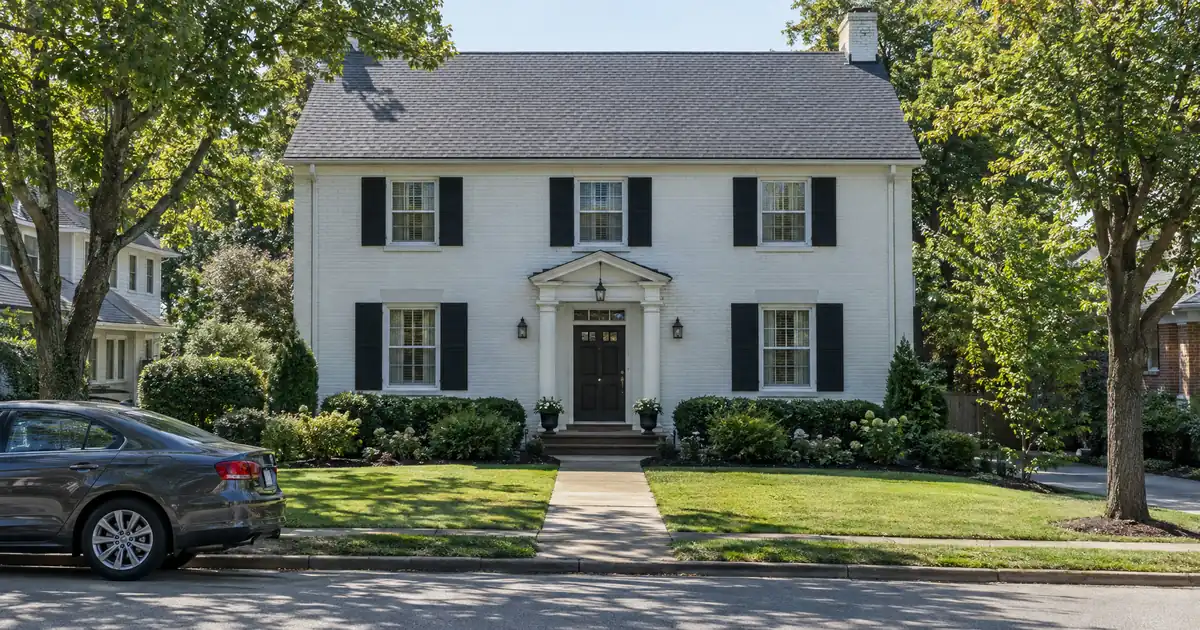
The Quick Read: One heir takes a new first-lien loan against the free-and-clear rental, in their own name, and the cash from that loan pays the other heirs for their shares, after which each departing heir deeds their interest to the borrower, so the keeper ends up holding clean title. The lender sizes the loan on a fresh appraisal and reviews the property’s rent against the new payment. The share you buy out decides whether the numbers fit.
- On most files across the wholesale network, a cash-out on an investment property tops out around 75% LTV, so the size of the shares you buy out sets feasibility.
- Title must sit in the keeper’s name with the deed recorded. Seasoning (the ownership wait before cash-out) is about 6 months from recording on typical files and is set by each lender.
- The file qualifies primarily on property-level rental income covering the payment, subject to lender guidelines. A 1.00 coverage ratio is where many select programs start.
- Every heir has to sign. The refinance releases departing heirs from the debt, and the deed moves their title.
- The new loan is larger than anything the property carried before, so test the coverage before you agree on a price.
Key Terms Defined
Cash-out refinance: a new loan that replaces any old one and puts cash in your hands at closing. On a paid-off property there is nothing to replace, so the whole loan is cash out.
LTV (loan-to-value): the loan amount divided by the appraised value.
DSCR (debt service coverage ratio): monthly rent divided by the full monthly payment. That payment is principal, interest, taxes, insurance, and any HOA dues, known together as PITIA.
Seasoning: the waiting period a lender wants between when you took title and when you cash out.
Vesting: how title will be held after closing, either in your personal name or in an entity such as an LLC.
Buyout agreement: the written deal among the heirs. It states the appraised value, each share, the payment, and the promise to sign a deed at funding.
DSCR Cash-Out Calculator
Run the cash-out numbers in your market
Rate source: Freddie Mac 30-yr average via FRED® — Federal Reserve Bank of St. Louis · effective Oct 8, 2026
Prefilled with starting assumptions — enter your property’s value, balance, taxes, and insurance for a more accurate picture.
Program parameters update from Lendmire’s centralized guideline source. Taxes and insurance are editable estimates.
As of Oct 8, 2026 · General Freddie Mac market benchmark, not a Lendmire loan offer. Property value, balance, taxes, and insurance are editable estimates. Maximum loan-to-value varies by lender, program, property type, and seasoning. Not a Loan Estimate, approval, or commitment to lend. Program availability and eligibility are subject to lender guidelines, credit approval, property review, and underwriting.
Does a Paid-Off Rental Really Count as a Cash-Out Refinance?
Yes, it does, and the label trips people up. With no loan to pay off, every dollar the lender advances is cash out. That is why the 75% LTV ceiling applies to the whole loan, not just to a slice of it. Every figure here varies by lender and program — guidelines, property type, leverage, and credit profile all apply.
Paid-off is the best starting point for a buyout. Equity is at its maximum, and no old balance eats into what you can pay the heirs. The catch is that the cap still binds. You are borrowing against the property to buy out people who own part of it.
DSCR loans are designed for non-owner-occupied investment properties. Because they are business-purpose investor loans, they are reviewed differently from a standard owner-occupied mortgage. That matters here for one reason: the lender looks at what the building earns, not at the keeper’s paycheck.
What Has to Be True Before You Apply
Four things must line up before a lender will review the file.
1. Title is in your name, or will be at the same closing. The estate must finish probate, or the trust must distribute. Lenders generally want the deed recorded before they treat the property as yours.
2. Every heir is on board. One holdout can stall the file, and a later section covers that case.
3. The rent supports the new loan. The new payment is bigger than any the property carried before.
4. There is an independent appraisal. A tax assessment is not a market value. LegalShield makes the same point: assessments set equitable taxation, not fair market value.
Skip any one of these and the file stalls.
How Underwriting Treats the File, Step by Step
Here is the sequence, from first conversation to the closing table.
Step 1: Establish who holds title. A cash-out becomes available once the estate distributes the property and title is in the keeping heir’s name. Some lenders in the network ease the seasoning wait for inherited property. The deed still has to be recorded first.
Step 2: Agree on value and price in writing. Order the appraisal and put the agreed price in a buyout agreement. If the price is tied to the refinance appraisal, a low value shrinks both the loan and the price. Decide in advance what happens in that case. A common fix is to let any heir dispute the value and order a second appraisal at their own expense.
Step 3: The lender reviews the property. The appraisal sets value. For rental income, the appraiser completes a rent schedule: form 1007 on a single-family home, form 1025 on a small multifamily. Those forms are named here for reference only.
Step 4: The lender tests coverage on the new loan. A larger loan means a larger payment, so the ratio is tested on the new number, not the old one. The file qualifies primarily on property-level rental income covering the payment, subject to lender guidelines.
Step 5: The lender reviews the borrower. Credit and reserves still matter. Most programs want a score around 660. A 620 floor exists in parts of the network, and 700 or higher unlocks the strongest leverage tiers. Reserves vary by lender, leverage, and loan size. About 6 months of PITIA is common, stepping up to about 9 months above $1,500,000.
Step 6: Close through title or escrow. The loan funds, proceeds go to the departing heirs, and the deeds are recorded. Loan sizes run up to $3,000,000 on standard programs, and every file is underwritten individually.
What the coverage number does and doesn’t tell you
Take monthly rent and divide by PITIA. At 1.00, rent exactly covers the payment. A 1.00 floor is where many select programs start, and stronger ratios open better terms and leverage. A separate select-lender path takes coverage below 1.00, with leverage and terms adjusted.
Clearing the number is not the same as positive cash flow. Repairs, vacancy, management, utilities, and capital expenses all sit outside the calculation. An heir who plans to keep the rental for years should budget those separately.
The Buyout Math: Share Size Decides Everything
Here is the rule that matters most. The more of the property you buy out, the higher the LTV you need. Equal shares make the arithmetic easy. On a paid-off property with no other liens, the buyout as a share of value is the LTV before costs.
| Heirs (equal shares) | Shares bought out | Implied LTV | Fits under 75% cap? |
|---|---|---|---|
| Two | One | 50% | Yes, with room |
| Three | Two | About 67% | Yes, thin cushion |
| Four | Three | 75% | Right at the cap, no room for costs |
| Six | Five | About 83% | No |
This is arithmetic, not a quote, and it ignores closing costs and reserves. Those come out of the same pot. A buyout that lands exactly at the cap on paper will not fit once costs are added.
Run the check in this order:
1. Agree the appraised value with the other heirs.
2. Multiply the value by the share you are buying out to get the buyout as a percentage of value.
3. Add a few points for closing costs.
4. Compare the total to the 75% cash-out ceiling.
5. Test coverage on the loan that results. Final terms depend on lender guidelines, property type, leverage, and the borrower’s complete credit picture.
When the share is too big
Say five of six heirs want out. At about 83%, the buyout is more than the loan can cover on its own. Investors in that spot have several options:
- Buy out part of the shares now and the rest later, leaving some heirs on title.
- Have the departing heirs accept a seller note for part of their payout.
- Bring outside cash or another asset to cover the gap.
- Negotiate a lower payout, if the heirs agree and the appraisal supports it.
Leaving heirs on title has a cost. Lenders typically want everyone on title to be on the loan documents, so confirm that early.
How Does the Cash-Out Compare With Other Ways to Pay Heirs?
The cash-out refinance is not the only route. It is often the cleanest one, but it only opens once the keeper holds title.
| Route | Best fit | Main limit |
|---|---|---|
| Cash-out refinance | Keeper holds title and the rent supports the loan | 75% LTV cap and coverage |
| Estate or probate loan | Probate still open, cash needed now | Relies on expected inheritance |
| Seller note to heirs | Heirs who prefer a monthly payment stream | Depends on lien position and trust |
| Sell and split | No one wants to keep the property | The asset leaves the family |
A cash-out refinance keeps the asset and releases the departing heir from the debt. A seller note keeps the heir tied to the property’s performance.
Where the General Rule Breaks
Most files follow the steps above. These edge cases are where they stop doing so.
The seasoning clock. Seasoning is a lender rule, not a law, and DSCR loans are not agency products, so each lender sets its own clock. The clock generally starts at the recorded deed, not at the date of death and not at closing. Agency-backed programs carry their own inheritance exceptions. Those rules do not govern DSCR files, so do not assume they apply.
Delayed financing does not fit. Inheritance is not a purchase. Purchase-based workarounds don’t apply, and the loan is sized on the appraised value regardless.
Quitclaims. A quitclaim deed moves title only. It does not move the loan or change who owes it. The refinance handles the debt, and the deed handles the title. You need both.
An old loan that somehow survives. If an inherited property still carries a loan, the federal due-on-sale protection matters. Nolo’s legal guide explains that the law bars lenders from calling a loan due after certain transfers, including a transfer to a relative on the borrower’s death. The statute text sits at 12 U.S.C. § 1701j-3. On a paid-off rental, there is nothing to accelerate, so this rarely comes up.
Trust-held property. The trustee typically signs the loan and deed. Talk to a trust attorney first.
Estate timing. State estate law can override a clean-looking closing. If the estate is still open, get an attorney’s confirmation of who has authority to sign.
Below-market buyouts. If you pay an heir less than fair value, the transaction can be treated partly as a gift. Tax treatment can depend on how the funds are used and how the property is held; investors should keep clear records and speak with a qualified tax professional before relying on any deduction.
Property types. Manufactured homes, log homes, and barndominiums are not offered through the network’s DSCR programs, so an inherited property of those types needs a different financing route.
What If an Heir Won’t Sign?
If the heirs hold the property as co-owners, one of them may ask a court to force a sale. In states that have adopted the Uniform Partition of Heirs Property Act, a partition request triggers notice and a court-ordered appraisal. Per the Texas Freedom Colonies Project’s summary, the other co-owners may buy the requesting co-owner’s interest at the court-determined value. They have 45 days to elect and another 60 days to arrange financing.
Those are statutory periods under the act, not lender timelines. The Land Trust Alliance explains the purpose and the vulnerability it addresses: relatives who share an inherited property as co-owners. States choose whether to adopt the act, so the rules vary by location. And it generally applies only where the co-owners received interests from a relative and have no written partition agreement.
The practical takeaway: have the lender conversation before a court sets your clock. An heir who knows the financing path is in place often negotiates more calmly.
Tenants, Leases, and Entity Vesting
Existing leases generally continue through the ownership change. The lender will want to see the leases and rent support, and the keeper takes over deposits and management. Plan that handoff with the property manager, if there is one.
Vesting is a real decision. You can hold title personally, or deed the property into an LLC at closing. Vesting in an LLC is possible subject to lender program eligibility, and the lender will review entity documents. Transferring the property into an entity before the loan can complicate things. Ask the lender how it wants the sequence handled.
What the Decision Looks Like in Practice
Picture three siblings who inherit a free-and-clear duplex in equal thirds. One wants to keep it. Buying out two shares implies about 67% LTV on a cash-out before costs, under the 75% ceiling. Say the rent covers the new payment at roughly 1.15x. That is a modeled ratio, not a market fact. A file like that clears a 1.00 floor with some cushion, subject to lender guidelines, credit, and reserves.
Now change one input. Say the same property carries rent that covers the new payment at only 0.95x. That sits below the 1.00 floor of many select programs. A sub-1.00 path through select lenders in the network may be reviewed, with leverage and terms adjusted. Expect a lower LTV, which shrinks what you can pay the heirs. Or the keeper can bring more cash to the closing.
A pattern worth knowing: the files that go sideways are rarely about credit. They are about the appraisal. The heirs agree on a number, the appraiser returns a different one, and nobody wrote down what happens next. A paragraph in the buyout agreement fixes that.
A larger down payment lowers the monthly payment and can lift the ratio. It never erases leverage caps, credit floors, reserve rules, or property eligibility. The strongest files clear both tests: enough equity and enough rental coverage.
Some investors compare this route with a conventional cash-out. Lendmire’s piece DSCR vs Conventional Cash-Out Refinance for a Retiree’s Paid-Off Rental covers where each one fits. The complete DSCR loans guide explains the basics if the terms here are new.
Documents to Gather
- Death certificate
- Will, trust, or letters of administration
- Recorded deed
- Signed buyout agreement
- Appraisal and rent schedule
- Current leases and rent support
- Entity documents, if you are vesting in an LLC
- Proof of reserves
Frequently Asked Questions
Can the heir who keeps the property qualify with thin personal income?
Often, yes. DSCR files qualify primarily on property-level rental income covering the payment, subject to lender guidelines. The lender still reviews credit, reserves, and the property. Thin income does not sink the file, but a weak score or low reserves can.
Does inheriting a rental waive the seasoning wait?
Not automatically. Seasoning is lender-set, and some lenders in the network ease the wait for inherited property. The deed still has to be recorded, and the clock generally runs from that recording. On typical files, plan on about 6 months.
What happens if the appraisal comes in below the price the heirs agreed on?
Both the loan and the price shrink if the price is tied to the appraisal. If the price was fixed in advance, the keeper may need cash to cover the gap. Put the answer in the buyout agreement before ordering the appraisal.
Are the heirs I buy out still liable on the loan?
No, not after the refinance. The new loan pays the heirs for their interests, and they deed those interests to you. A deed alone never removes anyone from a loan, which is why the refinance and the deed happen together.
Can I leave one heir on title and buy out the rest?
Yes, but expect friction. Lenders typically want everyone on title to be on the loan documents. Confirm with the lender before you structure a partial buyout.
Next Step
If you are buying or refinancing a rental property and want to see how the numbers work, Lendmire can help you compare DSCR loan options based on the property income, credit profile, leverage, and investor goals. Qualification is subject to lender guidelines and is not a commitment to lend. The mortgage broker arranges financing through select lenders in its wholesale network across 41 markets, including Washington, D.C. Call 828-256-2183 or request a quote.
Investors weighing their equity options can start with Lendmire’s guide to cash-out refinance on an investment property.
About Lendmire
A non-QM mortgage broker (NMLS# 2371349), Lendmire arranges DSCR financing for real estate investors in 41 markets — 40 states plus Washington, D.C. Because deals are underwritten primarily on property cash flow rather than personal income documentation, the structure suits self-employed buyers and entity-owned portfolios. Lendmire places loans through wholesale investor lenders; it is not a direct lender. Scotsman Guide named Lendmire a Top Mortgage Workplace in both 2025 and 2026.
Get Started
Ready to find the right loan for you?
In about 30 seconds you can review financing options available for your investment property. No commitment required.
Informational only. Not a Loan Estimate, approval, or commitment to lend. Program availability and eligibility are subject to lender guidelines, credit approval, property review, and underwriting.
References
1. LegalShield: How to Buy Out a Sibling’s Shared Property
2. Nolo: Taking Over a Mortgage When a Loved One Dies
3. Cornell Law: 12 U.S.C. § 1701j-3
4. Texas Freedom Colonies Project: UPHPA Summary
5. Land Trust Alliance: Partition of Heirs Property Act
This article is part of Lendmire’s investment property cash-out refinance program — full qualification details, guidelines, and scenarios live on the program page.
Related reading: How an Heir Refinances an Inherited Rental to Buy Out Siblings · How to Refinance an Inherited Rental to Buy Out Heirs · Inherited Rental Refinance Requirements When Buying Out Co-Heirs
Brandon Miller
Founder & CEO, Mortgage Loan Originator, Lendmire LLC
- Mortgage Loan Originator · NMLS# 1129696 · Verify on NMLS Consumer Access
- North Carolina Real Estate Broker · License# 343312 · Verify on NCREC
- North Carolina Insurance Producer · License# 19053198 · Property, Casualty, Life, Health · Verify on NAIC SBS
- Lendmire LLC · Firm NMLS# 2371349 · Verify firm licensure
Compliance and disclosures. Lendmire (NMLS# 2371349) is a licensed mortgage broker and is not a direct lender, depository institution, financial advisor, or tax professional. Content in this article is general market analysis and educational information — not financial, legal, or tax advice for any specific situation. Lendmire does not guarantee loan approval; every transaction is subject to underwriting by the funding lender. Mortgage pricing and loan program guidelines are subject to change at any time without notice and vary by borrower characteristics, property type, and state regulations. Lendmire complies with Equal Housing Opportunity. Licensure verification: NMLS Consumer Access.