
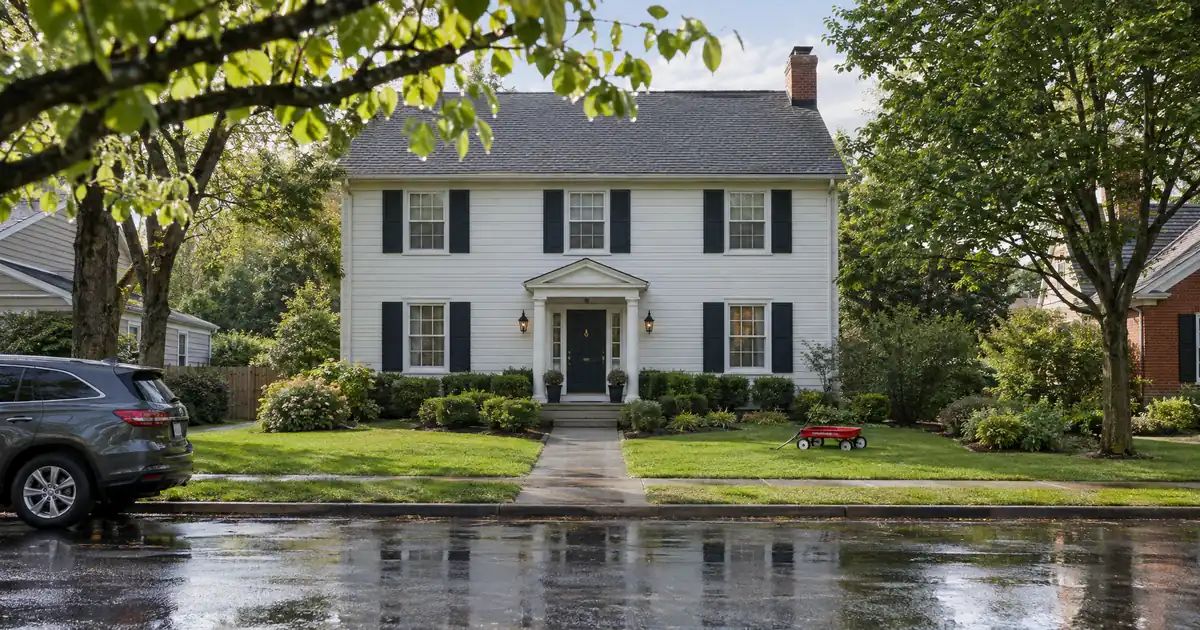
The Quick Read: You put a new first lien on a rental that has no mortgage, and the cash that comes back, after closing costs, pays for the roof or system work. Lenders size the loan on two tests at once: the appraised value against a 75% LTV ceiling on a cash-out, and whether the property’s rent covers the new payment. Treat the tighter of the two as your real limit, and expect the roof’s condition to matter at appraisal. Terms depend on the lender’s guidelines, the property type, the leverage, and a full review of the credit profile.
- A paid-off rental still counts as a cash-out refinance, because cash comes back to you.
- The 75% LTV ceiling on a cash-out sets the most you can borrow. Rent coverage can cap you lower.
- Most network programs want about 6 months of ownership, measured from title recording.
- A roof near the end of its life can change the appraisal, so sequence the repair carefully.
- Clearing 1.00 coverage is not the same as positive cash flow. The exact numbers vary by lender and program and follow a full review of property, leverage, and credit.
A debt-free rental feels like the easy case. No payoff, no old lender, no lien to clear. In some ways it is easy. The catch is that you are starting a payment from zero, and every dollar you pull out becomes new monthly debt that the rent has to carry.
DSCR Cash-Out Calculator
Run the cash-out numbers in your market
Rate source: Freddie Mac 30-yr average via FRED® — Federal Reserve Bank of St. Louis · effective Oct 15, 2026
Prefilled with starting assumptions — enter your property’s value, balance, taxes, and insurance for a more accurate picture.
Program parameters update from Lendmire’s centralized guideline source. Taxes and insurance are editable estimates.
As of Oct 15, 2026 · General Freddie Mac market benchmark, not a Lendmire loan offer. Property value, balance, taxes, and insurance are editable estimates. Maximum loan-to-value varies by lender, program, property type, and seasoning. Not a Loan Estimate, approval, or commitment to lend. Program availability and eligibility are subject to lender guidelines, credit approval, property review, and underwriting.
Does a Paid-Off Rental Count as a Cash-Out Refinance?
Yes. A refinance that returns cash to you is a cash-out refinance, whether or not an old loan gets paid off. On a free-and-clear rental the new loan minus closing costs, prepaids, and any required reserves or escrows is what lands in your account. The lender is making a first-lien loan on a property that had none.
This is a business-purpose loan on a non-owner-occupied property. Homestead rules and owner-occupied cash-out rules do not apply. FHA and VA roof standards do not apply either, which is worth saying because some roofing sites describe them as if every lender follows them.
Qualification runs primarily on property-level rental income covering the payment, subject to lender guidelines. Credit, reserves, the appraisal, and property condition still count. A DSCR loan means less personal income paperwork. It does not mean no paperwork. Expect the appraisal, an insurance binder, a credit report, leases, and often some documentation of the repair work.
Our complete DSCR loans guide covers the loan type from the ground up if you want the basics first.
Key Terms Defined
DSCR (debt service coverage ratio): The property’s monthly rent divided by its full monthly housing payment. For residential investor loans that payment is principal, interest, taxes, insurance, and any HOA dues.
PITIA: Principal, interest, taxes, insurance, and association dues. It is the payment side of the coverage ratio.
LTV (loan-to-value): The loan amount divided by the appraised value. On a cash-out, the ceiling in our network is 75%.
Seasoning: The time you have owned the property before a lender will do a cash-out. About 6 months, measured from title recording, is the common expectation.
Free and clear: A property with no mortgage or lien against it.
Capex (capital expenditure): Big, infrequent costs that extend a building’s life, such as a new roof or HVAC system, as opposed to routine repairs.
Reserves: Liquid cash you must show after closing, commonly about 6 months of PITIA, and more on larger loans.
How Underwriting Actually Treats This Loan, Step by Step
The process is the same as any rental cash-out, with one twist: nothing gets paid off, so every dollar of proceeds is a dollar of new debt. Here is the sequence.
1. Ownership and title. With no payoff, the lender confirms clean title and that the vesting matches the borrower on the note. If an LLC owns the rental, that is workable subject to lender program eligibility, but the entity on title and the entity on the loan must line up.
2. Appraisal with a rent opinion. The lender orders its own appraisal. Value sets the LTV ceiling. For a one-unit rental the appraiser also estimates market rent. Fannie Mae’s appraiser guidance describes the single-family rent schedule, Form 1007, as the appraiser’s estimate of monthly market rent for a single-family investment property. That is an appraisal form, not a DSCR rule, but it shows whose opinion counts. The appraiser’s market-rent figure is what typically drives the rent side of the ratio. Your lease is supporting evidence.
3. Size the loan. Take the appraised value and multiply by the 75% cash-out ceiling. That is the most the loan can be. Subtract closing costs, prepaids, and reserves, and you have the most cash you could receive. Our companion piece How to Size a Cash-Out Refinance on a Paid-Off Rental walks through that math in more detail.
4. Retest coverage on the new payment. Here the paid-off status bites. The new loan creates a payment where there was none, so coverage is tested at the amount you request. Borrow more and the ratio drops. On many files, coverage caps the loan before LTV does. Select programs start at 1.00 coverage, and stronger ratios open better pricing and leverage. A separate select-lender path goes below 1.00, with leverage and terms adjusted.
5. Close and receive proceeds. The cash comes to you, not to the contractor. Keep it in its own account so the money trail is clear.
What decides the outcome, in plain order: appraised value and the leverage cap, market rent against the new payment, credit score, reserves, property type and condition, and how you hold title.
Where the Roof Complicates the Appraisal
The roof is the central edge case here, and it creates a circular problem. You want the cash because the roof is bad. But the roof being bad is exactly what an appraiser may notice.
Consumer real-estate coverage notes that appraisers record a roof’s remaining economic life. A roof near the end of its life can lead to a lower value or an appraisal made “subject to” repairs. Leaks, sagging decking, and soft sheathing are the kind of visible defects that draw attention. Insurers look at roof age too. A roofing contractor’s financing explainer notes that insurers may add conditions and that coverage gets verified before closing.
Most of that commentary describes conventional and government-backed lending. How a given DSCR lender treats a worn roof varies by program, and some lenders will want repairs completed or funds set aside. That is a question for your broker before you order anything, not after.
So the practical question is sequencing. You have three realistic options:
- Repair first with your own cash, then refinance and recoup the money. This keeps the appraisal clean. If you pay before closing and take cash out afterward, the loan is still a cash-out.
- Ask about a repair escrow or holdback. Some lenders in the network may structure funds around required work. Availability depends on the lender and the file.
- Refinance as-is when the roof is aging but not failing and the appraisal is unlikely to flag it.
An improvement may support a higher appraised value, depending on comps and underwriter review. Do not count on the repair cost showing up dollar for dollar in the value.
System Repairs Are Not All the Same
Roofs get the attention, but HVAC, plumbing, electrical, and drainage work run on different urgency clocks. The table gives a rough way to think about each.
| Repair | Typical urgency | Appraisal or insurance angle |
|---|---|---|
| Roof | High if leaking | Remaining life flagged; insurer may add conditions |
| HVAC | High in extreme weather | Condition noted; may affect habitability |
| Plumbing | High if failing | Active leaks can trigger repair conditions |
| Electrical | Safety-driven | Outdated systems can draw insurer attention |
| Drainage or foundation | Varies | Can raise condition questions at appraisal |
A failed system that makes the unit unrentable changes the rent side of the ratio too. A vacant unit is typically underwritten on market rent, but practices vary. Talk it through with your broker before you let the unit sit empty while you wait on financing.
The Structures That Exist
The spine of the network is the 30-year fixed. Extended terms such as a 40-year, and interest-only periods, are available through select lenders in the network. ARM structures exist for investors who want them. Interest-only can lift coverage during the repair period, but it does not reduce the balance, so treat it as a tool for a specific plan, not a default.
Loan sizes run up to $3,000,000 on standard programs, with smaller balances routed through select lenders. Credit tiers run 620, 660, 680, and 700, with 620 as the floor in parts of the network. Most programs want around 660, and 700 and above unlocks the strongest leverage. Reserves are commonly about 6 months of PITIA, stepping up to about 9 months above $1,500,000. These are typical ranges from select wholesale-network guidelines, subject to lender guidelines and not a commitment to lend.
Many lenders attach a prepayment penalty to DSCR loans. That matters here. If you pull cash for one repair and plan to pay it down or sell soon, ask what the penalty schedule looks like before you commit.
Where the General Rule Breaks
You bought the rental for cash recently. The “paid-off” status is new, so seasoning matters. About 6 months of ownership from title recording is the usual expectation across our network. Delayed financing, a conventional product for recent cash buyers, limits the loan to documented purchase cost rather than appreciation, so rehab money you put in may not come back. DSCR programs often treat this differently, but terms vary by lender.
Short-term rentals. The Form 1007 rent schedule is built around monthly leases, and Fannie Mae says it was not designed for short-term rentals. STR loans in the network run to 75% LTV on a purchase, about 70% on a refinance, and 70% on a cash-out, with a 640 or better score and about 12 months of hosting history expected. The 70% figure on a cash-out applies to short-term-rental collateral. A standard long-term rental sits at 75%. Final terms depend on the lender’s guidelines, the property type, and the borrower’s complete credit picture.
Ineligible property types. Manufactured homes (single- and double-wide), log homes, and barndominiums are not offered through the network’s DSCR programs, however good the rent looks.
Thin coverage. If the rent barely covers the new payment, the lender may cap the loan below what the LTV allows. You can borrow less, use a longer term, or accept a smaller cash figure.
Passing the Coverage Test Is Not the Same as Cash Flow
DSCR compares rent to PITIA and nothing else. Repairs, vacancy, management, and utilities sit outside the calculation. A rental that clears 1.00 can still lose money in a month with a vacancy or a plumbing call.
Picture a rental that carried no debt and threw off healthy monthly income. After the refinance, a payment now comes out of that income every month. Coverage may look fine on paper at around 1.2x, yet your actual margin after operating costs has shrunk to a sliver. The test a lender runs and the test you should run are different. Ask whether the property still makes sense after the refinance, not only on the day the funds arrive.
Cash-Out Versus the Alternatives
A cash-out is not the only way to pay for a roof. Here is how the main choices compare.
| Option | How funds arrive | Best when |
|---|---|---|
| Cash-out refinance | Lump sum at closing | Large bill, strong rent coverage, long hold |
| Pay from savings | Immediate | You have liquidity and want no new debt |
| Contractor financing | Paid to contractor | Smaller job, short horizon |
| Insurance claim | Claim payout | Storm or hail damage is covered |
If damage came from a storm, file the claim first. A claim payout costs you no new debt, and insurers often want to inspect before work starts. Skipping that step can forfeit money you were owed.
Our piece How to Use a Paid-Off Rental Cash-Out Refinance to Clear Another Loan covers a different use of the same tool.
Right-Size the Loan to the Bid
You can borrow up to the cap. That does not mean you should. A smarter number is the contractor’s bid, plus a contingency for surprises, plus closing costs, plus the reserves the program requires. Anything beyond that is new debt with no job attached.
Get two or three bids before you apply. Know whether you are replacing the whole roof or patching, because that changes both the price and the tax treatment. A bigger pull also lowers coverage, so borrowing the minimum that does the job can keep you in a better pricing tier.
Tax and Records
Tax treatment can depend on how the funds are used and how the property is held; investors should keep clear records and speak with a qualified tax professional before relying on any deduction. For the general principle that repairs and improvements are separated, see IRS Publication 527.
When Not to Do It
Skip the cash-out if the repair is small and you can pay it from cash flow. Skip it if rent coverage is already thin, if you plan to sell soon and a prepayment penalty would bite, or if an insurance claim or savings can cover the bill at lower cost. A refinance has costs. Use it when the repair is large enough to justify them.
Frequently Asked Questions
Can I cash-out refinance a paid-off rental to fix a roof?
Yes. A refinance that returns cash is a cash-out, even with no existing loan. Proceeds are capped by the 75% LTV ceiling and by how much new payment the rent can support. Whether the roof’s condition affects the appraisal depends on the lender and the property.
Do I need to fix the roof before I refinance?
Not always. A failing roof may lead to a lower appraised value or repair conditions, so it is worth asking your broker before the appraisal is ordered. Some investors repair first with their own cash and recoup it at closing. Others ask about an escrow or holdback.
Can an LLC-owned rental do this?
Often yes, subject to lender program eligibility. The entity on title needs to match the borrower on the note, so sort that out before applying.
Do I need an appraisal if there is no mortgage?
Yes. The lender orders its own appraisal to set value for the LTV cap and to estimate market rent for the coverage ratio.
How much cash can I actually get?
It depends on appraised value, the 75% ceiling, rent against the new payment, closing costs, and reserves. It is not a guaranteed figure. If you want to see how the numbers might shake out, use the illustrative calculator on this site.
If you are buying or refinancing a rental property and want to see how the numbers work, Lendmire can help you compare DSCR loan options based on the property income, credit profile, leverage, and investor goals. Lendmire is a mortgage broker arranging financing through select lenders in its wholesale network, across 41 markets including Washington, D.C. Reach the team at 828-256-2183.
A roof is the repair that most often forces the question, and the investors who handle it well plan the sequence before they order the appraisal.
For how equity extraction works on an investment property, see Lendmire’s guide to cash-out refinance on an investment property.
About Lendmire
Lendmire (NMLS# 2371349) is a mortgage brokerage focused on DSCR investor financing, helping arrange programs through wholesale and investor-lending channels in 41 markets, including Washington, D.C. DSCR loans are evaluated by the lender on property cash flow rather than personal income, subject to lender guidelines, supporting LLC closings and accommodating investors with four or more financed properties. Scotsman Guide Top Mortgage Workplace in both 2025 and 2026.
Get Started
Ready to find the right loan for you?
In about 30 seconds you can review financing options available for your investment property. No commitment required.
Informational only. Not a Loan Estimate, approval, or commitment to lend. Program availability and eligibility are subject to lender guidelines, credit approval, property review, and underwriting.
References
1. Fannie Mae Appraiser Update
2. Opendoor: Does a New Roof Increase Home Value
3. Fair & Square Roofing: How Roof Age Affects Property Financing
4. IRS
This article is part of Lendmire’s investment property cash-out refinance program — full qualification details, guidelines, and scenarios live on the program page.
Related reading: How Much a DSCR Refinance Releases on a Part-Year Short-Term Rental · How to Convert a Fourplex to Condos and Refinance Each on DSCR · Selling a Rental vs. a DSCR Cash-Out Refinance for the Next Purchase
Brandon Miller
Founder & CEO, Mortgage Loan Originator, Lendmire LLC
- Mortgage Loan Originator · NMLS# 1129696 · Verify on NMLS Consumer Access
- North Carolina Real Estate Broker · License# 343312 · Verify on NCREC
- North Carolina Insurance Producer · License# 19053198 · Property, Casualty, Life, Health · Verify on NAIC SBS
- Lendmire LLC · Firm NMLS# 2371349 · Verify firm licensure
Important disclosures. Lendmire (NMLS# 2371349) is a licensed mortgage brokerage. Lendmire is not a direct lender, depository institution, or financial advisor. All loan inquiries are subject to lender underwriting; this article does not constitute a commitment to lend. Rates, terms, and program guidelines are subject to change without notice and vary by borrower profile, property type, and state. Information in this article is general in nature and is not financial, legal, or tax advice. Equal Housing Opportunity. NMLS Consumer Access: nmlsconsumeraccess.org.