
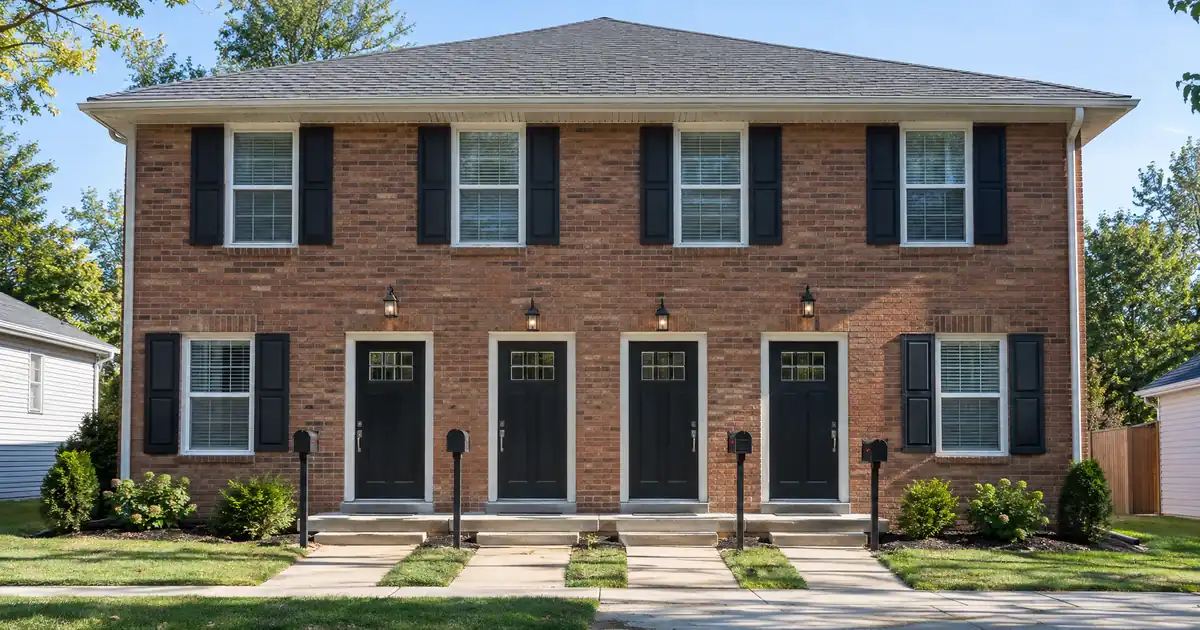
The Quick Read: Sometimes, but vacancy is where a DSCR cash-out gets hardest, and the answer depends on how empty the building is, whether it is rent-ready, and which program reviews the file. Some programs want a tenant in place or a documented operating history, while others let the appraiser’s market-rent opinion stand in for a lease. A partly vacant fourplex is far easier than a fully empty one.
- Cash-out on most network programs tops out around 75% LTV on a standard rental, with about 6 months of seasoning from title recording.
- A building with one or two rent-ready empty units is the most workable vacancy case.
- A fully vacant building, or one that still needs work, is usually better leased up or stabilized first.
- Clearing 1.00 coverage is where select programs start. It does not mean the property cash-flows.
- Eligibility is set by each lender’s guidelines, credit approval, and property review. Nothing here is a commitment to lend.
Vacancy changes the question a lender asks. On a purchase, the lender asks whether the property can rent. On a cash-out, the lender asks why a property that should be earning isn’t. That difference drives everything below.
DSCR Cash-Out Calculator
Run the cash-out numbers in your market
Rate source: Freddie Mac 30-yr average via FRED® — Federal Reserve Bank of St. Louis · effective Oct 8, 2026
Prefilled with starting assumptions — enter your property’s value, balance, taxes, and insurance for a more accurate picture.
Program parameters update from Lendmire’s centralized guideline source. Taxes and insurance are editable estimates.
As of Oct 8, 2026 · General Freddie Mac market benchmark, not a Lendmire loan offer. Property value, balance, taxes, and insurance are editable estimates. Maximum loan-to-value varies by lender, program, property type, and seasoning. Not a Loan Estimate, approval, or commitment to lend. Program availability and eligibility are subject to lender guidelines, credit approval, property review, and underwriting.
Why Does Vacancy Make a Cash-Out Harder?
Vacancy is harder on a refinance than on a purchase because a refinance has no acquisition story to explain the empty units. Lenders want evidence of rent, and a lease is the cleanest evidence there is.
On a purchase, most programs accept a vacant property in turnkey condition and size the loan on the appraiser’s rent opinion. A cash-out is different. The borrower already owns the building, has had time to rent it, and is asking to pull equity out. Many programs read an empty property as a risk signal. They may ask for a tenant in place, a lease-up period, or an operating history before lending against equity.
Across the wholesale network, the treatment splits into roughly three camps:
- Tenant required. The building must be leased, or have a short- or medium-term rental history, before a cash-out is considered.
- Market rent allowed. The appraiser’s market-rent opinion replaces the missing lease, often with conditions on property condition and leverage.
- Mixed treatment. Leased units count at lease, vacant rent-ready units count at appraised market rent, and the lender may trim leverage for the vacancy.
None of these is the “correct” rule. They are different program designs, which is why the same building can get different answers from different lenders. A broker who sees many guidelines can sort a file toward the camp that fits. A single lender can only offer its own.
How Do Lenders Count Rent in a 2–4 Unit Building?
Lenders count rent unit by unit, using the lease for occupied units and the appraiser’s market rent for empty ones. The result is a total rent used for lender review that gets divided by the full monthly obligation, meaning principal, interest, taxes, insurance, and any association dues.
For a 2–4 unit property, the appraisal is typically the small residential income property report, known as Form 1025. Fannie Mae’s forms list shows Form 1007, the comparable rent schedule, for one-unit properties and Form 1025 for 2–4 units. DSCR loans are not agency products, so those forms are borrowed formats rather than a rulebook. The agency’s appraisal form requirements are where the form structure originates, but program rules for a DSCR file come from the lender.
Many programs also apply a lower-of convention: the lower of the in-place lease or the appraiser’s market rent. A lease signed above market gets trimmed. A vacant unit has no lease at all, so the appraiser’s number is the only number. Nothing cross-checks it, so a conservative rent opinion shrinks the loan directly.
| Situation | Rent counted | What to document | Typical reaction |
|---|---|---|---|
| Fully leased | Lower of lease or market | Leases, rent roll | Cleanest file |
| One unit vacant, rent-ready | Leases plus market rent | Rent roll, listing evidence | Often workable |
| Two units vacant | Leases plus market rent | Written vacancy explanation | Program-dependent, leverage may adjust |
| Fully vacant, rent-ready | Market rent only | Listing, comps, explanation | Some programs yes, many want a lease first |
| Vacant, needs work | Not eligible yet | Finish the work | Stabilize before applying |
Treat the table as a map of tendencies, not a promise. Each lender sets its own line, and every file is reviewed individually.
What Does the Math Look Like on a Fourplex With One Empty Unit?
A fourplex with one empty unit usually clears the coverage test if the three leased units carry most of the load, but the lender’s treatment of the empty unit moves both the ratio and the loan size. Run the same building under two treatments and the gap shows up fast.
Picture a fourplex appraised near $600,000, financed at the 75% LTV ceiling for a standard-rental cash-out. All figures here are modeled assumptions for illustration, not market data. The exact numbers vary by lender and program and follow a full review of property, leverage, and credit.
- Treatment A: vacant unit counted at market rent. The three leases and the one market-rent unit all count. Coverage runs around 1.25x.
- Treatment B: vacant unit counted at zero. Only the three leases count. Coverage falls to roughly 0.95x, below the 1.00 point where select programs start.
Same building, same appraised value, same debt. The only change is how one empty unit is treated, and it moves the file across the 1.00 line. Under Treatment B, a lender may still review the file through a select-lender path that takes coverage below 1.00 with leverage and terms adjusted. That is a separate path from the 1.00-and-up programs, not a lower floor on the same one, and it is subject to lender guidelines, credit approval, and property review.
The loan is also capped by two tests at once. The value test limits the loan to the LTV ceiling on appraised value. The rent test limits it to the largest obligation the rent used for lender review supports. The tighter test wins. In a vacant file with a cautious rent opinion, the rent test is usually the tight one.
One more caution. Clearing 1.00 is not positive cash flow. The ratio compares rent to the monthly obligation only. Repairs, vacancy, management, utilities, and capex all sit outside it. In a four-unit building with one empty unit, the real margin can be thinner than the ratio suggests.
What Are the Other Gates Besides Vacancy?
Two gates sit beside vacancy: seasoning and property condition. A vacant building can clear the rent test and still fail either one.
Seasoning. Most programs expect about 6 months of ownership before a cash-out, measured from title recording. Cash buyers sometimes ask about a delayed-financing exception, which can waive the waiting period but typically caps proceeds near documented cost rather than appraised value. On a DSCR file, that treatment is lender-set, so confirm it before counting on it.
Rent-ready condition. A vacant building that is finished and marketable is a different file from one mid-renovation. If the property still needs real work, it generally isn’t a cash-out candidate yet. The common path is a short-term bridge or hold, then a DSCR refinance once the building is stabilized and leased. A rehab that is only cosmetic and complete is a far easier conversation than open permits and missing kitchens.
Reserves and credit. These apply to every file. Reserves commonly run around 6 months of PITIA, stepping up to about 9 months on loans above $1,500,000, and they vary with leverage and loan size. Credit tiers start at a 620 floor in parts of the network, with most programs preferring around 660 and 700+ opening the strongest leverage. A vacant file has less room to absorb a weak score, because the rent evidence is already thin.
Why Do Different Lenders Give Opposite Answers?
Lenders disagree about vacant cash-out because each one prices the same uncertainty differently. It is program design, not a contradiction.
A lender that requires a tenant is protecting against appraiser-rent risk. The market-rent number on a vacant file has no lease behind it, and if the appraiser is optimistic, the loan is oversized. A lender that accepts market rent is comfortable with that risk, usually because it trims leverage, wants a finished property, or leans on credit and reserves to offset it.
Neither stance is wrong. They fit different borrowers. If you read one page saying vacant cash-out is generally unavailable and another saying it is not automatically ineligible, both can describe real programs. The practical lesson is that a single decline is not the market’s answer. It is one program’s answer.
Business-purpose status matters here too. DSCR loans are designed for non-owner-occupied investment properties. Because they are business-purpose investor loans, they are reviewed differently from a standard owner-occupied mortgage. That is why a building you plan to live in, or a former residence you are converting, gets extra scrutiny. Lenders usually want a signed occupancy affidavit and, for conversions, lease or move-out evidence. Under the federal business-purpose rule, the loan’s primary purpose is what counts, and mislabeling a personal-use loan as business purpose carries real risk.
What Can Strengthen a Vacant Cash-Out File?
Anything that replaces the missing rent evidence helps. The strongest move is a signed lease at market rent before you apply, which converts an uncertain vacant file into a document-supported one.
Short of a lease, several steps tend to help:
- Listing evidence. An active listing at a market-supported asking rent shows the unit is being marketed.
- Comparable rents. Give the appraiser nearby monthly comps. Rent opinions are built from them.
- A written vacancy explanation. Short, factual, and specific: recent turnover, completed repairs, a marketing start date.
- A short-term rental history. For a short-term rental, platform history can stand in for a long-term lease. Short-term rental purchases run to 75% LTV, while refinance and cash-out run around 70% on those files, with about 12 months of hosting history and a 640+ score typical. Short-term rental rules can vary by city, county, HOA, and property type, so investors should confirm local rules before relying on projected rental income.
- A clean entity package. Entity documents, insurance, title, and a rent roll for any occupied units. Final terms depend on the lender’s guidelines, the property type, and the borrower’s complete credit picture.
Don’t use your target rent as the coverage figure. Market rent comes from the appraiser’s comparables, not your pro forma, and a nightly rate multiplied by thirty is not market rent either.
Should You Lease First, or Apply Now?
Lease first if the building is fully vacant, if the rent opinion is likely to come in low, or if the numbers only work at full market rent on every empty unit. Apply now if one or two rent-ready units are empty and the leased units already carry the coverage.
A simple decision path:
1. Is the property rent-ready? If no, finish the work or bridge first.
2. Has it been owned about 6 months? If no, seasoning is the gate, not vacancy.
3. Is it fully or partly vacant? Partly vacant files often proceed. Fully vacant files should be priced out with several lenders before assuming.
4. Does coverage clear 1.00 with the vacant units at zero? If yes, the file is comfortable. If only at full market rent, expect leverage adjustments or a lease-up request.
The flip point is carry cost. If you are paying bridge or hard-money carry while an empty unit sits, waiting for a lease is not free. Leasing at a slightly lower rent to reach occupancy can cost less than a few extra months of carry, and a signed lease can lift the file’s strength with the lenders that matter. If you have plenty of runway and a low-cost note, patience costs little.
The conventional lane is rarely the answer here. Big banks and large retail lenders generally want a stabilized, documented rental with personal income support, so a vacant 2–4 unit building is an awkward fit. For how the two lanes compare on a cash-out, Lendmire’s piece DSCR Cash-Out vs Conventional Refinance on a 2 to 4 Unit Property covers the tradeoffs. The complete DSCR loans guide covers the full program picture.
What If the Program Says No?
A decline on one program is a routing problem, not a verdict on the building. You have several alternatives.
- Lease up, then refinance. Often the cleanest fix. A seasoned lease turns the file into the standard case.
- Bridge or hold. For a property that needs work, keep the short-term financing until it is stable, then take it out with a DSCR cash-out.
- A different program. Some programs in the network review vacant units on market rent. Others want a tenant. A broker can route accordingly.
- A lower-leverage structure. Taking less cash out can bring a thin file inside a program’s limits.
- A home equity line. Investment-property lines cap at $500,000 total and sit on top of an existing first.
Be careful with prepayment terms and refinance costs. They reduce net proceeds, and a cash-out that nets little after costs may not justify the new, larger obligation. Tax treatment can depend on how the funds are used and how the property is held; investors should keep clear records and speak with a qualified tax professional before relying on any deduction.
Key Terms Defined
DSCR (debt service coverage ratio): Monthly rent used for lender review divided by the monthly obligation of principal, interest, taxes, insurance, and association dues.
Market rent: The rent an appraiser supports using comparable local rentals, used when there is no lease or when the lease is above market.
Rent roll: A unit-by-unit list of tenants, rents, and lease terms for a multi-unit building.
Seasoning: The ownership period a lender expects before it will lend cash-out against equity, measured from title recording.
Rent-ready: Finished and marketable now, with no work needed before a tenant could move in.
Partial vacancy: One or more empty units in a building that has other leased units.
Frequently Asked Questions
Do I need a lease to cash-out refinance a 2–4 unit rental?
Not always. Some programs require a lease or operating history, while others use the appraiser’s market-rent opinion for vacant units. A signed lease at market rent before you apply generally strengthens the file and widens the number of programs that will review it.
What if only one unit in my fourplex is vacant?
That is the most workable case. Leased units typically count at lease, and the empty rent-ready unit may count at appraised market rent. Some programs trim leverage or discount the vacant rent, so run the coverage with that unit at zero as a stress test.
Can I cash-out refinance if the whole building is empty?
Possibly, but it is the hardest case. Some programs review a fully vacant, rent-ready building on market rent alone. Many want a tenant first. Pricing the file with more than one lender, or leasing up before applying, usually gives a better outcome.
Can I live in one of the units and still use a DSCR cash-out?
Generally no. DSCR loans are built for non-owner-occupied investment properties, and an owner-occupied 2–4 unit follows a different lane. If you plan to move in, the file should be structured for that purpose from the start.
Does clearing 1.00 coverage mean the building makes money?
No. The ratio counts rent against the monthly obligation only. Vacancy, repairs, management, utilities, and capex sit outside it, so a thin ratio on a building with an empty unit can still leave you with little real margin.
If you are buying or refinancing a rental property and want to see how the numbers work, Lendmire can help you compare DSCR loan options based on the property income, credit profile, leverage, and investor goals. Reach the team at 828-256-2183, or request a quote.
For how equity extraction works on an investment property, see Lendmire’s guide to cash-out refinance on an investment property.
About Lendmire
A DSCR-focused mortgage broker, Lendmire (NMLS# 2371349) places investor financing across 41 markets — 40 states plus Washington, D.C. — with DSCR eligibility generally reviewed by the lender on property cash flow instead of tax returns, subject to lender guidelines. Scotsman Guide named Lendmire a Top Mortgage Workplace in 2025 and 2026.
Get Started
Ready to find the right loan for you?
In about 30 seconds you can review financing options available for your investment property. No commitment required.
Informational only. Not a Loan Estimate, approval, or commitment to lend. Program availability and eligibility are subject to lender guidelines, credit approval, property review, and underwriting.
References
1. Fannie Mae – Selling & Servicing Guide Forms
2. Fannie Mae Selling Guide B4-1.2-01
This article is part of Lendmire’s investment property cash-out refinance program — full qualification details, guidelines, and scenarios live on the program page.
Related reading: DSCR Cash-Out Documentation When a Lease Expires During Refinance · How to Clear a Solar Lien on Your First Rental Before a DSCR Cash-Out · How to Keep a Standing HELOC on a Rental to Fund the Next Deal
Brandon Miller
Founder & CEO, Mortgage Loan Originator, Lendmire LLC
- Mortgage Loan Originator · NMLS# 1129696 · Verify on NMLS Consumer Access
- North Carolina Real Estate Broker · License# 343312 · Verify on NCREC
- North Carolina Insurance Producer · License# 19053198 · Property, Casualty, Life, Health · Verify on NAIC SBS
- Lendmire LLC · Firm NMLS# 2371349 · Verify firm licensure
Required disclosures. Lendmire (NMLS# 2371349) operates as a licensed mortgage broker, not a direct lender or depository. The discussion in this article is general in nature and should not be relied upon as financial, legal, or tax advice — every investment scenario is unique and should be reviewed by a qualified professional. Any loan inquiry is subject to lender underwriting, and this article is not a commitment to lend or a guarantee of approval. Mortgage rates, loan terms, and program guidelines vary by borrower, property, and state, and may change without notice. Equal Housing Opportunity. Verify licensure at NMLS Consumer Access.