
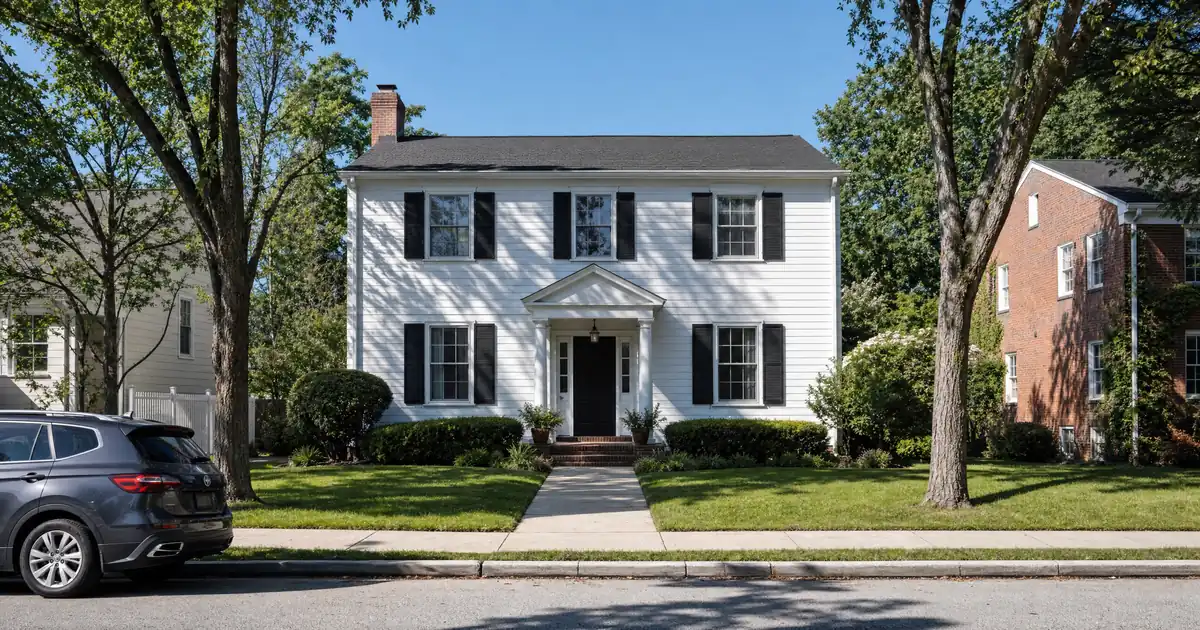
The Quick Read: A cash-out refinance on an Airbnb property swaps your current mortgage for a larger loan sized against the home’s value, with the difference wired to you at closing. Because nightly-rate income doesn’t look like a paycheck or a signed 12-month lease, most conventional lenders won’t count it toward qualification. That’s why short-term rental (STR) owners lean on DSCR loans, which size the loan against the property’s rental income instead of the owner’s traditional personal-income documentation. Across the wholesale lender network Lendmire works with, STR cash-out refis typically cap around 70% loan-to-value, want roughly a 640 credit score, and expect about 12 months of hosting history before Airbnb income counts on its own.
DSCR Cash-Out Calculator
Run the cash-out numbers in your market
Rate source: Freddie Mac 30-yr average via FRED® — Federal Reserve Bank of St. Louis · effective Jul 30, 2026
Prefilled with starting assumptions — enter your property’s value, balance, taxes, and insurance for a more accurate picture.
Program parameters update from Lendmire’s centralized guideline source. Taxes and insurance are editable estimates.
As of Jul 30, 2026 · General Freddie Mac market benchmark, not a Lendmire loan offer. Property value, balance, taxes, and insurance are editable estimates. Maximum loan-to-value varies by lender, program, property type, and seasoning. Not a Loan Estimate, approval, or commitment to lend. Program availability and eligibility are subject to lender guidelines, credit approval, property review, and underwriting.
What a Cash-Out Refinance Actually Is
A cash-out refinance replaces your existing loan with a new one that’s meaningfully bigger than your current balance, and you keep the difference. The Consumer Financial Protection Bureau draws the line at more than five percent larger than the prior loan balance and any junior liens combined — below that, it’s just a rate-and-term refinance with a small amount of cash back, not a true cash-out event.
That threshold matters because it isn’t a marketing label. It changes how the loan is priced, how much leverage is allowed, and how much seasoning a lender wants before letting you touch the equity. A rate-and-term refi on an STR property is a different conversation than a cash-out refi, even when the same house sits behind both.
One clarification worth making early: DSCR loans are business-purpose loans for non-owner-occupied investment property. Because they’re not consumer mortgages, they’re reviewed differently than a loan on the house you live in.
Key Terms Defined
A few terms carry the whole conversation. Get these down and the rest of the article reads a lot faster.
- DSCR (Debt Service Coverage Ratio): the property’s monthly rental income divided by its monthly housing payment (principal, interest, taxes, insurance, and any HOA dues, together called PITIA). A ratio at or above 1.00 means the rent covers that payment.
- LTV (Loan-to-Value): the loan amount expressed as a percentage of the property’s appraised value. Lower LTV means more equity cushion and usually better terms.
- PITIA: principal, interest, taxes, insurance, and association dues — the full monthly housing obligation, not just the loan payment.
- Seasoning: the waiting period a lender wants between buying (or refinancing) a property and pulling cash out of it again.
- Non-QM / business-purpose loan: a loan made to an investor for a rental property rather than a primary residence, underwritten outside standard conventional/agency rules.
Cash-Out Refinance vs. HELOC vs. Home Equity Loan
These three get lumped together constantly, and they shouldn’t be. A cash-out refi replaces the whole first mortgage; a HELOC and home equity loan sit behind it as a second lien.
| Factor | Cash-Out Refinance | HELOC | Home Equity Loan |
|---|---|---|---|
| Lien position | Replaces first mortgage | Second lien behind existing loan | Second lien behind existing loan |
| Structure | Single new loan | Revolving credit line | Lump-sum loan |
| STR income counted? | Yes, via DSCR programs | Rarely on business-purpose terms | Rarely on business-purpose terms |
| Best for | Larger equity pulls, rate reset | Ongoing renovation draws | One-time, fixed need |
For an STR owner sitting on real appreciation, the cash-out refinance is usually the tool that lets Airbnb income itself do the qualifying. HELOCs and home equity loans on investment property are far less commonly underwritten against nightly-rate income in the non-QM space, so they tend to fall back on the owner’s personal financials instead.
Why Conventional Lenders Struggle With Airbnb Income
Conventional underwriting was built around W-2 paychecks and signed leases — Airbnb income breaks that model in five specific ways. Any one of these can sink a conventional cash-out application even on a property that cash flows well in real life.
- Platform deposits, not a lease. Airbnb and VRBO payouts land as irregular platform transfers, not a fixed monthly rent check a conventional underwriter can trend.
- Seasonality. A beach house that earns most of its income in three summer months looks unstable on a monthly-average basis, even if the annual number is strong.
- Self-employed tax profiles. Many hosts run STR income through a Schedule E or business entity with deductions that shrink the number a conventional lender sees on a tax return.
- LLC ownership. Property titled to an LLC — common for STR operators managing liability — falls outside most conventional owner-occupant underwriting entirely, subject to program eligibility.
- Financed-property limits. Conventional guidelines cap the number of financed properties a borrower can hold, which stops STR portfolio investors cold well before a DSCR investor hits a ceiling.
The common thread: conventional underwriting is qualifying the person. DSCR underwriting qualifies the property.
How DSCR Underwriting Actually Treats Airbnb Income
Here’s the honest, step-by-step version of what happens once a file lands on a DSCR lender’s desk — not the marketing version.
Step one: pick the income source. If the property already has an operating history, actual trailing platform income is usually the strongest number a lender will use. Without history, the file leans on third-party market projections instead.
Step two: order the appraisal. Appraisers still use the standard rent-schedule forms that originated in agency lending, even on non-QM files, because they’re the common language everyone in the industry already reads. Those forms are built around a monthly-lease comparison, not a nightly rate — which is exactly why STR-specific programs don’t rely on them alone.
Step three: run the ratio. Qualifying monthly income, whichever source applies, gets divided by the proposed PITIA. Clearing 1.00 means rent covers the payment on paper — it does not mean the deal is cash-flow positive after repairs, vacancy, management fees, utilities, and capital expenses, which sit entirely outside the ratio.
Step four: underwrite the borrower and the collateral separately. A strong coverage number doesn’t override a credit issue, a thin reserve position, or an appraisal that comes in soft. Credit, liquidity, and the as-is value get reviewed on their own track, and any one of them can change the outcome even when the property’s income looks great.
Step five: confirm the property can legally operate as a short-term rental. This is the step that trips up more STR cash-out files than anything else. If the local rule set doesn’t allow the use, the income behind it can’t support the loan — no matter how strong the trailing numbers are. Short-term rental rules can vary by city, county, HOA, and property type, so confirming local rules before relying on projected rental income is worth doing before you get attached to a number.
Where the Qualifying Income Number Comes From
Non-QM lenders generally accept three ways to document Airbnb income, and which one applies depends on whether the property has a track record yet.
Actual platform history. Twelve to twenty-four months of documented Airbnb or VRBO earnings, used directly. This is the strongest path when it exists.
Third-party market projections. For properties without operating history, market-data platforms estimate what a comparable unit should earn. AirDNA describes its revenue figure as booked nights times average daily rate, plus cleaning fees, minus host discounts and platform service fees — a defensible methodology, but a projection, not a receipt. That’s why most DSCR programs in the network apply a haircut, commonly landing somewhere in the 70–80% range of the projected gross figure, before treating it as qualifying income.
Appraiser market-rent fallback. A conservative, long-term monthly rent opinion, used as a comparison figure even on STR files. It’s the floor, not the ceiling — most STR files qualify off the platform or projection number when it’s available and stronger.
Lendmire’s coverage of DSCR loans for Airbnb properties walks through this in more depth if you’re deciding which documentation path fits your property.
Running the Numbers: A Worked Cash-Out Example
Picture an investor holding an Airbnb property that’s appraised meaningfully above the existing loan balance after a couple of seasons of strong bookings. On a cash-out refinance, the new loan is capped at roughly 70% of that appraised value under most STR programs in the network — the gap between that cap and the existing payoff, minus closing costs, becomes the cash-out amount.
The other side of the file is coverage. Say qualifying rental income, after any documentation haircut, clears the proposed PITIA at somewhere around 1.15x to 1.25x — comfortably above the 1.00 floor most STR programs use as a starting point. That’s a modeled scenario, not a quoted deal; every file is priced and sized individually against the property, the borrower’s credit, and current program guidelines.
Two things determine whether that math actually clears: enough equity to hit the leverage cap, and enough rent to clear the coverage floor. A property can be equity-rich and still fall short on coverage if the projected income is thin relative to the payment — and the reverse happens too, where the ratio looks great but the appraisal doesn’t support enough equity to make the refinance worth doing.
The Structures and Variations Available
The spine of STR financing across the network is the 30-year fixed loan, with real variation underneath it depending on the file. Loan sizes generally run from roughly $100,000 up through $3,000,000 on standard programs, and above about $2,500,000 the network typically holds to 30-year fixed structures rather than shorter or adjustable terms.
Interest-only periods and 40-year amortization schedules are available through select lenders for investors who want to hold monthly obligations down and let the coverage ratio carry more of the weight. Adjustable-rate structures exist too, for investors who have a reason to want one.
No state carries a tighter overlay. Connecticut, Florida, Illinois, and New Jersey purchases reach the same 80% loan-to-value ceiling available elsewhere (85% by exception), and loan sizes run up to the standard $3,000,000. Credit requirements shift the leverage ceiling too — a 620 floor exists in parts of the network, and most STR programs want a 640-plus score.
Where the General Rule Breaks: Edge Cases
The framework above holds for most single-family and small multifamily Airbnb properties. It breaks in a handful of predictable places.
Local law can eliminate the income source entirely. New York City is the clearest national example. Under the NYC Mayor’s Office of Special Enforcement’s registration law, unregistered short-term rentals can’t process bookings at all through major platforms, and only owner-occupied units with the host present typically qualify to list. The measurable result was a collapse in listings after enforcement began. A DSCR lender simply can’t underwrite STR income in a market where the underlying use is that restricted — no coverage ratio fixes that problem.
Small multifamily STR sits in a financing gap. Once a property runs five to eight units, it’s above the standard 1-4 unit residential box and below where most agency-style multifamily programs start. Add nightly rental income into that mix and the pool of lenders willing to touch the file narrows fast — leverage on these deals typically compresses well below what a comparable 1-4 unit STR would get.
Seasonal and vacation markets face tighter terms. A ski cabin or beach house with heavy seasonal swings usually sees a tighter coverage requirement or a lower leverage cap than a year-round rental, because the income is inherently lumpier. Reserve requirements — commonly landing around six months of PITIA on standard files, sometimes stepping up toward nine months on larger loans, and occasionally waived on modest, conservative rate-term deals — tend to run on the higher end for these properties specifically.
Some property types aren’t in the box at all. Manufactured homes, both single- and double-wide, along with log homes and barndominiums, are not offered through the network’s DSCR programs regardless of how well they’d cash flow as a listing. That’s not a “harder to finance” situation — it’s simply outside what these programs cover.
Tax classification and loan qualification are two different questions. EisnerAmper walks through the IRS’s rule that a dwelling counts as a personal residence if you use it personally for more than 14 days or 10% of the days it’s rented, whichever is greater — the framework behind how STR income and losses get taxed. That has nothing to do with how a DSCR lender counts your rental income for a refinance. Investors conflate these constantly, and they run on completely separate tracks. Tax treatment can depend on how loan proceeds are used and how the property is titled — investors should keep clean records and talk to a qualified tax professional before relying on any deduction, and Lendmire’s coverage of the tax implications of a cash-out refinance is a reasonable starting point for that conversation.
What the Investor Decision Looks Like in Practice
The most common use case: an investor bought with hard money or a bridge loan, stabilized the property as a short-term rental, and now wants to refinance into permanent, fixed financing while pulling equity for the next deal. That’s the “BRRRR” exit — buy, rehab, rent, refinance, repeat — applied to STR income specifically, and it’s a large part of why cash-out refinancing on Airbnb properties matters at all.
Files in markets with heavy STR concentration tend to show a consistent pattern: coverage looks marginal on a conservative long-term-rent comparison but clears comfortably once trailing twelve-month platform income or a market projection is layered in. The stronger files in that category are the ones that pull comps from a recognized STR data source and run both the long-term and short-term income scenarios side by side before applying — it tells you exactly where the file’s cushion actually sits before a lender sees it.
The other side of the decision: waiting. Because most STR cash-out programs want roughly 12 months of hosting history before nightly-rate income counts on its own, an investor who refinances too early may get pushed toward the more conservative appraiser fallback number instead — which usually means less cash out, not a declined file. Waiting the extra few months to build a real booking history is often the difference between a mediocre cash-out number and a strong one.
For investors weighing this move against simply using a cash-out refinance to buy the next investment property, or wondering more broadly whether cash-out refinancing to invest even makes sense right now, the property-level math above is the place to start — not a general market read.
If none of this is new to you and you just want the full mechanics of how DSCR review works across property types, Lendmire’s complete DSCR loans guide covers it end to end.
Frequently Asked Questions
Can I cash-out refinance an Airbnb with no long-term lease in place?
Yes — that’s the entire point of a DSCR-based STR program. Qualification runs off trailing platform income or a market projection rather than a signed 12-month lease, subject to lender guidelines and roughly 12 months of hosting history in most cases.
Does off-season income hurt my application?
It can factor in, since seasonal properties often see tighter coverage requirements or slightly lower leverage caps to offset the income swings between peak and off-peak months. A full trailing-twelve-month income picture generally represents the property more fairly than a snapshot from a slow month.
Can I do this on a property owned by an LLC?
Many DSCR programs will lend to LLC-titled entities, subject to program eligibility and lender-specific documentation requirements. This is one of the areas where non-QM underwriting diverges most from conventional rules, which typically won’t touch LLC-owned property at all.
Is a vacant, newly acquired STR eligible for a cash-out refinance?
Generally not right away — most cash-out programs want the property to have operated and generated some income history first, commonly cited around six months of ownership seasoning before cash-out is available, with STR-specific income counting typically wanting closer to 12 months of hosting history.
What’s the difference between refinancing and just taking out a HELOC on my Airbnb?
A cash-out refinance replaces your entire first mortgage with a new, larger one; a HELOC sits behind your existing loan as a separate line of credit. On investment property, DSCR-based cash-out refinancing is far more commonly built around nightly-rate income than HELOC products are.
For how equity extraction works on an investment property, see our guide to cash-out refinance on an investment property.
About Lendmire
Lendmire (NMLS# 2371349) is a mortgage broker, not a lender — it arranges DSCR investor loans through select lenders across a wholesale network spanning 41 markets, including Washington, D.C. Nothing here is a commitment to lend, and no scenario or coverage figure guarantees approval; every file is subject to lender review, credit approval, property eligibility, and program guidelines that can change. This article is general information, not financial, legal, or tax advice. Investors weighing an Airbnb cash-out refinance can call 828-256-2183 or request a quote to see how a specific property’s numbers actually run. Scotsman Guide named Lendmire a Top Mortgage Workplace in both 2025 and 2026.
Get Started
Ready to find the right loan for you?
In about 30 seconds you can review financing options available for your investment property. No commitment required.
Informational only. Not a Loan Estimate, approval, or commitment to lend. Program availability and eligibility are subject to lender guidelines, credit approval, property review, and underwriting.
References
1. Consumer Financial Protection Bureau — Cash-Out Refinances and Paydown Behavior
2. AirDNA Help Center — How AirDNA Calculates Revenue
3. NYC Mayor’s Office of Special Enforcement — Short-Term Rental Registration Law
4. EisnerAmper — Hidden Tax Impacts of Short-Term Rentals
This article is part of Lendmire’s investment property cash-out refinance program — full qualification details, guidelines, and scenarios live on the program page.
Related reading: Refinance Rental Property With Cash Out · Short-term Rental DSCR Loans For Business Owners With Lean Tax Returns · Do Voucher Tenants Help or Hurt Your DSCR Ratio?
Brandon Miller
Founder & CEO, Mortgage Loan Originator, Lendmire LLC
- Mortgage Loan Originator · NMLS# 1129696 · Verify on NMLS Consumer Access
- North Carolina Real Estate Broker · License# 343312 · Verify on NCREC
- North Carolina Insurance Producer · License# 19053198 · Property, Casualty, Life, Health · Verify on NAIC SBS
- Lendmire LLC · Firm NMLS# 2371349 · Verify firm licensure
Compliance and disclosures. Lendmire (NMLS# 2371349) is a licensed mortgage broker and is not a direct lender, depository institution, financial advisor, or tax professional. Content in this article is general market analysis and educational information — not financial, legal, or tax advice for any specific situation. Lendmire does not guarantee loan approval; every transaction is subject to underwriting by the funding lender. Mortgage pricing and loan program guidelines are subject to change at any time without notice and vary by borrower characteristics, property type, and state regulations. Lendmire complies with Equal Housing Opportunity. Licensure verification: NMLS Consumer Access.