
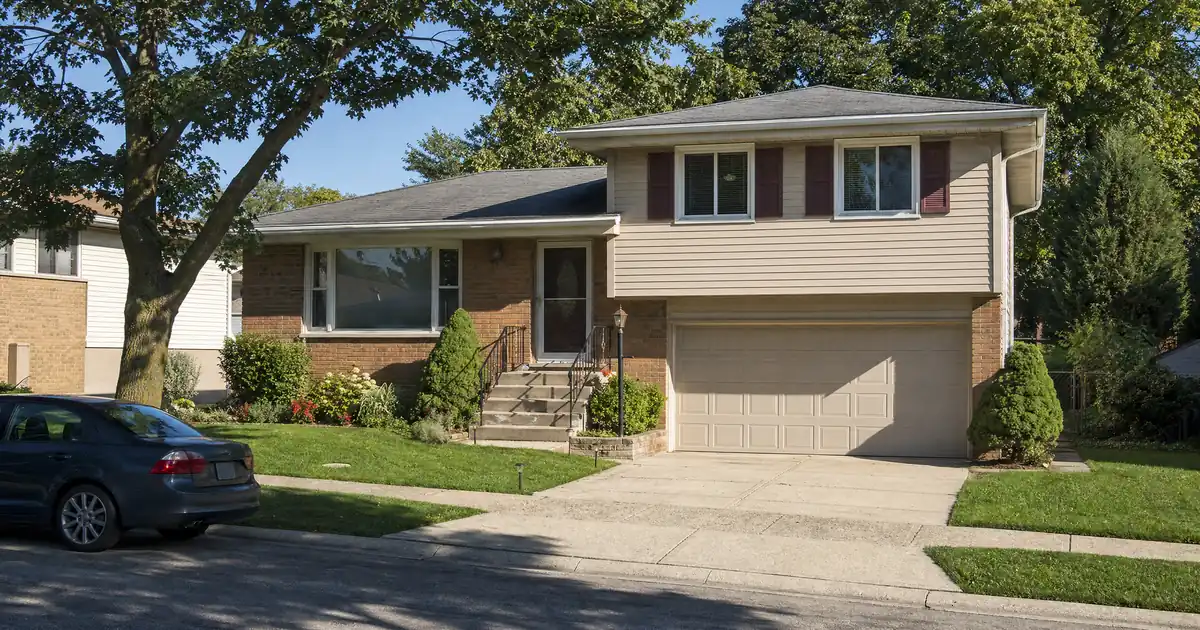
The Quick Read: The BRRRR refinance is a cash-out refinance sized against the property’s new appraised value instead of what the investor paid for it — the mechanism that lets rehab equity turn into repeat-purchase capital. Across most DSCR programs the cap sits near 75% LTV, seasoning runs about 6 months of ownership, and the payment has to clear roughly 1.00x rent-to-PITIA coverage. Miss any one of those three and the refinance either shrinks, delays, or gets capped at cost basis instead of value. Terms vary by lender guidelines, property type, leverage, credit profile, and full file review.
What Is a Cash Out Refinance BRRRR, Exactly?
A BRRRR cash-out refinance is the “Refinance” step in Buy, Rehab, Rent, Refinance, Repeat — the move where an investor replaces short-term acquisition financing (hard money, bridge debt, or an all-cash purchase) with a long-term loan sized against the property’s current value, pulling the difference out as cash. BiggerPockets, the platform credited with coining the term, describes the cycle as finding a distressed property purchased below cost, rehabbing it, renting it out, refinancing for cash, then reinvesting that cash into the next deal.
DSCR Cash-Out Calculator
Run the cash-out numbers in your market
Rate source: Freddie Mac 30-yr average via FRED® — Federal Reserve Bank of St. Louis · effective Jul 30, 2026
Prefilled with starting assumptions — enter your property’s value, balance, taxes, and insurance for a more accurate picture.
Program parameters update from Lendmire’s centralized guideline source. Taxes and insurance are editable estimates.
As of Jul 30, 2026 · General Freddie Mac market benchmark, not a Lendmire loan offer. Property value, balance, taxes, and insurance are editable estimates. Maximum loan-to-value varies by lender, program, property type, and seasoning. Not a Loan Estimate, approval, or commitment to lend. Program availability and eligibility are subject to lender guidelines, credit approval, property review, and underwriting.
The refinance is the fulcrum of the whole strategy. Everything before it — the discount purchase, the rehab budget, the lease-up — exists to set up one appraisal. Everything after it — the next acquisition, the next rehab — depends on what that appraisal produces.
Two products get compared here: DSCR loans and standard rate-and-term or agency-conforming refinances. In plain terms, a cash-out refinance simply means the new loan amount exceeds the payoff of the existing debt, with the excess disbursed to the borrower. What makes it a BRRRR refinance rather than a generic one is that it’s happening early in an ownership timeline, against a property that just went through forced appreciation, using an investment-property, business-purpose loan rather than an owner-occupied one.
How the Refinance Actually Gets Underwritten, Step by Step
The refinance decision runs through four gates, in this order: title seasoning, appraised value, rent-to-payment coverage, and leverage cap. A file can fail at any gate regardless of how the others look — a fully seasoned, high-coverage file still gets capped by the 75% LTV ceiling, and a high-value file with fresh title still gets capped by seasoning. Exact terms depend on the lender’s guidelines, property type, leverage, and a full review of the borrower’s file.
Step one — the seasoning clock starts at the recorded deed. Most DSCR programs in Lendmire’s wholesale network want to see around 6 months of ownership before sizing a refinance against fresh appraised value. That clock runs from the date title transferred to the investor — not from the date the rehab finished, not from the date the tenant moved in. An investor who closes a purchase in cash or via a bridge loan and finishes rehab in ten weeks may still be waiting on the calendar, not the construction schedule.
Step two — the appraisal does two jobs, not one. For a single-unit rental, the appraisal is typically ordered with a Single-Family Comparable Rent Schedule — the industry calls it Form 1007 — and for 2-4 unit properties, a comparable operating-income schedule does the same job. These forms exist because a standard sales-comparison appraisal establishes market value but says nothing about market rent, and the refinance needs both numbers simultaneously: value drives the maximum loan size at the program’s LTV cap, and rent drives the coverage ratio.
Step three — the coverage math runs rent against PITIA, nothing else. DSCR compares gross monthly rent to the full monthly housing payment — principal, interest, taxes, insurance, and any HOA dues. On select programs in Lendmire’s network, 1.00 is where qualification starts, not a universal industry floor — some lenders want stronger coverage, and stronger ratios generally open better leverage and pricing. Clearing 1.00 means the rent covers the housing payment. It does not mean the property is cash-flow positive once vacancy, repairs, management, utilities, and capital reserves get factored in — those sit entirely outside the ratio, and conflating the two is one of the more common mistakes investors make reading their own numbers.
Step four — the loan amount gets sized against the lower of value or the LTV cap, and the payoff has to actually clear. Cash-out refinances on investment property typically top out around 75% LTV across most of the network. The new loan pays off the existing hard-money or bridge balance and covers closing costs; whatever’s left above that gets disbursed as cash-out proceeds. That’s the capital that funds the “Repeat” step.
An investor with strong bank-statement income or a W-2 job doesn’t get an easier version of this process on a DSCR file — the property carries the underwriting weight, not the borrower’s personal income, which is exactly why Lendmire’s complete DSCR loans guide frames qualification around rental income covering the payment rather than a personal debt-to-income test.
Where the General Rule Breaks: The Edge Cases
The six-month-and-75%-LTV shape above is the general case. It breaks in a handful of predictable ways, and knowing which one applies to a given file changes the refinance math before the appraisal is even ordered.
All-cash purchases can sidestep full seasoning — but they get a different valuation ceiling. An investor who bought entirely in cash can often refinance without waiting out a full seasoning period, but the loan doesn’t get sized against fresh appraised value at full leverage. It gets capped at the lesser of current appraised value or the documented amount the investor actually paid to acquire the property. That’s a materially different outcome than a seasoned refinance at full value, and treating it as a shortcut to the same leverage is a common underwriting error flagged across appraisal-industry commentary. Non-QM programs commonly mirror this same cost-basis-cap shape, though it runs as its own documentation path rather than a universal workaround.
LLC-held time can sometimes count toward seasoning. If a property was previously titled in an entity majority-owned or controlled by the same investor, the holding period inside that LLC may credit toward the ownership clock — relevant for investors who buy inside an entity and later need to retitle for a specific program. Loans to LLC-titled entities remain subject to program eligibility, and not every lender in the network treats entity-held time the same way.
Existing-loan age and title-holding age are two separate clocks. This is the mix-up that trips up more BRRRR investors than almost anything else. How long the investor has held title is one test. Separately, whether the existing debt being paid off is old enough to qualify for certain payoff treatments is a different test entirely. A hard-money or bridge loan closed a few months earlier is, by definition, young — which is one more reason DSCR refinances (governed by lender-specific overlays rather than agency loan-age rules) became the standard exit vehicle for BRRRR investors rather than a conventional cash-out.
Short-term rental exits appraise differently than long-term rental exits. If the BRRRR strategy’s endgame is a nightly-rental listing rather than a signed lease, the rent figure the appraisal produces won’t be a simple multiplication of nightly rate by 30 days. Appraisal guidance is explicit that nightly STR rates shouldn’t be multiplied into a monthly figure — that approach ignores vacancy, personal property, and operating costs, so appraisers base the rent opinion on comparable monthly-lease properties instead. For an investor exiting into an Airbnb-style strategy, that can mean the appraised “rent used for lender review” comes in lower than the property’s actual nightly-rate income would suggest. On the financing side, Lendmire’s short-term-rental DSCR programs generally run purchase leverage to 75% LTV and refinance/cash-out around 70%, with roughly a 640+ credit score, about 12 months of hosting history, and a 1.00 coverage floor expected — tighter than the long-term-rental refinance parameters above. More detail sits in Lendmire’s DSCR loan for Airbnb coverage.
Inheritance and legal-award transfers don’t wait at all. Where title passed through inheritance or a legal award — divorce, separation, dissolution of a domestic partnership — the ownership clock is treated as starting at the transfer date rather than requiring a waiting period. This edge case rarely applies to a BRRRR purchase specifically, but it matters for investors who fold an inherited property into an active portfolio strategy.
Refinance Readiness: The Checklist That Actually Matters
Before ordering an appraisal, a file is either ready or it isn’t — and most of what determines that has nothing to do with the property’s condition.
- Title seasoning: has the investor held recorded title for roughly 6 months, or does the file fall under an all-cash, inheritance, or LLC-transfer exception?
- Lease in place: is there a signed lease (or, for STR strategy, a documented hosting history) the appraiser can use to support the rent conclusion?
- Rehab documentation: are receipts, contractor invoices, and permits organized, in case the file lands on a cost-basis cap rather than an appraised-value refinance?
- Coverage math: does projected rent, divided by the anticipated PITIA at the target loan amount, land at or above the program’s floor — commonly 1.00x on select programs, with stronger ratios opening better terms?
- Entity paperwork: if the property will close in an LLC, are operating agreements and authorization documents current, subject to program eligibility?
- Credit profile: does the borrower sit above the roughly 620 floor found in parts of the network, with 660 and 700+ tiers unlocking progressively stronger leverage?
A file that clears all six moves through underwriting with far fewer preventable delays. A file missing two or three of them doesn’t necessarily fail — it just tells the lender exactly where the compensating factors need to come from.
If the Appraisal Comes in Low
A refinance appraisal that lands below the projected after-repair value is the single most common way a BRRRR cycle stalls with cash still trapped in the deal — and it’s a live risk, not a hypothetical one. BiggerPockets’ own risk framing calls out low appraisals directly alongside short-term-loan exposure and budget overruns as the strategy’s core downside.
When the number comes in light, the loan amount shrinks with it — the 75% LTV ceiling applies against whatever value the appraisal actually supports, not the value the investor modeled during acquisition. There’s no separate “appeal the DSCR” process the way there might be a value-reconsideration request on the sales-comparison side; if the rent schedule comes in conservative, the fix is usually stronger rent comps (a longer lease at a documented rate, or comparable unit data) rather than a renegotiation of the coverage math itself.
The practical response is rarely to force the refinance at a worse leverage point. More often it means holding the property longer to build additional seasoning and rent history, paying down the existing bridge balance to reduce what needs to be refinanced, or accepting that this particular cycle recovers a portion of capital rather than all of it. The 70% rule that governs the acquisition side of BRRRR exists precisely as a buffer against this outcome — buying with enough discount that even a conservative refinance appraisal still leaves the investor with usable equity.
Across files like these, a pattern shows up consistently: investors who model the refinance appraisal conservatively at acquisition — assuming rent comes in at the lower end of the range and value comes in a notch under the contractor’s optimistic ARV — rarely get surprised at the refinance table. The investors who get stuck with capital trapped in a deal are almost always the ones who underwrote the acquisition assuming the refinance would hit the best-case number.
What This Means for Repeat-Cycle Speed
Because DSCR programs aren’t bound by agency-style title-seasoning and loan-age rules the way conventional financing is, an investor whose file clears a lender’s own seasoning window can pull cash-out proceeds well before qualifying under a conventional refinance — directly increasing how many buy-rehab-rent-refinance cycles fit into a year. That flexibility is real, but it’s not free: shorter seasoning tends to pair with tighter leverage or stronger coverage requirements earlier in the ownership period, which is why the underwriting question is never simply “can this refinance happen” — it’s “at what leverage, against which valuation basis, and does the rent clear the bar at that loan size.”
Investor purchase activity is a meaningful share of the housing market this dynamic plays out in. Cotality’s Home Investor Report put investor share of single-family purchases at 30% at the close of 2025, up slightly from the prior year. Redfin’s investor report shows a different but related figure — 19% in the first quarter of 2026 under its own methodology — reflecting overall housing-market softness. The two datasets use different definitions and aren’t directly comparable, but both point to a still-substantial investor presence that financing conditions directly shape.
Loan size matters here too. Standard DSCR programs across the network run up to roughly $3,000,000; above about $2,500,000, structures generally hold to 30-year fixed terms rather than shorter or adjustable options. Reserve requirements scale with size and leverage — commonly around 6 months of PITIA, with conservative rate-and-term files under $1,500,000 at modest leverage sometimes seeing reserves waived, and files above that threshold typically stepping up to around 9 months. None of this is fixed across every lender; it’s presented here as the range seen across select programs in the network, confirmed file by file.
One investor-specific restriction worth knowing before assuming a financing path: a handful of property types are excluded from DSCR programs entirely across the network — manufactured homes (both single- and double-wide), log homes, and barndominiums are not offered, not “harder to finance.” An investor running a BRRRR strategy on one of those property types should plan for a different exit loan from the outset rather than discovering the mismatch at refinance time.
DSCR loans on investor properties are business-purpose, non-owner-occupied products, which means they’re underwritten and disclosed differently than a standard owner-occupied mortgage. That distinction is worth knowing but rarely changes the practical mechanics an investor is managing day to day. More on how a DSCR refinance compares structurally to conventional financing sits on Lendmire’s DSCR vs conventional page, and Lendmire covers the refinance-specific mechanics further, including cash-out refinancing with a DSCR loan and cash-out refinancing for BRRRR investors.
Key Terms Defined
ARV (after-repair value): the property’s appraised value once rehab is complete, used to model the refinance loan size before construction starts.
Seasoning: the minimum length of time a lender wants an investor to have held title before sizing a refinance against fresh appraised value rather than cost basis.
DSCR (debt-service coverage ratio): monthly rental income divided by the full monthly housing payment (principal, interest, taxes, insurance, HOA), used to qualify the loan on property income instead of personal income.
PITIA: principal, interest, taxes, insurance, and association dues — the full monthly obligation used in the DSCR calculation.
Cost-basis cap: an underwriting limit that sizes a refinance against documented purchase price plus verified rehab cost, rather than current appraised value — typically applied when full seasoning hasn’t been met.
Delayed financing: a refinance path for investors who purchased entirely in cash, allowing a refinance without waiting a standard seasoning period, but capped at the lesser of appraised value or documented purchase cost.
Frequently Asked Questions
How long do I have to own a BRRRR property before I can cash-out refinance it?
Most DSCR programs across Lendmire’s network want to see around 6 months of ownership from the recorded deed date before sizing a refinance against fresh appraised value. Files that don’t meet that window typically aren’t denied outright — they often get capped at documented purchase price plus verified rehab costs instead of full appraised value, subject to lender guidelines.
Does a cash-out refinance on a BRRRR property use my personal income to qualify?
No — DSCR loans qualify primarily on the property’s rental income covering the payment, subject to lender guidelines, rather than personal income documentation. The lender compares projected or in-place rent to the full monthly housing payment (PITIA) to produce the coverage ratio that drives approval.
What if my refinance appraisal comes in lower than my projected ARV?
The loan amount adjusts to whatever value the appraisal supports, capped at the program’s LTV ceiling — commonly around 75% on a cash-out refinance across most of the network. Rather than forcing the deal through at reduced leverage, many investors hold the property longer to build seasoning and rent history, or accept partial rather than full capital recovery on that cycle.
Can I refinance a BRRRR property held in an LLC?
Yes, loans to LLC-titled entities are available through select programs, subject to program eligibility and current lender guidelines. In some cases, time the property was held inside a majority-owned LLC can count toward the seasoning clock if title later moves to the individual investor.
Does a short-term rental exit strategy change the refinance math?
Yes — short-term rental refinances generally run tighter than long-term rental refinances across the network, often capping around 70% LTV with roughly a 640+ credit score, about 12 months of hosting history, and a 1.00 coverage floor expected. The rent used for lender review figure is also based on comparable monthly-lease data rather than nightly rate multiplied by 30 days, which can produce a lower number than the property’s actual nightly income suggests.
Are all property types eligible for a BRRRR cash-out refinance through DSCR programs?
No — manufactured homes (single- and double-wide), log homes, and barndominiums are not offered through DSCR programs in Lendmire’s network. Investors targeting one of these property types for a BRRRR strategy should plan for a different exit financing option from the start.
If a rehab is finished, the lease is signed, and the numbers are close to penciling, Lendmire can help compare DSCR loan options based on the property’s income, the borrower’s credit profile, target leverage, and the investor’s next-move timeline. Reach Lendmire at 828-256-2183 or request a pricing quote to see how a specific file stacks up.
This article is for general informational purposes only and does not constitute financial, legal, or tax advice. Loan approval is never guaranteed, and nothing here represents a commitment to lend. All scenarios described are subject to lender approval and current borrower, property, and program guidelines, which can change without notice.
For how equity extraction works on an investment property, see cash-out refinance on an investment property.
About Lendmire
Lendmire (NMLS# 2371349) is a mortgage broker that arranges DSCR investor financing through select lenders in its wholesale network, spanning 40 states plus Washington, D.C. — 41 markets total. Lendmire doesn’t fund or underwrite loans directly; lenders in the network review each file, and approval depends on the property, the borrower’s credit and reserves, and program guidelines current at the time of application. Nothing here is a commitment to lend, and it isn’t financial, legal, or tax advice — investors should confirm current program parameters directly and consult a qualified professional for their specific situation. Loans made to LLC-titled entities remain subject to program eligibility. Tax treatment of a cash-out refinance can depend on how funds are used and how the property is held; investors should keep clear records and talk to a qualified tax professional before relying on any deduction. Scotsman Guide named Lendmire a Top Mortgage Workplace in both 2025 and 2026.
Get Started
Ready to find the right loan for you?
In about 30 seconds you can review financing options available for your investment property. No commitment required.
Informational only. Not a Loan Estimate, approval, or commitment to lend. Program availability and eligibility are subject to lender guidelines, credit approval, property review, and underwriting.
References
1. BiggerPockets – How to Invest in Real Estate With the BRRRR Method
2. McKissock – Form 1007 & Its Impact on Short-Term Rental Appraisals
3. Marketwise Valuation – Understanding Short-Term Rentals and Form 1007
4. BiggerPockets – The Pros & Cons of the BRRRR Strategy
5. Cotality – Home Investor Report Q4 2025
This article is part of Lendmire’s investment property cash-out refinance program — full qualification details, guidelines, and scenarios live on the program page.
Related reading: BRRRR Strategy Hard Money To DSCR Refinance With No Cash Out Of Pocket · Using A Cash Out Refinance To Grow Your Rental Portfolio · Is a Cash Out Refinance Smart for Rental Property?
Brandon Miller
Founder & CEO, Mortgage Loan Originator, Lendmire LLC
- Mortgage Loan Originator · NMLS# 1129696 · Verify on NMLS Consumer Access
- North Carolina Real Estate Broker · License# 343312 · Verify on NCREC
- North Carolina Insurance Producer · License# 19053198 · Property, Casualty, Life, Health · Verify on NAIC SBS
- Lendmire LLC · Firm NMLS# 2371349 · Verify firm licensure
Disclosures. The information presented in this article is general market commentary, not financial, legal, or tax advice. Lendmire is a mortgage brokerage (NMLS# 2371349) — not a direct lender or depository institution — and loan placement is subject to lender underwriting. Nothing in this content represents a commitment to lend. Loan terms, pricing, and program availability vary based on borrower qualifications, property characteristics, and state of subject property, and are subject to change at any time. Lendmire complies with Equal Housing Opportunity requirements. Consumer access: nmlsconsumeraccess.org.